




Scribner's Magazine Articles
The Dial Magazine Articles
The New Republic Articles
Freedom's Triumph Articles
Film Daily Magazine Articles
The North American Review Articles
La Baionnette Articles
Rob Wagner's Script Magazine Articles
The Smart Set Articles
Liberty Magazine Articles
The American Legion Monthly Articles
The Flapper Magazine Articles
Touchstone Magazine Articles
Ken Magazine Articles
Vogue Magazine Articles
Sea Power Magazine Articles
Theatre Arts Magazine Articles
Men's Wear Magazine Articles
Creative Art Magazine Articles
Trench Warfare Articles
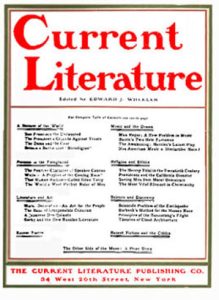
Current Literature Magazine Articles
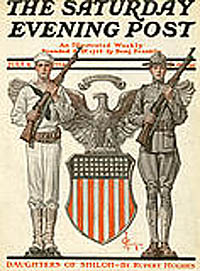
The Saturday Evening Post Articles
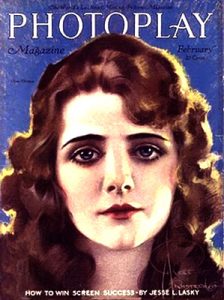
Photoplay Magazine Articles
Pic Magazine Articles
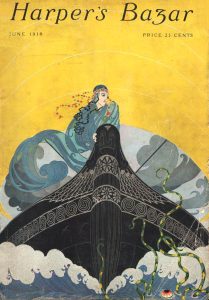
Harper's Bazaar Magazine Articles
PM Tabloid Articles
Hearst's Sunday American Articles
Life Magazine Articles
The American Legion Weekly Articles
Click Magazine Articles
Confederate Veteran Magazine Articles
G.I. Joe Magazine Articles
Outing Magazine Articles
Punch Magazine Articles
The Film Spectator Magazine Articles
Collier's Magazine Articles
People Today Magazine Articles
Vanity Fair Magazine Articles
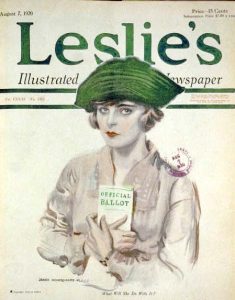
Leslie's Magazine Articles
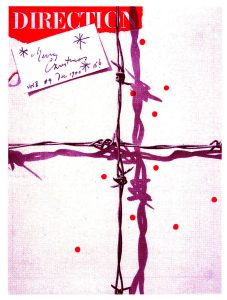
Direction Magazine Articles
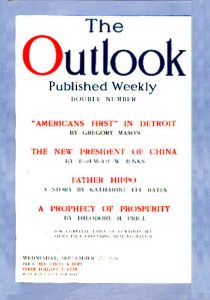
Outlook Magazine Articles
Newsweek Articles
The National Park Service Articles
The New York Times Articles
The Saturday Review Articles
Stage Magazine Articles
Confidential Magazine Articles
Harper's Weekly Articles
47 Magazine Articles
The Atlantic Monthly Articles

F.D.R.

FDR Compared to Lincoln
(Philadelphia Record, 1945)

An anonymous Philadelphia journalist, dumbstruck by the sudden death of FDR, compared the fallen president to Abe Lincoln because both were successful military leaders. He goes a step further by insisting that Walt Whitman’s famous ode to Lincoln is equally applicable for FDR.

Sticking It to FDR
(Liberty Magazine, 1942)

George Creel (1876 – 1953), the nation’s first and only official censor (1917 – 1918), knew FDR for twenty-five years, and in this wartime recollection he made FDR wish that the two had never met. This is the type of article Creel would never have allowed to be published twenty some years earlier because it sought to reduce confidence in the Commander-in-Chief. Yet, with the war in its eleventh month, Creel gave it to FDR with both barrels:


“No man ever dreamed more nobly or had less skill in making his dreams come true.”

FDR’s Proposal to Limit Personal Income
(PM Tabloid, 1942)

By the end of the war, FDR’s administration had placed taxable personal income as high as 94%(!). His Brain Trust were all big believers in Federal intervention into the economy – offering all sorts of price freezes and wage freezes in order to limit competition during the Great depression (as if that was a good). As the war kicked-in to high gear, FDR installed a low ceiling upon all high-earners and capped their salaries at $25,000.00 per-year.


Click here to read about FDR’s airplane.

Advertisement

Use shortcode [oma_ad position="summary_top"] (or other position) in your theme or widgets to display OMA Promotions here.

FDR in W.W. I
(Liberty Magazine, 1942)

Between the years 1913 through 1920, FDR served as Assistant Secretary of the Navy under Josephus Daniels:


“Roosevelt had not been in office a month before he gave out a public statement urging a more adequate navy:”


“‘The navy is not fit for war. We have today only sixteen ships we can send effectively against the first line of the enemy.'”

They Protected FDR
(Coronet Magazine, 1945)

Five months after the death of President Roosevelt, writer Michael Sayers (1911 – 2010) managed to get this FDR article to press while the public’s interest in the man was still hot. It addressed the tremendous lengths the Secret Service went to on a daily basis to protect President Roosevelt from Axis assassins and general kooks who wanted a shot at him:


“The White House detail, headed by six-foot Michael Reiley (1909 – 1973), stayed beside the President at all times. They became his shadows, unseen in the public glare, but always at hand… The President was not permitted to set foot in any place that had not been thoroughly investigated beforehand.”

His Mail
(Spot Magazine, 1941)

Unlike his many predecessors, FDR used to encourage the American people to write him with their thoughts. At times, the President used to boast to Congress concerning the volume of his mail in favor of his programs, but the mails did not simply deliver stamped envelopes:


“Almost anything you can think of has arrived as a gift at some time or another – dogs, sheep, eagles, baby chicks, toads, alligators. Mr. Roosevelt has never received any lions, but Calvin Coolidge got two, from Johannesburg…”

Advertisement

Use shortcode [oma_ad position="summary_top"] (or other position) in your theme or widgets to display OMA Promotions here.

Harold Ickes: FDR’s Gas Czar
(Liberty Magazine, 1942)

This article was published one month after the start of the war; it must have been a time when everyone had something to say about Harold Ickes (1874 – 1952) as he was composing the gas rationing laws for the home front. In this column, Ickes speaks for himself. He had been the one who saw to the President’s energy policy’s during the Great Depression and now he was FDR’s go-to-guy for gas during the war.

”If Lincoln Were in the White House”
(Liberty Magazine, 1936)

By cleverly borrowing from the state paper, letters and speeches of the Great Emancipator, a journalist from the usually pretty anti-New Deal Liberty Magazine was able to piece together a few paragraphs indicting
what they hoped Lincoln would think of the New Deal.

The Up-and-Coming FDR
(The Saturday Evening Post, 1913)

Theodore Roosevelt had loomed large in Washington for a long time – so when it was learned that his nephew, Franklin Delano Roosevelt (a Democrat!), was chosen to work in Woodrow Wilson’s Department of the Navy he was an instant curiosity.


Click here to read a 1913 article about another young man on the move: Winston Churchill.

Advertisement

Use shortcode [oma_ad position="summary_top"] (or other position) in your theme or widgets to display OMA Promotions here.

FDR’s Man in Foggy Bottom
(Collier’s Magazine, 1940)

This is a peculiar article about FDR’s Secretary of State, Cordell Hull (1871 – 1955); the man who penned the piece was so obsessed with Hull’s hillbilly upbringing that he didn’t get around to writing about the man himself until page six.

FDR’s Sense of Sympathy
(PM Tabloid, 1942)

When a 22-year-old expectant father wrote to President Roosevelt complaining that he’d been unemployed for four months, FDR wasted little time in contacting one of his alphabet agencies and seeing to it that the gent was offered a defense job.

The Alphabet Bureaucrats
(New Outlook Magazine, 1934)

It would be difficult to select the typical New Deal bureau. In not a few there is considerable friction between different degrees and elements of thought as to how far the New Deal should really go… The program is so vast, the limits of its intent so completely shrouded in the vague phraseology of the new idealism, that there appears to be plenty of work for all. [For example] unwanted surplusses were found in the electrical power and appliance field. It was perceived that here was a case of ‘under-consumption’ on the part of American homeowners. How to solve the problem? With another bureau, of course. And so we have the EHFA – the Electric Home and Farm Authority.

Advertisement

Use shortcode [oma_ad position="summary_top"] (or other position) in your theme or widgets to display OMA Promotions here.

FDR’s Alphabet Agencies
(Pathfinder Magazine, 1934)

Listed herein are the sixty-two alphabet agencies as they existed in 1934. More were on their way and, as this article makes quite clear, a good number of them were created by the Hoover administration. If you’re looking for an article indicating that Hoover and Roosevelt had similar approaches to governance, this might be a good place to start.

‘The New Deal Was Not Fascist”
(The Atlantic Monthly, 1933)

In certain quarters it is asserted that Mr. Roosevelt’s ‘New Deal’ is nothing other than the first stage of an American movement toward Fascism. It is said that, although the United States has not yet adopted the political structure of Italy and Germany, the economic structure of the country is rapidly being molded upon the Fascist pattern.


FDR’s D-Day prayer can be read here

Advertisement

Use shortcode [oma_ad position="summary_top"] (or other position) in your theme or widgets to display OMA Promotions here.

The Temper of the Electorate
(The New Outlook Magazine, 1932)

Just weeks before the U.S. presidential election of 1932 this article appeared in a political magazine that indicated how the Depression-tossed voters were feeling after three years of economic set-backs. The article consists of 21 pithy little paragraphs that sum up their feelings:

I BELIEVE it possible to feel hungry under either major party, but that under the Republicans it seems to hurt more.


Click here to read about the extensive press coverage that was devoted to the death of FDR…

FDR’s Publicity Machine
(New Outlook Magazine, 1934)

To those who have followed the political career of President Roosevelt, this unprecedented emphasis on public relations and publicity is no surprise. No president has ever been more alive to the potentialities of maintaining a ‘good press’, of gauging public reaction to his policies and of timing his announcements to obtain the widest and most sympathetic audience possible… No party organization could afford the elaborate press relations machinery which existed on March 4, 1933. Its cost, including salaries, printing, supplies etc., is today in excess of $1,000,000 annually, and it is being paid for by the American taxpayer.


Click here to read about President Harry Truman…

Advertisement

Use shortcode [oma_ad position="summary_top"] (or other position) in your theme or widgets to display OMA Promotions here.

Scroll to Top