





F.D.R.

The Alphabet Bureaucrats
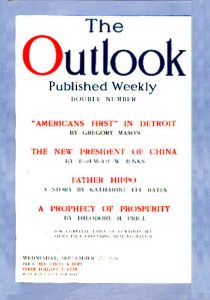
(New Outlook Magazine, 1934)

It would be difficult to select the typical New Deal bureau. In not a few there is considerable friction between different degrees and elements of thought as to how far the New Deal should really go… The program is so vast, the limits of its intent so completely shrouded in the vague phraseology of the new idealism, that there appears to be plenty of work for all. [For example] unwanted surplusses were found in the electrical power and appliance field. It was perceived that here was a case of ‘under-consumption’ on the part of American homeowners. How to solve the problem? With another bureau, of course. And so we have the EHFA – the Electric Home and Farm Authority.

‘The New Deal Was Not Fascist”
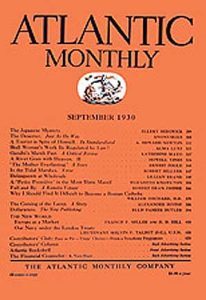
(The Atlantic Monthly, 1933)

In certain quarters it is asserted that Mr. Roosevelt’s ‘New Deal’ is nothing other than the first stage of an American movement toward Fascism. It is said that, although the United States has not yet adopted the political structure of Italy and Germany, the economic structure of the country is rapidly being molded upon the Fascist pattern.


FDR’s D-Day prayer can be read here

Advertisement

Use shortcode [oma_ad position="summary_top"] (or other position) in your theme or widgets to display OMA Promotions here.

The Temper of the Electorate
(The New Outlook Magazine, 1932)

Just weeks before the U.S. presidential election of 1932 this article appeared in a political magazine that indicated how the Depression-tossed voters were feeling after three years of economic set-backs. The article consists of 21 pithy little paragraphs that sum up their feelings:

I BELIEVE it possible to feel hungry under either major party, but that under the Republicans it seems to hurt more.


Click here to read about the extensive press coverage that was devoted to the death of FDR…

FDR’s Publicity Machine
(New Outlook Magazine, 1934)

To those who have followed the political career of President Roosevelt, this unprecedented emphasis on public relations and publicity is no surprise. No president has ever been more alive to the potentialities of maintaining a ‘good press’, of gauging public reaction to his policies and of timing his announcements to obtain the widest and most sympathetic audience possible… No party organization could afford the elaborate press relations machinery which existed on March 4, 1933. Its cost, including salaries, printing, supplies etc., is today in excess of $1,000,000 annually, and it is being paid for by the American taxpayer.


Click here to read about President Harry Truman…

Advertisement

Use shortcode [oma_ad position="summary_top"] (or other position) in your theme or widgets to display OMA Promotions here.

The World Press and the Death of FDR
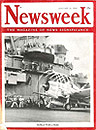
(Newsweek Magazine, 1945)

At 5:45 p.m. telephones rang simultaneously in the Washington bureaus of the AP, UP and [the International News Service] on a conference call from the White House. The familiar voice of Steve Early, who had retired only recently after twelve years as White House press secretary, called the roll to make sure all were listening. Then: ‘Here is a flash. The President died suddenly early this afternoon’

Swiftly the news went around the world… No president had meant quite so much to the press as Mr. Roosevelt. Few in history had been more consistently and bitterly opposed by a majority of publishers. Perhaps none had more admirers and fewer detractors among working newsmen. No president since his cousin Theodore, who coined the word ‘muckracker’, had on occasion denounced press and newsmen alike more harshly. Yet most newsmen forgave him his peevish moments. Certainly none had been more news-rich and none had ever received the voluminous coverage that President Roosevelt had. Over the years, the Roosevelt twice-a-week press conference was the Capital’s biggest newsmaker.

FDR: The First One Hundred Days
(Literary Digest, 1933)

Here are the Chief accomplishments of the special Session of the 73rd Congress, March 9 – June 16, 1933


These fifteen pieces of legislation were called the Honeymoon Bills – his critics pointed out that not one of them originated in Congress and added to their argument that Congress had been marginalized during the earliest period of his presidency.


FDR’s critics had a thing or two to say about the first year of The New Deal…


Click here to read about FDR and the press.

‘Why I Compare LBJ with my Father, FDR”
(Coronet Magazine, 1964)

Doesn’t LBJ remind you of FDR?

That’s the question I hear most of these days. He does, and touring through the poverty-stricken states of Appalachia with President Johnson, I saw why.
– so wrote Franklin D. Roosevelt, Jr. (1914 – 1988) in the attached article that was penned some 23 years after his father’s death.

Advertisement

Use shortcode [oma_ad position="summary_top"] (or other position) in your theme or widgets to display OMA Promotions here.

Harry Hopkins – FDR’s Right Hand
(United States News, 1944)

This article makes it quite clear that Harry Hopkins (1890 – 1946) wore many hats in the administration of FDR.
During the first five years of the New Deal he had the unique title Special Assistant to the President, he not only wrote speeches for FDR – Hopkins also oversaw the goings-on at the Civil Works Administration (CWA), the Federal Emergency Relief Administration (FERA), and the Works Progress Administration (WPA). Between the years 1938 through 1940, he served as Secretary of Commerce and when the war came he supervised the Lend-Lease program, the Chairman of the Munitions Assignment Board and traveled frequently as the President’s representative to Moscow and London.


When the U.S.S.R. collapsed, it was discovered that one of his additional duties was being a Soviet agent.


Click here to read about another member of the New Deal Brain-Trust…


Read an anti-Gandhi article from 1921…

The Twilight of the New Deal
(United States News and World Report, 1946)

The crusading spirit that Franklin D. Roosevelt was able to summon up in the minds of Government employees at the outset of his first administration, and again in the years that followed, now is vanishing. The spirit and imagination of Mr. Roosevelt brought into public service would not have been there.

It was this quality that captured the enthusiasm of engineers like J.A. Krug; of lawyers like Oscar S. Cox, Ben Cohen and Thomas Corcoran; of economists like Robert Nathan, Launchlin Curie, Leon Henderson and Isadore Lubin.

Integrating the Home Front
(Collier’s Magazine 1941)

Although the Roosevelt administration believed that integrating the armed forces was far too risky a proposition during wartime, it did take one important step to insure that fair hiring practices were followed by all businesses that held defense contracts with the Federal government; during the summer of 1941, while American industry was still fulfilling its roll as the arsenal of democracy, a Federal law was passed that criminalized racist hiring practices. The attached editorial from Collier’s Magazine applauded the President for doing the right thing.


Read an anti-Gandhi article from 1921…

Advertisement

Use shortcode [oma_ad position="summary_top"] (or other position) in your theme or widgets to display OMA Promotions here.

The 1940 Election Polls and FDR
(Coronet Magazine, 1941)

The attached article was written by Dr. George Gallup (1901 – 1984), the pioneering American pollster and founder of the Institute of Public Opinion. Gallup’s article reveals some surprising information about American voters and their thoughts concerning FDR’s 1940 bid for re-election against Wendell Willkie (1892 – 1944).

The Champ is Gone
(PM Tabloid, 1945)

This highly personal column appeared in one of New York City’s evening papers and seemed characteristic of the feeling experienced by much of the U.S. after hearing about the unexpected death of President Roosevelt.
Written by Joe Cummiskey, the column stands out as the type of remembrance that is thoroughly unique to those who write about sports all day long, which is who Mr. Commiskey was:

Somehow or other, if you were in sports, you never thought of FDR so much as connected with the high office which he held. Rather, you remembered him most the way he’d chuckle, getting ready to throw out the the first ball to open the baseball season. Or how he’d sit on the 50 at the Army-Navy game…

His Female Chief-of-Staff
(Literary Digest, 1938)

Missy Le Hand (1896 – 1944) was a pretty big deal in the life of President Franklin Roosevelt. FDR had many secretaries, but only one was a woman (and she was the first woman to ever serve in this capacity to a U.S. president). When the Germans attacked Poland, the State Department called her first, knowing full well that she was the only one in the White House with the permission to wake him up. Although this article lists many of the personal tasks she was charged with, it should be known that Missy Le Hand was the target of many Washington influence-peddlers.

Advertisement

Use shortcode [oma_ad position="summary_top"] (or other position) in your theme or widgets to display OMA Promotions here.

Sam Rosenman: FDR’s Right Arm
(Coronet Magazine, 1944)

Samuel Rosenman (1896 – 1973) was an attorney, judge and a highly placed insider within the ranks of the Democratic Party, both in Albany and the nation’s capital. It was Rosenman who helped articulated many of FDR’s policies, wrote numerous executive orders and conceived of the moniker New Deal. He was the first lawyer to hold the position White House Counsel and he was an indispensable advisor to Roosevelt throughout the course of his New York governorship as well as his presidency.

Advertisement

Use shortcode [oma_ad position="summary_top"] (or other position) in your theme or widgets to display OMA Promotions here.

Scroll to Top