


PM Tabloid Articles
Vogue Magazine Articles
The Film Spectator Magazine Articles
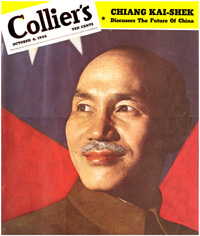
Collier's Magazine Articles
Trench Warfare Articles
The Saturday Review Articles
Stage Magazine Articles
Ken Magazine Articles
Confederate Veteran Magazine Articles
Film Daily Magazine Articles
Confidential Magazine Articles
People Today Magazine Articles
Leslie's Magazine Articles
Outing Magazine Articles
Vanity Fair Magazine Articles
Rob Wagner's Script Magazine Articles
Photoplay Magazine Articles
The American Legion Monthly Articles
The New Republic Articles
Touchstone Magazine Articles
47 Magazine Articles
Pic Magazine Articles
Men's Wear Magazine Articles
Sea Power Magazine Articles
La Baionnette Articles
Harper's Bazaar Magazine Articles
Current Literature Magazine Articles
G.I. Joe Magazine Articles
Newsweek Articles
The Dial Magazine Articles
Life Magazine Articles
The Smart Set Articles
The North American Review Articles
Creative Art Magazine Articles
Outlook Magazine Articles
The New York Times Articles
The Atlantic Monthly Articles
Theatre Arts Magazine Articles
Scribner's Magazine Articles
Liberty Magazine Articles
The National Park Service Articles
The Saturday Evening Post Articles
The American Legion Weekly Articles
Hearst's Sunday American Articles
Direction Magazine Articles
Harper's Weekly Articles
Punch Magazine Articles
Click Magazine Articles
The Flapper Magazine Articles
Freedom's Triumph Articles

F.D.R.

A Day in the Life of F.D.R.
(Literary Digest, 1937)

The attached article presented a dusk till dawn account of one day in the life of President Franklin Delano Roosevelt (1882 – 1945).
Written during his first term (prior to the war), the journalist recounted who the reoccurring players in his life were, the time of his rising, the preferred meals, the length of the meetings, distractions, recreations and other assorted minutia -but you’ll not read the word wheelchair once. This is a fine example of the press black-out that was in place in order to prevent the public any knowledge whatever of Roosevelt’s paralytic illness, which rendered him paralyzed from the waist down (he suffered from Guillain-Barré syndrome which he contracted in 1921).

Read a 1945 interview with FDR’s economic adviser, Bernard Baruch; click here.
Click here to read about the four inaugurations of FDR.

FDR’s Doctor Speaks
(Collier’s Magazine, 1946)

Published ten months after the death of President Franklin Roosevelt, Vice-Admiral Ross T. McIntire, Surgeon General of the U.S. Navy, reminisced about Roosevelt’s illness and his observations of the man:

The Pearl Harbor attack put a pressure on the President that never lifted.


With the flower of American youth fighting and dying on land and sea, he looked on any sparing of himself as a betrayal…


From Amazon:


FDR’s Deadly Secretstyle=border:none

Leon Trotsky Speaks About FDR and the Great Depression
(Rob Wagner’s Script Magazine, 1938)

Two and a half years were left on the clock for the exiled Leon Trotsky (né Lev Davidovich Bronstein: 1879 – 1940) until he would have to keep his rendezvous with an icepick in Mexico – and while living it up on this borrowed time he granted an interview to this one correspondent from a Beverly Hills literary magazine in which he ranted on in that highly-dated and terribly awkward Bolsheviki language about President Franklin Delano Roosevelt and his social programs.


Click here to read an article about the NKVD agent who murdered Trotsky.

Advertisement

Use shortcode [oma_ad position="summary_top"] (or other position) in your theme or widgets to display OMA Promotions here.

African-Americans, FDR, and the 1944 Election
(Yank Magazine, 1944)

A segment from a longer article regarding the 1944 presidential election and the widespread disillusionment held by many Black voters regarding the failings of FDR and his administration:

…the Negro vote, about two million strong, is shifting back into the Republican column.

The report is largely based upon the observations of one HARPER’S MAGAZINE correspondent named Earl Brown.


The group that advised FDR on all matters involving the African-American community was popularly known as the Black Brain Trust…

When New York City Mourned F.D.R.
(Yank Magazine, 1945)

With the exception of the attached piece, there is no magazine article in existence that illustrated so clearly the soul-piercing pain that descended upon the city of New York when the word got around that President Franklin Delano Roosevelt had died. YANK correspondent Bill Davidson walked from one neighborhood to the next recording much of what he saw:

Nowhere was grief so open as in the poorest districts of the city. In Old St. Patrick’s in the heart of the Italian district on the lower East Side, bowed, shabby figures came and went, and by the day after the President died hundreds of candles burned in front of the altar. ‘Never’ a priest said ‘have so many candles burned in this church’.
A woman clasped her 8-year-old son and said, ‘Not in my lifetime or in yours will we again see such a man.’

The FDR Assassination Attempt
(Coronet Magazine, 1960)

The attached article recalls that seldom remembered day in February of 1933 when Giuseppe Zangara (1900 – 1933) fired fifteen bullets wildly into a Florida crowd in an attempt to murder President-Elect Franklin Roosevelt.

Advertisement

Use shortcode [oma_ad position="summary_top"] (or other position) in your theme or widgets to display OMA Promotions here.

FDR’s Third Term: Vox Populi
(Pathfinder Magazine, 1940)

Here are the results of PATHFINDER MAGAZINE‘s 1940 poll concerning FDR’s controversial run for a third term. The pollsters were interested in discovering the voter’s thoughts on the third term as a concept for future presidents – rather than gaining a better understanding as to the popularity of President Roosevelt.


The poll considered the opinions of citizens who voted for FDR in 1936 and those who sided with Republican Alf Landon in the same election. They concluded that 68.6% of poll’s participants were against a third presidential term.

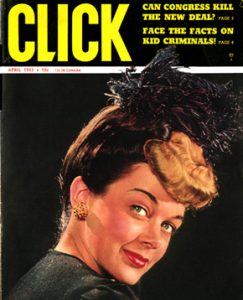
Can Congress Kill the New Deal?
(Click Magazine, 1943)

This is a 1943 editorial that was penned by Republican Senator Robert Taft (1889 – 1953) who explained in the most clinical terms that President Roosevelt’s loyal opposition on Capitol Hill can be relied upon to support him in all matters involving his roll as Commander-in-Chief. However, Taft implied, any further efforts to go gallivanting about the Capitol creating any more of those agencies with the New Deal trademark names like FSA, WPA, NYA, REA, TVA etc. etc. etc will be met with the stiffest opposition from the Republicans, who were well outnumbered, anyway.


Taft’s column was answered by his opposite number in the Democratic Party: New York Senator Robert F. Wagner (1877 – 1953); his column can also be read here.


The historian Henry Steele Commager chose to rank FDR at number 19 insofar as his impact on the American mind was concerned – click here to understand his reasoning…

Advertisement

Use shortcode [oma_ad position="summary_top"] (or other position) in your theme or widgets to display OMA Promotions here.

He was Too Tough on Businesses
(Collier’s Magazine, 1938)

President Franklin Delano Roosevelt was well-known for cracking wise about the members of the American business community, such as stock brokers, speculators, company functionaries and the leading corporate executives during the Great Depression – believing that there actually could be an economy worth saving if they didn’t exist. Throughout the Thirties the New Deal launched numerous tax laws and assorted other pieces of legislation that served only to stymy competition, raise prices and slow all economic growth. The editors of COLLIER’S MAGAZINE published this spirited and rational defense of corporate America in 1938 and it is attached herein:

American business, whatever its limitations, has produced a better living for more people than any other system of production… The American big-business system has fed people better and more generously. It has provided more convenient and more wholesome shelter. It has distributed vastly more of the mechanical aids to civilized living.


Click here to read about FDR’s tax plan from 1935.

‘The House the New Deal Built”
(New Outlook, 1934)

Here is a short article that appeared a year and a half into the administration of President Roosevelt and it lays the nation’s economic short comings right upon the doorstep of 1600 Pennsylvania Avenue. The writer articulated how unrecognizable the nation had become in such a very short span of time. The president’s anti-competition policies were wreaking havoc on an already damaged economy.

‘Voting Strength”
(New Outlook, 1935)

As one wise old wag once pointed out:


When robbing Peter to pay Paul, you can pretty much be guaranteed of Paul’s support come election time.


This 1935 opinion piece went into greater detail on this matter believing that this is (and has been for the past 70 years) the campaign strategy of the Democratic Party.

Advertisement

Use shortcode [oma_ad position="summary_top"] (or other position) in your theme or widgets to display OMA Promotions here.

He was a Dirty Campaigner…
(Collier’s Magazine, 1952)

FDR’s predecessor, Herbert Hoover, wrote a series of articles concerning his own presidency that appeared on the pages of COLLIER’S MAGAZINE throughout the spring of 1952. The sixth installment was devoted to his 1932 reelection bid against FDR and the Roosevelt Hoover remembered was an under-handed campaigner who surrounded himself with liars and all sorts of other aids and speechwriters who took liberties with the truth in all matter’s involving the record of Hoover’s administration.


CLICK HERE to read about President Hoover and the Bonus Army…

FDR and the House Republicans
(United States News, 1944)

The House of Representatives that was convening in early ’44 was composed of thirty additional Democrats – but this seemed not to matter to the President and his allies on the Hill; after eight years of practice, the opposition party had learned how to play the game.

Eleanor Roosevelt on the Death of FDR
(Yank Magazine, 1945)

This column, by First Lady Eleanor Roosevelt, was an articulate effort at make some sense of her husband’s death, which took place during one of the most critical periods in world history:

Perhaps in His wisdom, the Almighty is trying to show us that a leader may chart a way, may point out the road to lasting peace, but that many leaders and many peoples must do the building. It cannot be the work of one man, nor can the responsibility be laid upon his shoulders, and so when the time comes for peoples to assume the burden more fully, he is given rest.

Advertisement

Use shortcode [oma_ad position="summary_top"] (or other position) in your theme or widgets to display OMA Promotions here.

Mobilization for Human Needs
(A Magazine Advertisement)

The Mobilization for Human Needs charity campaign was the brain-child of President Roosevelt; it was based on his belief that private charities, when teamed with either county, state or the Federal government, could serve the public good better than these agencies could do when working separately.


The attached page appeared in hundreds of popular magazines during the Fall of 1933 imploring the readers to donate to the local charities that were associated with this campaign.

Scroll to Top