









La Baionnette Articles
Hearst's Sunday American Articles
Harper's Weekly Articles
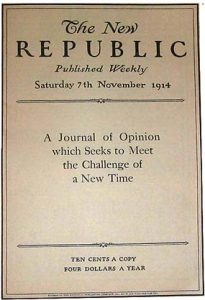
The New Republic Articles
The Flapper Magazine Articles
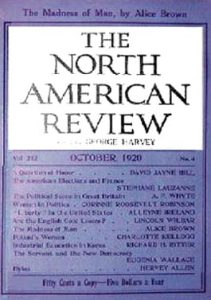
The North American Review Articles
Vanity Fair Magazine Articles
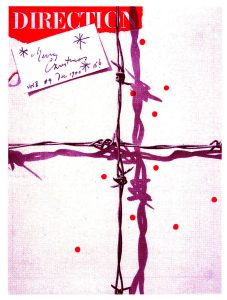
Direction Magazine Articles
Photoplay Magazine Articles
Trench Warfare Articles
Current Literature Magazine Articles
Vogue Magazine Articles
The American Legion Monthly Articles
The New York Times Articles
Men's Wear Magazine Articles
Pic Magazine Articles
Scribner's Magazine Articles
Liberty Magazine Articles
Sea Power Magazine Articles
The Film Spectator Magazine Articles
The National Park Service Articles
The Saturday Review Articles
Click Magazine Articles
Film Daily Magazine Articles
Confederate Veteran Magazine Articles
People Today Magazine Articles
Outlook Magazine Articles
Newsweek Articles
Theatre Arts Magazine Articles
47 Magazine Articles
The Dial Magazine Articles
PM Tabloid Articles
The Atlantic Monthly Articles
The American Legion Weekly Articles
Freedom's Triumph Articles
The Smart Set Articles
Leslie's Magazine Articles
Life Magazine Articles
Collier's Magazine Articles
The Saturday Evening Post Articles
Outing Magazine Articles
Touchstone Magazine Articles
Harper's Bazaar Magazine Articles
Ken Magazine Articles
Rob Wagner's Script Magazine Articles
G.I. Joe Magazine Articles
Confidential Magazine Articles
Creative Art Magazine Articles
Punch Magazine Articles
Stage Magazine Articles

New Deal

Harold Ickes: FDR’s Gas Czar
(Liberty Magazine, 1942)

This article was published one month after the start of the war; it must have been a time when everyone had something to say about Harold Ickes (1874 – 1952) as he was composing the gas rationing laws for the home front. In this column, Ickes speaks for himself. He had been the one who saw to the President’s energy policy’s during the Great Depression and now he was FDR’s go-to-guy for gas during the war.

FDR’s Man in Foggy Bottom
(Collier’s Magazine, 1940)

This is a peculiar article about FDR’s Secretary of State, Cordell Hull (1871 – 1955); the man who penned the piece was so obsessed with Hull’s hillbilly upbringing that he didn’t get around to writing about the man himself until page six.

FDR’s Alphabet Agencies
(Pathfinder Magazine, 1934)

Listed herein are the sixty-two alphabet agencies as they existed in 1934. More were on their way and, as this article makes quite clear, a good number of them were created by the Hoover administration. If you’re looking for an article indicating that Hoover and Roosevelt had similar approaches to governance, this might be a good place to start.

Advertisement

Use shortcode [oma_ad position="summary_top"] (or other position) in your theme or widgets to display OMA Promotions here.

The Alphabet Bureaucrats
(New Outlook Magazine, 1934)

It would be difficult to select the typical New Deal bureau. In not a few there is considerable friction between different degrees and elements of thought as to how far the New Deal should really go… The program is so vast, the limits of its intent so completely shrouded in the vague phraseology of the new idealism, that there appears to be plenty of work for all. [For example] unwanted surplusses were found in the electrical power and appliance field. It was perceived that here was a case of ‘under-consumption’ on the part of American homeowners. How to solve the problem? With another bureau, of course. And so we have the EHFA – the Electric Home and Farm Authority.

The New Deal’s Continuing Failures
(New Outlook, 1935)

When FDR’s first term reached the half-way mark the editor of New Outlook, Francis Walton, sat down at his typewriter and summarized the new president’s record:

It is a record of action – mostly ill-considered. It is a record of astounding failures. It is a record of abandoned experiments smilingly excused and apologized for by their perpetrator even before they were undertaken… It is a record against which natural recovery is waging a super-human struggle to reach us.

The Twilight of the New Deal
(United States News and World Report, 1946)

The crusading spirit that Franklin D. Roosevelt was able to summon up in the minds of Government employees at the outset of his first administration, and again in the years that followed, now is vanishing. The spirit and imagination of Mr. Roosevelt brought into public service would not have been there.

It was this quality that captured the enthusiasm of engineers like J.A. Krug; of lawyers like Oscar S. Cox, Ben Cohen and Thomas Corcoran; of economists like Robert Nathan, Launchlin Curie, Leon Henderson and Isadore Lubin.

Advertisement

Use shortcode [oma_ad position="summary_top"] (or other position) in your theme or widgets to display OMA Promotions here.

Harold Ickes Wrote the Relief Checks
(New Outlook, 1935)

When Harold Ickes (1874 – 1952) assumed his post as FDR’s Secretary of the Department of the Interior he found himself in charge of three distinct governmental concerns. The first of these elements to be lorded over was the public lands (mines, forests and Indian reservations). His second responsibility was involved with the drilling of oil. The third and most observed cell in his official asylum was that of Administrator of Public Works Three Billion Dollar Fund. He was under instruction to spend this as rapidly as possible…It would give work to the workless, get money into circulation and encourage business.


Click here to read about President Harry Truman…

The Wages and Hours Bill
(Pathfinder Magazine, 1937, 1938)

This article recorded portions of the battle on Capitol Hill that were waged between the Spring and Winter of 1937 when Congress was crafting legislation that would establish a minimum wage law for the nation’s employees as well as a maximum amount of working hours they would be expected to toil before additional payments would be required. This legislation would also see to it that children were removed from the American labor force. The subject at hand is the Black-Connery Bill and it passed into law as the Fair Labor Standards Act.

Farm Credit Administration Established
(Pathfinder Magazine, 1937)

Unlike the CCC, WPA, CWA, or DRA, you can type FCA.gov into a search engine and actually make contact with one of FDR’s multiple alphabet agencies. This 1937 article will tell you why it came into being – but it won’t tell you why the agency wasn’t done away with during any of the decades of plenty that followed.

Advertisement

Use shortcode [oma_ad position="summary_top"] (or other position) in your theme or widgets to display OMA Promotions here.

Federal Housing
(Pathfinder Magazine, 1937)

At present the Federal Housing Administration is sponsoring the building of more than 1,000 small demonstration houses in as many cities, with the cost to range from $2,500 to $3,500. It is the belief of the belief of the FHA that 71.2 percent of American families have incomes permitting the purchase of homes costing less than $5,000.


Yet, regardless of the degradation of the Great Depression, the United States was still an enormously wealthy nation…

FDR on Wage Reduction
(Literary Digest, 1938)

I am opposed to wage reductions – a statement made by President Roosevelt at a February press conference in 1938, compelled both economists and industrialists to ejaculate numerous multisyllabic words on the matter. In light of the fact that magazine editors are wage earners, the majority of selected quotes side with FDR.


Click here to read about the end of the Great Depression…

Advertisement

Use shortcode [oma_ad position="summary_top"] (or other position) in your theme or widgets to display OMA Promotions here.

Scroll to Top