






World War Two

Find old World War 2 articles here. We have great newspaper articles from wwii check them out today!

All the Pretty German Spies
(Coronet Magazine, 1943)

Siegrid von Laffert, Edit von Coler and the exotic dancer LaJana had four things in common: they were all carbon-based life forms, they were all all German women, they were all beautiful and they were all Nazis spies:

These women spies are called the ‘Blonde Battalions’. Chosen for their physical attractiveness, they are usually between 18 and 22 years of age. Members of the ‘Blonde Battalion’ are admitted to the Gestapo school in Altona, near Hamburg and after they are sent out to perform their work as efficient machines, with rigid discipline and precision…


From Amazon:
Double Cross: The True Story of the D-Day Spiesstyle=border:none

Above Nagasaki
(Yank Magazine, 1945)

The destruction of Nagasaki looks nothing like the debris in Cassino or Leghorn. The strange thing here is the utter absence of rubble. You can see a couple of square miles of reddish-brown desolation with nothing left but the outlines of houses, a bit of wall here and half a chimney there. In this area you will see a road, and the road will be completely clean. It is too soon after the bombing for the Japs to have done any cleaning of the roads and you can’t see a single brick or pile of broken plaster or lumber on any street or sidewalk in town.


After Nagasaki, Japan surrendered – but there was a lapse of fifteen hours before the Japanese heard that their declaration had been accepted…

Occupation Begins
(Newsweek Magazine, 1945)

On Tuesday, August 28 (Tokyo time), the Japs got their first taste of the ignominy of surrender… The occupation forces were ordered to go ashore much as they regularly did in amphibious operations – with full combat equipment and battle dress, across beaches and onto docks. No chances were to be taken.

Advertisement

Use shortcode [oma_ad position="summary_top"] (or other position) in your theme or widgets to display OMA Promotions here.

An American POW On Radio Tokyo
(American Magazine, 1942)

When the bright boys at Radio Tokyo decided to allow one of their half-starved American prisoners to flatter them on air, they couldn’t imagine that he would take the opportunity to broadcast vital information needed by the U.S. Navy, but that’s just what he did.


Click here to read an article about the American POW experience during the Korean War.

Understanding the Veterans
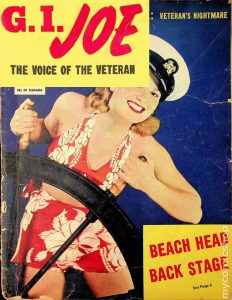
(Pageant Magazine, 1945)

Appearing in various magazines and newspapers on the 1945 home front were articles and interviews with assorted experts who predicted that the demobilized military men would be a burden on society. They cautioned families to be ready for these crushed and broken men, who had seen so much violence and had inflicted the same upon others, would be maladjusted and likely to drift into crime. In response to this blarney stepped Frances Langford (1913 – 2005), the American singer. She wrote in the attached article that she had come to know thousands of soldiers, sailors airmen and Marines during the course of her tours with the USO and that the nation could only benefit from their return.

Advertisement

Use shortcode [oma_ad position="summary_top"] (or other position) in your theme or widgets to display OMA Promotions here.

The Returning Army
(United States News, 1944)

The young man going into the Army has a course in orientation to fit him for fighting. He has to be shown what kind of people his enemies are. He has to be told why it is necessary to fight. In the same manner, the Army is finding that the men returning from war have to be fitted for civilian life. They bring back resentment against men and women who have known little privation and less hardship.

The Surrendering Italians
(PM Magazine, 1943)

Italians who were assigned to the defense of key hill positions surrendered in droves as the U.S. attack intensified… Many of the Italians had been without food for two days. There water was exhausted. Some of the captives shamelessly wept as the Americans offered them food and cigarettes.


Click here to read about American POWs during the Vietnam War.

The World War Two Origins of the T-Shirt
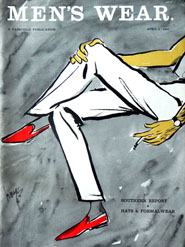
(Men’s Wear Magazine, 1950)

A couple of paragraphs from a popular fashion industry trade magazine that pointed out that the white cotton knit crew-neck garment we call the T-shirt came into this world with the name quarter sleeve and had it’s origin in the U.S. Navy where it earned it’s popularity and soon spread to other branches of the U.S. military during the mid-to-late 1930s. When the war ended in 1945 the T-shirt was the only element of the uniform that American men wanted to keep.


There was another fashion innovations of W.W. II, click here to read about it…

Advertisement

Use shortcode [oma_ad position="summary_top"] (or other position) in your theme or widgets to display OMA Promotions here.

The African-Americans Fighting in France and Italy
(Yank Magazine, 1945)

Here are two Yank Magazine articles from the same issue that report on the all-black combat units that fought the Germans on two fronts in Europe: one organization fought with the Seventh Army in France and Germany, the other fought with the Fifth Army through Italy:

Hitler would have a hemorrhage if he could see the white boys of the 411th Infantry bull-sessioning, going out on mixed patrols, sleeping in the same bombed buildings, sweating out the same chow lines with the Negro GIs.


Click here to read about the African-American efforts during the First World War.

Discrimination Abroad
(Newsweek Magazine, 1945)

Much has been written and much more whispered about relations between American Negro soldiers and white girls in Britain and elsewhere. To get at the facts, Newsweek assigned William Wilson of its London bureau to a candid review of the subject. His findings , largely from the standpoint of the Negro soldiers themselves [are as follow].

The Guerrilla War That Never Was
(Collier’s Magazine, 1945)

During the Autumn of 1944, when the great momentum was with the Allies and the German Army was in rapid retreat, the SS newspaper Das Schwartz Korps declared that an Allied-occupied Germany would not be a placid land:


The Allied soldiers shall find no peace. Death will lurk behind every corner. They might establish a civilian administration, but its leaders would not live a month. Nobody could execute the enemy’s orders without digging his own grave. No judge could pronounce sentences dictated by the enemy without being crucified in his own window frame in the dead of night.


This article goes into great detail concerning how the SS intended to make good on these words.

Advertisement

Use shortcode [oma_ad position="summary_top"] (or other position) in your theme or widgets to display OMA Promotions here.

Heroes of the Battle of Britain
(Collier’s Magazine, 1945)

A list of five outstanding Britons (two women and three men) accompanied by a description of their selfless acts performed during the Nazi Blitz on their homeland.

Who dares to doubt when Britons sing that there will always be an England?

A Hidden Nazi Army?
(Quick Magazine, 1954)

In the chaos and confusion of 1945 Berlin the whereabouts of Gestapo General Heinrich Müller was lost; many believe he had been killed or committed suicide. Another report had it that Müller had been captured with the Africa Korps by the British and subsequently made good his escape into Syria. In an issue of the Soviet newspaper Izvestia that appeared on newsstands at the end of July, 1950, it was reported that while residing in the Middle East he had converted to Islam, changed his name to Hanak Hassim Bey and was amassing an army of German veterans in order to march on Israel. The attached notice seems to be based on the Izvestia article.

Distrusting Germans was a common pastime for many people in the Twentieth Century; some thirty years earlier a similar article was published about this distrust.
Here is another article about escaped Nazis.


When a Nazi converted to Islam it was undoubtedly the work of Haj Amin Al-Husseini. Click here to read about him.

Advertisement

Use shortcode [oma_ad position="summary_top"] (or other position) in your theme or widgets to display OMA Promotions here.

The Ike Jacket Goes Mainstream
(Collier’s Magazine, 1944)

In their book about American soldiers in the war-torn Britain of W.W. II, Overpaid, Over-Sexed and Over Herestyle=border:none (1991), authors James Goodson and Norman Franks recall how thoroughly impressed Americans were with the standard issue British Army uniform. The Supreme Allied Commander, U.S. General Dwight Eisenhower, was no exception – he promptly ordered his tailor to suit him in a similar get-up. Other American generals followed in his path as did the cocky young pilots of the Army Air Corps – shortly there after the look soon spread to other branches of the Army. This 1944 article discusses the broad appeal of this jacket and that civilian fashion designers had begun manufacturing the Ike Jacket for the Home Front.

The Escaped P.O.W.s That The F.B.I. Never Found
(Collier’s Magazine, 1953)

Unlike Reinhold Pabel, the W.W. II German P.O.W. whose story is told in the article posted above, the five escapees in this article remained at large long after the war ended. Five minutes researching their names on the internet revealed that every single one of them remained in the U.S. where they held jobs, paid taxes and raised families well into their golden years.

Advertisement

Use shortcode [oma_ad position="summary_top"] (or other position) in your theme or widgets to display OMA Promotions here.

Scroll to Top