












The Saturday Review Articles
Scribner's Magazine Articles
Hearst's Sunday American Articles
Confederate Veteran Magazine Articles
Current Literature Magazine Articles
Touchstone Magazine Articles
Photoplay Magazine Articles
Collier's Magazine Articles
The National Park Service Articles
Outlook Magazine Articles
The North American Review Articles
The Dial Magazine Articles
Theatre Arts Magazine Articles
Harper's Weekly Articles
Men's Wear Magazine Articles
Pic Magazine Articles
Life Magazine Articles
Creative Art Magazine Articles
G.I. Joe Magazine Articles
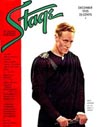
Stage Magazine Articles
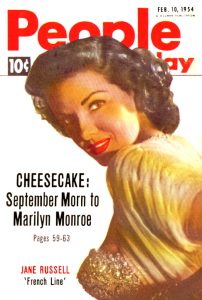
People Today Magazine Articles
Rob Wagner's Script Magazine Articles
Outing Magazine Articles
The American Legion Monthly Articles
Newsweek Articles
The American Legion Weekly Articles
Ken Magazine Articles
Freedom's Triumph Articles
Liberty Magazine Articles
The Film Spectator Magazine Articles
Vanity Fair Magazine Articles
The Saturday Evening Post Articles
Trench Warfare Articles
The Atlantic Monthly Articles
The New Republic Articles
The Smart Set Articles
Confidential Magazine Articles
Vogue Magazine Articles
Leslie's Magazine Articles
Punch Magazine Articles
Sea Power Magazine Articles
Click Magazine Articles
The Flapper Magazine Articles
La Baionnette Articles
Film Daily Magazine Articles
The New York Times Articles
Direction Magazine Articles
Harper's Bazaar Magazine Articles
47 Magazine Articles
PM Tabloid Articles

Hollywood History

My Brother Groucho
(Coronet Magazine, 1951)

In this six page essay Harpo Marx tells the tale of Groucho (1890 – 1977) as only an older brother could see it. From the Marx family’s earliest days in the slums of New York and Groucho’s first entertainment job (he was 13), Harpo (1888 – 1964) briefly recounts his brother’s wins and losses leading up to the team’s first popular show on Broadway (I’ll Say She Is, 1923) and the man’s travails on his T.V. game show, You Bet Your Life.

Groucho’s infatuation with the language has been the backbone of his entire life and has, undoubtedly, played the largest single part in shaping him into one of the greatest wits of our time. Groucho doesn’t regard words the way the rest of us do. He looks at a word in the usual fashion. Then he looks at it upside down, backwards, from the middle out to the ends, and from the ends back to the middle…Groucho doesn’t look for double meanings. He looks for quadruple meanings. And usually finds them.


Click here to read about the manner in which the Marx Brothers would test their jokes.

The Discovery of Audrey Hepburn
(People Today, 1952)

American audiences came to know Audrey Hepburn (1929 – 1993) when she was teamed up with Gregory Peck for the 1953 William Wyler production Roman Holiday (Paramount) – but the king makers of Hollywood sat up and took notice of her a year earlier, when she appeared in the European comedy Monte Carlo Baby (briefly reviewed herein). This movie was pretty quickly forgotten – and today Monte Carlo Baby cannot be found on DVD or cassette, and the film’s producer, Ray Ventura (1908 – 1979), is primarily remembered for his talents as a jazz pianist.

American Dominance in 1930s Film
(Stage Magazine, 1939)

The editors of STAGE MAGAZINE were dumbfounded when they considered that just ten years after audiences got an earful from the first sound movies, the most consistent characteristic to have been maintained throughout that decade was the box-office dominance of American movie stars, directors and writers. After naming the most prominent of 1930s U.S. movie stars the author declares with certainty that this could not have been an accident.

Advertisement

Use shortcode [oma_ad position="summary_top"] (or other position) in your theme or widgets to display OMA Promotions here.

Jane Fonda
(Pageant Magazine, 1960)

When this article went to press in 1960, Jane Fonda (b. 1937) was all of 22.
She had recently dropped out of Vassar to pursue modeling in Manhattan (unlike most college drop-out who quit campus to pursue modeling, Fonda’s smiling mug was placed on two VOGUE covers that year) and to study method acting with Lee Strasberg (1901 – 1982). She had her first taste of Broadway in a short-lived production titled There was a Little Girl and had not, as yet, taken up her interest in totalitarian communism.


Click here to read about Henry Fonda.

‘The Thin Man”
(Stage Magazine, 1937)

Attached is an article by One Take Woody (Woodbridge Strong Van Dyke, Jr. 1889 – 1943) on the topic of the two Thin Man films he had directed:

Looking back into the infinite past, I seem to recall that a certain motion picture was made and that I had something to do with it. It stirs restlessly in my memory, for it was immediately seized by the theater public as a new cycle in screen entertainment. In Hollywood, things are often done in cycles – gangster cycles, G-man cycles, historical romances, sea stuff,even Shakespeare. Somebody starts it and others fall in line to catch the shekels that bounce to the floor after the first jack pot.


Click here to read an article about Dashiell Hammett.

Ginger Rogers
(Film Daily, 1939)

A single page article on the topic of Ginger Rogers (1911 – 1995) and her career as it had progressed up to the year 1939:

Virginia Katherine McMath is the real name of this famous star and she was born in Independence, Missouri, on July 16, but most of her childhood was spent in Fort Worth, Texas.

She is five feet, four inches tall and weighs 108 pounds. She never has to diet because dancing keeps her in perfect condition. Dancing is listed as her very favorite hobby, too.

She had her first taste of real success on the screen with the winning roles in ‘Gold Diggers of 1933′ and ’42nd Street’.


Click here to read about the young Lucile Ball.

Advertisement

Use shortcode [oma_ad position="summary_top"] (or other position) in your theme or widgets to display OMA Promotions here.

Social Issues in Movies
(Stage Magazine, 1938)

Aren’t you tired of Hollywood’s socio-political rantings?

•Nuclear power…………….They’re against it (The China Syndrome).
•Antisemitism……………….They’re against it (Gentleman’s Agreement).

•Alcoholism………………….They’re against it (Lost Weekend).
•Racial segregation………..They’re against it, but in 1915 they were for it (Birth of a Nation).

One glance at this 1939 article and you’ll be able to blame it all on the poet Archibald McLeish (1892 – 1982) who clearly advocated for political posturing in American movies.

No doubt, McLeish must have been very happy when Warner Brothers released Confessions of a Nazi Spy in April of 1939; it was the first Hollywood film to take a swipe at the Nazi war machine.

Ode to the Hollywood Agent
(Rob Wagner’s Script Magazine, 1942)

The literati have all agreed: there is no doubt that if Shakespeare were alive today he would live in Beverly Hills, California. He would dwell in a 1930s split-level Persion-conversion, probably on Palm or Roxbury. As a well-compensated screenwriter he would churn-out the standard plots that were expected of him: fish-out-of-water dramadies, romcoms, and (under assorted pen names) a few reality shows; and like the poet whose work is attached, he would write about matters unique to Southern California -valet parking, Cobb Salads -and in this case the Hollywood agent.

This poem was written by Sydney King Russell (1898 – 1976), who, like Shakespeare, knew that if you’re going to write a poem about Hollywood agents, you’ll need to crack open the ol’ rhyming dictionary to see what rhymes with ten percent.

When Prestige was Thrust Upon Hollywood’s ”Cameramen”
(Stage Magazine, 1937)

Shortly before this article went to press, that particular member of the Hollywood film crew called the director of photography (DP) was treated a wee-bit better than other crew members were likely to be treated (but not that much better). Granted, the director and producer knew his name and his body of work – but his screen credit was still mixed among all the other names of the crew (if listed at all) – and this article points out that much of that changed in the Thirties.

Advertisement

Use shortcode [oma_ad position="summary_top"] (or other position) in your theme or widgets to display OMA Promotions here.

Cosmetic Surgery in Hollywood
(Photoplay Magazine, 1930)

Published in a 1930 Hollywood fan magazine, this is the story of the earliest plastic surgeons and the rise of cosmetic surgery in Hollywood:

Telling the actual names of all the stars who have been to the plastic surgeons is an impossible task. They won’t admit it, except in a few isolated instances…It is only lately that a few of them are beginning, not only to to admit that they’ve had their faces bettered, but to even go so far as to publicly announce it.

Hollywood’s Case Against Monogamy
(Photoplay Magazine, 1938)

Technologies change, power changes, tastes change, but if anything has remained a constant in the West coast film colony it has been the fickle romantic tastes of all the various performers, directors and producers who toil in the vineyards of Hollywood. An old salt once remarked that if a Hollywood marriage lasts longer than milk it can be judged a success; with this old saw in mind, a wise anthropologist sat down, put pen to paper and seriously attempted to understand mating habits of Hollywood, California.


Click here to read a 1938 memoir by a Los Angeles prostitute.

Angela Lansbury Arrives in Hollywood
(Rob Wagner’s Script, 1945)

Those sly dogs at SCRIPT MAGAZINE! They printed the smiling mug of the twenty-five year-old Angela Lansbury (b. 1925) on the cover of their rag, briefly praising her for being the youngest performer to have ever been nominated for an Academy Award (she soon won the 1944 Best Supporting Actress statue for Gaslight), and ran a profile of the lass on a page eight article that was misleadingly titled Our Cover Girl, only to devote 85% of the columns to an illustrious forebear.

Advertisement

Use shortcode [oma_ad position="summary_top"] (or other position) in your theme or widgets to display OMA Promotions here.

Mickey Rooney, RIP
(Collier’s Magazine, 1940)

In 1940 Mickey Rooney (né Joe Yule, Jr.; b. 1920 – 2014) had replaced Shirley Temple as the number one box-office draw, after having steadily performed before the cameras from the age of six onward. Rooney had been jockeying for first place since he began playing the title roll in the Andy Hardy films just two and a half years earlier.


With the onslaught of the Second World War the sands of Hollywood shifted beneath his feet, creating a plethora of new stars and the need for different sorts of films – from that point on he only appeared in supporting rolls. In 1982 Rooney remarked:

When I was 19 years old, I was the number one star of the world for two years. When I was 40, nobody wanted me. I couldn’t get a job.

The Unusual Case of Henry Fonda
(Coronet Magazine, 1953)

“It may be that Fonda enjoys acting so much because the stage is the one place in the world where he feels completely at ease. In private life, he is painfully shy at times. He hates being the center of attention; he always stays in the background at parties.”

The Show-Biz Blood of Cecil B. DeMille
(Pic Magazine, 1941)

At the age of 63, after 44 years in show business, Cecil B. De Mille is still producing. He can’t stop and he probably never will. He is first, last and all the time a showman. The show business is in his blood, and whether he is on a set or taking his leisure at home, his heart and mind are in the theater. He loves to have people around him so that he can play a part, for consciously or unconsciously, he is always acting… C.B.’s father was an actor and playwright, and later a partner of David Belasco. His mother was an actress, and later a very successful play agent.


The article goes into more depth outlining De Mille various triumphs in silent film and his work on The Squaw Manstyle=border:none.

Advertisement

Use shortcode [oma_ad position="summary_top"] (or other position) in your theme or widgets to display OMA Promotions here.

Lew Ayres at Twenty
(Photoplay Magazine, 1930)

Here is a profile of the actor Lew Ayres (1908 – 1996) that was published, quite coincidentally, shortly before the release of ALL QUIET ON THE WESTERN FRONT (Universal):

Naturally a great deal depends on the outcome of this picture. Lew is not the type that will go on for years as a moderate success. He will either be a tremendous hit or or a failure.


Click here to read about Lew Ayres and his status as a conscientious objector during the second World War.

Rube Goldberg on Hollywood
(Photoplay Magazine, 1930)

Hired to write dialogue for the king makers at Twentieth Century Fox, cartoonist Rube Goldberg (1890 – 1970) jotted down his impressions of 1930s Hollywood.

The chief mogul did all the ordering and I must say that he knew food. The lavish way in which he ordered bore out some of the glittering tales I had read about the grandeur of the movies. I think I ate six helpings of caviar and four tenderloin steaks. I wanted to make them believe I was no slouch myself.

If you would like to read a Rube Goldberg interview from 1914, click here.

Howard Hughes Buys Multicolor
(Film Spectator, 1930)

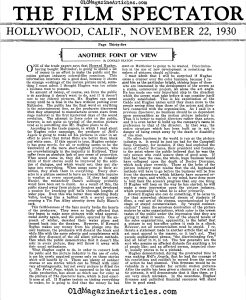
When the deep-pocketed film director Howard Hughes (1905 – 1976) decided to tint a few sequences from his film HELL’S ANGELS (1930) he purchased the company that he believed capable of filling such an order: Multicolor in Hollywood, California (as it turned out, the work was actually done by Technicolor). Hughes was such a curiosity to the press and they followed his every whim; in this article, critic Donald Beaton refers to Hughes as a pioneer and salutes him for experimenting with color.

Advertisement

Use shortcode [oma_ad position="summary_top"] (or other position) in your theme or widgets to display OMA Promotions here.

Scroll to Top