



Rob Wagner's Script Magazine Articles
The American Legion Weekly Articles
G.I. Joe Magazine Articles
The Atlantic Monthly Articles
The National Park Service Articles
The Smart Set Articles
Current Literature Magazine Articles
Newsweek Articles
The Film Spectator Magazine Articles
Punch Magazine Articles
Creative Art Magazine Articles
Freedom's Triumph Articles
The Saturday Evening Post Articles
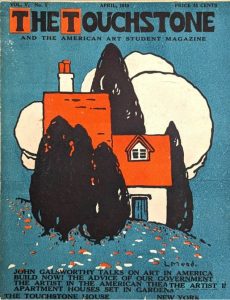
Touchstone Magazine Articles
Pic Magazine Articles
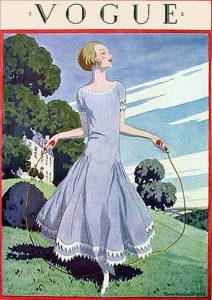
Vogue Magazine Articles
Theatre Arts Magazine Articles
The New York Times Articles
Outlook Magazine Articles
Collier's Magazine Articles
Trench Warfare Articles
Click Magazine Articles
Liberty Magazine Articles
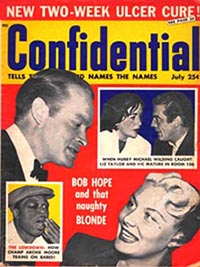
Confidential Magazine Articles
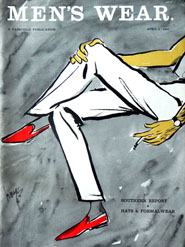
Men's Wear Magazine Articles
The Saturday Review Articles
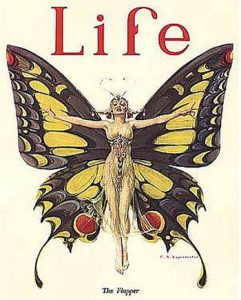
Life Magazine Articles
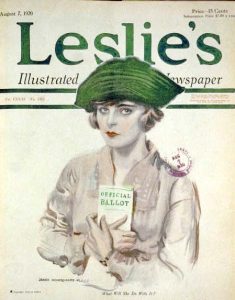
Leslie's Magazine Articles
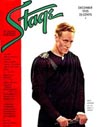
Stage Magazine Articles
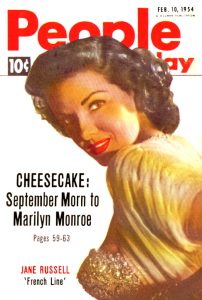
People Today Magazine Articles
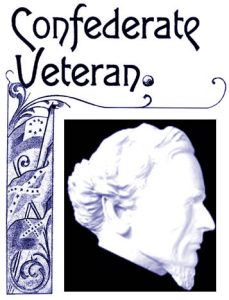
Confederate Veteran Magazine Articles
The New Republic Articles
Outing Magazine Articles
La Baionnette Articles
Hearst's Sunday American Articles
Vanity Fair Magazine Articles
The American Legion Monthly Articles
Film Daily Magazine Articles
Harper's Bazaar Magazine Articles
Ken Magazine Articles
The North American Review Articles
Direction Magazine Articles
Sea Power Magazine Articles
PM Tabloid Articles
Photoplay Magazine Articles
47 Magazine Articles
Scribner's Magazine Articles
The Flapper Magazine Articles
Harper's Weekly Articles
The Dial Magazine Articles

Hollywood History

Munchkin Gossip
(Stage Magazine, 1939)

From the Hot From Hollywood page in STAGE MAGAZINE came this tidbit reporting on the curious events taking place on the sets of ‘The Wizard of Oz’:

The cast was extraordinary, from the stars Frank Morgan, Judy Garland, Ray Bolger, Bert Lahr, Jack Haley to Toto, the Carin Terrier. But of them all, the most utterly enchanting were the midgets, two hundred and twenty-five of them, with their doll faces, their plastered hair that looked as though it had been painted on their heads, the little felt flowers that grew out of their shoes, the bells that jingled from their sleeves. They, of course, were in costume for the good little Munchkins.


Another article about this incredible film can be read here…

A Profile of Shirley Temple
(Film Daily, 1939)

As a phenomenon in the history of the show business and among all children, Shirley Temple (1928 – 2014) stands as absolutely unique. For four successive years she has led all other stars in the film industry as the number one box office attraction of the world. But Shirley’s influence has been wider than this – there is no country in the world, both civilized and uncivilized where at some time or another her pictures have not been shown.

In a few weeks Shirley’s fan mail reached avalanche proportions, with with the result in her next film, Bright Eyesstyle=border:none, Shirley was starred. The old contract was torn up and the Temples were given a new one.

Jean Harlow, Star
(Photoplay Magazine, 1931)

When this interview appeared on the newsstands, Jean Harlow (1911 – 1937) had fifteen credits under her belt (most of them short films) and only six years left until she would assume room temperature as a result of kidney failure. Written by the PHOTOPLAY reporter Leonard Hall (who would like us to believe that he was a Hollywood studio psychiatrist), this is a light and breezy two page interview conducted at the New Yorker Hotel at a time when that establishment appealed to Hollywood Royalty.


Click here to read articles about Marilyn Monroe.

Advertisement

Use shortcode [oma_ad position="summary_top"] (or other position) in your theme or widgets to display OMA Promotions here.

Bad-Boy Errol Flynn
(Sir! Magazine, 1954)

There is no doubt that the Hollywood matinee idol Errol Flynn (1909 – 1959) was the Charlie Sheen of his day, and thanks to the unrelenting press control that the Hollywood studios exercised over the fan magazines of that day, we probably only know about a quarter of his assorted debaucheries. He was a masher and a lush, and the one law suit that the studio executives couldn’t kill was

the great case against him for statutory rape which, had it stuck, would have given him jail for fifty years. For weeks in 1942 it replaced the war news in the headlines.


In 1938, Flynn wrote an article in which he weakly defended the unique moral codes of Hollywood actors; you can read it here.

Gahndi and American Movies
(Photoplay Magazine, 1937)

Roving Photoplay correspondent Cornelius Vanderbilt, Jr. traveled far afield to Yerovila Jail in Poona in order to ask the incarcerated Mahatma Gandhi (1869 – 1948) a question of an entirely trivial nature:


What is your favorite American movie?

William Holden
(Coronet Magazine, 1956)

The attached profile of actor William Holden (1918 – 1981) appeared in print when his stock was about to peak.


When the summer of 1956 rolled around, Holden was already a double nominee for a BAFTA (Picnic), an Oscar (Sunset Boulevard) and was the grateful recipient of an Academy Award for Best Actor one year earlier (Stalag 17). In 1957 his performance in the Bridge on the River Kwai would bring even more pats on the back (although the Best Actor statue would go to Alec Guinness).


This five page interview tells the story of Holden’s initial discovery in Hollywood, his devotion to both the Screen Actor’s Guild and Paramount Pictures. His Hollywood peers held him in especially high-regard:

In a poll of Hollywood reporters recently he was designated ‘the best adjusted and happiest actor around’; by contrast, the same poll identified Humphrey Bogart as a total pain in the keister – click here to read that article.

Advertisement

Use shortcode [oma_ad position="summary_top"] (or other position) in your theme or widgets to display OMA Promotions here.

Clark Gable: Cad
(Confidential Magazine, 1955)

We all know that there are two sides to every story, but not in this article. If the utterances of Clark Gable’s first wife (Josephine Dillon, 1884 – 1971) are true, then we have no choice but to believe that Gable was a real stinker.

When Miss Dillon left for Hollywood, he followed. A year later they were married in Los Angeles by gospel minister A.C. Smithers. Josephine traded the Dillon name to become Mrs. Clark Gable.
It didn’t take her long to discover quite a bit about her new young husband. He didn’t even have a grammar school education. He knew nothing about acting. And he was penniless. They lived in the money Josephine made as a dramatic coach. There wasn’t much of it, because her best pupil was her big-eared husband; his lessons were ‘on the house’. He sopped up what she knew like a sponge.

Where the Stars Dwell: Beverly Hills, California
(Coronet Magazine, 1953)

Times have changed: when this article about Beverly Hills first went to press, that famed little hamlet could support as many as ten bookshops. It is now barely able to support one:

Beverly Hills became famous in 1926 when, in one of the smartest publicity stunts of the century, the movie star Will Rogers was elected honorary mayor. Installed in drizzling rain, Rogers declared that all the budding town needed for progress was a little scandal and a few murders…


This was not a problem.


Beverly Hills Confidential: A Century of Stars, Scandals and Murdersstyle=border:none

What’s in that Brooklyn Water?
(Quick Magazine, 1952)

2013 marked the 100th year since the first film was made in Hollywood, and in that time one American neighborhood more than any other has consistently supplied the film and television industry with a seemingly inexhaustible pool of talent: Brooklyn, New York. From Clara Bow in the era of silent film to Gabby Sidibe in the digital – the talented sons and daughters of Brooklyn have made their way West and we have all been the beneficiaries.

Advertisement

Use shortcode [oma_ad position="summary_top"] (or other position) in your theme or widgets to display OMA Promotions here.

Shirley Temple Sheds a Baby Tooth!
(Stage Magazine, 1935)

Child movie star Shirley Temple (1928 – 2014) was by no means at her box-office peak when this article was penned (her most popular period would span the years 1936 through 1938), but the institution that she had become by 1935 had already built many second homes and an assorted number of mansions for more than a few well-placed studio executives and mogul types. When the news hit the palmy, sun-soaked boulevards of Hollywood that she had lost her first baby tooth, there was panic!

That the end now shows unmistakable signs of beginning. That first baby tooth fell to the studio floor with a crash heard ’round the world….Yet, even as as the nabobs of Fox stood about applauding and cooing, the cold hand of fear must have gripped their kindly hearts.


Click here to read a 1939 profile of Shirley Temple.

How the Academy Award Got Nicknamed ‘Oscar’
(Stage Magazine, 1938)

If you’ve been wondering how the Academy Awards came to be known more popularly as Oscar and you think that the answer simply has to be bathed in an endless amount of Hollywood Glamour, involving a boat-load beautifully tailored, charming and overly talented matinee idols, you’d better hit the ‘ol back browser button now.

Advertisement

Use shortcode [oma_ad position="summary_top"] (or other position) in your theme or widgets to display OMA Promotions here.

Realistic Training for ALL QUIET ON THE WESTERN FRONT
(Photoplay Magazine, 1931)

Prior to reading this PHOTOPLAY article we were convinced that Oliver Stone’s Vietnam war film, PLATOON (1986) was the first production of it’s kind to actually take the effort to school all cast and extras as to the horrors of war; however it seems that this unique distinction goes to All Quiet on the Western Front.


In this interview the seven leading cast members discuss how the making of that movie disturbed each of them in profound ways:

We went into that picture a group of average wise-cracking fellows. We didn’t come out that way…


A small notice has been added that announced that the movie had been banned in Austria.

A 1929 review of the book can be read here

Martha Vickers
(Pic Magazine, 1945)

Perhaps one of the first magazine articles about the beautiful actress Martha Vickers (1925 – 1971) who is best remembered by fans for her performance as the fabulously slutty Carmen Sternwood in the 1946 film The Big Sleep.


This article tells the tale of her early days in 1940s Los Angeles and her work as a photographer’s model, which turned more than a few of the crowned heads of Hollywood.

Thoughts on the American Films of 1941
(Direction Magazine, 1941)

Here is a film review from DIRECTION MAGAZINE that discussed many of the forthcoming movies of 1941 and how they so rarely depict American culture in an accurate light:

In bringing back the usual revelations from a trip through the Middle West, I want to repeat the oft-declared amazement that American films… reflect the barest minimum of the American scene in these United States. The rare attempts of the Grapes of Wrath and Primrose Path to seek and show new dramatic settings, are the exceptions that prove the rule of formula.
Many of the American films of 1941 are listed herein and the article can be printed.

Advertisement

Use shortcode [oma_ad position="summary_top"] (or other position) in your theme or widgets to display OMA Promotions here.

‘Hollywood Hangout”
(The American Magazine, 1942)

Schwab’s Pharmacy was like many other well-heeled American pharmacies of the Forties – it filled prescriptions, sold cigars, served three squares a day at their counter and cracked-wise with the clientele. What made it different was that many of the customers were among the most glam movie stars of the time. Located on Sunset Boulevard, west of Hollywood, in an area known as Sherman:

It’s the one place in Hollywood where screen biggies like Robert Taylor, Gene Tierney and Marlene Dietrich drop in and out all day and make themselves at home.

Rita Hayworth
(Rob Wagner’s Script, 1946, American Magazine, 1942)

A 1946 article from Script, a semi-chic Beverly Hills magazine (it went belly-up in 1949), explaining just how it came to pass that a sweet, little Brooklyn girl named Margarita Carmen Cansino became Rita Hayworth (1918 – 1987):

Then came reincarnation. Rita discarded her Spanish name, gave away her dancing costumes, did something to her hairline, stuck a y into her mother’s family name (Joseph Haworth, same family, toured with Edwin Booth) and so on to the big time and ‘Cover Girl’ and ‘Tonight and Every Night’.

So the girl with a Spanish father and an Anglo-Saxon mother becomes the typical American girl to thousands of American soldiers abroad, and that, too, is as it should be.


Click here to read articles about Marilyn Monroe.

Director Alfred Hitchcock
(Film Daily, 1939)

Now at work on his first American motion picture [since arriving in Hollywood], the glossily rotund Hitchcock, whose gelatinous appearance and jocose manner belie his sinister intent, and who brightly eyes all comers with a sort of controlled effervescence, happily declares that his first Hollywood opus will surpass anything he has yet done to keep an audience poised on the edges of its chairs.


Click here to read about Marilyn Monroe and watch a terrific documentary about her life.

Advertisement

Use shortcode [oma_ad position="summary_top"] (or other position) in your theme or widgets to display OMA Promotions here.

Scroll to Top