

















Click Magazine Articles
Pic Magazine Articles
The American Legion Monthly Articles
People Today Magazine Articles
Stage Magazine Articles
The Flapper Magazine Articles
Collier's Magazine Articles
Creative Art Magazine Articles
Vogue Magazine Articles
Hearst's Sunday American Articles
Confidential Magazine Articles
Vanity Fair Magazine Articles
Photoplay Magazine Articles
The Dial Magazine Articles
The Saturday Review Articles
Harper's Bazaar Magazine Articles
The Saturday Evening Post Articles
Trench Warfare Articles
Newsweek Articles
The American Legion Weekly Articles
G.I. Joe Magazine Articles
Direction Magazine Articles
Current Literature Magazine Articles
47 Magazine Articles
Sea Power Magazine Articles
Theatre Arts Magazine Articles
The Film Spectator Magazine Articles
The North American Review Articles
Punch Magazine Articles
Liberty Magazine Articles
Confederate Veteran Magazine Articles
Ken Magazine Articles
The National Park Service Articles
Life Magazine Articles
Harper's Weekly Articles
Men's Wear Magazine Articles
Outing Magazine Articles
Scribner's Magazine Articles
The Smart Set Articles
The New Republic Articles
Freedom's Triumph Articles
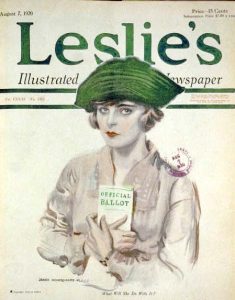
Leslie's Magazine Articles
The New York Times Articles
Outlook Magazine Articles
Rob Wagner's Script Magazine Articles
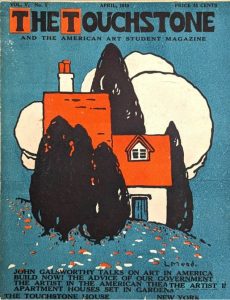
Touchstone Magazine Articles
PM Tabloid Articles
La Baionnette Articles
Film Daily Magazine Articles
The Atlantic Monthly Articles

Fashion

The Revolution in 1920s Fashion
(Saturday Review of Literature, 1925)

A clever observer of the passing scene typed these words about the social revolution that he had been witnessing for the past six years:

In those dark ages before the war women’s fashions changed from year to year, but generally speaking at the dress-makers word of command…The first short skirt sounded the knell of his dictatorship, and since then womanhood has never looked back…I say again that [today’s fashion] is a phenomenon which the social historian appears to be passing over.


Click here to read about the fashion coup of 1922.

Turning Back The Fashion Revolution
(Literary Digest, 1929)

Periodically we run across articles on this subject and it makes us sit up and recognize that this must have been a constant fear for numerous women (and fashion journalists) during the Twenties. Each article centers on a widespread belief that the Deep State behind the fashion industry had plans afoot to force women back into long skirts and corsets and that women would not be allowed any say in the matter.


Click here to read a similar article and here to read our other article on the subject.

Advertisement

Use shortcode [oma_ad position="summary_top"] (or other position) in your theme or widgets to display OMA Promotions here.

The Black Dress Arrives
(The New Republic, 1921)

The attached article is by an unidentified, pointy-headed male, and regardless of the fact that it was written over 100 years ago, many of his reflections regarding fashion and those who are enslaved by it are still relevant in our own time. It all started for this fellow when he felt the urge to understand why such a broad variety of New York women should take to wearing black for each and every occasion and so he polished-up the ol’ cranium, rolled up his sleeves and began to think hard about the nature of fashion. He concluded that the lot of the female fashion victim

is not the ordinary story of women’s victimization, her subjection in a man-made world. She, after all, accepts of herself this silent decree of fashion and rushes to it. It is woman-made, this particular enslavement

Paris Fashion: Spring, 1915
(Vanity Fair, 1915)

During the Spring of 1915 Mme. Parisienne had decided that it was time to add some gaiety into her wardrobe. Since August of the previous summer there had been such bad news and although the rationing of fabric continued, there was still much available for the asking.

Click to read about the U.S. fabric rationing during W.W. II.

Mariano Fortuny and his Knossos Scarf
(Vogue Magazine, 1912)

Marguerite O’Kane, a genuine enthusiast of the Arts and Crafts Movement, enjoyed the unique distinction of writing the first review for American VOGUE covering the work of Mariano Fortuny (Mariano Fortuny y Madrazo: 1871 – 1949). Although celebrated in Europe since making his first gown in 1906, the Knossos Scarf, a long sheer silk rectangle inspired by the costumes of ancient Crete, he was unknown to most fashion-minded Americans until this article appeared during the closing weeks of 1912.


Iconic fashion designer Yves Saint Laurent began his meteoric career as a very young man; click here to read about him.

Advertisement

Use shortcode [oma_ad position="summary_top"] (or other position) in your theme or widgets to display OMA Promotions here.

Japan’s Rebellion Against Western Fashions
(Current Opinion Magazine, 1922)

Contrary to the headline written above, this interesting article does not simply discuss the (temporary) Japanese rejection of European and American clothing in the Twenties but also touches upon earlier days when Western styles were fully embraced by the nobility of that country.

There is in Japan a growing revolt against European clothing…The Japanese have endured agonies in their efforts to get our hats, our trousers, our corsets…

The House of Lucile
(Hearst’s Sunday American, 1917)

Fashion and Hollywood costume designer Howard Greerstyle=border:none
wrote of Lady Duff Gordonstyle=border:none
(born Lucy Sutherland, 1863 – 1935):

…she was the first to introduce the French word chic into the English language, particularly in relation to fashion. She was the first dressmaker to employ mannequin parades (ie. models) in the showing of clothes…She was responsible for many fads and her clothes made many people famous. She was the most expensive dressmaker of her time, and the most aloof.


Lucile was one of the few souls to survive the TITANIC sinking; click here to read her account of that sad night.

•Read about the 1943 crochet revival•

Advertisement

Use shortcode [oma_ad position="summary_top"] (or other position) in your theme or widgets to display OMA Promotions here.

Are We Our Bathrooms?
(Harper’s Bazaar, 1922)

Most people, and you might very likely be one of them, tend to believe the old adage, Show me your friends, and I’ll tell you what you are; but fashion diva Lady Duff Gordon (aka: ‘Lucile’) was of the mind, Show me your bathroom, and I’ll tell you who and what you are and in 1922 she went out to prove it by scampering all over Paris in search of the finest bathrooms. Upon reading of the expedition, the editors of HARPER’S BAZAAR remarked:

It makes one realize that many of us who fatuously remarked, ‘So this is Paris’, were really not at the party at all.

Click here to read a 1937 article about feminine conversations overheard in the best New York nightclub bathrooms.

Baron Adolf de Meyer and the Paris Collections of 1922
(Harper’s Bazaar, 1922)

A Paris fashion review written by pioneering fashion photographer Adolph de Meyer
(1868 – 1949). His column is illustrated by six of his photographs illustrating the autumnal offerings from the houses Worth and Chanel. The collections generated by Maria Guy, Jean Lanvin, Marthe Collot, Doucet, Cheruit, Poiret and Patout were also addressed at some length.

Of course ‘collections’ must be seen by me. The round of all the big maisons de couture must be made. I must know what is worn and what I shall decide to present to the readers of HARPER’S BAZAAR.

Summer Fashions
(Vanity Fair Magazine, 1918)

Six very fine fashion drawings illustrate what was generally perceived to be the chic silhouette during the August of 1918.

There may be some women who can get along without satin frocks, but it is exceedingly doubtful..


Click here to read about military influeneces of feminine fashions.

Advertisement

Use shortcode [oma_ad position="summary_top"] (or other position) in your theme or widgets to display OMA Promotions here.

Tango Fashions
(Vanity Fair Magazine, 1913)

The urgent word from Belle Époque Paris on the matter of proper Tango gowns was published in this 1913 article and accompanied by seven illustrations.

What shall you wear to the Tango Teas? Let me whisper to you a secret, only to be revealed when it is found out, my dear, there is no Tango in America, or, at least in New York. But it is quite different in Paris and it is for Paris and the Tango that the French dance frocks are made.


Click here to read about feminine conversations overheard in the best New York nightclubs of 1937.

The Rebirth of the Corset?
(The Nation, 1929)

This article is an editorial by an anonymous scribe at THE NATION who responded to a fashion article that appeared in the 1929 pages of THE NEW YORK TIMES declaring that skirts and dresses would once again sweep the floor, sleeves would button at the wrist and the corset was making a comeback after so many years on the lam:

There is in this genuine cause for mourning. It is too bad that modern women should again be salves to fashion; it is a pity that the female form, happily free of entanglements for half a dozen years, is in a fair way to go back to them.


Read More 1920s Articles About Flapper Fashions…

The Paris Purses for Autumn
(Vogue Magazine, 1919)

A VOGUE editorial from the Fall of 1919 praising the swank of six nifty Parisienne purses -each created from different materials and each displaying the industrious fingers of skilled craftsmen.


Click here to read about happy Hollywood’s discovery of plastic surgery…

Advertisement

Use shortcode [oma_ad position="summary_top"] (or other position) in your theme or widgets to display OMA Promotions here.

Chez Poiret: the Hot Social Ticket in the Paris of 1919
(Vogue Magazine, 1919)

The post-war publicity machine of French fashion designer Paul Poiret was in fine form when he saw to it that his minions invited the Paris-based correspondent from American VOGUE to his house for a grand fete, seated her comfortably, drink in hand, right on the fifty-yard line in order that she might be better able to report to her handlers back in New York that Paris was back.


The correspondent who was not invited was the fashion journalist from FLAPPER MAGAZINE; American flappers did not approve of Poiret one bit. Click here to read what they thought of him.

Paris Fashion: Summer, 1916
(Vanity Fair Magazine, 1916)

Paying no mind to the continuing unpleasantness that was taking place somewhere around the Somme (ie. W.W. I), the taste-makers of Paris soldiered-on and created garments for mid-summer that were original and feminine and bore the mark of Paris’ characteristic opulence.


Legendary fashion designer Christian Dior had a good deal of trouble with people who would illegally copy his designs; click here to read about that part of fashion history.

A Look at the Winter Sleeves of 1921
(Vogue Magazine, 1921)

A collection of twelve fashion illustrations depicting the variety of sleeve treatments available during the winter of 1921. Some of the details offered were created by the House of Worth, Captain Molyneux, Martial et Armand and Madeleine and Madeleine.

Advertisement

Use shortcode [oma_ad position="summary_top"] (or other position) in your theme or widgets to display OMA Promotions here.

Scroll to Top