












World War One

Find old World War 1 articles here. Find information on uniforms, women, gas warfare, prisoners of war and more.

The Healthiest American Men and the Draft of 1917
(U.S. Gov. 1931)

Attached is a map of the 48 states that will show you which regions of the country produced the greatest number of healthy men who passed their Selective Service physical examinations. You will also learn which parts of the nation provided men who could not pass this examination.

Advertisement

Use shortcode [oma_ad position="summary_top"] (or other position) in your theme or widgets to display OMA Promotions here.

Entry to a German Dugout
(L’Illustration, 1915)

A French photograph showing the entry way to one of the many subterranean shelters that dotted the Western front during the First World War; also included is another diagram of what one of the smaller German dugouts resembled that had such an entry.


This article appears on this site by way of a special agreement with L’Illustration.

Looking Back at the War with Regret
(The Nation, 1927)

Ten years ago the American people reversed its national tradition against entangling alliances and participation in the political struggles of Europe in order, as it is fondly believed, to make the world safe for democracy, safeguard the rights of small nations and the principle of self-determination… If the causes and justifications for our intervention were based on facts, some evidence of their truth ought now, after ten years, to be apparent.

Advertisement

Use shortcode [oma_ad position="summary_top"] (or other position) in your theme or widgets to display OMA Promotions here.

The ‘Christy Girl’ at War
(Sea Power Magazine, 1918)

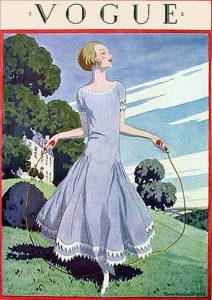
When the songwriter Irving Berlin sat down in 1915 to write his well-loved ditty I love the Girl on the Magazine Cover, we have no doubt that it was the Christy Girl who inspired him. The Christy-Girl, so-called, was the creation of the American commercial illustrator Howard Chandler Christy (1873 – 1952) who placed her famous mug on thousands of magazine covers, newspaper ads and billboards.


The attached file consists of two articles, both pertaining to recruiting posters; one for the U.S. Navy and the other for the Marines. In the interest of national security, the Christy-Girl is depicted as a cross-dressing patriot in both of them, and the sailors loved it; they preferred to call her Honey Girl, and as far as they were concerned, that name fit her just fine.

The Navy Call to Arms
(Sea Power Magazine, 1918)

Attached are a few words on the W.W. I naval recruiting poster To Arms by illustrator Milton Bancroft.


The article primarily describes what the duties of a ship’s bugler are, what this position represents and why this was such an suitable graphic image for recruiting sailors for the war.

Dr. W.E.B. Dubois Will Attend The Peace Conference
(The Crises, 1919)

Serving as the representative for the National Association for the Advancement of Colored People, a special correspondent for THE CRISES MAGAZINE – and gathering information for his forthcoming tome on the African-Americans who served in the First World War, Dr. Dubois sailed for France in order to attend the Versailles Conference in Paris.

Advertisement

Use shortcode [oma_ad position="summary_top"] (or other position) in your theme or widgets to display OMA Promotions here.

A Color Photograph of German Prisoners
(1915)

A color photograph from the earlier part of the war, remarkable for it’s clarity and mood. It depicts ten German prisoners wearing their 1910 tunics, staring in a dazed stupor at eight truly bored Poilus struggling through their potato pealing detail.

Advertisement

Use shortcode [oma_ad position="summary_top"] (or other position) in your theme or widgets to display OMA Promotions here.

The U.S. Army: Plagued by Deserters
(Review of Reviews, 1910)

As a wise, old sage once remarked: You don’t go to war with the army that you want, you go to war with the army that you have -no truer words were ever spoken; which brings us to this news piece from a popular American magazine published in 1910. The reader will be interested to know that just seven years prior to the American entry into World War One, the U.S. Army was lousy with deserters and it was a problem they were ill equipped to handle.


Click here to read some statistical data about the American Doughboys of the First World War.

Rumors of War
(Review of Reviews, 1910)

This article refers to a temperate review of Anglo-German relations as understood by Dr. Theodore Schiemann (1847 – 1921), confidant of Kaiser Wilhelm II and professor at the University of Berlin. Interestingly, the professor predicted some aspects of the forth-coming war correctly but, by enlarge, he believed Germany would be victorious:

A German-English war would be a calamity for the whole world, England included; for it may be regarded as a foregone conclusion that simultaneously with such an event every element in Asia and Africa that is hostile to the English would rise up as unbidden allies of Germany.

Chemical War
(The North American Review, 1922)

The article attached concerns the past and future of chemical warfare (at least as this was understood in 1922) and was written by Captain J.M. Scammell, Brit who wrote a good deal on the matter throughout much of the Twenties and Thirties. Like so many other articles we find from the immediate post-war period, Captain Scammell argued that chemical warfare can be one of the most humane options available to a general:

The really significant figures are those showing that while gas caused 27.3 percent of all casualties, of these only 1.87 percent died! That is less than one-twelfth the percentage that died from the effects of other wounds. Gas, moreover, does not mutilate or disfigure…

Advertisement

Use shortcode [oma_ad position="summary_top"] (or other position) in your theme or widgets to display OMA Promotions here.

An Abbreviated War Record of the 92nd Division
(The Stars and Stripes, 1919)

An illustration of the insignia patch and a brief account of the origins, deployments and war-time activities of the U.S. Army’s Ninety-Second Infantry Division during World War One. It is highly likely that the attached description of the 92nd’s service record had been rewritten to suit the personal taste’s of the paper’s Jim Crow editors. Sadly, there are other examples of such biased editing at THE STARS and STRIPES.

German Schools and the Teaching of the War
(Literary Digest, 1922)

It was discovered in 1922 that when the German school system made mention of the recently ended war (if they addressed the topic at all), the subject was often white-washed or inaccurately characterized. When approached by a foreign reporter concerning the matter, teachers claimed that new books were too expensive and that the prevailing political forces could never agree on an accurate history of the war:

When do you think you will be able to begin studying the history of the war in your schools? I asked.

Not until this generation dies…

Clemenceau
(Literary Digest, 1922)

Georges Clemenceau (1841 – 1929) served as one of France’s wartime Premieres (1917-1920). The following is an excerpt from his letter to the American people imploring them to share in his outrage concerning Germany’s open defiance to the Versailles Treaty. Clemenceau would die seven years later, fully convinced that another devastating war with Germany was just around the corner.

Click here to read more articles about the German violations of the Versailles Treaty.

Advertisement

Use shortcode [oma_ad position="summary_top"] (or other position) in your theme or widgets to display OMA Promotions here.

Scroll to Top