









Harper's Bazaar Magazine Articles
Life Magazine Articles
Click Magazine Articles
Sea Power Magazine Articles
PM Tabloid Articles
Outlook Magazine Articles
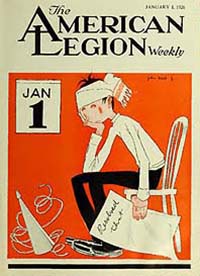
The American Legion Weekly Articles
The Saturday Evening Post Articles
Liberty Magazine Articles
Harper's Weekly Articles
The American Legion Monthly Articles
Vanity Fair Magazine Articles
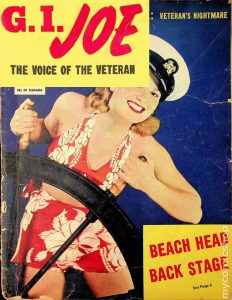
G.I. Joe Magazine Articles
Rob Wagner's Script Magazine Articles
Current Literature Magazine Articles
The National Park Service Articles
Confederate Veteran Magazine Articles
The Dial Magazine Articles
Outing Magazine Articles
Trench Warfare Articles
La Baionnette Articles
The Smart Set Articles
The Film Spectator Magazine Articles
Film Daily Magazine Articles
Ken Magazine Articles
Vogue Magazine Articles
Stage Magazine Articles
Photoplay Magazine Articles
The Atlantic Monthly Articles
Direction Magazine Articles
The Flapper Magazine Articles
Confidential Magazine Articles
Punch Magazine Articles
47 Magazine Articles
The Saturday Review Articles
Theatre Arts Magazine Articles
Creative Art Magazine Articles
The New York Times Articles
Scribner's Magazine Articles
Leslie's Magazine Articles
Newsweek Articles
Hearst's Sunday American Articles
The North American Review Articles
People Today Magazine Articles
The New Republic Articles
Touchstone Magazine Articles
Pic Magazine Articles
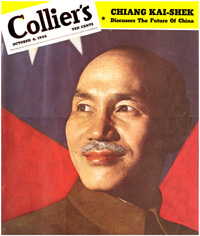
Collier's Magazine Articles
Freedom's Triumph Articles
Men's Wear Magazine Articles

World War One

Find old World War 1 articles here. Find information on uniforms, women, gas warfare, prisoners of war and more.

‘Playing the Game”
(The English Review, 1915)

Sporting terms used as a metaphors for war are very common and come naturally to those who tend to think about matters military on a regular basis; yet this article uses the expression, playing the game more as a character trait that was unique to the British. The author, Austin Harrison, writing in 1915 (the year of grim determination) believed that the English have always played the game as a matter of course; they have always maintained good form, and yet:

Playing the game is only half the battle in war [and]…it will be the finest game we ever have played.

The Ground Taken by the German Armies
(NY Times, 1915)

Here is a numeric account, estimated by the Germans, indicating how much of Europe was conquered and occupied by their army on the first anniversary of World War One. The report also accounts for the amount of land being occupied by the Entente powers, and the number of Allied prisoners, machine guns and artillery pieces taken by the central powers within this same time frame. The report was interpreted by the Berlin-based American Association of Commerce before being filed in its entirety by the Associated Press.

Advertisement

Use shortcode [oma_ad position="summary_top"] (or other position) in your theme or widgets to display OMA Promotions here.

The French Navy Sank Their Own Submarine
(The Atlanta Georgian, 1917)

This news piece appeared in a Georgia newspaper during the closing weeks of American neutrality. The first report of this French naval blunder involving a French torpedo boat sinking a French submarine came from Berlin, rather from Paris or London, where such events would never make it past the censors.

This brief notice makes no mention as to the original source or who witnessed the accident.

Tailoring at Sea
(Popular Mechanics, 1910)

During the First World War a popular songster in the United States penned a little diddy that ran just so:

-Though the Army is the clover


T’was the Navy brought them over

And the Navy will bring them back….


In anticipation of this roll, the far-seeing Department of the Navy ordered each and every American battleship to have within its arsenal at least one sewing machine, and a tar who was proficient at tailoring in order to make themselves worthy of the task.

Advertisement

Use shortcode [oma_ad position="summary_top"] (or other position) in your theme or widgets to display OMA Promotions here.

The Effects of Unrestricted Submarine Warfare
(The Atlanta Georgian, 1917)

The alarming rise in shipping losses due to the increased presence of German submarines (as foretold in the Zimmermann telegram) had made the American population sit up and take notice in a way that the war had never done before. The attached four notices were printed on the front pages of an Atlanta paper one month prior to the U.S. Congress’ declaration of war; each one pertains to military recruiting or the need for military equipment.


The widening of hostilities also served to outrage the Latin American republics: Guatemala would soon break off all relations with Germany and Brazil would declare war in October of that year.


Click here to read about the new rules for warfare that were written as a result of the First World War – none of them pertain to the use of poison gas or submarines.

W.W. I Zeppelin Raids on London
(NY Times, 1915)

Printed during the seventh month of the First World War, this is a collection of assorted musings that first appeared in The London Times involving what was known for sure regarding the subject of German zeppelins. In an attempt to understand the true speed, range and fuel capacity of a zeppelin, the author refers to a number of previous voyages that the airships were known to have made during the pre-war years. Concerns regarding the amount of ammunition that could have been carried is also mentioned.

It was a Second Rate War
(The American Mercury, 1924)

In the conflict which some still persist in calling the Great War, though it was great only in size, there was so much jumble and muddle and half-hearted experiment and so little visible military skill and ingenuity that a far-seeing and keen-thinking British colonel has declared that if the nations of the earth will only use their brains, the inevitable next war will show combat so transformed and reformed that the struggle of 1914 – 1918 will seem, by comparison, little more than a clash ‘between barbaric hordes…’


Click here to read about the new rules for warfare that were written as a result of the First World War – none of them pertain to the use of poison gas or submarines.

Advertisement

Use shortcode [oma_ad position="summary_top"] (or other position) in your theme or widgets to display OMA Promotions here.

Submarine Warfare: The First Seven Months
(NY Times, 1915)

Information released from the British Admiralty concerning the number of British merchant and fishing vessels lost to German U-boat attacks during the first seven months of the war. The article names eight non-military ships sunk during March 1915. In addition, the Admiralty also stated the total number of British merchant and fishing vessels lost through German naval attacks from the start of the war through March 10, 1915.


Click here to read about the new rules for warfare that were written as a result of the First World War – none of them pertain to the use of poison gas or submarines.

Supplying Chewing Gum to the A.E.F.
(America’s Munitions, 1919)

Although the origins of chewing gum have been traced to many different parts of the ancient world, no culture has whole-hardheartedly embraced the stuff quite as thoroughly as the Americans. The Yankee bromance with chewing gum has largely been credited to the American industrialist William Wrigley, Jr. (1861 – 1932) for creating, in 1906, a gum that appealed broadly to the American palette – and when Americans went to war in 1917, Wrigley’s chewing gum was in their arsenal.


We added to this page a small column about Dr. Morris Nafash, who was one of the brilliant chemists at the Bazooka Bubble Gum Company.


Click here to read about the A.E.F. love for candy…

Click here to read about all the effort that was made to get cigarettes to the Doughboys.

America Commits Itself to the War
(Literary Digest, 1928)

In writing a piece for La Revue Mondale ten years after the Armistice, Stéphane Lauzanne (1887 – 1928), Editor-in-Chief of the semi-official Paris Matin wrote a few bitter-sweet words about the American character and how it was both a hindrance and a benefit to the Allies in the war. Yet he was full of praise when he recalled the bold and forward-thinking manner in which America entered the war and committed both blood and treasure.


Click here to read an interview with the World War I American fighter pilot Eddy Rickenbacker.

Advertisement

Use shortcode [oma_ad position="summary_top"] (or other position) in your theme or widgets to display OMA Promotions here.

The Slaughter of the Aristocrats
(NY Times, 1915)

This 1915 article goes into great length listing the names of all the assorted European noblemen and plutocrats who fell during the first year and a half of the First World War.

The great world conflict which broke out soon after [the murder of Archduke Ferdinand] has placed the pall of mourning over every third home in the belligerent countries of Europe… The dreadful slaughter has fallen with especial heaviness on the upper and wealthy classes…


The writer, Charles Stolberg, also included the names of the most admired European athletes who gave their lives for king and country.

German Submarines in American Waters
(Coronet Magazine, 1941)

This article is composed of a couple of paragraphs recalling the damages caused to American shipping as a result of the U-Boat menace on the East Coast of the United States during the First World War. Written at a time when the U.S. was once again having to deal with the same threat, this time by Admiral Karl Dönitz (1891 – 1980), the journalist wished that Henry J. James, the author of German Subs In Yankee Waters
be properly credited for having devised many of the more successful countermeasures.

Advertisement

Use shortcode [oma_ad position="summary_top"] (or other position) in your theme or widgets to display OMA Promotions here.

Nietzsche and World War One
(Sewanee Review, 1920)

In this 1920 article the theologian George Burman Foster (1858 – 1918), examined the writings of the German philosopher Friedrich Nietzsche (1844 – 1900) and surmised how that philosopher might have understood the First World War, with all of it’s scientific and industrial power.

War constitutes one of of those dangerous ‘experiments’ undertaken by the wise man to further the progress of life, to test the value of an idea, of life. Hence, war is beneficial, good in itself; and thus Nietzsche predicts without dismay or regret that Europe is not far from entering into a period of great wars when nations will fight with one another for the mastery of the world.


Click here to read about the Nazi interpretation of Nietzsche.

With the Germans on the Somme
(The Cambridge Magazine, 1916)

Throughout much of World War I, the German-American war correspondent Karl Von Wiegand (1874 – 1961) reported on the goings-on within the Kaiser’s Army for an American new syndicate. As luck would have it, he happened to be in a front line German trench when the British Army launched their enormous attack on July 1, 1916. Here is one of his earlier dispatches from the German side:


We stood awe-stricken. Mankind, like Frankenstein, was being devoured by the monster it had created.

Advertisement

Use shortcode [oma_ad position="summary_top"] (or other position) in your theme or widgets to display OMA Promotions here.

Scroll to Top