


















47 Magazine Articles
Click Magazine Articles
Collier's Magazine Articles
Confederate Veteran Magazine Articles
Confidential Magazine Articles
Creative Art Magazine Articles
Current Literature Magazine Articles
Direction Magazine Articles
Film Daily Magazine Articles
Freedom's Triumph Articles
G.I. Joe Magazine Articles
Harper's Bazaar Magazine Articles
Harper's Weekly Articles
Hearst's Sunday American Articles
Ken Magazine Articles
La Baionnette Articles
Leslie's Magazine Articles
Liberty Magazine Articles
Life Magazine Articles
Men's Wear Magazine Articles
Newsweek Articles
Outing Magazine Articles
Outlook Magazine Articles
People Today Magazine Articles
Photoplay Magazine Articles
Pic Magazine Articles
PM Tabloid Articles
Punch Magazine Articles
Rob Wagner's Script Magazine Articles
Scribner's Magazine Articles
Sea Power Magazine Articles
Stage Magazine Articles
The American Legion Monthly Articles
The American Legion Weekly Articles
The Atlantic Monthly Articles
The Dial Magazine Articles
The Film Spectator Magazine Articles
The Flapper Magazine Articles
The National Park Service Articles
The New Republic Articles
The New York Times Articles
The North American Review Articles
The Saturday Evening Post Articles
The Saturday Review Articles
The Smart Set Articles
Theatre Arts Magazine Articles
Touchstone Magazine Articles
Trench Warfare Articles
Vanity Fair Magazine Articles
Vogue Magazine Articles

World War One

Anything for the Smoking Doughboys

• America's Munitions, 1919 •


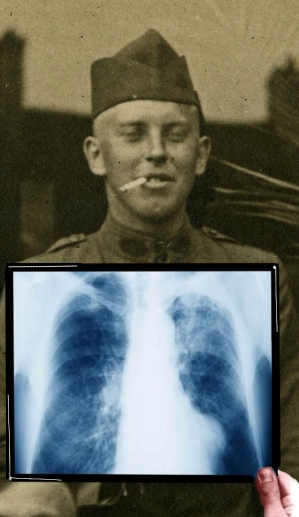
Cigarette smoking was far more prevalent in the United States after the First World War than it was in earlier days; this is largely due to the free cigarettes that were widely distributed among the nations soldiers, sailors and Marines during that conflict – and this is the subject of the attached article. It was written by Benedict Crowell (1869 – 1952), who served as both the Assistant Secretary of War and Director of Munitions between 1918 and 1920 – and although his column informs us that numerous tobacco products were dispersed throughout the ranks on a seemingly biblical scale, he does not touch upon the tragic topic of the addictions that soon followed (contrary to popular belief, the American medical establishment had their suspicions about tobacco long before the war).

“Probably 95% of of the soldiers of the American Expeditionary Forces used it in one form or another. In May of 1918 it was decided… to allow each soldier a certain amount of tobacco per day… The daily ration of four-tenths of an ounce was given to every man overseas who desired it. The soldier had the choice of cigarettes, smoking tobacco or chewing tobacco.”

Author Rick Atkinson pointed out that the W.W. II American GIs stationed in Europe collectively smoked one million cigarettes each day.

– from Amazon:

Read Supplying Tobacco to the AEF<br>(America’s Munitions, 1919) for Free
cigarette lung cancerreasons for lung cancer after 1918ww1 cigarette addiction lung cancer reasonsoldiers tobacco rationsww 1 soldier cigarettesww 1 soldier cigarsww1 soldiers cigarette rationsww1 soldiers tobacco rationsfree cigarettes for US soldiers during ww1ww 1 soldier chewing tobaccoww 1 soldiers addicted to cigarettesSupplying Tobacco to the WW1 Doughboystobacco rations in WW1US ARMY tobacco supplies 1918smoking american soldiers

Anything for the Smoking Doughboys

Anything for the Smoking Doughboys

cigarette lung cancerreasons for lung cancer after 1918ww1 cigarette addiction lung cancer reasonsoldiers tobacco rationsww 1 soldier cigarettesww 1 soldier cigarsww1 soldiers cigarette rationsww1 soldiers tobacco rationsfree cigarettes for US soldiers during ww1ww 1 soldier chewing tobaccoww 1 soldiers addicted to cigarettesSupplying Tobacco to the WW1 Doughboystobacco rations in WW1US ARMY tobacco supplies 1918smoking american soldiers
Scroll to Top