





The New Republic Articles
The National Park Service Articles
Collier's Magazine Articles
The Atlantic Monthly Articles
47 Magazine Articles
Pic Magazine Articles
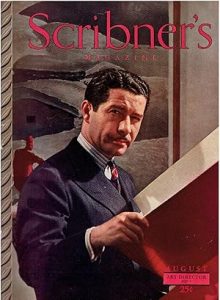
Scribner's Magazine Articles
Stage Magazine Articles
Click Magazine Articles
Photoplay Magazine Articles
Freedom's Triumph Articles
Confederate Veteran Magazine Articles
Trench Warfare Articles
Touchstone Magazine Articles
Theatre Arts Magazine Articles
Hearst's Sunday American Articles
G.I. Joe Magazine Articles
The Saturday Review Articles
The Saturday Evening Post Articles
The Flapper Magazine Articles
Outlook Magazine Articles
The Film Spectator Magazine Articles
The Dial Magazine Articles
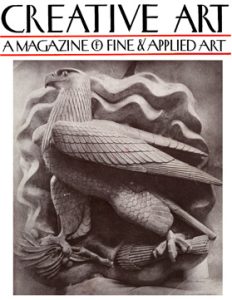
Creative Art Magazine Articles
Harper's Bazaar Magazine Articles
Punch Magazine Articles
The North American Review Articles
Vogue Magazine Articles
Outing Magazine Articles
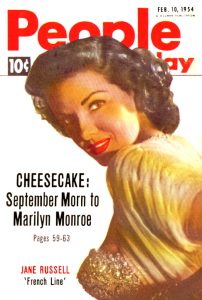
People Today Magazine Articles
Film Daily Magazine Articles
Men's Wear Magazine Articles
Sea Power Magazine Articles
Current Literature Magazine Articles
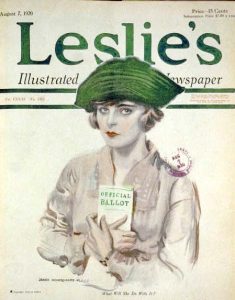
Leslie's Magazine Articles
Confidential Magazine Articles
La Baionnette Articles
Liberty Magazine Articles
Direction Magazine Articles
Harper's Weekly Articles
Rob Wagner's Script Magazine Articles
The American Legion Weekly Articles
Vanity Fair Magazine Articles
The New York Times Articles
Newsweek Articles
Life Magazine Articles
PM Tabloid Articles
The American Legion Monthly Articles
Ken Magazine Articles
The Smart Set Articles

Twentieth Century Writers

A Review of Brideshead Revisited
(Rob Wagner’s Script Magazinet, 1946)

A favorable review of Evelyn Waugh’s (1903 – 1966) triumph Brideshead Revisited
(1945):

Looking up momentarily from our crystal ball, we predict that ‘Brideshead Revisited’ will set sales records and arouse more comment – critical and otherwise – than any book in many a day.

Advertisement

Use shortcode [oma_ad position="summary_top"] (or other position) in your theme or widgets to display OMA Promotions here.

ALL QUIET on the WESTERN FRONT
(The Bookman, 1929)

All Quiet On The Western Front by Erich Maria Remarque topped the U.S. bestseller list for all of 1929 and it was due in no small part to enthusiastic book reviews like the one we’ve posted here that must have numbered in the thousands throughout all of North America:

Here is a book about the war of such extraordinary purity and force that, reading it, one seems actually never to have read of the wear before. Numberless books have been written that present the stark, physical horrors of the war in quite as full detail as All Quiet on the Western Front, but their effects have been ified by one’s perception of the intent to shock. Many others have given us a more complete, more literary rendition of war as it strikes full upon the nerves of sensitive and intelligent men. Nothing could be less academic than Herr Remarque’s book; but nothing could be more vivid.


Is your name Anderson?


From Amazon: All Quiet on the Western Frontstyle=border:none

Ralph Ellison on Richard Wright Among Others…
(Direction Magazine, 1941)

Printed just twelve years before he would receive a National Book Award for his tour de force, The Invisible Man, celebrated wordsmith Ralph Ellison (1914 – 1994) wrote this review of Negro fiction for a short-lived but informed arts magazine in which he rolled out some deep thoughts regarding Richard Wright, Langston Hughes, Arna Bontemps, Zora Neil Hurston and assorted other ink-slingers of African descent:

It is no accident that the two most advanced Negro writers, Langston Hughes and Richard Wright, have been men who have enjoyed freedom of association with advanced white writers; nor is it accidental that they have had the greatest effect upon Negro life.


Click here to read a 1929 book review by Langston Hughes.


CLICK HERE to read about African-Americans during the Great Depression.

Advertisement

Use shortcode [oma_ad position="summary_top"] (or other position) in your theme or widgets to display OMA Promotions here.

Reviewed: ‘The Garden Party and Other Stories’
(Life Magazine, 1922)

The Life Magazine review of The Garden Party and Other Stories
by the New Zealand writer Katherine Mansfield (1888 – 1923) is attached here for your enjoyment. Mansfield lived a short but productive life before tuberculosis got the best of her in 1923. This was one of any number of favorable reviews that she enjoyed in her lifetime and she is today often considered one of the best short story writers of her period.

Conrad Reviewed by H.L. Mencken
(The Smart Set, 1921)

H.L. Mencken’s (1880 – 1956) short review of Joseph Conrad’s (1882 – 1941) collection of essays, entitled Notes on Life and Letters . The book contained Conrad’s thoughts on such subjects as the sinking of ‘Titanic’ to the writings of Henry James, Guy de Maupassant, Daudet and Ivan Turgenev were all touched upon in this collection of essays.

Advertisement

Use shortcode [oma_ad position="summary_top"] (or other position) in your theme or widgets to display OMA Promotions here.

Jules Romains and THE DEATH OF NOBODY
(Vanity Fair, 1915)

This very brief column appeared in Vanity Fair Magazine during the winter of 1915 as one element in the publicity campaign supporting the distribution of The Death of Nobody, Jules Romains’ (1885 – 1972) 1911 novel.

Prior to the First World War Romains was primarily known as a poet and founder (along with fellow poet Georges Chennevière) of Unanimisme, a movement that combined concept of international brotherhood with the psychological ideal involving a shared group consciousness. At the time of this printing, the novelist was serving in the French Army.

P.G. Wodehouse: Master of American Slang
(American Legion Weekly, 1919)

At the time this profile first appeared in 1919, P.G Wodehouse (1904 – 1975) had recently resigned his post as the drama critic for Vanity Fair in order to realize his ambitions as a novelist and playwright. This article revealed to all Wodehouse’s keen interest in American slang and American comic strips.

Karl Shapiro, Poet
(Yank Magazine, 1945)

In 1944, Karl Jay Shapiro (1913 – 2000) was pulling in the big-bucks as a U.S. Army Private stationed in New Guinea, but unlike most of the khaki-clad Joes in at least a ten mile radius, Shapiro had two volumes of poetry under his belt (Person Place and Thingstyle=border:none and Place of Love) in addition to the memory of having been awarded a Guggenheim Fellowship. In this short interview, he explains what a poet’s concerns should be and offers some fine tips for younger poets to bare in mind.

A year latter, while he was still in uniform, Shapiro would be awarded the 1945 Pulitzer Prize for poetry

Advertisement

Use shortcode [oma_ad position="summary_top"] (or other position) in your theme or widgets to display OMA Promotions here.

Rebecca West: The Last Birth of Time
(Current Opinion, 1921)

Rebecca Weststyle=border:none
(born Regina Miriam Bloch: 1892 – 1983) became a fixture on the literary landscape just prior to the First World War when she was recognized as a young, thought-provoking writer with much to say on many matters. The article serves as an interesting profile of the woman by compiling various remarks made during the course of her early career.

The Letters and Cartoons of O. Henry
(Literary Digest, 1922)

Today, the name of O. Henry (1862 – 1910) has a far stronger association with New York City than with North Carolina, (his birth place) or Texas, where he spent much of his youth; however when you come to read the attached letters, and see his cartoons, you will hear a very distinct Western voice that is far removed from the New York that he wrote about.

Advertisement

Use shortcode [oma_ad position="summary_top"] (or other position) in your theme or widgets to display OMA Promotions here.

Reviewed: The Waste Land
(The Nation, 1922)

Attached is one of the first American reviews of T.S. Eliot’s poem The Waste Land, it was penned by literary critic Gilbert Seldes (1893 – 1970):

In essence The Waste Land says something which is not new: that life has become barren and sterile, that man is withering, impotent, and without assurance that the waters which made the land fruitful will ever rise again.

A Review of Memorial by Christopher Isherwood
(Rob Wagner’s Script, 1947)

A review of Christopher Isherwood’s (1906 – 1986) semi-autobiographical novel, Memorial, which was placed in post-World War I Britain:

The plot of Memorialstyle=border:none can be discussed very briefly: it doesn’t have one. It doesn’t need one. It is entirely fascinating, not a dramatic sequence of events, but an increasingly intimate understanding of a state of affairs…The book proceeds, not forward in time, but inward by layers. Isherwood has a wonderful gift of getting inside people.

Famous Edith Sitwell
(Literary Digest, 1927)

Edith Sitwell (1887 – 1964) had appeared on the literary horizon some fourteen years before this profile was read in the American press and by 1927 all concerned seemed to have decided that she had attained a respectable level of notoriety and was worthy of being labeled famous:

Miss Sitwell is described by THE SKETCH (London) as ‘an author who dislikes simplicity, morris-dancing, a sense of humor, and every kind of sport except reviewer-baiting.’

Advertisement

Use shortcode [oma_ad position="summary_top"] (or other position) in your theme or widgets to display OMA Promotions here.

Scroll to Top