





Rob Wagner's Script Magazine Articles
La Baionnette Articles
Current Literature Magazine Articles
The Smart Set Articles
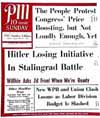
PM Tabloid Articles
The Saturday Review Articles
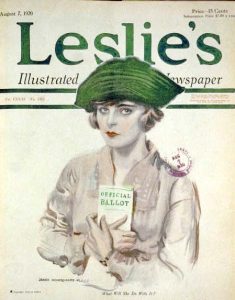
Leslie's Magazine Articles
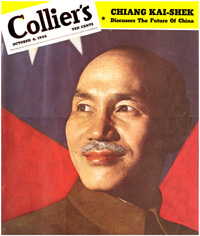
Collier's Magazine Articles
Confederate Veteran Magazine Articles
Photoplay Magazine Articles
Creative Art Magazine Articles
Film Daily Magazine Articles
Newsweek Articles
Stage Magazine Articles
Sea Power Magazine Articles
Outing Magazine Articles
Harper's Bazaar Magazine Articles
Outlook Magazine Articles
Click Magazine Articles
Life Magazine Articles
Harper's Weekly Articles
Men's Wear Magazine Articles
People Today Magazine Articles
Trench Warfare Articles
Liberty Magazine Articles
The New Republic Articles
The National Park Service Articles
47 Magazine Articles
Touchstone Magazine Articles
Punch Magazine Articles
Scribner's Magazine Articles
The Dial Magazine Articles
The American Legion Monthly Articles
Direction Magazine Articles
G.I. Joe Magazine Articles
Pic Magazine Articles
The New York Times Articles
Vanity Fair Magazine Articles
Confidential Magazine Articles
The Saturday Evening Post Articles
Ken Magazine Articles
The Atlantic Monthly Articles
The Flapper Magazine Articles
Hearst's Sunday American Articles
The North American Review Articles
Theatre Arts Magazine Articles
The American Legion Weekly Articles
Freedom's Triumph Articles
The Film Spectator Magazine Articles
Vogue Magazine Articles

African-American History

Learn about African American history with these old magazine articles. Find information on Black Civil Rights violations in the 1920s.

Jim Crow in Trenton
(PM Tabloid, 1943)

In 1943 the NAACP asked the administrators at Trenton’s New Lincoln Junior High School to explain why it should be entirely reserved for only Black students when such a practice was in violation of the State Civil rights Act.
The bureaucrats responded that ever since the school was built in the Twenties, that’s the way it had always been. Integration soon started.

A Poem of Outrage
(Masses and Mainstream, 1955)

In the Digital Age, Beulah Elizabeth Richardson (1920 – 2000: stage name Beah Richards) is largely remembered as an award-winning actress, but it has widely been forgotten that she was also a poet and playwright. The attached poem is an honest expression of her reaction to the tyranny experienced by too many African Americans.

Pain and Hope
(Coronet Magazine, 1942)

Attached herein are a few pages from 12 Million Black Voices by Richard Wright (1908 – 1960). The book, published in 1942, is a poetic account of the challenging lives lead by African Americans both before the great migration and after their arrival in the North. The editors of Coronet showed their sympathies for this minority by publishing these pages, but they also showed their total racial insensitivities by running crude pigeon English captions beneath each of the accompanying photographs.


Click here to read about the first Black Marines.

Advertisement

Use shortcode [oma_ad position="summary_top"] (or other position) in your theme or widgets to display OMA Promotions here.

Black Racism
(Pageant Magazine, 1969)

During the closing months of the tempestuous Sixties, American baseball legend Jackie Robinson (1919 – 1972) wrote about his fears in regards to the racist hatreds that existed within the hearts of a handful of the most vociferous Black radicals.

‘What the Negro Means to America”
(Atlantic Monthly, 1929)

In the attached article Count Hermann Alexander Keyserling (1880 – 1946), German philosopher and social critic, wrote about those uncommon cultural elements within the African-American culture that renders American blacks as an unprecedented, unique cultural force in the world:

There has never been anything like the American Negro in Africa, nor is there anything like him in the West Indies or in South America.

The Black Women Who Pass For White
(Liberty Magazine, 1949)

In most of our larger cities and many small towns there are thousands of Negroes who have successfully ‘gone over the line’ and are now living as white. Among them, it is said, are several well-known athletes and members of Congress – But you don’t hear much about the Negro women who pass. The roving male nature makes it easier for a man to pass completely, though it involves giving up his family as well as his friends. A woman finds passing harder to take.


Click here to read about the social differences between darker skinned and lighter skinned black people.

Advertisement

Use shortcode [oma_ad position="summary_top"] (or other position) in your theme or widgets to display OMA Promotions here.

How One Southerner Overcame His Racist Attitudes
(Coronet Magazine, 1948)

The attached is an historic article that explains the lesson that so many white Americans had to learn in order that America become one nation, indivisible, with liberty and justice for all. There can be no doubt that many ragged, dog-eared copies of this middle class magazine must have been passed from seat to seat in the backs of many buses; perhaps one of the readers was a nineteen year-old divinity student named Martin Luther King, Jr.?


Before the Atom Bomb came along, Joseph Stalin hatched a scheme to invade the U.S. and create two Americas, one black, one white – click here to read more…

‘A Negro Poet”
(NY Times, 1897)

Here is the NY Times review of Lyrics of Lowly Life (1897) by Paul Laurence Dunbar (1872 – 1906), who was a distinguished African-American poet, novelist, and playwright of the late 19th and early 20th centuries. If Helen had the face that launched a thousand ships, then Dunbar had the poetry to launch at least twenty thousand schools – for it seems that is about how many there are named for him.

‘Fear of the Police”
(Pageant Magazine, 1964)

As 1964 came to a close this venom-packed column was read by many in the white American middle-class and it must have seemed very clear to many among them that matters between the races would not be righted for decades to come. Written by the Harlem-born writer James Baldwin (1924 – 1987) on the occasion of the 1964 Harlem Race Riot, Baldwin did not simply denigrate the NYC Police Department but the culture, government and sacred documents of the entire nation.

Advertisement

Use shortcode [oma_ad position="summary_top"] (or other position) in your theme or widgets to display OMA Promotions here.

The Dying Underclass…
(Pageant Magazine, 1964)

This article chronicles the poor health that had been a constant companion within the African-American communities and how it differed from their white counterparts.

To the men who count the living and the dead – the statisticians, discrimination against the Negroes carves a picture in their death charts as clear as an inscription on a new tombstone, as pathetic as a dead child’s forgotten doll… There is no question in any public health expert’s mind that to get a real improvement in the death rate picture among Negroes, they must be able to improve their diet, housing, education, and living standards, including medical care. And that can only come about, it seems, by removal of all the discriminatory barriers on the economic and social level.

The Backdrop of the Harlem Renaissance
(The Independent, 1921)

The excitement that was 1920’s Harlem can clearly be felt in this article by the journalist and Congregational minister, Rollin Lynde Hartt:


Greatest Negro city in the world, it boasts magnificent Negro churches, luxurious Negro apartment houses, vast Negro wealth, and a Negro population of 130,000…

The Old Southern View of Integration
(Pageant Magazine, 1959)

In this 1959 article Alabama wordsmith Wyatt Blasingame did his level-headed best to explain the sluggish reasoning that made up the opinions of his friends and neighbors as to why racial integration of the nation’s schools was a poor idea. He observed that even the proudest Southerner could freely recognize that African-Americans were ill-served by the existing school system and that they were due for some sort of an upgrade – they simply wished it wouldn’t happen quite so quickly. The journalist spent a good deal of column space explaining that there existed among the Whites of Dixie a deep and abiding paranoia over interracial marriage.


Their line of thinking seems terribly alien to us, but, be assured, Southern white reasoning has come a long way since 1923…

Advertisement

Use shortcode [oma_ad position="summary_top"] (or other position) in your theme or widgets to display OMA Promotions here.

Restraining The Terror In Georgia
(The Literary Digest, 1921)

Whether Georgia Governor Hugh M. Dorsey (1871 – 1948) was overwhelmed by a sense of humanity or whether he simply wished to reduce the northern flow of African-Americans from his state in the Great Migration – we’ll never know, but the fact stands that in late April, 1921, the Governor stood before the State Committe on Race Relations and spoke of 135 instances in which Black citizens were unjustly treated by White Georgians (The Georgia Government document pertaining to his address can be read here).

The State of African-Americans in 1929
(The Book League, 1929)

This book review of Scott Nearing’s Black Americastyle=border:none
was published on the eve of the Great Depression and it provides a very accurate account of that community.

There are in the United States today, if statistics do not lie, some twelve million Negroes. The population of the Argentine is not so large, nor that of Holland, nor that of Sweden. Eight million of these dark Americans live in the South. In Georgia alone there are more than a million colored people…How do they live – these blacks in a country controlled by whites.


Author Scott Nearing (1883 – 1983) was an American naturalist, educator and civil rights advocate.


Click here to read an article by Ralph Ellison concerning Black writers of the 1930s.

The Archbishop Did His Bit
(Pathfinder Magazine, 1947)

A small notice from 1947 that reported on the archdiocese of St. Louis standing up in favor of racially integrating their school system – while simultaneously threatening excommunication to all members of the flock who contested the decision.

Advertisement

Use shortcode [oma_ad position="summary_top"] (or other position) in your theme or widgets to display OMA Promotions here.

The Power of the African-American Press
(Pageant Magazine, 1952)

President Truman was re-elected in 1948 by a slender margin of 52,000 votes in the circulation area of The Chicago Defender, which almost alone of all the newspapers of all kinds in that area, supported Truman. After the election it published a boastful full-page advertisement –

What is the Negro press? Primarily it is a protest press demanding the correction of injustice to colored people. ‘We are organs of protest,’ explains Thomas W. Young, publisher of the Norfolk Journal and Guide, ‘born more than a hundred years ago in righteous indignation over the institution of slavery.’

The Ice was Thawing…
(Pathfinder Magazine, 1949)

Starting in the 1940s, small articles like the one here began appearing in magazines and newspapers across the nation – snippets indicating that the American people (ie. whites) were slowly catching on to the system of racial injustice they had inherited – and wondering aloud as to the tyranny of it all:

To 13 co-eds at Uppsala College, East Orange, N.J., democracy is something more than a worn text-book theory. It is a living, though thorny, reality. Shortly before school’s end, they formed one of the nation’s first interracial, interfaith college social sororities.


Another article about segregation’s end can be read here.

King’s March in Washington
(United States News, 1963)

Although the attached article is indeed about the famous civil rights march on Washington that took place in August of 1963, the journalist made his primary concern the political gains and losses that remained after all was said and done.

Advertisement

Use shortcode [oma_ad position="summary_top"] (or other position) in your theme or widgets to display OMA Promotions here.

Scroll to Top