















Fashion

The Need for Color in Men’s Fashion
(Current Opinion, 1919)

Tom Wolf and Mark Twain have not been the only men to have lamented the drab hues so prevalent in manly attire: now you may add to that list a new name: H. Dennis Bradley. The late Mr. Bradley was a tailor in London’s Old Bond Street some time back, and he was quite vocal concerning the issue of men’s fashions. Being a true man of the cloth, Mr. Bradley was certain that, prior to the unpleasantness of 1914, men’s fashions were headed in a healthy and aesthetically sound direction, but when the boys came home, the promise was not kept.

We may not go back to the rainbow shades and wonderful stuffs of the bucks and the dandies of olden times–do what we will, we live in utilitarian days–but whatever comes do not let us revert to the hideous hues and shapelessness of the Victorian era…

Click here to read a 1929 article about the Dress-Reform Movement.

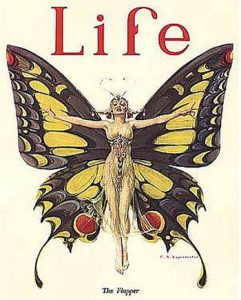
The Flapper Debate
(Literary Digest, 1921)

This article is made up of the musings of various editors, university presidents and social reformers discussing the cultural relevance of the Flapper and the cultural changes she has brought forth.

Advertisement

Use shortcode [oma_ad position="summary_top"] (or other position) in your theme or widgets to display OMA Promotions here.

Colleen Moore: A Flapper in Hollywood
(The Flapper Magazine, 1922)

By the time this piece appeared in The Chicago Daily News (prior to being picked up by the fast crowd at Flapper Magazine) Colleen Moore was all of twenty-one years of age with fourteen Hollywood films to her credit. This interview was conducted over lunch by the polished Hollywood reporter Gladys Hall, who we’re sure picked up the check; on that day Miss Moore wanted to talk about flappers, a flock she was proud to be numbered among (and a subject she seemed to know well).

Sweaters and Knits Elevated
(Holiday, 1952)

The new women’s sweaters will probably disappoint collectors of pin-up art. They are designed, oddly enough, to appeal to women – the women of taste and discrimination who will wear them.

Nose-Bobbing
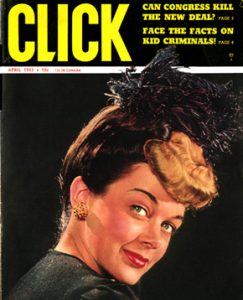
(Click Magazine, 1938)

In the parlance of today it is politely called Rhinoplasty but back in the day, the verb bob was in use – which meant to cut short and no matter what you call the procedure, you’ll see that the gent pictured in this photo-essay needed a nose-job PRONTO!

Advertisement

Use shortcode [oma_ad position="summary_top"] (or other position) in your theme or widgets to display OMA Promotions here.

The Invention of Rayon
(Literary Digest, 1937)

This magazine article reported on the Miracle Fabric of the 1930s: rayon – and rayon cannot be deleted from any study dealing with Thirties fashion any more than the word polyester can be separated from a discussion of 1970s fashion. The article presents a history of the fabric but makes it quite clear that the fabric was immediately embraced by all the fashion houses at that time.


Read about the 1930s revival of velvet.

Click here to read about feminine conversations overheard in the best New York bathrooms of 1937.

Goodbye to the Pompadour
(Click Magazine, 1944)

A late-breaking news report from the fashion editors at Click Magazine announced that the pompadour hairstyle has been given the brush-off: grab your combs, girls, because parts are back in style…

During the Second World War, hair dye was not simply used by women;click here to read about the men who needed it.

Flapper Poesy
(Literary Digest, 1922)

More juvenile flapper verses revealing that the flapper is as old as history itself – and far more meddlesome than her male counterpart.

Click here to read a FLAPPER MAGAZINE review of an anti-flapper movie.


Click here to read an article about the demise of a popular 1940s hairstyle.

Advertisement

Use shortcode [oma_ad position="summary_top"] (or other position) in your theme or widgets to display OMA Promotions here.

Japan’s Rebellion Against Western Fashions
(Current Opinion Magazine, 1922)

Contrary to the headline written above, this interesting article does not simply discuss the (temporary) Japanese rejection of European and American clothing in the Twenties but also touches upon earlier days when Western styles were fully embraced by the nobility of that country.

There is in Japan a growing revolt against European clothing…The Japanese have endured agonies in their efforts to get our hats, our trousers, our corsets…

Campus Fashions for Autumn
(The Diamondback, 1949)

Designing women are working toward the return of the chemise dress, the raccoon coat, the slicker rain coat, the ankle bracelet, multiple chains of beads, etc. Anything they have forgotten, your imagination may safely supply.

Important in high fashion this year are the scissors skirt, long and impossibly tight, the winged collar, featuring a neckline that juts off at a terrific angle, the bat collared suit – which looks more like a cartwheel than a costume. One can happily assume that these creations will never take on the campus…. Safer predictions are that the campus co-ed will take to tweed suits, especially those trimmed in velvet…

The Short Hair of the Late Forties
(The Diamondback, 1949)

The shingle cut, the feather trim, the French Scissors cut or the cherub cut – no matter which you choose – a short hairstyle flatters your face…. When the American college girl first began to clip her long tresses, the general reaction was one of general horror. Now that the surprise has worn off, the various advantages of short hair become apparent: trim locks are cool, easy to take care of, smart looking and stylish.

Advertisement

Use shortcode [oma_ad position="summary_top"] (or other position) in your theme or widgets to display OMA Promotions here.

The Dress-Reform Movement and Male Attire
(Literary Digest, 1929)

A few short paragraphs from a late-Twenties issue of Literary Digest recalled the terribly unproductive plans of the short-lived dress-reform movement and the frustrating nature of the human male in most matters sartorial:

The male is a shy creature, and has always been particularly fearful of appearing conspicuous…


Click here to read an editorial about the need for reform in men’s attire.

The New Glamour of Velvet
(Literary Digest, 1936)

A 1930s fashion article which perfectly encapsulated some of the heady excitement that filled the air when a new crush-resistant, non-wrinkling, packable, ultra-fashionable velvet hit the market. The material was immediately swooped-up by the glam squad in far-off Hollywood; RKO chief costume designer Walter Plunkett pontificated:

Velvet is the epitome and symbol of elegance.


Not one to be upstaged, Travis Banton (1894 – 1958) Plunckett’s counterpart at Paramount Studios, chimed in declaring:

The flattery and refinement of velvet is supplied by no other material.

Anticipating the Springtime coronation of Edward VIII, thousands of yards of velvet had been manufactured for the occasion.


Click here to read about the woman who dictated many of the fabric restriction rules on the American home front.

The House of Lucile
(Hearst’s Sunday American, 1917)

Fashion and Hollywood costume designer Howard Greerstyle=border:none
wrote of Lady Duff Gordonstyle=border:none
(born Lucy Sutherland, 1863 – 1935):

…she was the first to introduce the French word chic into the English language, particularly in relation to fashion. She was the first dressmaker to employ mannequin parades (ie. models) in the showing of clothes…She was responsible for many fads and her clothes made many people famous. She was the most expensive dressmaker of her time, and the most aloof.


Lucile was one of the few souls to survive the TITANIC sinking; click here to read her account of that sad night.

•Read about the 1943 crochet revival•

Advertisement

Use shortcode [oma_ad position="summary_top"] (or other position) in your theme or widgets to display OMA Promotions here.

The Dress Reform Movement
(La Nazione, 1919)

In the early parts of the 20th Century serious attention had been paid in some quarters to what was called dress reform. An article from the August 14, 1929 magazine The Nation pointed out that

The Life Extension Institute weighed the street clothing of the women in New York City last June. The clothing of the women…averaged two pounds, ten ounces, while that of the men was was eight pounds, six ounces.


The Italian Futurist Ernesto Thayaht offered his remedy for the fashion maladies of the day with the design of a one piece garment that many Americans chose to see simply as pajamas. Needless to say, it didn’t catch on.


Click here to read a 1929 article about the Dress-Reform Movement.
Click here to read an editorial about the need for reform in men’s attire.
Read about men’s fashions from 1937 and the break-through in color that had been so sorely needed.

Comprehending the Flapper Revolt
(Vanity Fair, 1921)

In the early Twenties there were a good many social changes which men had to struggle to understand; among them was the Modern Woman. The Italian novelist and lexicographer Alfredo Panzini (1863 – 1939) attempted to do just that for the editors of Vanity Fair.

‘Don’t expect us’, she says to you, disconsolate male, ‘don’t expect us to be like the old-fashioned girls who went to church, and did the laundry, and looked up to their husbands as to their God.’

Colorful Menswear
(Literary Digest, 1937)

This 1937 fashion report let it be known that men’s fashions were getting more colorful; items that we associate with the Fifties such as plaid cummerbunds made their appearance first in 1937. The first clothing item to cross the color line was, in all probability, the Hawaiian shirt – which came into vogue some five years earlier.


Click here to read a related article from 1919.

Advertisement

Use shortcode [oma_ad position="summary_top"] (or other position) in your theme or widgets to display OMA Promotions here.

Scroll to Top