Author name: editor

1945, Weapons and Inventions, Yank Magazine

The Undeveloped Weapons of the Nazi Scientists
(Yank Magazine, 1945)

The war was over when the U.S. Army Ordnance Department began snooping around all the assorted ÜBER-secret weapons labs and work shops where the pointiest headed Nazis were developing some truly far-seeing weaponry, inventions that they were never able to perfect (thankfully).

One of the most striking aspects of the attached article is the part when you recognize that it was the Nazi scientists who first conceived of such space-based weaponry as the Star Wars technology that was ushered in during the Reagan presidency (i.e.: the Strategic Defense Initiative). While in pursuit of their nefarious tasks, these same scientists also conceived of harnessing the powers of the sun in order to advance Hitler’s queer vision of the perfect world.


Click here to read about the firm belief held by the German Army concerning the use of motorcycles in modern war.

Death Dealers Squadron Peleliu 1945 | Napalm Deployed on Peleliu 1945 | WW II Napalm Use
1945, Collier's Magazine, Weapons and Inventions

Enter Napalm
(Collier’s Magazine, 1945)

The first use of napalm in the Second World War was by the U.S. Army Air Corps flying over Germany. This article reported that it was used by Navy over Saipan, the Army over Tinian and the Marines over Peleliu:

Now it is possible to tell one of the more dramatic fire-bomb stories: [During an eight day period] last October, on a section of Peleliu no bigger than a city block, the Death Dealer Squadron of the Second Marine Air Wing dropped more than 32,000 gallons of flaming gasoline on Jap cave positions and wiped them out.


Click here to read about one of the greatest innovations by 20th Century chemists: plastic.

Advertisement

Use shortcode [oma_ad position="summary_top"] (or other position) in your theme or widgets to display OMA Promotions here.

'How We Made the October Revolution'' (New York Times, 1919)
1919, Soviet History, The New York Times

‘How We Made the October Revolution”
(New York Times, 1919)

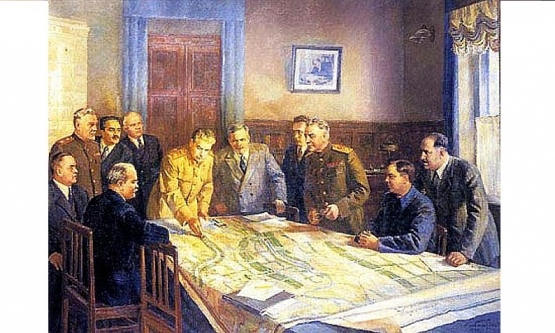
Here is Leon Trotsky’s reminiscence of those heady days in 1917 that served as the first step in a 75 year march that went nowhere in particular and put millions of people in an early grave – this is his recollection of the fall of the Kerensky Government and the creation of the Union of Soviet Socialist Republics(R.I.P.).

THE REVOLUTION was born directly from the war, and the war became the touchstone of all the revolutionary parties and energies…


The review of the first English edition of Das Kapital can be read here…

1941 Paul Robeson Interview
1941, African-American History, The American Magazine

‘America’s No. 1 Negro”
(The American Magazine, 1941)

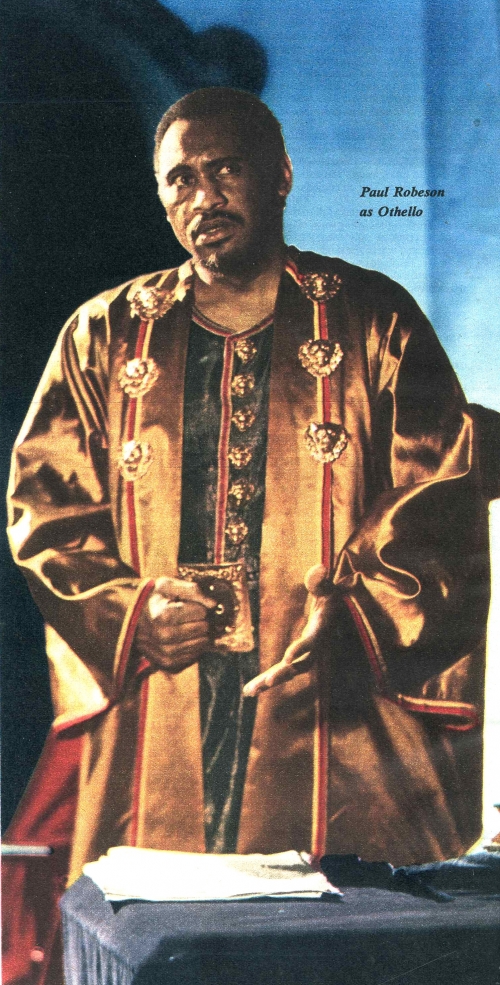
Paul Robeson (1898 – 1976) was a multi-talented man and this article lays it all out.

Paul Robeson thinks of himself as conclusive proof that there is no such thing as a backward race. Given a few generations of equal opportunities, he believes, any people – Eskimos, Malayans, Fijians or the Untouchables of India – can produce as talented statesmen, scientists, educators, inventors and artists as the whites.
The Hats of 1947 (Collier's Magazine, 1947)
1940s Fashion, 1947, Collier's Magazine

The Hats of 1947
(Collier’s Magazine, 1947)

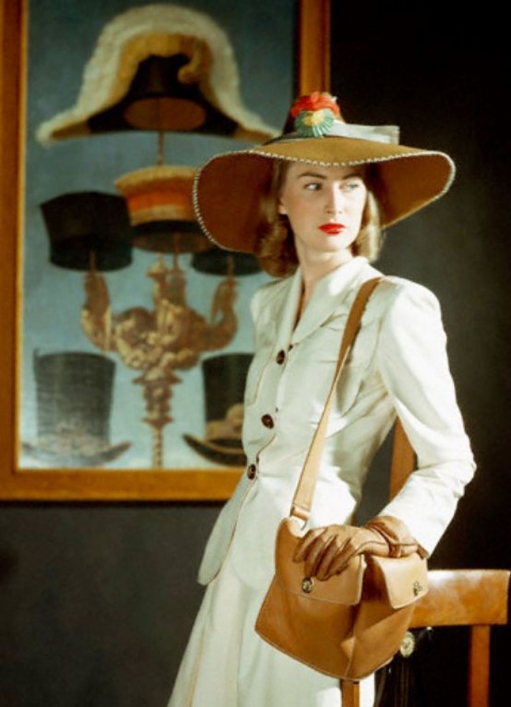
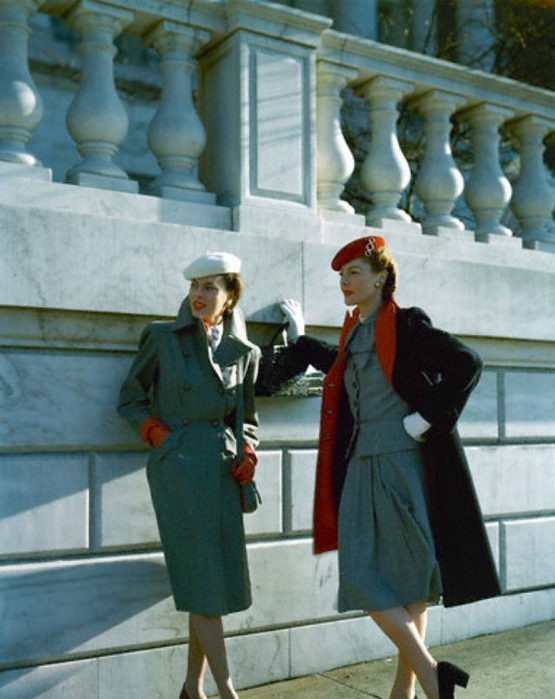
With the exception of the broad-brimmed sun hat pictured in the attached fashion editorial, you will find that women’s hats were growing smaller throughout the course of the Forties and they tended to sit farther back on the cranium, requiring hairdos that would accommodate and complement these creations.


The Sally Victor hat composed of red cherries took its inspiration directly from the bizarre, comical costumes worn by the actress Carmen Miranda. This fruit theme was typical of many post-war milliners. The six other hats in the piece were by two American designers: Lilly Dache and John-Frederics.

Click here to see what men’s summer hats were like during this period.

Advertisement

Use shortcode [oma_ad position="summary_top"] (or other position) in your theme or widgets to display OMA Promotions here.

1940 s article about fashion models
1940s Modeling, 1944, Coronet Magazine

Fashion Modeling in the 1940s
(Coronet Magazine, 1944)

Inasmuch as this 1944 article sums up the bygone world of the New York fashion model, the terms heroin chic and bulimia are not found on any of it’s five pages (an over site, no doubt). The Forties were a time when a model would be just as likely to get a booking from a commercial artist as she would a photographer, and, unlike the Twenties and the earliest days of the Thirties, it was a time when a standardized image of beauty was well-established.

– five feet nine inches in height, weight 110 pounds, bust 33, waist 24, hips 34, blonde or a light shade of brown hair. She will have quick, clever eyes and a very expressive face.
Many of the models are bitter, unhappy girls inside. They soon grow disillusioned with their dream of modeling as a gateway to theatrical glory; they learn that their height is against them.


Read about the attack of the actress/models!

When W.W. II Came to Hollywood (Photoplay Magazine, 1948)
1948, Hollywood, Photoplay Magazine

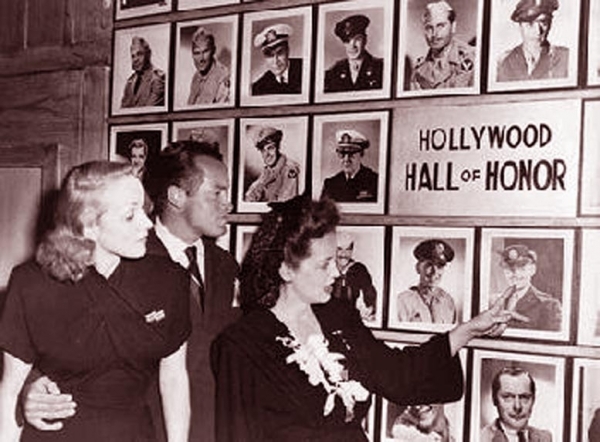
When W.W. II Came to Hollywood
(Photoplay Magazine, 1948)

The attached article is but a small segment addressing the history of Hollywood during the war W.W. II years; clipped from a longer Photoplay Magazine piece that recounted the illustrious past of Hollywood some thirty-five years earlier.

After Pearl Harbor, the men really began leaving town. David Niven was gone now. So too, was Flight Officer Laurence Olivier. And more and more from the Hollywood ranks kept leaving. Gable, Fonda, Reagan, the well-knowns and the lesser-knowns. Power, Taylor, Payne, Skelton and many others…More Hollywood regulars went away, so other, newer newcomers had to be found to replace them because the box office was booming.

1942 Stalingrad Battle News Article | 1942 Red Army Counter-Offensive at Stalingrad.
1942, Eastern Front, Newsweek

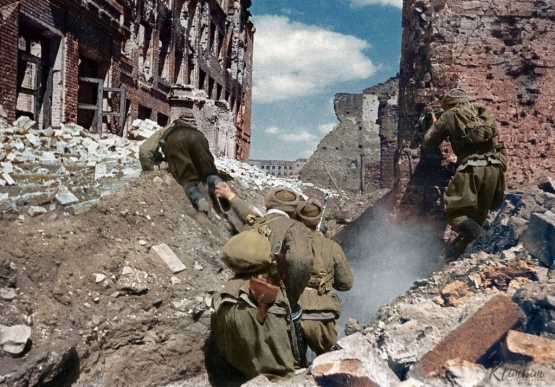
The Battle of Stalingrad
(Newsweek Magazine, 1942)

The Newsweek report on the under-supplied Red Army counter-offensive at Stalingrad.

Russia’s hope was Hitler’s despair. His schedule for the year had already been irreparably disrupted and none of his major objectives – Stalingrad, the Caspian Sea, the oil of the Caucasus – had yet been attained. And already the Nazi soldiers could feel the cold breath of winter through their summer uniforms…

Advertisement

Use shortcode [oma_ad position="summary_top"] (or other position) in your theme or widgets to display OMA Promotions here.

U.S. Advertising During W.W. II (Yank Magazine, 1944)
1944, Advertising, Collier's Magazine

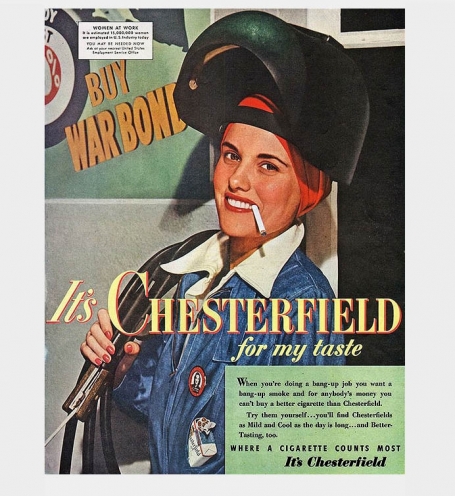
U.S. Advertising During W.W. II
(Collier’s Magazine, 1944)

If advertising is defined as the craft of convincing people they want something that they actually don’t care for, then World War II proved to have been the perfect challenge to the ad men of the 1940s. The wordsmith who penned this article regarding home front advertising chortled loudly when he saw the manner in which the bloodiest brawl in history was being marketed to the American consumers.

Advertising has gone to war… and the advertising profession not only knows what we are fighting for; it knows down to the last uplift bra, what we want when we come home…It is the copywriters of advertising who nurse the carefully guarded secret that this war is, in reality, a luxury cruise.


Articles about the importance of fashion models in 1940s advertising can be read here.

Who Are Better Drivers Male or Female | Who Are Better Drivers Men or Women
1936, Cars, The Literary Digest

Women Drivers Vindicated
(Literary Digest, 1936)

Attached is a magazine article concerning the on-going debate regarding women drivers and the continuing balderdash as to which of the genders is the better driver: the issue was decided in 1936 and the men lost:

…according to the report of a university professor who took the trouble to find out. Armed with statistics, he asserts that the female of the motoring species is not nearly so deadly as the male.

Segregation Soviet-Style (Pathfinder Magazine, 1949)
1949, Pathfinder Magazine, The Cold War

Segregation Soviet-Style
(Pathfinder Magazine, 1949)

As the April of 1949 was winding down, 11 members of the Communist Party U.S.A. were standing trial in a Federal courtroom spilling every secret they had in an all-out effort to lighten their load further down the road. Among these classified plots was a 1930s plan to invade the United States and create two separate Soviet republics – one White, the other Black. The region they had in mind for the African-Americans would cover nine of the old Confederate states.


A Quick Read About Soviet-Enforced Atheism Behind the Iron Curtain…

Advertisement

Use shortcode [oma_ad position="summary_top"] (or other position) in your theme or widgets to display OMA Promotions here.

The Down-Hill Side of Being a Society Girl (Collier's Magazine, 1933)
1933, Collier's Magazine, Manners and Society

The Down-Hill Side of Being a Society Girl
(Collier’s Magazine, 1933)

The attached Collier’s article was written by two post-debs of the Boston/Manhattan variety who were both products of what they called the approval mill of America’s upper-crust. Having been run through the right schools and the right summer camps, they attended the right parties and made charming with all the right people; looking back in their 20s, they were able to see how this long-treasured practice prepared them poorly for life – tending to perpetuate the spiraling vortex of women who were educated and polite, yet unable to think.

'What Kind of Women are the WAACs?'' (Click Magazine, 1942)
1942, Click Magazine, WACs

‘What Kind of Women are the WAACs?”
(Click Magazine, 1942)

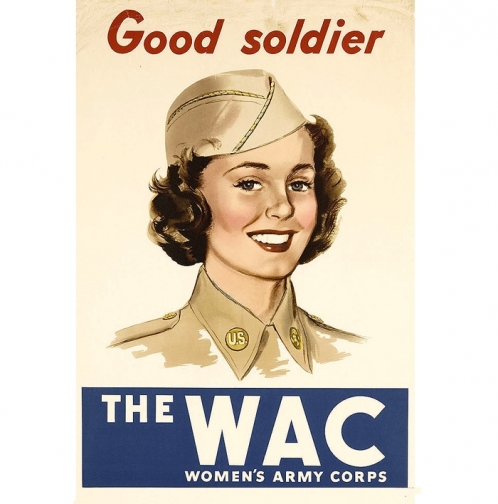
They’re career women, housewives, professionals, factory hands, debutantes. They’ve taught school, modeled, supported themselves, as secretaries, salesgirls, mechanics. Single and married, white and colored, between the ages of 21 and 45, they’re corresponding with a beau, in Ireland, a husband Australia, or the ‘folks back home’ in Flatbush. But varied as their background may be, they’ve enlisted in the Women’s Army Auxiliary Corps (WAAC) with a common purpose: to get behind America’s fighting men and help win a lasting peace.

When well-versed in army-administrative methods, the WAAC will cause the transfer of 450 enlisted men to combat areas each week. It realizes full-well its responsibility and has dedicated itself to the idea that the Women’s Army Auxiliary Corps will prove itself equal to the opportunity.

Women Marines 1942 - 1945 | USMC Women in WW II
1946, Think Magazine, Women (WWII)

The Women of the U.S. Marine Corps
(Think Magazine, 1946)

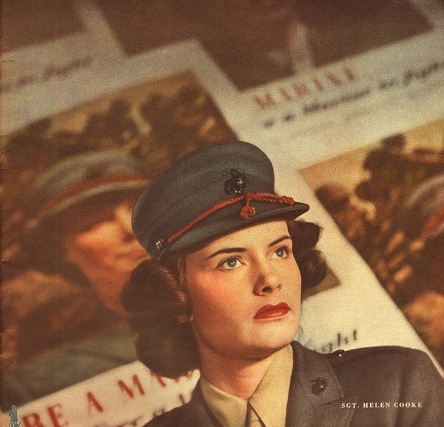
Lady Leathernecks’, as the trimly-clad members were affectionately dubbed, responded to their country’s call some 19,000 strong, accomplishing more than 150 different jobs at more than fifty Marine bases and stations throughout the United States.

Organized February 13, 1943 the Women’s Reserve was directed by Lt. Colonel Ruth Cheney Streeter (1895 – 1990). Women in the Marine Corps were authorized to hold the same jobs, ranks and pay as Marines.

Advertisement

Use shortcode [oma_ad position="summary_top"] (or other position) in your theme or widgets to display OMA Promotions here.

FDR Relationship with the Press | FDR Relationship with Newspaper Reporters
1934, F.D.R., New Outlook Magazine

FDR’s Publicity Machine
(New Outlook Magazine, 1934)

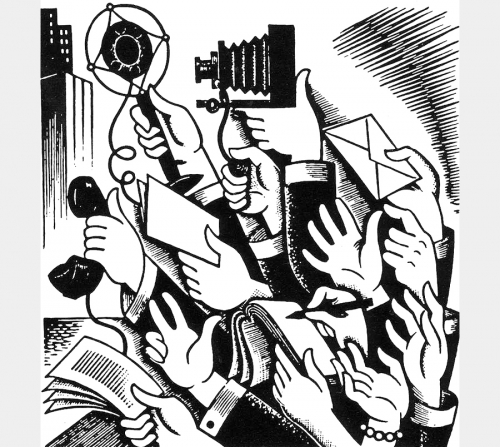
To those who have followed the political career of President Roosevelt, this unprecedented emphasis on public relations and publicity is no surprise. No president has ever been more alive to the potentialities of maintaining a ‘good press’, of gauging public reaction to his policies and of timing his announcements to obtain the widest and most sympathetic audience possible… No party organization could afford the elaborate press relations machinery which existed on March 4, 1933. Its cost, including salaries, printing, supplies etc., is today in excess of $1,000,000 annually, and it is being paid for by the American taxpayer.


Click here to read about President Harry Truman…

1945 Newspapers Cover the Death of FDR | Global Press Coverage of FDR Death 1945
1945, F.D.R., Newsweek

The World Press and the Death of FDR
(Newsweek Magazine, 1945)

At 5:45 p.m. telephones rang simultaneously in the Washington bureaus of the AP, UP and [the International News Service] on a conference call from the White House. The familiar voice of Steve Early, who had retired only recently after twelve years as White House press secretary, called the roll to make sure all were listening. Then: ‘Here is a flash. The President died suddenly early this afternoon’

Swiftly the news went around the world… No president had meant quite so much to the press as Mr. Roosevelt. Few in history had been more consistently and bitterly opposed by a majority of publishers. Perhaps none had more admirers and fewer detractors among working newsmen. No president since his cousin Theodore, who coined the word ‘muckracker’, had on occasion denounced press and newsmen alike more harshly. Yet most newsmen forgave him his peevish moments. Certainly none had been more news-rich and none had ever received the voluminous coverage that President Roosevelt had. Over the years, the Roosevelt twice-a-week press conference was the Capital’s biggest newsmaker.

Advertisement

Use shortcode [oma_ad position="summary_top"] (or other position) in your theme or widgets to display OMA Promotions here.

Scroll to Top