Author name: editor

Arthur Derounian Article About American German Bund | 1930s American Fascist Groups | Monitoring German Bund in America
1944, American Fascism, Coronet Magazine

American Fascists Exposed
(Coronet Magazine, 1944)

This is a wonderful read. Writing under the name John Ray Carlson, the journalist Arthur Derounian (1909 – 1991) went under cover into the seedy world of American fascist organizations and discovered that they all spoke with each other. Having impressed the German Bundists, he moved quickly up the ranks of American fascism and was soon given the task of uniting every antisemitic, anti-democratic, pro-fascist clique in the country. Here is a list of some of the groups he was in contact with during his four years in the underground: America First, the American Vigilant Intelligence Federation, American Nationalist Party, Chicago Patriot’s Bureau, New England Christian Front, National Workers League, Detroit Mothers, American Mothers, Yankee Freeman and Mothers of the United States of America. He finally found himself in the company of Lawrence Dennis, a creepy book-worm who was known in those low circles as the dean of American fascism.

O.S.S. Agents Executed by General Anton Dostler (Yank Magazine, 1945)
1945, Spying, Yank Magazine

O.S.S. Agents Executed by General Anton Dostler
(Yank Magazine, 1945)

On the evening of March 26, 1944, fifteen O.S.S. agents were executed following a failed raid on Italian soil to blow-up an Axis railroad tunnel. The sabotage mission was in support of the allied attack taking place further south at Monte Cassino (Battle of Monte Cassino, January 17, 1944 – May 19, 1944) and had the tunnel been successfully blown, supplies to the defending Germans would have been cut off.


This YANK article reported on the first war crime trial of the post World War Two era: the trial of German General Anton Dostler (1891 – 1945), who gave the order to execute the O.S.S. prisoners. In his defense, General Dostler insisted that he was acting under the orders of General Gustav von Zangen, who denied the claim.

Tales of the O.S.S. (Coronet Magazine, 1964)
1964, Coronet Magazine, Spying

Tales of the O.S.S.
(Coronet Magazine, 1964)

“He was all in gray: a gray suit and tie, gray hair and blue-gray eyes. He was about 60 years old, I judged, and thus seven or eight years my senior. He was not a military figure – but somewhat pear-shaped, with pudgy hands and a thickset neck. Powerful, I thought, but rather overweight.”
“His voice was a surprise – softspoken, beautifully modulated. ‘I’m Colonel Donovan…'”

Advertisement

Use shortcode [oma_ad position="summary_top"] (or other position) in your theme or widgets to display OMA Promotions here.

WW2 OSS Operations | Wartime Intelligence Stories | OSS Magazine Article | The Secret Story of OSS by Corey Ford and Alastair MacBain Collier s Magazine article October 6 1945
1945, Collier's Magazine, Spying

The O.S.S.
(Collier’s Magazine, 1945)

This was more than likely the very first mainstream magazine article to address the vital contributions that the Office of Strategic Service made in beating the Axis powers. It appeared on the newsstands just about six weeks after the end of the Second World War and lists various key operations and triumphs that had heretofore been secret.


In 1940 OSS chief Donovan wrote an article about the German-American Bund, Click here to read it.

Swimwear (Pathfinder Magazine, 1947)
1940s Fashion, 1947, Pathfinder Magazine

Swimwear
(Pathfinder Magazine, 1947)

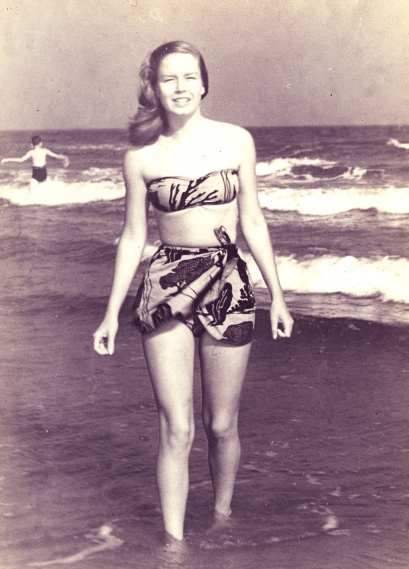
The only big fashion innovation popular enough to share the 1947 headlines with Dior’s New Look involved the evolution in women’s swimwear; most notably the Bikini. The attached single page article pertains to all the new fabrics being deployed in ladies beachwear and all their assorted coverups:

Sand-and-sun fashions for this summer are perter and briefer than ever before. Although the typical bathing suit covers just about 2.5 square feet of a swimmer’s anatomy, a costume-look for the beach is achieved with a companion cape, skirt of short coat… Favored fabrics are those made to ride the waves. Knitted wool shows up in both classic and unusual designs. Colors are softer and muted. Black and blue appear most often, with cider, gray and smudge the ‘high-style’ shades.

Click here to learn about women’s fashions from the Summer of 1934•

College Fashion (Look Magazine, 1941)
1940s Fashion, 1941, Look Magazine

College Fashion
(Look Magazine, 1941)

Dusty, Peggy and Jean were just three of the co-eds that made up the six percent of American women who attended college in 1941 – and that’s all that was required of them in order for the trio to sample fashion’s latest wares and sound-off in the attached Fall fashion review. Go figure.

Advertisement

Use shortcode [oma_ad position="summary_top"] (or other position) in your theme or widgets to display OMA Promotions here.

Soviet Treaty Violations (U.S. Dept. of Defense, 1962)
1962, Soviet History

Soviet Treaty Violations
(U.S. Dept. of Defense, 1962)

This is a carefully cataloged list of the international treaties that the Soviet Union signed and agreed to abide by during the course of their first forty years (1920 – 1960). Printed next to these agreements are listed the dates the Soviets chose to violate the treaties and the direct results that ensued.


Promises are like pie crust, made to be broken. – V.I. Lenin


Click here to read about the Hitler-Stalin Non-Aggression Pact.

(Coronet Magazine, 1943)
1943, Coronet Magazine, German Home Front

Letters from the German Home Front
(Coronet Magazine, 1943)

The misery that lingered over the W.W. II German home front is well documented and many of the issues concerning melancholy, hunger and thirst can be read in the attached assortment of letters that were pulled from the bloodied uniforms of the thousands of dead Nazi soldiers that surrounded the city of Stalingrad in 1943. These personal correspondences by German parents, wives and sweethearts present a thorough look at the dreariness that lingered over the German home front.

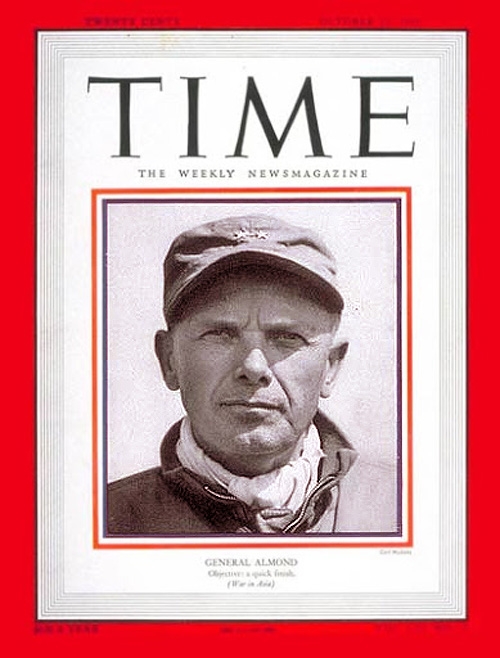
US Army General Edward M Almond on Korean War Mistakes | US Military Restraint in Korean War | US Military Restraint During Cold War
1954, The Korean War

The Army Restrained
(U.S. News & World Report, 1954)

Sitting before a senate committee convened in order to understand what went wrong in Korea, Lieutenant General Edward M. Almond (1892 – 1979), U.S. Army, was not shy to point out that it was the the back-seat drivers in Washington who interfered in their ability to fight the war.


Senator Welker: Could we have won the war in 1951…?


General Almond: I think so.


General Matthew Ridgway experienced the same frustration – click here to read about it.

Advertisement

Use shortcode [oma_ad position="summary_top"] (or other position) in your theme or widgets to display OMA Promotions here.

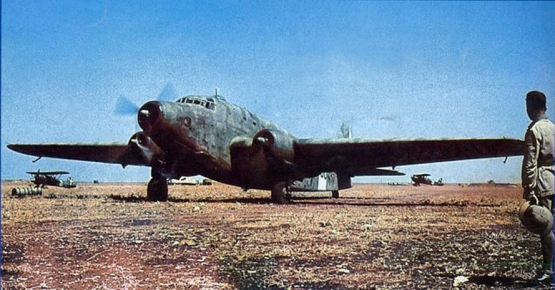
Savoia Marchette SM 82: Italian Transport and Bomber (Alertman, 1942)
1942, America's Alertman, Weapons and Inventions

Savoia Marchette SM 82: Italian Transport and Bomber
(Alertman, 1942)

The Savoia Marchetti SM 82 Canguru was a triple engine transport aircraft that was also put to use as a bomber. Produced by the Italians, it was additionally used by their German allies and was capable of seating 40 fully-equipped soldiers comfortably or 51 fully-equipped soldiers uncomfortably. At the time this article appeared, this long-range transport was being used to shuffle German and Italian soldiers to the collapsing fronts in North Africa.

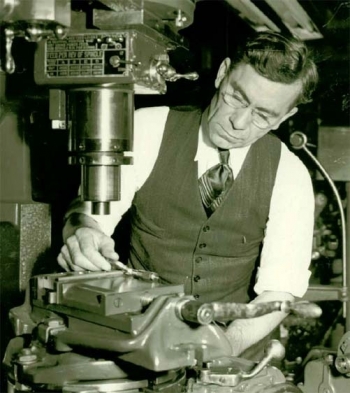
John Garand: Inventor of the M1 Garand (Click Magazine, 1944)
1944, Click Magazine, Weapons and Inventions

John Garand: Inventor of the M1 Garand
(Click Magazine, 1944)

Attached is a Click Magazine photo essay of one of the seldom remembered heroes of W.W. II: John C. Garand – the gunsmith who tripled the firepower of the American foot soldier.


In 1939, a German spy almost succeeded in delivering the blueprints of the Garand rifle into the blood-soaked hands of his Nazi overlords: read about it here.


Click here to read about the Japanese Zero.

Advertisement

Use shortcode [oma_ad position="summary_top"] (or other position) in your theme or widgets to display OMA Promotions here.

Japanese Aichi-99 Dive Bomber Information | WW2 Japanese Aircraft
1942, America's Alertmen, Weapons and Inventions

The Japanese Aichi-99 Dive Bomber
(Alertmen, 1942)

When, on December 7, 1941, the bombers and fighter aircraft of the Imperial Japanese Navy came roaring out of the Hawaiian blue to reign death and destruction on Pearl Harbor, the Aichi-99 was among those present. The attached article from 1942 will tell you all that the American military knew about it at the time.


Read about another plane that was at Pearl Harbor that morning…

Mitsubishi A5M
1942, PM Tabloid, Weapons and Inventions

The Japanese Zero
(PM Tabloid, 1942)

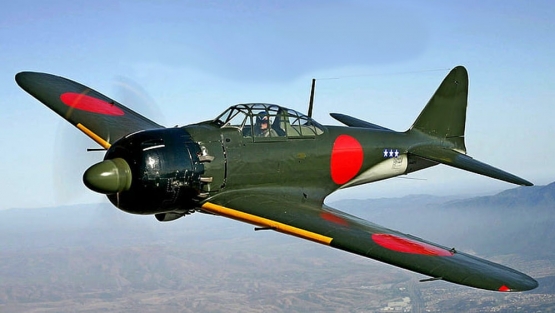
Soon after Pearl Harbor Americans began hearing about a Japanese warplane called called the Zero. It had an unusual name, it was virtually unknown, even to aircraft experts, and almost immediately it began to take on an air of sinister mystery. Information now available shows there is no good reason for the mystery, although the plane has been a big factor in the Jap drive… The Zero has no secret weapons or engineering developments. It is simply a pretty good pursuit or fighter.

The German JU-88 Heinkel Fighter Bomber (Alertman, 1943)
1943, America's Alertman, Weapons and Inventions

The German JU-88 Heinkel Fighter Bomber
(Alertman, 1943)

From the pages of a 1943 issue of America’s Alertman was this page that presented some information about the German JU 88 twin engine bomber, which was the primary offensive aircraft in the Luftwaffe’s arsenal during the Second World War. It was the successor to the Ju-87 and saw service as a night fighter and torpedo bomber in addition to serving as reconnaissance aircraft. The earliest prototype first flew in December of 1936 with a civilian registration of D-AQEN; it managed a top speed of 360 mph. Throughout the course of the war there were 15,000 JU 88’s constructed.

The attached article from 1943 goes into greater detail and can easily be printed.

Advertisement

Use shortcode [oma_ad position="summary_top"] (or other position) in your theme or widgets to display OMA Promotions here.

The American A-36 Fighter Bomber (Yank Magazine, 1943)
1943, Weapons and Inventions, Yank Magazine

The American A-36 Fighter Bomber
(Yank Magazine, 1943)

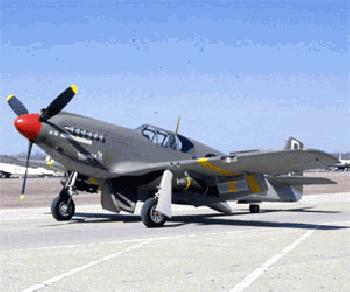
This article page from a 1943 YANK MAGAZINE concerns the American A-36 fighter-bomber of World War II. The article is accompanied by photographs and testimonial accounts as to how well the fighter aircraft performed in combat over North Africa and Sicily.

Built by North American Aviation, this ship is a dive-bomber version of that company’s P-51 Mustang fighter. The A-36 can climb at the rate of nearly half a mile a minute, with a ceiling of 30,000 feet. Powered by a 12-cylinder Allison engine, it has a flying speed in excess of 400 miles an hour…

The B-17 (Coronet Magazine, 1959)
1959, Coronet Magazine, Weapons and Inventions

The B-17
(Coronet Magazine, 1959)

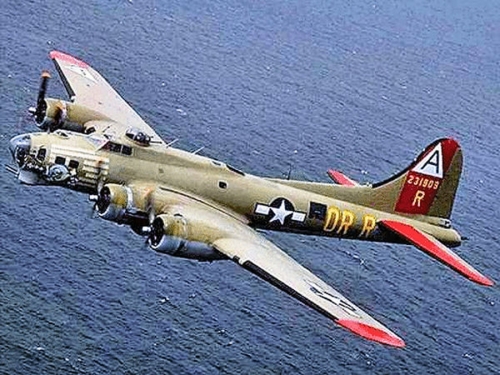
The B-17 Flying Fortress was the most fabulous combat plane ever built. Like Douglas’ unretireable DC-3 airliner, the B-17 is history written in metal, a pivot of progress which helped influence an entire generation.

Perhaps more than any other plane, the B-17 beat Hitler. Its 640,036 tons of bombs on Europe, nearly the total dropped by all other U.S. planes combined, knocked out much of his industry, oil and railroads… The B-17 unveiled the era of strategic air power and turned man’s eye to the stratosphere and beyond.


Click here to read about the P-47 fighter plane.

Advertisement

Use shortcode [oma_ad position="summary_top"] (or other position) in your theme or widgets to display OMA Promotions here.

Scroll to Top