Author name: editor

Alternative Lyrics for the National Anthem (Pathfinder, 1941)
1941, Americana, Pathfinder Magazine

Alternative Lyrics for the National Anthem
(Pathfinder, 1941)

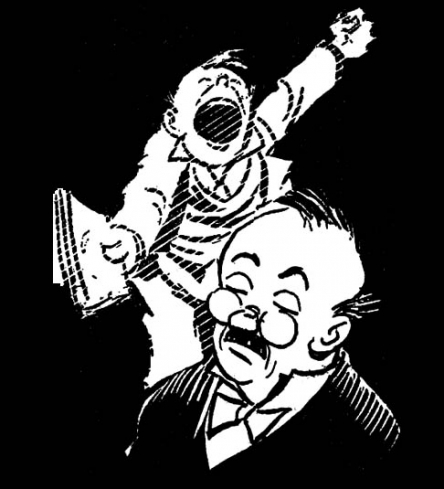
Do you fail to recall the words to our national anthem time and again? You’re not alone – a quick glance at Google’s records indicate that in the silence of their rooms, thousands of your fellow Americans suffer from the same malady (and smirk at others who make their memory loss public). To say that the Americans of today are not as patriotic as they used to be is an understatement to be sure – but some of you will no doubt be relieved to know that the Americans of yore, vintage 1941, didn’t know the lyrics to The Star Spangled Banner any better than we do – as you can tell by the attached verses which were penned over seventy years ago about his fellow Americans and their inability to keep the words of Francis Scott Key in their heads.

1940 Congress Approves Military Build-Up
1940, PM Tabloid

Congress Approved $5,000,000,000 Build-Up
(PM Tabloid, 1940)

To fulfill the [Pentagon’s requirements] the President plans to send Congress one more defense message asking for another $5,000,000,000. After that, with machine industries saturated with orders, Congress can sit back and survey the defense picture – provided England doesn’t collapse overnight… Acting Secretary of the Navy Compton announced yesterday the award of contracts for three aircraft carriers and two cruisers to the Newport News Shipbuilding and Drydock Co….

Tony Randall Magazine Interview
1964, Hollywood History, Pageant Magazine

Tony Randall: Movie Star
(Pageant Magazine,1964)

In this early Sixties article, celebrity epistolarianne Cyndi Adams recalled her first two encounters with the man who would be Felix Unger:
‘I am definitely neurotic and psychotic,’ cheerily announced Tony Randall (1920 – 2004) the first time we met – ‘he’s an actor-comedian of remarkable skills…

he unconsciously reflects, in the way he plays his rolls, so much of the neurotic age we live in…’.


The New York Times would pursue this point to a further degree in their 2004 obituary of the actor:

That’s the force Tony Randall embodied: he represented, in his neurotic grandeur, our national will to unhappiness. Or if not our will, at least our right, which in the 50’s we were only beginning to realize we could exercise.

Advertisement

Use shortcode [oma_ad position="summary_top"] (or other position) in your theme or widgets to display OMA Promotions here.

1920, Aftermath (WWI), The Independent

Post-W.W. I Society and the New Spirit of the Twenties
(The Independent, 1920)

In 1920 there were many articles celebrating the three-hundredth anniversary of the Puritan’s arrival on Cape Cod. This one writer decried the lack of enthusiasm that marked the modern age following the end of the Great War – a world that stood in contrast to the Pilgrim spirit. Religious faith, patriotism, and the belief in human progress had all been called into question by the mass carnage experienced during the war. Shell shocked and traumatized, the world seemed different: the old order had collapsed, replaced by an age of machines. The author of this column, Preston Slosson, was one of the observant souls to realize that the legacy of the First World War was disillusionment and cynicism.

Our stock of idealism has temporarily run low and a mood of cynicism has replaced the devoted enthusiasm of 1918…


Click here to read a 1916 article about life on the German home front.

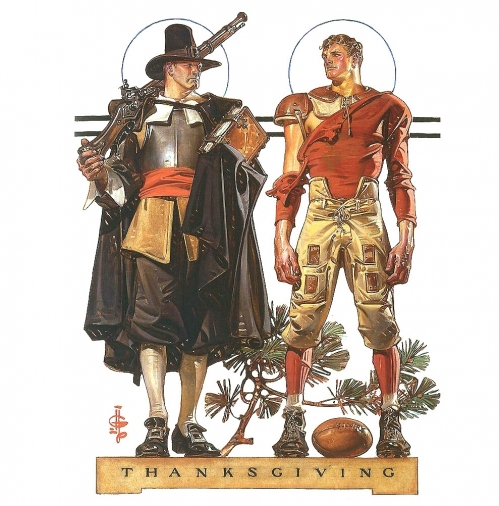
Thanksgiving and Football (The Stars and Stripes, 1918)
1918, Football History, The Stars and Stripes

Thanksgiving and Football
(The Stars and Stripes, 1918)

Peace was eleven days old when this column first appeared.
Anticipating Thanksgiving, 1918, The Stars & Stripes announced that football games, movies and assorted other forms of entertainment had been arranged by the American Red Cross in order to placate the eager American survivors of the First World War who simply wanted to get on those big boats and sail home.


As an expression of gratitude, numerous French families had volunteered to invite American soldiers and sailors to their homes to celebrate the Thanksgiving holiday.
Bad 1940 Movies | 1940 Hollywood Studios Fail To Attract Audiences
1940, Hollywood History, PM Tabloid

Failing To Attract An Audience
(PM Tabloid, 1940)

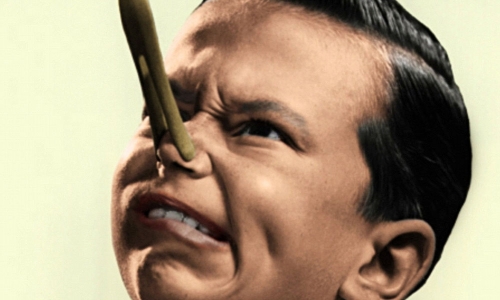
In spite of the incredible films that Hollywood churned out in 1939 – Gone With the Wind, The Wizard of Oz and Mr. Smith Goes to Washington, it seemed that there were some folks in 1940 who just wouldn’t be satisfied. This completely irked the citizens of Hollywood. And so the editor of Variety dispatched pollsters hither and yon to ask why they
thought the movies stunk.

Advertisement

Use shortcode [oma_ad position="summary_top"] (or other position) in your theme or widgets to display OMA Promotions here.

The Book that Shook the Kremlin (Coronet Magazine, 1959)
1959, Coronet Magazine, The Cold War

The Book that Shook the Kremlin
(Coronet Magazine, 1959)

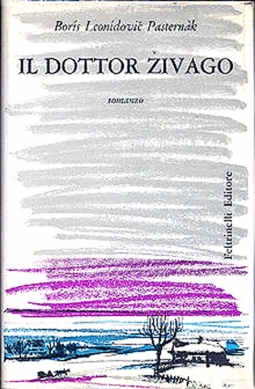
How Pasternak’s Russian novel, Doctor Zhivagostyle=border:none (1957), came to be published was not your standard bourgeois affair involving manuscripts sent by certified mail to charming book agents who host long, wet lunches – quite the contrary. As the journalist noted in the attached article: It is an intriguing story involving the duplicity of one Italian communist who gleefully deceived a multitude Soviets favoring that the work be buried forever.
'Guns On French Cliffs Shell British Ships (PM Tabloid, 1940)
1940, France, PM Tabloid

‘Guns On French Cliffs Shell British Ships
(PM Tabloid, 1940)

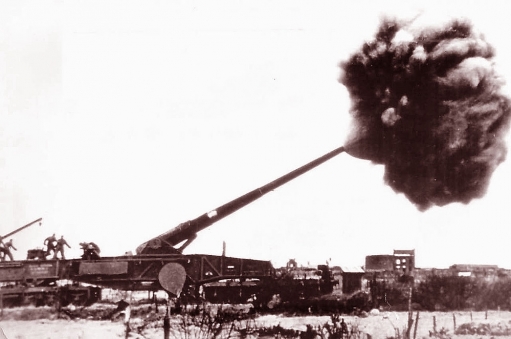
A British convoy in the Straits of Dover today ran the gauntlet of terrific cannonade of long range German artillery on the French cliffs from Calais to Boulogne. The spectacular Channel bombardment was witnessed by thousands on the Dover cliffs. They reported that none of the 18 ships in the British convoy appeared to have been hit.

American Opinions of the NEW DEAL 1933 | American Reaction to the Great Depression
1933, New Outlook Magazine, The Great Depression

The Unhappy Constituents
(New Outlook Magazine, 1933)

If President Roosevelt were a Caliph in ancient Baghdad, he would disguise himself as a Congressman and wander about the country asking the man at the filling station, the hitch-hiker, the farmer and his wife, the local chairlady of a woman’s club – he would ask them what they thought of FDR, the NRA, [General] Hugh Johnson, Brain Trusters, Jim Farley and the entire set-up in Washington… He would be startled. Mr Roosevelt is growing exceedingly unpopular – not so much the President himself as his Administration.


More about New Deal problems can be read here…

Advertisement

Use shortcode [oma_ad position="summary_top"] (or other position) in your theme or widgets to display OMA Promotions here.

Americans All - Immigrants All Radio Program 1938 | Encouraging European Immigration
1938, Immigration History, Pathfinder Magazine

‘Americans All”
(Pathfinder Magazine, 1938)

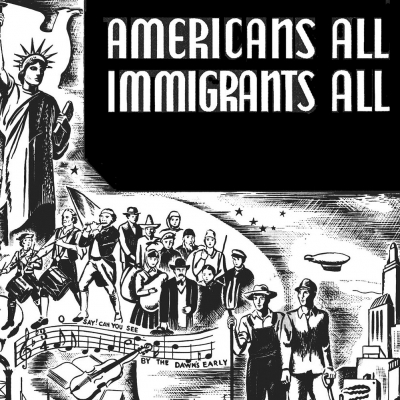
In an effort to keep the writers and actors of the Works Progress Administration busy, FDR’s Department of the Interior produced a 26-part radio program intended to prove that America could never have become so great without the contributions of all the various hyphenated groups that make up the country. On Sunday afternoon throughout much of 1938, Americans could gather around their radios, if they had them, and hear their identity groups being praised by the Government: African-Americans tuned in on December 18th; the WASP show was on December fourth.

1930s Public Opinion in the USA | The Mood of The 1932 Presidential Election
1932, F.D.R., Look Magazine

The Temper of the Electorate
(The New Outlook Magazine, 1932)

Just weeks before the U.S. presidential election of 1932 this article appeared in a political magazine that indicated how the Depression-tossed voters were feeling after three years of economic set-backs. The article consists of 21 pithy little paragraphs that sum up their feelings:

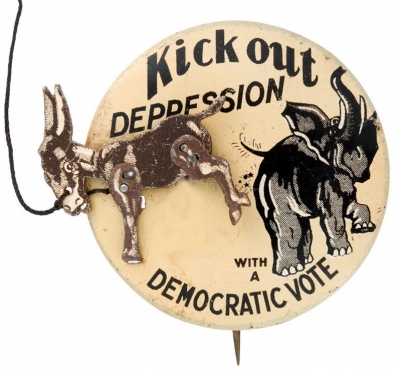
I BELIEVE it possible to feel hungry under either major party, but that under the Republicans it seems to hurt more.


Click here to read about the extensive press coverage that was devoted to the death of FDR…

Advertisement

Use shortcode [oma_ad position="summary_top"] (or other position) in your theme or widgets to display OMA Promotions here.

Erik Satie and Les Six 1921 | Jean Cocteau and Erik Satie 1921
1921, Eric Satie Articles, Vanity Fair Hall of Fame

Erik Satie and Les Six
(Vanity Fair, 1921)

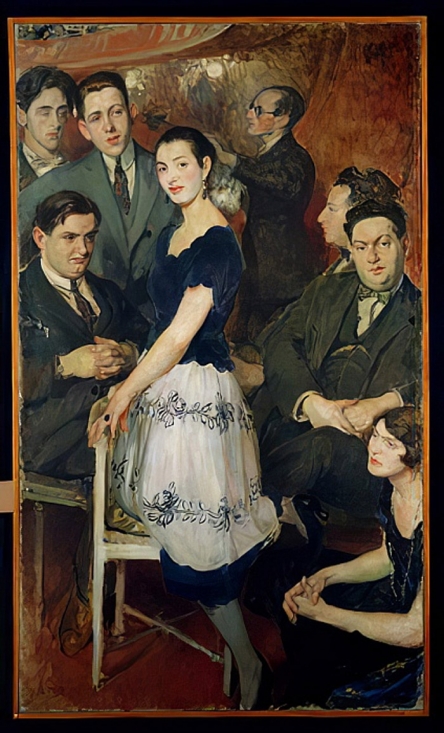
This article was written by Erik Satie as a salute to six unique French composers who had been working in Montparnasse during the previous years.

To me, the New Spirit seems a return to classic form with an admixture of modern sensibility. This modern sensibility you will discover in certain ones of the Six -George Autic (1899 – 1983), Francis Poulenc (1899 – 1963), Darius Milhaud (1892 – 1974)…

A.E.F. Knit Uniform Accessories (Fleisher's Catalog, 1918)
1918, U.S. Army Uniforms of World War One

A.E.F. Knit Uniform Accessories
(Fleisher’s Catalog, 1918)

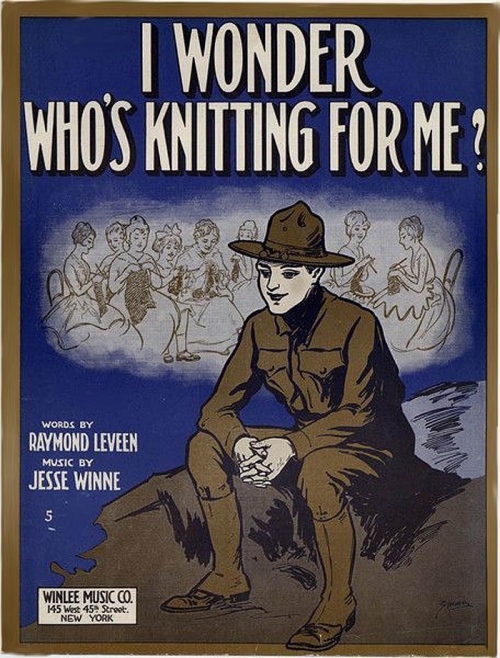
Photographs from the W.W. I era Fleisher’s Knitting & Crochet Manual that depicted the variety of Quartermaster approved scarves, wristlets, helmets, sweaters and watch caps that were available to the Doughboys for service Over There. In some cases the knitting instructions are intact.

Some might be amused to see that the photographer’s stylist had used the 1902 blouse rather than the more suitable 1912 issue.


From Amazon: Fleisher’s Knitting & Crochet Manualstyle=border:none

Sunglasses Make Their Mark in the Fashion World (Click Magazine, 1939)
1930s Fashion, 1939, Click Magazine

Sunglasses Make Their Mark in the Fashion World
(Click Magazine, 1939)

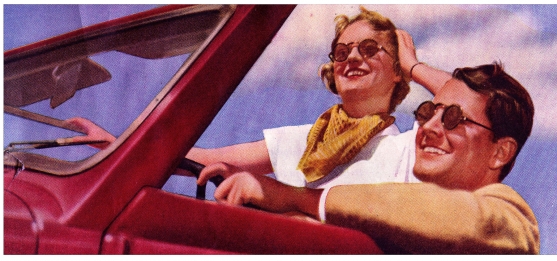
Although sunglasses had slowly inched their way forward in popularity since the late Twenties, the attached article declared that by 1939 sunglasses were officially recognized as a full-fledged fashion accessory when the Hollywood stars Joan Bennet and Hedy Lamar began to sport them around town.

Like T-shirts and khaki pants, it would be W.W. II that would provide sunglasses with a guaranteed spot on fashion stage for the next sixty-five years.


Click here to read a 1961 article about Jacqueline Kennedy’s influence on American fashion.

Advertisement

Use shortcode [oma_ad position="summary_top"] (or other position) in your theme or widgets to display OMA Promotions here.

Edward James Smythe American Fascist 1943 | Edward James Smythe Interview 1943
1943, American Fascism, PM Tabloid

The Bund-Klan Connection
(PM Tabloid, 1943)

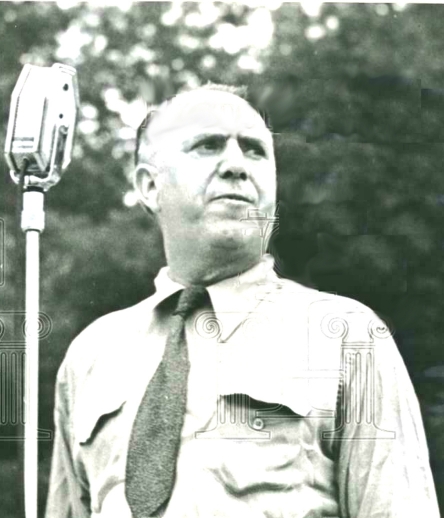
Edward James Smythe, a whisky-guzzling old reprobate whose great sorrow is that Hitler is too merciful toward the Jews, has decided to tell all – if anybody will listen. Smythe called PM‘s city desk the other day and, after establishing his identity as the well-known American-bred tinhorn Fascist, now under indictment with 27 others on sedition charges, said:

‘Remember that joint meeting of the Klan and the Bund at Camp Nordland over in Jersey? Well I organized that…’

Leaders of the German-American Nazi Bund Arrested 1940
1940, American Fascism, PM Tabloid

New Jersey Law Nabs Top Bundists
(PM Tabloid, 1940)

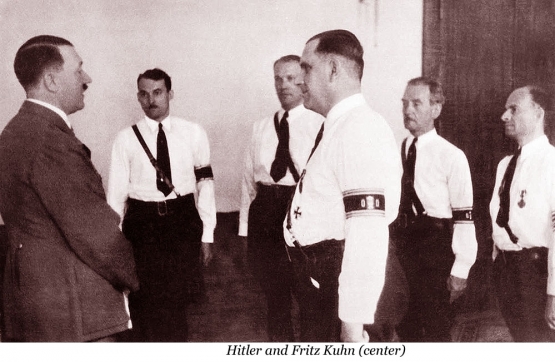
In 1937 the elders of New Jersey passed a law that was tailor-made for the thugs of Camp Nordland. Knowing well who the Bundists were, the law clearly condemned

‘the unlawful assembly of three or more persons’ and ‘and the uttering of speeches, the sale of literature, display of emblems and uniforms which counseled… hatred, violence or hostility against groups of persons… by reason of race, color, religion or manner of worship.’


In 1940 the law netted a harvest of the three highest Bund leaders.

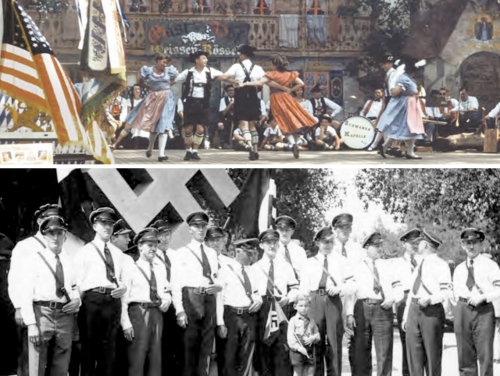
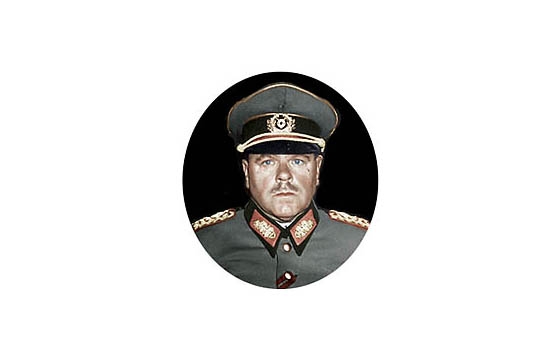
German-Americans and the Nazis | German-American Culture and 1930s Germany | German-Americans and Hitler
1941, American Fascism, Coronet Magazine

Adolf Hitler and the German-Americans
(Coronet Magazine, 1941)

This is a fascinating article not simply for what you’ll learn about Hitler, but for what you’ll additionally learn about the manner in which many Germans tended to view that queerest of hybrids, the German-Americans.


This article was written by Rene Kraus, who had been a German diplomat during the Wiemar Republic and a refugee under Hitler.


Click here to read about the German-Americans who called themselves Nazis.


Click here and you will learn that Kaiser Wilhelm was also bugged by German-Americans.

Advertisement

Use shortcode [oma_ad position="summary_top"] (or other position) in your theme or widgets to display OMA Promotions here.

Scroll to Top