Author name: editor

Talkies in Hollywood History | Struggling Actresses in Early Hollywood
1929, Hollywood Magazine, Talkies 1930

‘STAY HOME!”
(Hollywood Magazine, 1929)

The advent of talking pictures has enormously increased the number of those who vision a fairyland of fame and fortune if they can only reach Hollywood… Rumor had it that voice was important for the new Talkies, and every female whose misguided family had ‘cultivated’ Mamie’s vocal resources, usually without the faintest reasonable excuse, realized where her destiny lay. The rush was on… Several organizations in Hollywood find it possible to send girls back home before the tragedy point is reached… Periodically the Hollywood Chamber of Commerce broadcasts warnings.

Abortion History Parkmed Clinic | Parkmed Clinic Magazine Article 1973
1973, Abortion, Pageant Magazine

The Largest Abortion Mill
(Pageant Magazine, 1973)

On July 1, 1970, the New York State legislature ruled that all females, regardless of marital status, age or residency, might have an abortion within the state provided she was no more than 24 weeks pregnant. Less than a year later the largest industrial-strength abortion plant in the world opened up in New York City.

German Secret Army 1922 | Reichswehr Violations 1922-23
1922, Punch Magazine, Versailles Treaty

Fears of German Treaty Violations
(Punch, 1922 and Time, 1923)

These articles makes it clear that Clemanceau and Churchill were not the only ones who feared German duplicty in regards to the rearmament clause. Written a year apart are these two columns from Time and Punch insisting that the German Reichswehr had numerous weapons that were banned under the Versailles Treaty:

My attention had often been called to persistent rumors regarding Germany’s secret army. Whispers had reached me from quite reliable sources of over a million Teuton soldiers, well-officered and disciplined…


Click here if you would like to read about the 1936 Versailles Treaty violations.

Advertisement

Use shortcode [oma_ad position="summary_top"] (or other position) in your theme or widgets to display OMA Promotions here.

Mabel Walker Willebrandt Takes On Prohibition (Collier's Magazine, 1924)
1924, Collier's Magazine, Prohibition History

Mabel Walker Willebrandt Takes On Prohibition
(Collier’s Magazine, 1924)

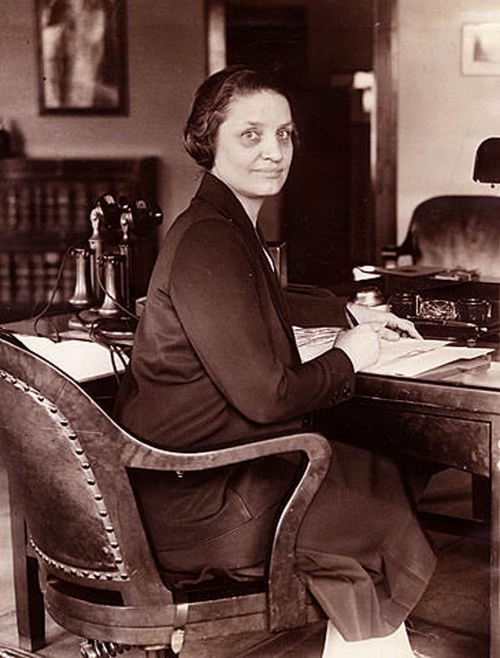
An article about Mabel Willebrandt (1889 – 1963), the Assistant Attorney General of the United States between the years 1921 through 1929, her tremendous successes in the past and her ambitions to hold fast in the enforcement of the Volstead Act:

‘Give me the authority and let me have my pick of 300 men and I’ll make this country as dry as it is humanly possible to get it,’ she said without the slightest trace of braggadocio. ‘There’s one way it can be done: get at the source of supply. I know them, I have no patience with this policy of going after the hip-pocket and speakeasy cases. That’s like trying to dry up the Atlantic ocean with a blotter.’

When Mrs. Willebrandt stepped down some seven years after this article went to press, she questioned the willingness of the nation’s law enforcement agencies to see the job through.

Fatty Arbuckle Has Something to Say... (Motion Picture News, 1919)
1919, Motion Picture News, Silent Movie History

Fatty Arbuckle Has Something to Say…
(Motion Picture News, 1919)

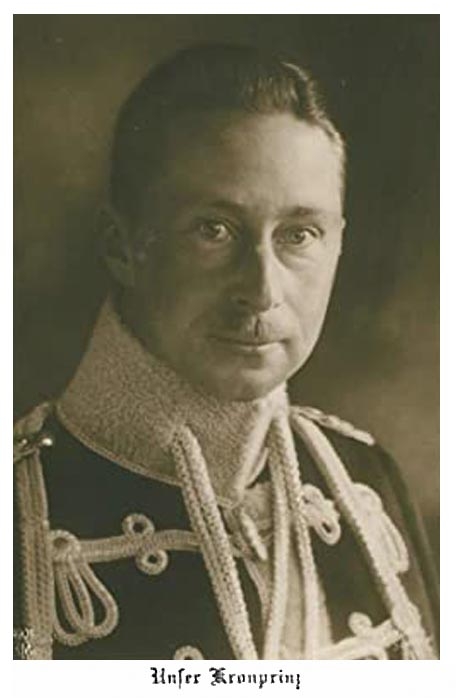
An interview with the famous silent film comedian, Fatty Arbuckle, as it appeared in a forgotten Hollywood trade magazine. Accompanying the interview are eight lines of biographical information pertaining to his Hollywood career as it stood in the year 1916. This short profile first appeared in The Studio Directory of The Motion Picture News and will serve to answer some of the questions readers might have concerning his career, before it took it’s tragic turn.


If you would like to read about the films of the Thirties, click here.
Click here to read about physical perfection during the Golden Age of Hollywood.

Advertisement

Use shortcode [oma_ad position="summary_top"] (or other position) in your theme or widgets to display OMA Promotions here.

Cover Girls (Coronet Magazine, 1948)
1940s Modeling, 1948, Coronet Magazine

Cover Girls
(Coronet Magazine, 1948)

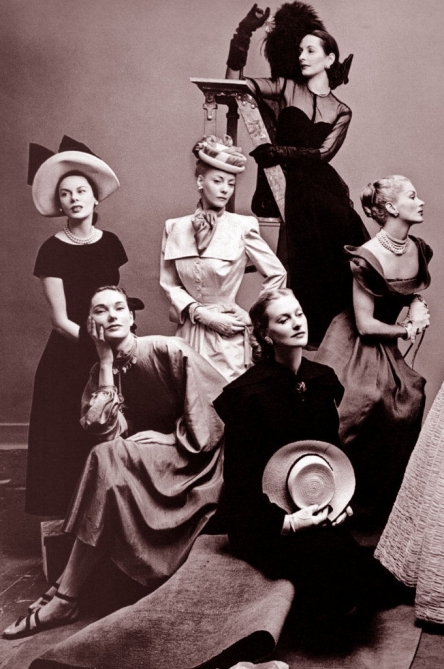
By 1948 the business of fashion modeling had developed into a $15,000,000-a-year industry. This article examines just how such changes evolved in just a ten year span of time:

American advertising struck pay dirt when it discovered the super salesgirls whose irresistible allure will sell anything from a bar of soap to a seagoing yacht…Always there was the secret whisper of sex. For women it was, ‘Be lovely, be loved, don’t grow old, be exciting’… For men it was, ‘Be successful, make everyone know that your successful, how can you get women if your not successful?’

The importance of attractive girls in our economy was stressed by John McPartland when he discussed modern advertising in his recent best seller, Sex in Our Changing World (1947).


Legendary fashion designer Christian Dior had a good deal of trouble with people who would illegally copy his designs; click here to read about that part of fashion history.

The Popularity of Italian Fascism 1923 | 1920s Italian History | 1923 Mussolini in Rome
1923, Benito Mussolini, Time Magazine

Fascism At It’s Peak
(Time Magazine, 1923)

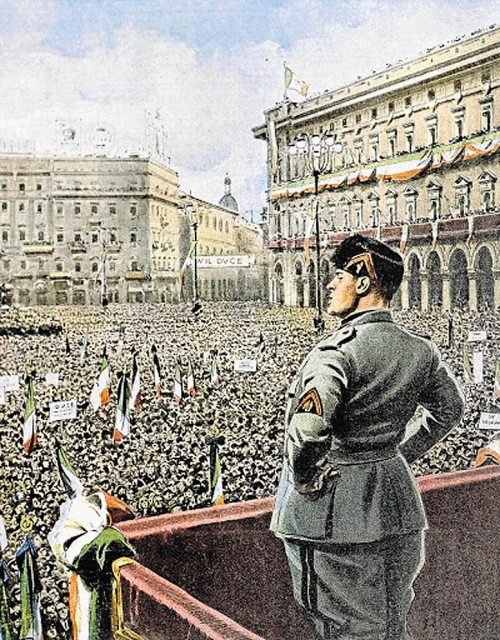
A dictatorship can last forever, if properly managed. It is my task to provide a mechanism that will endure and to have the various parts of this mechanism running without friction; then after I am gone it will be able to run itself. A dictatorship must answer the purpose for which it was introduced. Certainly the Fascist regime will last a very long time… Socialism works on the principle that all are equal, but Fascism knows we are far from equal. Take the great masses of human beings. They like rule by the few.

Advertisement

Use shortcode [oma_ad position="summary_top"] (or other position) in your theme or widgets to display OMA Promotions here.

Labor Unions Under Hitler 1935 | National Socialist Union of Employers and Workers
1935, The Literary Digest, The Nazis

A Socialist Remedy for Nazi-Germany’s Labor Questions
(Literary Digest, 1935)

A Socialist Workers’ Government has achieved a workers revolution in Germany without resorting to, though in some respects it approximates, Communism. Adolf Hitler has done it by wiping out all class privileges and class distinction, but the economics foundation of property rights and private capital has been left almost intact – for the present time.

The Third Reich, under Hitler, has wiped out corporate trade-unionism by forcing all workers to join one great government union, the National Socialist Union of Employers and Workers…


Eventually, unions were outlawed under Hitler.


Click here to read about the Nazi assault on the German Protestant churches in 1935.

Read an Article About the Socialist Aspects of Hitler’s Book, Mein Kampf.


Hitler’s economist admitted the German economy was socialist – more about that can be read here

The Failures of W.W. I American Press Censorship (Collier's Magazine, 1941)
1941, Censorship, Collier's Magazine

The Failures of W.W. I American Press Censorship
(Collier’s Magazine, 1941)

Seven and a half months before the second installment of the War-to-End-All-Wars was to begin, George Creel (1876 – 1953), America’s first official censor from World War I, wrote this article for the editors of Collier’s Magazine explaining why he believed that censorship in an open society cannot work:

As many scars bear witness, I was the official censor during the World War. For two years I rode herd on the press, trying to enforce the concealment demanded by the Army and Navy.

Advertisement

Use shortcode [oma_ad position="summary_top"] (or other position) in your theme or widgets to display OMA Promotions here.

The March of Time: Newsreel Journalism (Film Daily, 1939)
1939, Film Daily Magazine, Newsreels

The March of Time: Newsreel Journalism
(Film Daily, 1939)

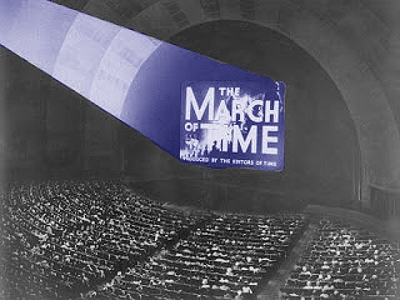
The attached magazine article first appeared in the long-forgotten Hollywood trade rag Film Daily and concerns the 1930s newsreel production company The March of Time:

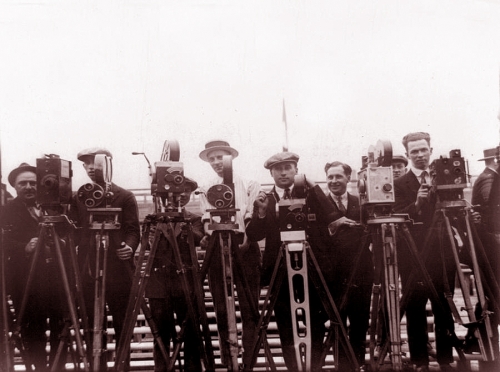
Since the beginning of the motion picture, the newsreel has been recognized as a vital medium of public information. Movie goers demand it. But, by the very nature of its technique and the swiftness with which it brings today’s events to the screen, the newsreel can give little more than headline news. And so it has created among movie-goers a desire to see more.

It was this desire ‘to see more’ that led the founders of ‘The March of Time’ to launch their new kind of pictorial journalism…The first issue appeared in some 400 theaters throughout the United States on February 1, 1935.

Newsreels at the Movies (Stage Magazine, 1936)
1936, Newsreels, Stage Magazine

Newsreels at the Movies
(Stage Magazine, 1936)

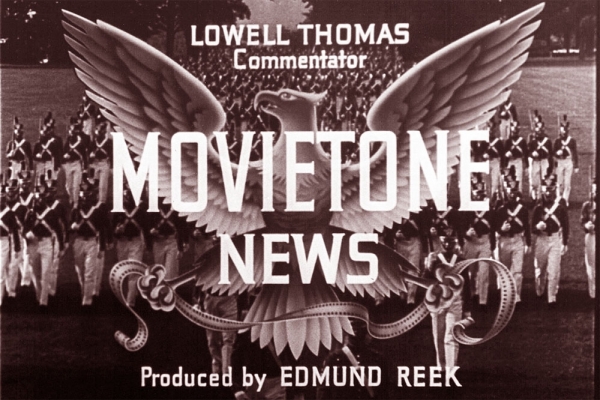
The journalist who wrote this 1938 piece saw much good in theater newsreels, believing that the newsreel encourages a keener sense of the present and imprisons it for history. He doesn’t refer to any of the prominent newsreel production houses of the day, such as Fox Movietone, Hearst Metrotone, Warner-Pathe or News of the Day but rather prefers instead to wax poetic about the general good that newsreels perform and the services rendered. This newsreel advocate presented the reader with a long, amusing list of kings, dictators and presidents and what they thought of having their images recorded.


Click here to read articles about Marilyn Monroe.

Advertisement

Use shortcode [oma_ad position="summary_top"] (or other position) in your theme or widgets to display OMA Promotions here.

What was Yank Magazine? (Coronet Magazine, 1944)
1944, Coronet Magazine, Magazines

What was Yank Magazine?
(Newsweek & Coronet Magazines)

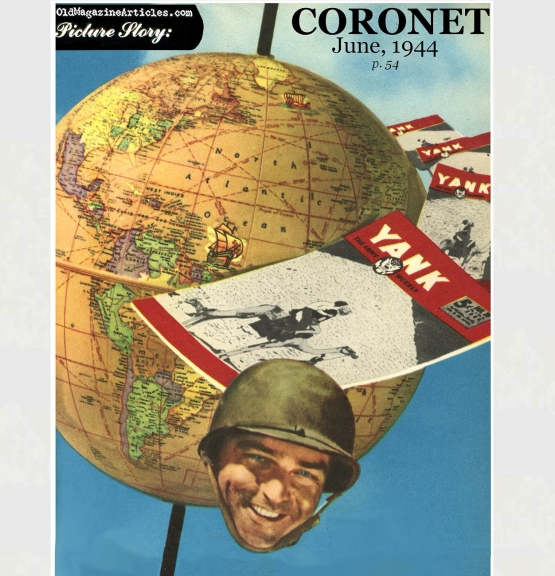
Inasmuch as OldMagazineArticles.com is devoted to archiving the articles from the olde Yank, we are also keen on posting article about the magazine and its editorial policies, for few periodicals said as much about that generation and their lot in the Forties better than Yank. Attached is a photo essay from Coronet Magazine, illustrated with some 23 images, that tell the tale of how that weekly operated.


When W.W. II came to a close Yank Magazine was no more, this article was written –

Life and Death of Leon Trotsky | Trotsky Biography
1940, PM Tabloid, Soviet History

The Life and Death of Trotsky
(PM Tabloid, 1940)

Appearing in the pages of a slightly left-leaning New York paper was this obituary of Leon Trotsky (1879 – 1940):

Thus, at 9:25 last night, ended the life of the man who, with Lenin, brought about the world’s most profound revolution and with his death, ended the bitterest of modern feuds – Trotsky against Stalin.

The View from the German Trenches (NY Times, 1915)
1915, World War One

The View from the German Trenches
(NY Times, 1915)

Originally appearing in the Berlin Tageblatt, this dispatch, written by Bernhard Kellerman (1879 – 1951), was later translated and printed in the The N.Y. Times magazine, Current History. It reported on the hardships and morale of German infantry serving in Flanders during the second year of the war.

Advertisement

Use shortcode [oma_ad position="summary_top"] (or other position) in your theme or widgets to display OMA Promotions here.

Scroll to Top