Author name: editor

The Lady was a Spy (Coronet Magazine, 1954)
1954, Coronet Magazine, Women (WWII)

The Lady was a Spy
(Coronet Magazine, 1954)

During World War II many women played roles as daring and courageous as were required of any man. This is the true story of one such woman, who gambled her life to help the Allies win the final victory in Europe.

…I began my mission in wartime France as a British secret agent. Colonel Maurice Buckmaster had told me what my assignment was:

You will parachute into France with a wireless operator and a demolition specialist. The drop will be 40 miles from Le Mans, where Rommel’s army is concentrated…


Click here to read about the women who spied for the Nazis during the Second World War.

The Mid-Century Look in Fashion (Pathfinder Magazine, 1950)
1950, 1950s Fashion, Pathfinder Magazine

The Mid-Century Look in Fashion
(Pathfinder Magazine, 1950)

Hair as short as a boy’s and feathered into wisps about the face… Accented waist… Long slim look… Spread-eagle effect about the shoulders obtained by deep armholes, bloused backs, big collars or little capes… Mostly narrow skirts but still plenty of full ones.


– so begins the attached two page Spring fashion review that was torn from the Women’s Page of the January 25, 1950 issue of Pathfinder Magazine. Judging from the six photographs that illustrate the column, Christian Dior continued call the tunes that other fashion designers had to dance to if they expected to attract a following. The New York designers whose efforts were singled out for praise were Lilly Daché, Hattie Carnegie, Ben Reig, Ceil Chapman and Vera Jacobs of Capri Originals.


More about 1950s hairstyles can be read here…

Advertisement

Use shortcode [oma_ad position="summary_top"] (or other position) in your theme or widgets to display OMA Promotions here.

1940s China Articles | ww2 China History
1943, Sino-Japanese Wars, Yank Magazine

Nationalist Chinese Trained by U.S. Army
(Yank Magazine, 1943)

This article will come as a surprise to the historical revisionists who run the Chiang Kai-Schek memorial in Taipei where U.S. involvement in W.W. II is oddly remembered only as having been the nation that sold oil to the Japanese. It is a well-illustrated Yank Magazine article filed from India regarding the military training of Chinese infantry under the watchful eye of General Joe Stilwell’s (1883 – 1946) American drill instructors.

The Lynching of African-Americans in France (NY Times, 1921)
1921, African-Americans

The Lynching of African-Americans in France
(NY Times, 1921)

This disturbing article from 1921 reported on a series of lynchings that took place between the years 1917 through 1919 by U.S. Army personnel serving in France during the First World War. The journalist quoted witness after witness who appeared before the Senate Committee regarding the lynchings they had seen:

Altogether…I saw ten Negroes and two white men hanged at Is-Sur-Tille. Twenty-eight other members of my command also witnessed these hangings and if necessary, I can produce them.

Read about racism in the U.S. Army of W.W. I

Advertisement

Use shortcode [oma_ad position="summary_top"] (or other position) in your theme or widgets to display OMA Promotions here.

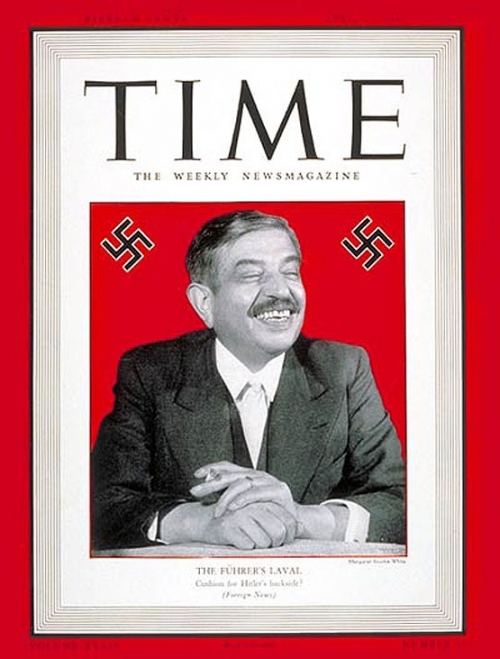
Pierre Laval Colluded with the Nazi Occupiers | France Under Premiere Pierre Laval
1942, France, Newsweek

Laval’s France
(Newsweek Magazine, 1942)

An article from the Spring of 1942 concerning the efforts of Premiere Laval to fool the French citizenry into loving their Nazi occupiers and hating the Allies.

Laval’s handicaps in reconciling the nation to the ‘new order’ are his personal unpopularity – careful observers estimate that 90 to 95 percent of the population spurn his policies – and the determination of the Nazis to stamp out resistance with terrorism.

Advertisement

Use shortcode [oma_ad position="summary_top"] (or other position) in your theme or widgets to display OMA Promotions here.

Political Crisis in Post-World War I Germany | German Revolution August 1919 | German Revolution Newspaper Article 1919
1919, Aftermath (WWI), Current Opinion Magazine

The Political Crisis in Post-War Germany
(Current Opinion Magazine, 1919)

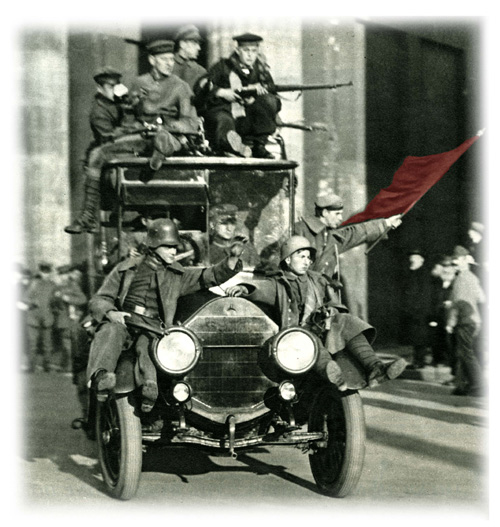
The Current Opinion foreign correspondent filed this short dispatch about the pandemonium unfolding in post-World War I Germany:

The great fact to the outside world is that a German parliament has actually precipitated a crisis. It threw out the Scheidemann cabinet. It presided over the birth of a Bauer one. It was the German parliament which dictated to the government regarding its composition, instead of meekly obeying the government, as had been the custom…


More about leftists in Weimar Germany can be read here.

Draft-Dodgers and Deserters in Federal Prison (American Legion Weekly, 1923)
1920, Draft Dodgers, The American Legion Weekly

Crack of Doom for the Draft Dodgers
(American Legion Weekly, 1920)

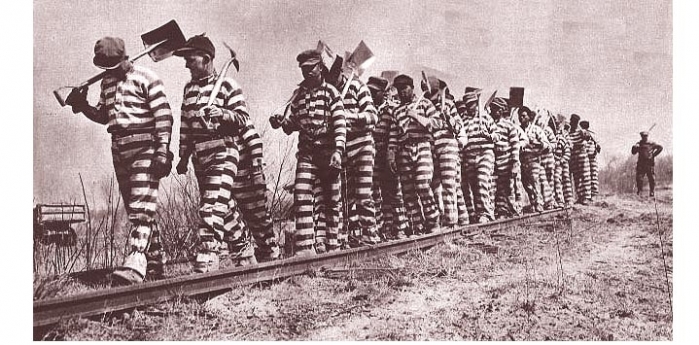
Doomsday looms just over the horizon for the draft deserters. That wily gentleman who hid behind a tree and chuckled as his neighbor shouldered a gun and marched off to battle is soon to have that chuckle mopped off his face. He will find that no tree vegetates enough to cover from shame the miserable carcass of his manhood…According to the latest reports, 173,911 is the maximum number of draft registrants chargeable with willful desertion.

Taro Yashima Refugee Artist from Japanese Fascism 1940 | 八島 太郎 | Japanese Emigrants to the United States
1944, Direction Magazine, Japanese Home Front

Taro Yashima
(Direction Magazine, 1944)

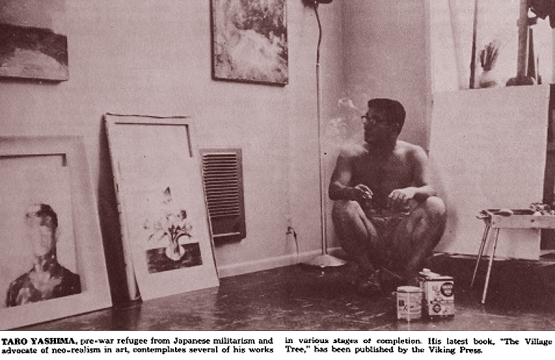
Many are the names of the refugee-artists who fled Hitler’s Germany for the United States – but few are the Japanese artists we remember who departed fascist Japan for America. This slim article tells the story of Taro Yashima (born Atsushi Iwamatsu, 1908 – 1994) who was brutalized by the militarists in his homeland and fled in 1939.

Advertisement

Use shortcode [oma_ad position="summary_top"] (or other position) in your theme or widgets to display OMA Promotions here.

1950s Soviet Cold War Cartoons | Anti-American Propaganda Cold War Cartoons | Old Soviet Cartoons
1952, Pathfinder Magazine, The Cold War

Stalin’s ‘Hate-America’ Campaign
(Pathfinder Magazine, 1952)

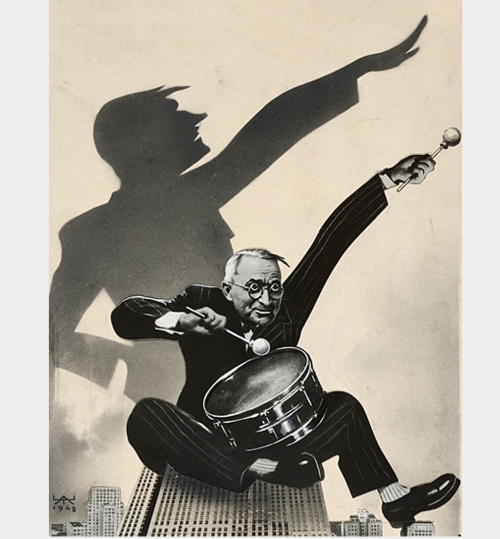
In 1952 the Soviet hierarchy began publishing an enormous amount of anti-American cartoons in magazines and newspapers throughout the worker’s paradise. As you will see, the Red cartoonists of yore were really big on comparing Americans to bugs and Nazis; they also delighted in making all American senior officers resemble the obese General Walker, who was the American corps commander leading the U.N. Forces in Korea.


The Soviets were very clever in the way in which they used radio to manipulate their people, click here to read about that…

Color Television: Hand Maiden to Art... (Art Digest, 1945)
1945, Early Television, The Art Digest

Color Television: Hand Maiden to Art…
(Art Digest, 1945)

Attached you will read a 1945 editorial written by the art critic Clayton Boswell, who articulately expressed the great hope that the art world had emotionally invested in color television:

This is what the art world has been waiting for – in the meantime struggling with the futility of attempting to describe verbally visual objects over the air. Now art on the television will be on par footing with music. And what radio has done in spreading the appreciation of good music will be duplicated with fine art…Then indeed will Andrew Carnegie’s dream of progress through education come true.

1920s Poverty in Germany | 1923 Time Magazine Article About German Starvation
1923, Aftermath (WWI), Time Magazines

The Emaciated Germans
(Time Magazines, 1923)

Fresh from his trip through post-war Europe, U.S. Senator Robert La Follette (1855 – 1925) declared:

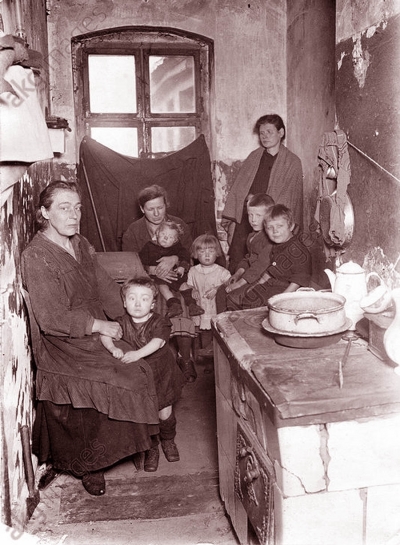
The Germans have been underfed for seven years. They are suffering for want of food, fuel and clothing. Young children and old people are dying from hunger and disease induced by hunger. Emaciated, despairing, they are waiting the end.

Advertisement

Use shortcode [oma_ad position="summary_top"] (or other position) in your theme or widgets to display OMA Promotions here.

Illegal For Women To Stand At Bars | NY State Legislation
1937, Pathfinder Magazine, Women's Suffrage

Inequality For Female Barflies
(Pathfinder Magazine, 1937)

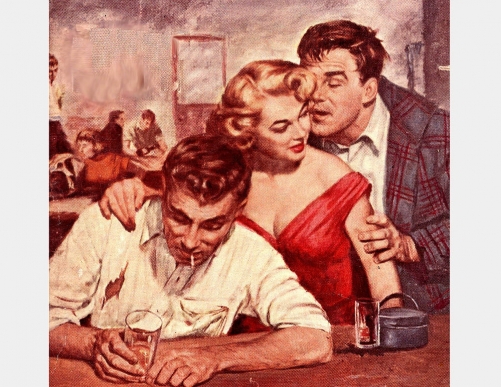
This column concerns a 1937 bill sponsored by New York State Senator Edward Coughlin. The senator’s bill provided for the arrest of any woman who stood at or in front of the bar of any club, hotel or restaurant licensed to sell alcoholic beverages. Coughlin held that any woman found guilty of this pastime should be charged with disorderly conduct. A few other states were also attracted to this legislation; it passed a year later only to be repealed in the early Sixties.


Click here to read about that moment in 1920 when American Women attained the vote.

Post-War Germany Struggled Under the Versailles Treaty (The Independent, 1921)
1921, Aftermath (WWI), The Independent

Post-War Germany Struggled Under the Versailles Treaty
(The Independent, 1921)

A 1921 column that clearly pointed out all the hardships created for Germany as a result of the Versailles Treaty.


The framers of that agreement could never have envisioned that the post-war landscape they designed for Germany would be pock-marked with such a myriad of frustrations – such as the border skirmishes between Germany and Poland, inflation, famine, the Salzburg Plebiscite and such harsh reparation payments that, when combined with all the other afflictions, simply served to create the kind of Germany that made Hitler’s rise a reality.


Another article about the despondency in 1920s Germany can be read here…

Charlie Chaplin Biography by Theodore Huff 1951 | Charlie Chaplin Primary Source | Mabel Normand on Charlie Chaplin
1951, Charlie Chaplin Articles, The New Leader Magazine

Charlie Chaplin Bio
(New Leader Magazine, 1951)

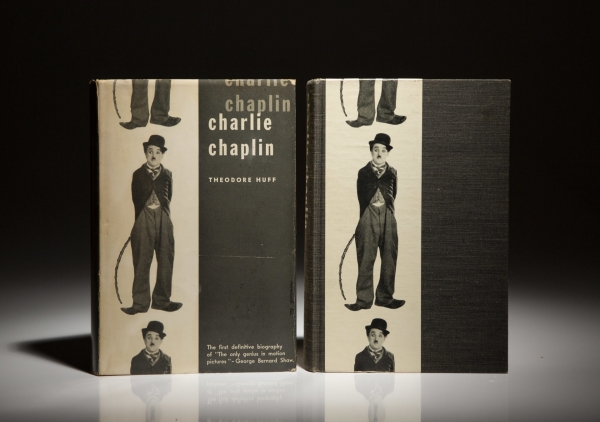
Here is an interesting review of Charlie Chaplin, a 1951 biography:

The acting of Charlie Chaplin has enriched our lives; it has become part of our experience. Regardless of how his casual and unserious politics are interpreted, irrespective of what attitude is taken toward newspaper stories of his private life, his films have demonstrably healthy influence on audiences. All one needs to do to prove this is to sit in a theater and listen to the genuine laughter which Chaplin evokes.

Advertisement

Use shortcode [oma_ad position="summary_top"] (or other position) in your theme or widgets to display OMA Promotions here.

Scroll to Top