Author name: editor

American W.W. I Cemeteries and French Gratitude (American Legion Monthly, 1936)
1936, Cemeteries, The American Legion Monthly

American W.W. I Cemeteries and French Gratitude
(American Legion Monthly, 1936)

Eighteen years after the last shot was fired in World War I, Americans collectively wondered, as they began to think about all the empty chairs that were setting at so many family dinner tables, Do the French care about all that we sacrificed? Do they still remember that we were there? In response to this question, an American veteran who remained behind in France, submitted the attached article to The American Legion Monthly and answered with a resounding Yes on all six pages:

…I can assure you that the real France, the France of a thousand and one villages in which we were billeted; the France of Lorraine peasants, of Picardy craftsmen, of Burgundy winegrowers – remembers, with gratitude, the A.E.F. and its contribution to the Allied victory.

The article is accompanied by eight photographs of assembled Frenchmen decorating American grave sites.

Click here to read about the foreign-born soldiers who served in the American Army of the First World War.

11/11 with the U.S. First Division (American Legion Weekly, 1919)
1919, Armistice Day Battle, The American Legion Weekly

11/11 with the U.S. First Division
(American Legion Weekly, 1919)

A 1919 article that recalled the U.S. Army’s First Division Armistice Day assault in the Bois de Romaigne:


The First Division was a pretty tired outfit. It had seen eleven months of almost continuous fighting…Rumors were around that there was going to be an armistice, but few listened and none believed. We had been bunked before.

The artillery fire increased and the machine guns rattled. You were on outpost and you fired your rifle, just fired it at nothing in particular. Everybody was doing it. The din increased until 11 o’clock, it ended with a crash that startled you. Fini la Guerre?

Advertisement

Use shortcode [oma_ad position="summary_top"] (or other position) in your theme or widgets to display OMA Promotions here.

US Army Armistice Day Assault 1918 | US Second Army Attacks November 11 1918 | Last Battle of WW I
1920, Armistice Day Battle, The Home Sector

The Armistice Day Offensive
(The Home Sector, 1920)

A Congressional committee of investigation has recently been treated to a scathing arraignment of the General Staff because military operations on the front of the Second Army were continued up to the hour of the signing of the Armistice on November 11, 1918. Members of the operations Section of the Staff, particularly the chief, Brigadier General Fox Conner, have been accused of slaughtering men on the last day of the war in order to satisfy their personal ambitions.

The Wrong Armistice Day (Yank Magazine, 1945)
1945, Armistice, Yank Magazine

The Wrong Armistice Day
(Yank Magazine, 1945)

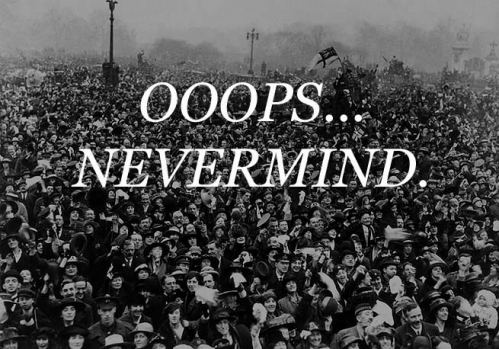
In the attached 1945 article an anonymous YANK MAGAZINE correspondent describes for his young readers how the last World War ended; the widely reported misinformation of a premature armistice treaty that was reported as being signed on November 7, 1918 – the retraction, and the subsequent announcement of the genuine armistice being signed four days later. General John J. Pershing recalled the scene in Paris:

It looked as though the whole population had gone out of their minds. The city turned into pandemonium. The streets and boulevards were packed with people singing and wearing all sorts of odd costumes. The crowds were doing the most clownish things. One could hardly hear his own voice, it was such bedlam.

Click here to read another article describing the Armistice Day celebrations in 1918 Paris.

Click here to read an explanation as to what was understood about the truce of November 11, 1918.
The News of the Armistice (The Stars and Stripes, 1918)
1918, Armistice, The Stars and Stripes

The News of the Armistice
(The Stars and Stripes, 1918)

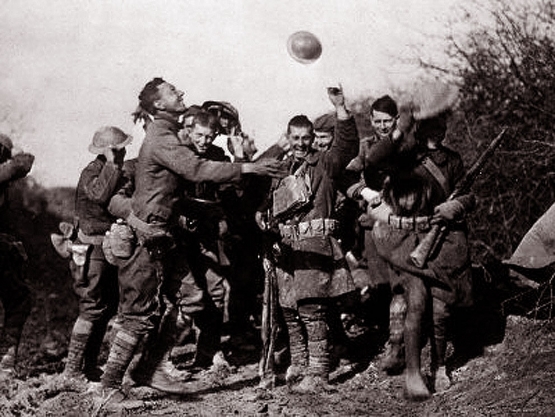
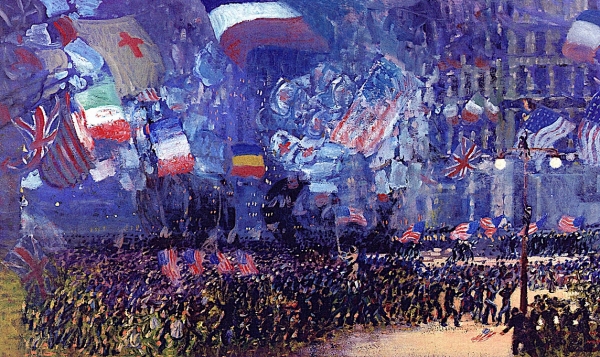
By the time this column was read by the American Doughboys, the truce was old news and this STARS AND STRIPES article makes for an interesting read as it imparts much of the November, 1918 excitement that filled the streets of Paris when the news of the Armistice hit the previously gloomy boulevards. This front-page article makes clear that many of the rumors pertaining to the German collapse could not be verified, yet affirms reports concerning the revolution in Germany, it’s food shortages and the Kaiser’s exile to Holland.

Advertisement

Use shortcode [oma_ad position="summary_top"] (or other position) in your theme or widgets to display OMA Promotions here.

Victorious WW2 Soldiers | WW2 american GIs in WW2 Europe
1945, Coronet Magazine, World War Two

A Pat on the Back for the GIs
(Coronet Magazine, 1945)

So they’ve given up.

They’re finally done in, and the rat is dead in an alley back of the the Wilhelmstrasse.

Take a Bow, GI – take a bow, little guy.

Far-flung ordinary men, unspectacular but free, rousing out of their habits and their homes – got up early one morning, flexed their muscles, learned the manual of arms (as amateurs) and set out across perilous oceans to whop the bejeepers out of the professionals.

And they did.

Advertisement

Use shortcode [oma_ad position="summary_top"] (or other position) in your theme or widgets to display OMA Promotions here.

Photographer Murray Korman Magazine Interview 1942 | Ralph Steiner Criticism 1942
1942, Photography, PM Tabloid

Murray Korman
(PM Tabloid, 1942)

Brilliant photographer Ralph Steiner (1899 – 1986) spent some time examining the photographs of Murray Korman (1902 – 1961) and, to his surprise, came away finding his work to be very interesting:

Murray Korman is the man whose pictures you see outside the musical shows and in girlie magazines… After four hours of looking I was dizzy. I figured that no man could take such pictures for 17 years and get satiated with lusciousness and bored by the sameness of the girls. I figured that all that kept Korman going was the profit motive. But when I went to his studio on Broadway I found I was all wrong.

Advertisement

Use shortcode [oma_ad position="summary_top"] (or other position) in your theme or widgets to display OMA Promotions here.

F.R. Trippler trench coat advertisement 1918
Trench Coats

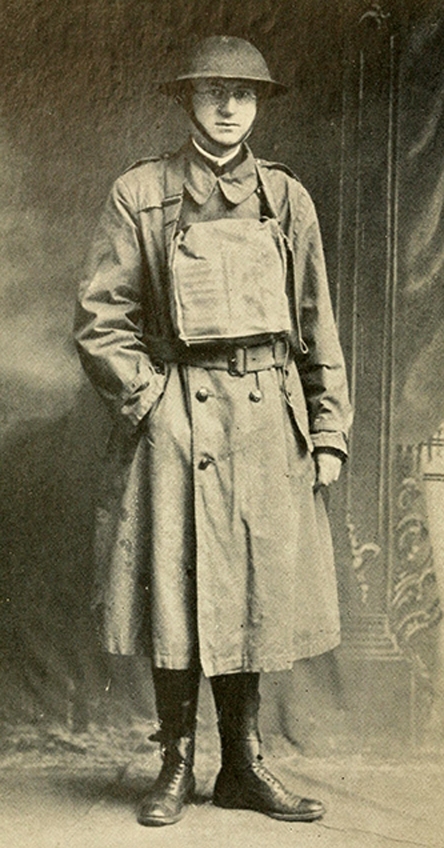
Four photographs of World War One Trench Coats
(A Current Book, 2005)

The following four images were first published in Stephen J. Chambers’ remarkable book, Uniforms & Equipment Of The British Army In World War Istyle=border:none, and they will give the viewer good understanding concerning the broad variety of different trench coats that were made available at the time.
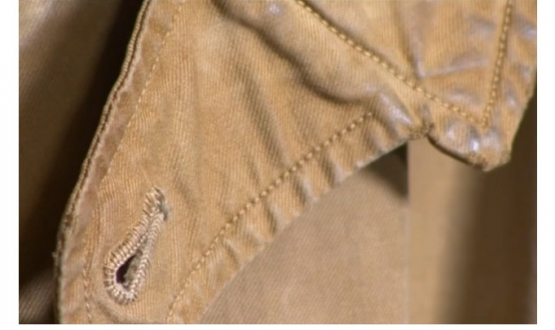
The afore mentioned British tailor’s journal West End Gazette remarked:

A feature (so far as tailors are concerned) of the European War is the variety of garments worn by officers, the details of which are suggested by the actual requirements of the campaign, rather than by the usual official regulations from the War Office. Never in the history of military tailoring, has such latitude been allowed, and officers are quick to recognize and avail themselves of the advantages of every practical design that is submitted for their approval.

Click here to read an old Vanity Fair magazine article about the trench coat.

One Tailor's Encounter with the Trench Coat (West End Gazette, 1915)
1915, The West End Gazette, Trench Coats

One Tailor’s Encounter with the Trenchcoat
(West End Gazette, 1915)

An excerpt from a British tailoring journal which explains what the garment is and is not. The illustrations show a long forgotten pattern with billows pockets and excessively long cuffs, which were intended to be gathered by wrist straps. You will also note that the trench coat is bereft of D rings and gas flaps and other fantasy elements of military-tailoring.

WW I Trench Coat 1918 | WW I Trench Coat American Army
1918, Trench Coats, Vanity Fair Magazine

The World War One Trench Coat
(Vanity Fair Magazine, 1918)

The fashion designers of the past ninety-four years all seem to be of one mind when it comes to the subject of the trench coat: it needs to be re-designed every four months. Years have passed, but still the garment has not reached a final state; meanwhile the rest of us only get one shot at a first impression. It is no matter whether the one who wears the trench coat is an actual trench-dweller or simply one who Tweets all day; the designers all have their opinions regarding the fluctuating number of straps and ‘D’ rings. There has been no end to the amount of cleverness applied to the re-treading of the garment and through the years we have been treated to doggy trench coats and lady’s evening gowns cut to resemble trench coats. Yet in the dark days of 1917, when the United States entered the fray, it was not lost on those who glanced at the attached column that too many of these raincoats were already buried in the damp grave yards of France and Belgium.


Click here to read about the fashion legacy of W.W. II: the t-shirt…

Advertisement

Use shortcode [oma_ad position="summary_top"] (or other position) in your theme or widgets to display OMA Promotions here.

History of Learning Disabilities | Teaching LD Students to Read
1937, Education, Pathfinder Magazine

Trying to Understand Learning Disabilities
(Pathfinder Magazine, 1937)

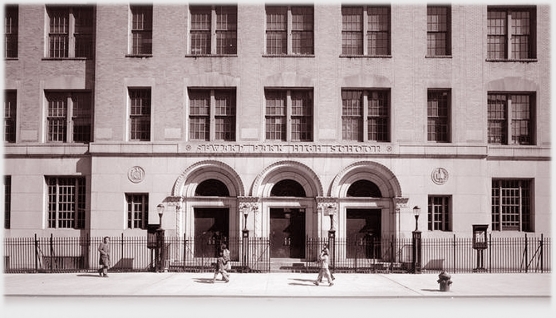
The kids who are discussed in this article would be called LD today – you don’t want to know how they were referred to in the early Twenties. Back then there were no Federally-funded commissions thronging with sympathetic PhD candidates to ramble on about convergence issues, processing concerns, the-classroom-learning-environment and the Learning Disabled. There were only frustrated kids, frustrated teachers and broken-hearted parents. This 1937 news article reports on the pioneering teachers at Seward Park High School in New York City and the earliest attempts to address the needs of students who suffered from language processing disorders, dyscalculia, dyslexia, dysgraphia and America’s favorite – good ol’ ADHD.

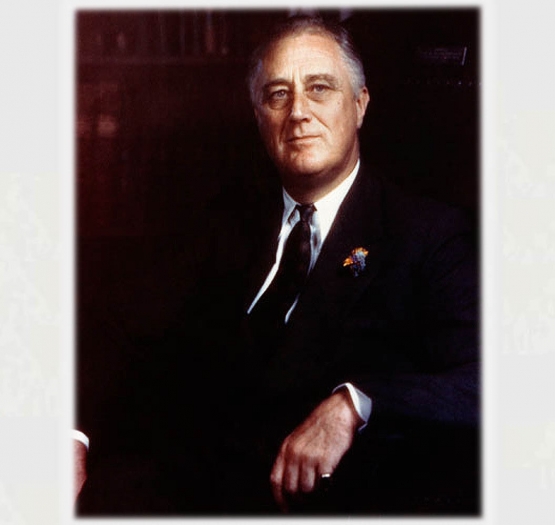
FDR First One Hundred Days in Office | Bills Passed By FDR First 100 Days | FDR and the 73rd congress 1933
1933, F.D.R., The Literary Digest

FDR: The First One Hundred Days
(Literary Digest, 1933)

Here are the Chief accomplishments of the special Session of the 73rd Congress, March 9 – June 16, 1933


These fifteen pieces of legislation were called the Honeymoon Bills – his critics pointed out that not one of them originated in Congress and added to their argument that Congress had been marginalized during the earliest period of his presidency.


FDR’s critics had a thing or two to say about the first year of The New Deal…


Click here to read about FDR and the press.

Robert Capa: A Life ('47 Magazine)
1947, 47 Magazine, Photography

Robert Capa: A Life
(’47 Magazine)

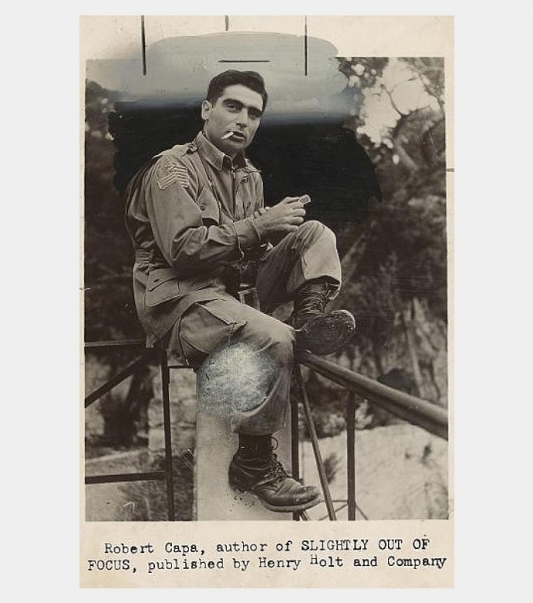
This article was written by John Hersey (1914 – 1993); it was written as a review of Slightly Out of Focus, the memoir by the most famous of World War II combat photographers, Robert Capa (né Andre Friedmann: 1913 – 1954). A fun and informative read, you will learn how the man came to be a photographer, how he acquired his nom de guerre, his work during the Spanish Civil War and the credibility that quickly followed.


Click here to read what General James Gavin remembered about photographer Robert Capa.

Advertisement

Use shortcode [oma_ad position="summary_top"] (or other position) in your theme or widgets to display OMA Promotions here.

Scroll to Top