






























“One explanation for our present success in getting supplies to the places where they are needed is that our armed forces have adopted the mass buying and distributing techniques perfected by our chain, department, and mail-order stores. No other nation has access to such knowledge. The top generals in the Quartermaster Corps ‘went to school’ to chain-store experts at the outbreak of the war and then commissioned many of the experts as fellow officers. Moreover, our armed forces picked up wholesale many techniques developed by our industries for moving things fast and with a minimum of fuss along our great highways, railways, seaways and airways… They put war on a business basis.”
“This experience in keeping things running has given us a big jump on our enemies. They have had to consider weapons as ‘expendable’. For example, when a Jap tank breaks down along the road it usually stays there. But you don’t see a bogged-down American tank along the road for more than a few minutes. Our ‘tank recovery trucks”, which look like the auto wreckers you would find in Muskogee, rush out and fix the tank on the spot, or pick it up and take it back to a depot for repair… We even have a mobile cobbler trucks that repair GI shoes within a few miles of of the front lines. The best designers of the American shoe business have pooled their lore and provided 239 different-sized shoes for our ‘foot soldiers’. GIs learned to to appreciate their American-built shoes when German prisoners began coming through the lines groaning and begging for ‘Amerikanishen schoen'”.
I found this web page concerning the various pleasing experiences many contemporary foreign soldiers have found when working with the American military in Afghanistan – some of them are quite amusing – you can read it here…
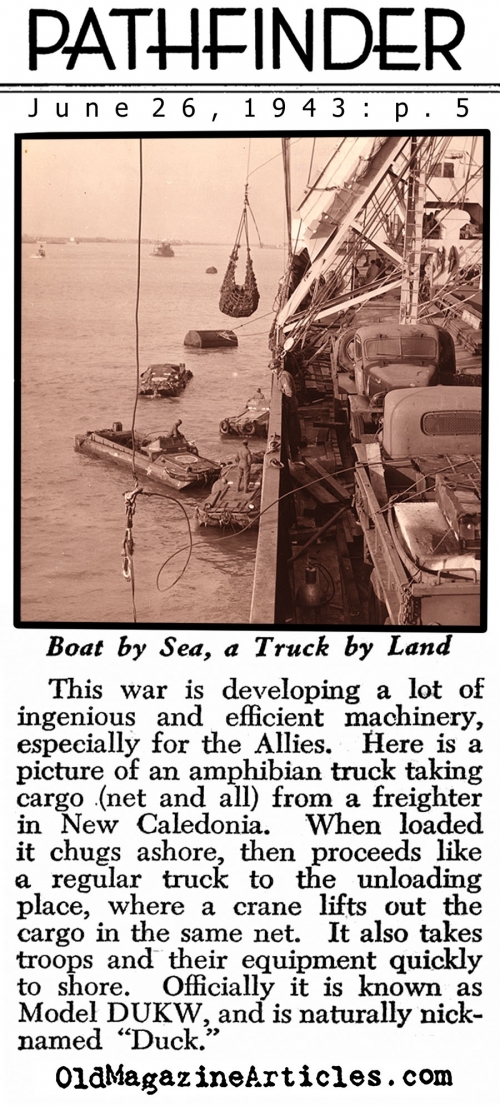
Click here to read more about the DUKWs of W.W. II…
Click here to read about the first American Paratrooper.
Click here to read about the inventions of W.W. II.