




























World War One

Find old World War 1 articles here. Find information on uniforms, women, gas warfare, prisoners of war and more.

Sniper Scopes Compared
(Literary Digest, 1916)

By enlarge, this article is a mildly technical piece that compares the German sniper scopes used during W.W. I to those of the British; happily, the amusing part of this essay is contained in the opening paragraph in which a British Tommy returning from the front, is quoted as exclaiming:

German snipers are better shots than the English because their rifles have telescopic sights that are illuminated at night.

American Snipers in France
(Literary Digest, 1919)

This article listed the skills required to survive as a sniper in W.W. I France:

One extremely important rule was that he should swab the muzzle of his rifle after every shot, to make sure that no moisture had collected there. One tiny drop of water would, upon the rifle’s discharge, send up a puff of steam that would reveal him to his carefully watching enemies.


To see a diagram of the American W.W. I sniper rifle, click here.


The Springfield 1903 Riflesstyle=border:none

W.W. I Gas Shells of the German Army
(Almanach Hachette, 1919)

It is often believed that the Germans were the first to use chemical weapons during the Great War, but historians like to point out that they were second to the French in this matter: in August of 1914, French infantry fired tear-gas grenades and in October, the Germans one-upped them with chemical artillery shells during the battle of Neuve Chapelle. However, the Germans are properly credited for being the first of the combatants to use chemical artillery with the most devastating effect. On April 22, 1915, the German Army hurled 520 gas shells at British and Canadian units in Belgium, killing five thousand and incapacitating ten thousand more. Following this historic incident, both sides began producing large amounts of gas shells and, of course, gas masks. The following is a black and white diagram depicting five different German gas artillery shells that were manufactured to be fired from a number of different guns of varying calibers.

Advertisement

Use shortcode [oma_ad position="summary_top"] (or other position) in your theme or widgets to display OMA Promotions here.

The U.S. Fires Her First Mustard Gas Shell
(Observer, 1918)

A cartoon by Alban B. Butler illustrating the overwhelming sense of glee that overcame American 1st Division artillerymen of World War I when they were charged with the task of firing the very first mustard gas shells ever to be fired by U.S. forces:

For months Americans had suffered from repeated concentrations of German mustard gas without the chance to retaliate in kind.

(No date was given)

The Fleecing of Liberators
(The Stars and Stripes, 1919)

By the time April of 1919 rolled around, it seemed to the Doughboys who were waiting for that boat to take them back to the good ol’ U.S. of A that their French allies had a short term memory and were terribly ungrateful for American sacrifices made on their behalf. Many post-Armistice letters written by the Doughboys were filled with snide comments about the high prices they were asked to pay for everyday merchandise, prices that seemed to be chosen just for them. Wisely, the Stars and Stripes editors chose not to take sides in this debate but ran this nifty little piece about the manner in which the Americans of 1782 treated their French allies during the American Revolution.


Click here to read about the foreign-born soldiers who served in the American Army of the First World War.

The Third Anniversary of Verdun
(The Stars and Stripes, 1919)

1919 marked the third anniversary of the Battle of Verdun and the grounds were still littered with the dead, surrounded by a tons of equipment, lying in open fields pock-marked by thousands of high explosive shells:

Spring will come to France next month, but Spring will not come to the field of Verdun. Already the grass is green on the broad stretches of Champagne; in the Vosges the snow patches linger only in the stubborn shelter of rocks that bar the sun,; but there is no portent of resurrection in all the stretch of churned up gravel marking the line of forts that protect the citadel of the Meuse from the Northeast…the shell holes are filled with clear water, and between them course new born brooks, sublimating in crystal pools from which no man would dare drink.

Advertisement

Use shortcode [oma_ad position="summary_top"] (or other position) in your theme or widgets to display OMA Promotions here.

U.S. Propaganda Pamphlets Dropped on the Hun
(The Stars and Stripes, 1919)

This is a swell read, written in that patois so reminiscent of those fast talking guys in 1930s Hollywood movies. One of the many reasons I find this era so interesting has to do with the fact that the war coincided with that mass-media phenomenon called advertising – and this article pertains exactly to that coincidence. This column was printed shortly after the war in order to let the Doughboys in on the existence of a particular group within the A.E.F. that was charged with the task of dumping propaganda leaflets all over the German trench lines:


Propaganda is nothing but a fancy war name for publicity and who knows the publicity game better than the Yanks?

Paris Furlough
(The Stars and Stripes, 1918)

A cartoon by C. LeRoy Baldridge (1889 – 1977) which depicted the streets of Paris in a way that only the A.E.F. could have witnessed it. A Yank-heavy Place de l’Opera is overwhelmed by sight-seeing Doughboys (note the Y.M.C.A. patch on the tour guide) and loitering officers lounging about over-priced cafes. In the foreground stands a bewildered Doughboy, dumb-struck by the passing gaze of an appreciative Parisienne while a few steps away a four-gold-chevroned private gets reamed for failing to salute the single-chevron looey. The stage is shared by bickering cabees, melancholy widows, wandering sailors, unforgiving MPs and a hard-charging, over-weight uniformed woman.

Click here to read about W.W. I art.

Click here to read the observations of U.S. Army lieutenant Louis L’Amour concerning 1946 Paris.

American Ambulance Volunteers in the Service of France
(The Stars and Stripes, 1919)

A thumbnail history of the United States Army Ambulance Service, which first arrived in June of 1917.

All through the hard French fighting of 1917 the 6,000 American ambulance drivers kept steadily at work in every sector of the French front. It was not until March, 1918, that the first sections of the service found themselves helping in battles with the fighting regiments of their own Army.

Many of the volunteers were college men, such as the poet E.E. Cummings, who wrote an interesting account of his days as an ambulance driver during the war.

Advertisement

Use shortcode [oma_ad position="summary_top"] (or other position) in your theme or widgets to display OMA Promotions here.

In the Doughboy Trenches
(The Stars and Stripes, 1918)

Mr. Junius B Wood, correspondent of the CHICAGO DAILY NEWS with the A.E.F. recently spent a week in the sector held by the American Army Northwest of Toul. He lived the life of a Doughboy, slept a little and saw a lot. He spent his days in and near the front line and some of his nights in No Man’s Land. Here is the second and concluding installment of his story, depicting life at the front as it actually is…

World War One American Prisoners of War
(The Stars and Stripes, 1919)

A brief notice reporting on the number of American Soldiers captured during the First World War. Also listed are the number of Americans who died in captivity as well as the number of prisoners taken categorized by branch of service. Interestingly, the notice states that 281 American Civilians were also taken prisoner.

Interestingly, the notice states that 116 American Civilians were also taken prisoner and we can assume that these Americans were with the Salvation Army, the Jewish Wellfare Board, the Knights of Columbus, etc.


Click here to learn what the Germans thought of American P.O.W.s…

Advertisement

Use shortcode [oma_ad position="summary_top"] (or other position) in your theme or widgets to display OMA Promotions here.

A New Propaganda Delivery Sysytem
(Literary Digest, 1917)

Photographs of a small, hand-held helium balloon being loaded with German translations of President Wilson’s April (1917) war address in order that they might be released over the German trenches. This small notice makes clear that this particular method of persuasion resulted in fifty Germans surrendering.

Shrapnel Shells
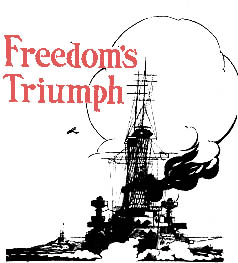
(Freedom’s Triumph, 1919)

Attached herein are diagrams of three World War I shrapnel artillery shells designed for use on land. The illustrator provided precise details concerning the mechanism of each – the precise operation of the percussion fuse, the time ring, the location of the acid and the essential shrapnel projectiles.

Germany Introduces the Leather Gas Mask
(Popular Mechanics, 1917)

A year and a half before the end of World War I, the German Army introduced the Lederschutzmasken, a leather gas mask made of specially treated Bavarian sheepskin with removable lenses. Designed to replace the rubberized cloth gas masks, the 1917 respirators proved to be far more effective against phosgene gas than the 1915 masks. The Allied powers dismissed the new design as evidence that material shortages on the German home front were forcing changes.

Click here to read about the celebrations that took place in Paris the day World War One ended.

Advertisement

Use shortcode [oma_ad position="summary_top"] (or other position) in your theme or widgets to display OMA Promotions here.

The Mills Bomb
(Trench Warfare, 1917)

A black and white mechanical drawing illustrating the most famous of British hand grenades that was ever used by British and Commonwealth forces during the course of World War One.

The German Anti-Tank Rifle
(Almanach Hechette, 1919)

As a response to the drastic increase in French and British tank production, German industry manufactured a powerful (if cumbersome) anti-tank rifle in early 1918. The weapon fired a 13mm armor-piercing bullet but it’s heavy recoil made the weapon difficult to operate. The Abris Museum in Albert, France has one of these currently on display.

Advertisement

Use shortcode [oma_ad position="summary_top"] (or other position) in your theme or widgets to display OMA Promotions here.

Scroll to Top