














47 Magazine Articles
Click Magazine Articles
Collier's Magazine Articles
Confederate Veteran Magazine Articles
Confidential Magazine Articles
Creative Art Magazine Articles
Current Literature Magazine Articles
Direction Magazine Articles
Film Daily Magazine Articles
Freedom's Triumph Articles
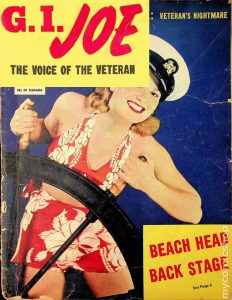
G.I. Joe Magazine Articles
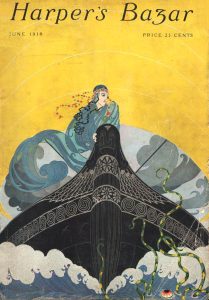
Harper's Bazaar Magazine Articles
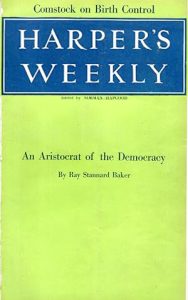
Harper's Weekly Articles
Hearst's Sunday American Articles
Ken Magazine Articles
La Baionnette Articles
Leslie's Magazine Articles
Liberty Magazine Articles
Life Magazine Articles
Men's Wear Magazine Articles
Newsweek Articles
Outing Magazine Articles
Outlook Magazine Articles
People Today Magazine Articles
Photoplay Magazine Articles
Pic Magazine Articles
PM Tabloid Articles
Punch Magazine Articles
Rob Wagner's Script Magazine Articles
Scribner's Magazine Articles
Sea Power Magazine Articles
Stage Magazine Articles
The American Legion Monthly Articles
The American Legion Weekly Articles
The Atlantic Monthly Articles
The Dial Magazine Articles
The Film Spectator Magazine Articles
The Flapper Magazine Articles
The National Park Service Articles
The New Republic Articles
The New York Times Articles
The North American Review Articles
The Saturday Evening Post Articles
The Saturday Review Articles
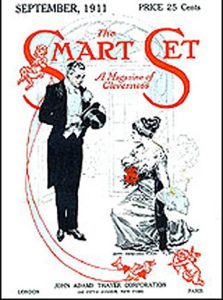
The Smart Set Articles
Theatre Arts Magazine Articles
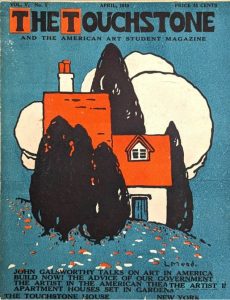
Touchstone Magazine Articles
Trench Warfare Articles
Vanity Fair Magazine Articles
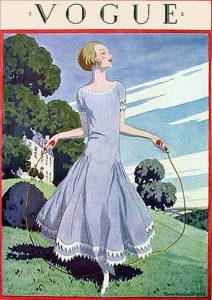
Vogue Magazine Articles

Poison Gas

Assorted
Gas Shells of
the W.W. I
German Army

• Almanach Hachette, 1919 •


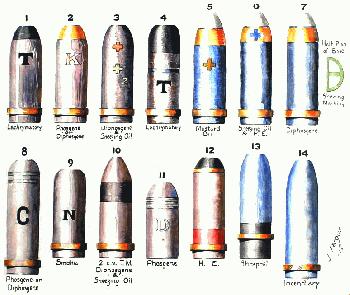
Attached are numerous black and white diagrams illustrating five different German gas artillery shells that were manufactured to be fired from a number of different guns of varying calibers.

Many have believed that the German Army was the first of the combatants to use chemical weapons during the First World War, but historians have pointed out that they were second to the French in this matter: in August of 1914, French infantry fired tear-gas grenades and in October, the Germans one-upped them with chemical artillery shells during the battle of Neuve Chapelle. However, the Germans are properly credited for being the first army to use chemical artillery with the most devastating effect. On April 22, 1915, the German Army hurled 520 gas shells at British and Canadian units in Belgium, killing five thousand and incapacitating ten thousand more. Following this historic incident, both sides began producing large amounts of gas shells and, of course, gas masks.

Click here to read more about gas warfare during World War One.

Read W.W. I Gas Shells of the German Army<br>(Almanach Hachette, 1919) for Free
ww1 gas warfare articleWW1 German Army Gas Shellsww1 poison gas German Armygas shells at Neuve Chapelle 1915ww1 poison gas artillery shellsww1 poison gas weaponsww1 poison gas weaponsfirst army to use chemical artillery 1915

Assorted [br]Gas Shells of [br]the W.W. I [br]German Army

ww1 gas warfare articleWW1 German Army Gas Shellsww1 poison gas German Armygas shells at Neuve Chapelle 1915ww1 poison gas artillery shellsww1 poison gas weaponsww1 poison gas weaponsfirst army to use chemical artillery 1915
Scroll to Top