






























Punch Magazine Articles
Pic Magazine Articles
Touchstone Magazine Articles
The Saturday Evening Post Articles
Hearst's Sunday American Articles
47 Magazine Articles
Film Daily Magazine Articles
People Today Magazine Articles
Ken Magazine Articles
Confederate Veteran Magazine Articles
The American Legion Monthly Articles
Men's Wear Magazine Articles
Current Literature Magazine Articles
Vanity Fair Magazine Articles
The New York Times Articles
Collier's Magazine Articles
Outlook Magazine Articles
The Film Spectator Magazine Articles
Liberty Magazine Articles
Harper's Bazaar Magazine Articles
Leslie's Magazine Articles
Freedom's Triumph Articles
Vogue Magazine Articles
Scribner's Magazine Articles
Photoplay Magazine Articles
Theatre Arts Magazine Articles
Outing Magazine Articles
The American Legion Weekly Articles
Stage Magazine Articles
The Atlantic Monthly Articles
Harper's Weekly Articles
PM Tabloid Articles
The North American Review Articles
La Baionnette Articles
The New Republic Articles
Creative Art Magazine Articles
Confidential Magazine Articles
Click Magazine Articles
Sea Power Magazine Articles
Rob Wagner's Script Magazine Articles
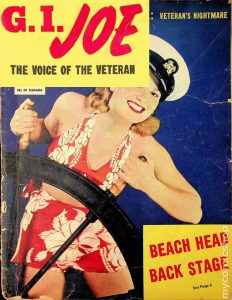
G.I. Joe Magazine Articles
The National Park Service Articles
The Flapper Magazine Articles
The Saturday Review Articles
The Smart Set Articles
Trench Warfare Articles
Life Magazine Articles
Direction Magazine Articles
The Dial Magazine Articles
Newsweek Articles

The Great Depression

Find archive articles on the Great Depression from the 1930’s. Our site has great information from old magazine and newspaper articles on the Great Depression.

‘Nobody Starves”
(New Outlook Magazine, 1934)

This article attempted to explain to that portion of the reading public fortunate enough to have jobs, just how the county relief programs worked and what was provided to the subscribers. The journalist did not weigh-in as to whether she approved or disapproved of the program but sought to explain that in places like the Mid-West, where houses outnumbered apartment buildings, allowances for such possessions were made. In the congested cities of the East it might be expected that the family car be sold prior to receiving relief funds, but in the states where distances were greater subscribers were permitted to hold on to their cars.

Children in Need
(Pathfinder Magazine, 1940)

In respect to their economic status, it has been estimated that one-half to two-thirds of the city children of America are in homes where annual income is too low to permit the family to buy items called for in an ordinary ‘maintenance’ budget – a budget of about $1,261 to meet the normal needs of living in a family of four.


CLICK HERE to read about African-Americans during the Great Depression.

Relief Bill Passed by Congress
(Pathfinder Magazine, 1932)

Republican President Herbert Hoover had made numerous attempts to get a Federal relief bill through the Congress to the ailing citizenry, but the Democratic congress repeatedly disagreed as to how the funds were to be distributed. Finally an agreement was reached as Hoover’s administration was reaching the end of his term and the Emergency Relief and Construction Act was passed into law.

The obnoxious features which had been injected into the legislation from time to time by Members of the House of Representatives and had so long delayed action, have been eliminated.

Advertisement

Use shortcode [oma_ad position="summary_top"] (or other position) in your theme or widgets to display OMA Promotions here.

The Great Depression and the Sexes
(Coronet Magazine, 1947)

Unemployment permitted a great deal more companionship between young men and young women, which ordinarily would have led to marriage. The only thing lacking was money. The arrangements called, simply, ‘living together’ became common. Often the man or woman was married, and couldn’t get , couldn’t afford, or didn’t want a divorce. Sometimes the man simply refused to marry, and the woman took him into her home or moved into his as the next best thing…


You Might Also Care to Know About The Sex Manners of the Twenties or Men & Women During W.W. II

The 1930s March to the Pews
(Literary Digest, 1933)

…since the Depression began one out of every six banks has failed, one out of every forty-five hospitals has closed, one out of every twenty-two business and industrial concerns has become bankrupt…


– for those living in the digital age, the quote posted above is simply another mildly interesting, stale line from American history – but when those words were written in 1932 it meant for those who read it that there world was falling apart. So much of what they were taught to believe in was collapsing before their very eyes and as a result they felt a need to know God – and know Him they did; half way through 1932 churches and other religious bodies showed a total net gain of 929,252 members thirteen years of age or over – one of the largest gains ever recorded – and the total membership, thirteen years or more of age, reached the record figure of 50,037,209.


Click here to read about the American South during the Great Depression.

Farm Credit Administration Established
(Pathfinder Magazine, 1937)

Unlike the CCC, WPA, CWA, or DRA, you can type FCA.gov into a search engine and actually make contact with one of FDR’s multiple alphabet agencies. This 1937 article will tell you why it came into being – but it won’t tell you why the agency wasn’t done away with during any of the decades of plenty that followed.

Advertisement

Use shortcode [oma_ad position="summary_top"] (or other position) in your theme or widgets to display OMA Promotions here.

How Poor Was America?
(New Outlook Magazine, 1933)

Economist Robert R. Doane (1889 – 1961) presented numerous charts and figures amassed between 1929 through 1932 to argue that America was still a wealthy nation despite the destruction wrought by the Great Depression:

In 1929 the United States held 44.6 percent of the total wealth of the world. In 1932 that proportion has increased to almost 50 percent. We still have half the banking-power of the world. We still have half the income. In all of the items of economic importance and efficiency, the United States still stands supreme.

Dormant Capital
(Pathfinder Magazine, 1934)

This article reported on a phenomenon that is common in our own day as well as the era of the Great Depression. It exists in any locale that fosters a lousy environment for business – for when the entrepreneurial classes loose their daring for investing in commercial ventures and when bankers refuse to loan money for fear that they will never be paid back, it leads to the creation of what is called dormant capital – money that should be working, but isn’t.

There is now piled up in banks some $46,000,000,000. As opposed to $39,000,000,000 at the low point of 1933, and the idle capital is on the increase. World trade has virtually broken down.


As one editorial makes clear, FDR had a tough time freeing up private capital for investments, click here to read it.

Advertisement

Use shortcode [oma_ad position="summary_top"] (or other position) in your theme or widgets to display OMA Promotions here.

Understanding Unemployment
(Pathfinder Magazine, 1937)

In order for FDR’s Federal Government to layout their planned economy they had to be able to forecast the future trends in unemployment, and with that in mind it was deemed suitable that a committee be convened to study the matter. The board of brainiacs called themselves the National Resources Committee and their study was boundless and all encompassing. This article summarizes the findings of one of the organization subcommittees; their 450,000-word report was titled Technological Trends and National Policy, Including the Social Implications of of New Inventions. The head of this subcommittee was the famed sociology professor William F. Ogburn, and as the title implied, the report studied the blessing and the curse that is the nature of technological innovation.

Food Riot
(Pathfinder Magazine, 1931)

“What has been generally overlooked in the present generous aid of the destitute is that country people have largely escaped notice.”

– these are the opening lines of the attached article that reported on the hunger that was spreading throughout portions of Central Arkansas during the early winter of 1931. In the town of England, as many as 300 farmers, whose crops had died in the drought, assembled as a mob and declared that they would have [food] – even “if they had to take it from the shelves themselves.”

The Gloom Of It All
(Pathfinder Magazine, 1932)

It must have been very difficult to maintain a sunny disposition back in the Thirties! No doubt, residents of the Great Depression would often have to make their own good news. For example, that same month in 1932 when this article appeared it was also announced that for the first time in the nation’s history alien emigration from the United States during the last fiscal year exceeded immigration [to the United States], figures being 103,295 and 35,576 respectively – there! For those people who disliked hearing foreign accents on the streets, there was a glimmer of hope – and that’s what this article was all about: finding hope.

Advertisement

Use shortcode [oma_ad position="summary_top"] (or other position) in your theme or widgets to display OMA Promotions here.

The Great Depression in the South
(Pathfinder Magazine, 1938)

In the Summer of 1938 the New Deal administration turned its attention to the Southern States in an effort to solve the poverty that had long afflicted the region and was especially keen during the Great Depression:

The War Between the States freed the slaves, but it did not free the South. Old plantations were broken up. Pressed to meet mortgages, farmers leased part of their farms to tenants. Cheap [African-American] labor remained and children were pressed into service on the Southern fields. Cotton and low labor costs stayed in the South.


Read about FDR’s African-American advisers here…

The Five Wealthiest Counties
(Pathfinder Magazine, 1937)

During the summer of 1937 the U.S. Census Bureau released the data that was compiled by it’s business department concerning the payrolls dolled out by the nation’s wealthiest industries in 1935. The information gleaned from these payrolls indicated which were the five richest counties in the country based on personal income. These small municipalities could be found in two Eastern states, two Mid-Western states and one Western state.


Jump ahead to our own time and you’ll learn how much the game has changed: today the top five wealthiest counties in the United States are all located in the Maryland and Virginia Suburbs that lie just outside the District of Columbia!

Advertisement

Use shortcode [oma_ad position="summary_top"] (or other position) in your theme or widgets to display OMA Promotions here.

The Chain Store Problem
(New Outlook Magazine, 1933)

The total amount of retail trade in 1929 was approximately $50,033,850,792 in net sales, but the ten percent of chain stores did $10,771,934,034 of this trade – or twenty-one and a half percent of the total! In the miniature department store field, selling articles for nickles, dime, quarters and dollars, earning charts show an average return on capital invested in 1920 of nearly fourteen percent. In 1925, this percentage rose to twenty-five. In 1930, after trade had begun to suffer, earnings still were in excess of of thirteen percent.

Unlikely Communists & Red Teachers
(New Outlook Magazine, 1934)

This article starts out discussing that during the Great Depression communism was beginning to appeal to a small number of unlikely Americans of the country club variety; by the fifth page, however, it heats up considerably when the subject turns to the number of communists who are charged with the instruction of American youth:

Although no accurate statistics on the subject are available, surveys and various reports indicate that there are 150,000 enthusiastic, thinking young Communists in the public schools and state universities of the United States today. Not nearly that many men are enrolled in the American Army. And the figure is a minimum – some estimates place the scholastic communists at 250,000.


The favorite newspaper among American communists was THE DAILY WORKER – read about it here…

Establishing A Misery Index
(New Outlook Magazine, 1933)

A great observer of the Washington merry-go-round, columnist Jay Franklin (1897 – 1967) pointed out in this article that there are Federal agencies entrusted with the sorts of information that, when analyzed properly, will serve both as an indicator of prosperity and of misery as they spread or recede across the land. …if one wished to know whether the people were desperate and suffering there were certain matters which would demonstrate it:

the number of evictions, the number of illegitimate births, the number of articles pawned or redeemed, the growth or decline of unnatural vice, the number of suicides. Information on these points, if currently accessible, in compact statistical form, would show whether the people were socially happy or economically satisfied.

Advertisement

Use shortcode [oma_ad position="summary_top"] (or other position) in your theme or widgets to display OMA Promotions here.

Scroll to Top