
The Smart Set Articles
Newsweek Articles
Photoplay Magazine Articles
The American Legion Weekly Articles
Outing Magazine Articles
Outlook Magazine Articles
Scribner's Magazine Articles
Punch Magazine Articles
Confederate Veteran Magazine Articles
Touchstone Magazine Articles
Theatre Arts Magazine Articles
Stage Magazine Articles
Liberty Magazine Articles
The Saturday Evening Post Articles
The Film Spectator Magazine Articles
Trench Warfare Articles
The National Park Service Articles
The Dial Magazine Articles
Creative Art Magazine Articles
The New York Times Articles
Sea Power Magazine Articles
The Atlantic Monthly Articles
Collier's Magazine Articles
The North American Review Articles
The Saturday Review Articles
Direction Magazine Articles
The Flapper Magazine Articles
Ken Magazine Articles
La Baionnette Articles
Vanity Fair Magazine Articles
Harper's Bazaar Magazine Articles
Confidential Magazine Articles
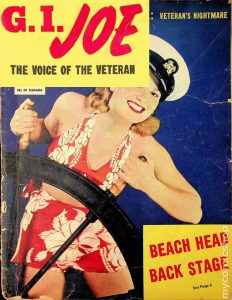
G.I. Joe Magazine Articles
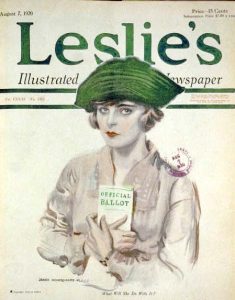
Leslie's Magazine Articles
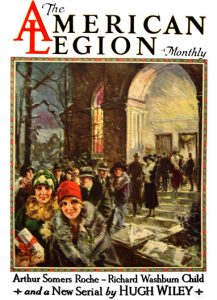
The American Legion Monthly Articles
Freedom's Triumph Articles
PM Tabloid Articles
People Today Magazine Articles
Pic Magazine Articles
Hearst's Sunday American Articles
Film Daily Magazine Articles
Current Literature Magazine Articles
Harper's Weekly Articles
47 Magazine Articles
Men's Wear Magazine Articles
Life Magazine Articles
The New Republic Articles
Vogue Magazine Articles
Rob Wagner's Script Magazine Articles
Click Magazine Articles

Soviet History

The 50th Anniversary

The red scribe who penned this article had no idea that the clock was ticking when it came to the USSR (it collapsed some twenty-three years later) and that the name Soviet Union would soon serve as the answer for assorted parlor games such as Trivial Pursuit. Nonetheless, the writer’s misplaced pride came bubbling forth in this column that celebrated their 50th year in existence.

The First Atheist Government
(The Commonweal, 1930)

Throughout much of the Twenties and Thirties the religious communities of the Western world looked at the nascent Soviet Union with some fascination: not only was it the first atheist government to be established, but it was the first government to be openly hostile to all religions alike.


An article about Chinese persecution of the Christian Church can be read here…


Click here to read about the Nazi assault on the German Protestant churches in 1935.

The Soviet Press on Famine Conditions
(Literary Digest, 1923)

Indignant accusations of trickery in dealing with the grain supply, which have been launched against the Russian Soviet Government by American and European editors, who were amazed to find that Russia was exporting grain in the midst of a new famine, are not particularly noticed by the Moscow press, which however, in such journals as the Moscow ‘Isvicstia’ and the ‘Economcheskaia Gizn’ feature reports of starvation in the Volga provinces.

Although there is no mention of the Soviet famine in this 1938 interview with Leon Trotsky, it is interesting nonetheless; to read it for free, you may click here.

Advertisement

Use shortcode [oma_ad position="summary_top"] (or other position) in your theme or widgets to display OMA Promotions here.

Georgia Invaded
(Literary Digest, 1921)

Nine months after the Soviet Union signed a good-will agreement respecting the autonomy and independence of its Black Sea neighbor, Vladimir Lenin’s Red Army quickly overran the borders of the Democratic Republic of Georgia on February 16, 1921; seizing the Georgian capital nine days later, Russian General Anatoli Ilyich Gekker declared the establishment of the Georgian Soviet Socialist Republic.


Additional magazine and newspaper articles about the Cold War may be read on this page.

The Life and Death of Trotsky
(PM Tabloid, 1940)

Appearing in the pages of a slightly left-leaning New York paper was this obituary of Leon Trotsky (1879 – 1940):

Thus, at 9:25 last night, ended the life of the man who, with Lenin, brought about the world’s most profound revolution and with his death, ended the bitterest of modern feuds – Trotsky against Stalin.

Soviet Treaty Violations
(U.S. Dept. of Defense, 1962)

This is a carefully cataloged list of the international treaties that the Soviet Union signed and agreed to abide by during the course of their first forty years (1920 – 1960). Printed next to these agreements are listed the dates the Soviets chose to violate the treaties and the direct results that ensued.


Promises are like pie crust, made to be broken. – V.I. Lenin


Click here to read about the Hitler-Stalin Non-Aggression Pact.

Advertisement

Use shortcode [oma_ad position="summary_top"] (or other position) in your theme or widgets to display OMA Promotions here.

‘How We Made the October Revolution”
(New York Times, 1919)

Here is Leon Trotsky’s reminiscence of those heady days in 1917 that served as the first step in a 75 year march that went nowhere in particular and put millions of people in an early grave – this is his recollection of the fall of the Kerensky Government and the creation of the Union of Soviet Socialist Republics(R.I.P.).

THE REVOLUTION was born directly from the war, and the war became the touchstone of all the revolutionary parties and energies…


The review of the first English edition of Das Kapital can be read here…

The Conversational Lenin
(Literary Digest, 1921)

When Washington D. Vanderlip made his way to the nascent Soviet Union to secure mining rights in Siberia he wrote of his meeting with the nation’s first dictator, Vladimir Lenin, and revealed a Lenin that was seldom seen in print. He wasn’t blathering on about the proletariat or the bourgeoisie but rather musing about his pastimes and dreams for the future.

On his desk was a copy of the New York Times, well-thumbed. ‘Do you really read it?’ I asked. ‘I read the New York Times, the Chicago American and the Los Angeles Times regularly,’ he said.’Through the New York Times I keep track of the atrocities, the assassinations and the new revolutions in Russia. Otherwise I wouldn’t know where to find them.’

Advertisement

Use shortcode [oma_ad position="summary_top"] (or other position) in your theme or widgets to display OMA Promotions here.

The Similarities Between Fascists and Bolsheviks
(The Literary Digest, 1933)

Here is a brief glance at various observations made by a correspondent for The London Observer who compared the two dominate tribes found in 1933 Moscow and Berlin. The journalist was far more distracted by the similarities in their street hustle and their speechifying rather than their shared visions in governance and culture – for example, both the Nazis and Soviets were attracted to restrictions involving public and private assembly, speech and gun ownership while sharing an equal enthusiasm for May Day parades and the color red. Additionally, both totalitarian governments held religion as suspect and enjoyed persecuting their respective dupes – for the Nazis that was the Jews and for the Communists it was the bourgeoisie.


Read a magazine piece that compares the authoritarian addresses of both Hitler and Stalin – maybe you will see how they differed – we couldn’t.


Read an article explaining how the Soviets used early radio…

The Police State
(Literary Digest, 1937)

Victor Serge (1890 – 1947) was a devoted Bolshevik writer who was highly critical of Joseph Stalin; he spent five years in the gulag for his subversive activity and would have no doubt died there had not an international mishmash of humanitarians raised a stink about his incarceration. He was exiled from the Marxist-dream-land in 1936 – the attached column is an extract from his gulag writings concerning the cruelties of Stalin’s secret police.

Advertisement

Use shortcode [oma_ad position="summary_top"] (or other position) in your theme or widgets to display OMA Promotions here.

Fracture in Moscow
(Literary Digest, 1921)

Sharp encounters between Lenin, Trotsky, Zinoviev, Dzerzhinsky and other Bolshevik leaders took place when Trotsky tried to take Warsaw in 1920 and the majority of the committee antagonized his policy, we learn from a letter written by a Bolshevik adherents in Russia, who is ‘presumably‘ high up in the Soviet hierarchy and a partisan of Trotsky.

Advertisement

Use shortcode [oma_ad position="summary_top"] (or other position) in your theme or widgets to display OMA Promotions here.

A Love Letter to Lenin
(Soviet Russia Magazine, 1920)

Sweet, sweet words from British socialist George Lansbury (1859 – 1940) concerning his first encounter with the Soviet dictator Vladimir Lenin:

He is about 50 years old, of medium height and carries himself with a slight stoop. He has fine eyes, which look you straight in the face, sometimes with a whimsical expression, as if he were trying to discover if anything unexpressed lay behind your words. They have, too, an expression of careful kindness; and you put him down as a man who musty love children.

Soviet-Approved Poetry
(Literary Digest, 1921)

No liberty of the press exists in Russia and so none but a poet recognized by the Government can get his verses published… In justice to Russian letters it must be said that all talented Russian authors have abstained from writing, or at any rate, from publishing their works during the rule of the proletariat, so that only the official poets, the literati hired by the Government, have their say.


The only Soviet-approved poet they single out for derision is Vladimir Mayakovsky (1893 – 1930), who is quoted liberally.

Advertisement

Use shortcode [oma_ad position="summary_top"] (or other position) in your theme or widgets to display OMA Promotions here.

Scroll to Top