













The Saturday Evening Post Articles
Vogue Magazine Articles
The Saturday Review Articles
The North American Review Articles
Theatre Arts Magazine Articles
The Flapper Magazine Articles
Current Literature Magazine Articles
Men's Wear Magazine Articles
Harper's Bazaar Magazine Articles
The New York Times Articles
The National Park Service Articles
Stage Magazine Articles
Harper's Weekly Articles
Life Magazine Articles
The Smart Set Articles
The New Republic Articles
Hearst's Sunday American Articles
Pic Magazine Articles
The Dial Magazine Articles
People Today Magazine Articles
Click Magazine Articles
Sea Power Magazine Articles
Outing Magazine Articles
Scribner's Magazine Articles
Creative Art Magazine Articles
Rob Wagner's Script Magazine Articles
Outlook Magazine Articles
La Baionnette Articles
Touchstone Magazine Articles
Newsweek Articles
Trench Warfare Articles
PM Tabloid Articles
Collier's Magazine Articles
Confidential Magazine Articles
Liberty Magazine Articles
Direction Magazine Articles
Ken Magazine Articles
The Atlantic Monthly Articles
G.I. Joe Magazine Articles
Photoplay Magazine Articles
Film Daily Magazine Articles
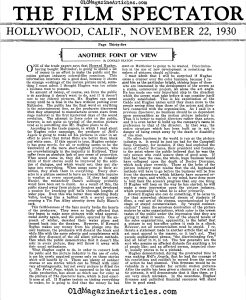
The Film Spectator Magazine Articles
Punch Magazine Articles
Confederate Veteran Magazine Articles
Vanity Fair Magazine Articles
47 Magazine Articles
The American Legion Monthly Articles
Freedom's Triumph Articles
The American Legion Weekly Articles
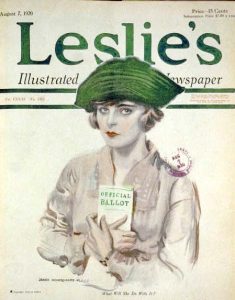
Leslie's Magazine Articles

Hollywood History

Betty Grable
(Pageant Magazine, 1952)

“For three consecutive years, 1946 through 1948, Betty Grable was the highest salaried woman in the world. For the past ten years she has never left the list of the nation’s ten biggest box office attractions. She also gets more fan mail (from 3,000 to 10,000 letters a week) than any other star in the motion picture industry. Oddly enough, most of it comes from women hungering for the Betty Grable beauty secrets.”

William Powell – Smooth Operator
(Collier’s Magazine, 1940)

This is a 1940 article that recalls William Powell’s climb to the top of the Hollywood pantheon:

“When the talking pictures came in, the transition didn’t bother him at all. Many of the silent stars turned out to have voices that squeaked like the brakes of a 1914 automobile. Powell had been training his voice ever since the fateful days of high school.”

Advertisement

Use shortcode [oma_ad position="summary_top"] (or other position) in your theme or widgets to display OMA Promotions here.

Leaving Hollywood
(Collier’s Magazine, 1956)

Here is a short, well illustrated article about the love shared between Grace Kelly and Prince Rainnier III:


“I don’t think I’ve ever seen two people who looked more in love. Every time I turned around to change film or grab another camera, they’d start whispering, holding hands… like any just-engaged couple. Pretty romantic.”

Stockings for Movie Stars
(Coronet Magazine, 1944)

$2,500.00 stockings, anyone? (in today’s currency, that would be $41,519.00) This is the story of Hollywood’s go-to-guy for outrageously priced, beautifully tailored silk hosiery. Unbelievable.

Advertisement

Use shortcode [oma_ad position="summary_top"] (or other position) in your theme or widgets to display OMA Promotions here.

Unskilled Labor Descended on Hollywood
(Photoplay Magazine, 1934)

With the unemployment level at an all-time high, many Americans heard that there were jobs to be had in Hollywood as movie extras; jobs that require one to simply walk back and forth, pantomime at a dinner table and wear nice costumes. With few other options available to them, thousands of people headed West only to find that there was very little work, sub-standard housing and too many sharks wishing to take advantage of them. This article tells their story and explains how FDR’s National Recovery Administration took it upon themselves to decide who could pursue this work and who could not.

Shirley MacLaine at 22
(Modern Screen, 1956)

Arriving in Hollywood by way of The Trouble with Harry in 1955, and cute as buttons – Shirley MacLaine (b. 1934) was the adopted little sister of the Rat Pack, that odd movie star whose sensitive skin burned too easily in the California sun and one of the few starlets who was actually capable of sewing her own clothes.

The Story Factory
(Rob Wagner’s Script, 1935)

Motion picture studios manufacture motion pictures. Motion pictures are shot from scripts. Scripts are developed from stories. Stories are written and sent to studios by undertakers, gamekeepers, chocolate dippers, steamfitters, pretzel-makers, judges, dentists, trapeze artists, carpet layers, parachute jumpers, nurses, tea tasters and amateur winders. It is a platitude that everyone owning a pencil fancies themselves a writer.

Advertisement

Use shortcode [oma_ad position="summary_top"] (or other position) in your theme or widgets to display OMA Promotions here.

‘I Remember William Powell”
(Photoplay Magazine, 1930)

A magazine article by Leonora Ross in which she recalled her high school days with one of Kansas City’s most famous sons, actor William Powell (1892 – 1984). At the time this article appeared, Powell had some forty-two films to his credit (37 of them silent) with his best work yet to come.

If you would like to read more articles from Photoplay Magazine, click here.


CLICK HERE to read about Powell’s most famous film: The Thin Man…

‘The Grapes of Wrath”
(Click Magazine, 1940)

The attached article is illustrated with three color photos from the set of the movie, this short article details why The Grapes of Wrath (Twentieth Century Fox, 1940) was such a different movie to come out of Hollywood and explains how thoroughly both the art and costume departments were in their research in depicting the migrant Okies in their Westward flight:

Realism, keynote of the book, was the keynote of the picture. Henry Fonda, who plays Tom Joad, lived for weeks among the Okie farmers from Oklahoma to understand their problems…

As a result of Steinbeck’s literary efforts, medical aid was offered to California’s migrants – Click here to read about it


Click here to read a 1935 article about the real Okies.


Perhaps Steinbeck saw this 1938 photo-essay while writing his novel?

John Steinbeck became a war correspondent in 1943.

Humphrey Bogart and his Feud with the Hollywood Press
(Pageant Magazine, 1956)

There was a time, Humphrey Bogart maintains, when he saw all interviewers and tried to answer all questions put to him…

But I can’t take it anymore, I’ve had to cut the fan magazines off my list entirely. Just the sheer smell of them drives me crazy. They smell of milk. The interviewers themselves treat you like a two-year-old child with their will-Debbie-marry-Eddie and can-Lance-Fuller-live-without-a-wife kind of idiocy. You know the whole sorry groove of the thing.


You can read about David Niven HERE

Advertisement

Use shortcode [oma_ad position="summary_top"] (or other position) in your theme or widgets to display OMA Promotions here.

Enter, Esther Williams
(Collier’s Magazine, 1942)

There is a new girl out at MGM in Culver City named Esther Williams (1921 – 2013), who is a cross between Lana Turner and a seal…Miss Williams happens to be that fortunate thing known as ‘a knockout’ – in looks and one of the greatest swimmers in the world.


Click here to read about Marilyn Monroe and watch a terrific documentary about her life.

The Birth of Special-Effects Makeup
(Pathfinder Magazine, 1939)

Here is an article about one of the most innovative minds in the nascent world of Hollywood makeup design; it belonged to a fellow named Jack Dawn (1892 – 1961). Dawn was under contract at MGM for decades and worked on over two hundred films, his most being the film that is discussed herein: The Wizard of Oz (1939, MGM). The article briefly touches upon the thin, rubbery masks that he created after having made numerous in depth studies of human bone and muscle.

Guess Whose Coming to Hollywood…
(Coronet Magazine, 1959)

The Coronet entertainment writer was quite correct when he identified Sidney Poitier (1927 – 2022) as the first actor of African descent to earn beaucoup bucks and achieve leading-man status in dramatic rolls in Hollywood. Born and raised in the Bahamas, Poitier’s predecessors in the film colony were many, but they were all song and dance men. The attached column clearly outlines what made Poitier such an actor apart.


Before there was Sidney Poitier, there was Farina…

Advertisement

Use shortcode [oma_ad position="summary_top"] (or other position) in your theme or widgets to display OMA Promotions here.

The Oscars: Hollywoods Self-Adoration Fest
(Stage Magazine, 1938)

A tongue-in-cheek magazine article from 1938 about The Academy of Motion Picture Arts and Sciences and their annual gala devoted to over-confidence, The Oscars. Written eleven years after the very first Academy Award ceremony, and published in a magazine that catered to New York theater lovers, the article was penned by an unidentified correspondent who was not very impressed by the whole affair but managed to present a thorough history of the award nonetheless.


Director Frank Capra was awarded his third trophy at the 1938 Oscars…

Oscars for 1938
(Pathfinder Magazine, 1939)

Attached is short report listing some of the highlights of the 11th Academy Awards ceremony that was held on February 23, 1939 in downtown Los Angeles:


• Director Frank Capra received his third Best Director statue for You Can’t Take It with You
.
• Walt Disney was awarded an Oscar for the best animated short film, Ferdinand The Bull – in addition to a special award for his innovative work on
Snow White and the Seven Dwarfs.


• The Best Screenplay Oscar went to Irish playwright George Bernard Shaw for his efforts on Pygmalion.


An amusing, if blasphemous, article about the 1938 Oscars can be read here…

Lucille Ball Gets Noticed
(Pic Magazine, 1940)

Among all the many lovelies who resided in the Hollywood of 1940, the wide-awake editors of PIC MAGAZINE singled-out Lucille Ball (1911 – 1989) as the one to watch:

Barring accidents, Lucille Ball tomorrow will occupy the spot now disputed by Carol Lombard, Joan Crawford and Ginger Rogers – as First Lady of Hollywood. Lucille deserves to get it and she has what it takes to get there. The red-headed ex-chorus girl has talent, ability looks, personality and willingness to take every punishment on her way up.


You can click here to read about I Love Lucy here

Advertisement

Use shortcode [oma_ad position="summary_top"] (or other position) in your theme or widgets to display OMA Promotions here.

Scroll to Top