




The National Park Service Articles
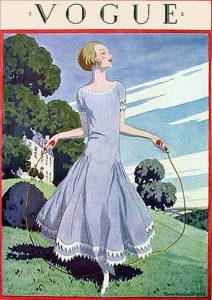
Vogue Magazine Articles
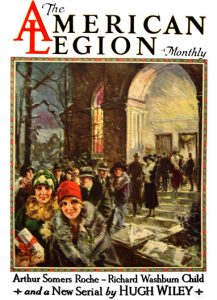
The American Legion Monthly Articles
Liberty Magazine Articles
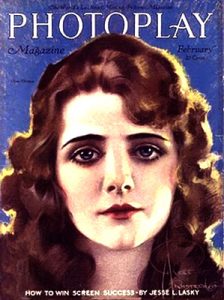
Photoplay Magazine Articles
PM Tabloid Articles
Creative Art Magazine Articles
The Saturday Evening Post Articles
Stage Magazine Articles
Outing Magazine Articles
The New Republic Articles
The New York Times Articles
Harper's Weekly Articles
The Dial Magazine Articles
The North American Review Articles
Newsweek Articles
People Today Magazine Articles
Direction Magazine Articles
Current Literature Magazine Articles
Harper's Bazaar Magazine Articles
Hearst's Sunday American Articles
Touchstone Magazine Articles
Click Magazine Articles
Sea Power Magazine Articles
Trench Warfare Articles
The Flapper Magazine Articles
La Baionnette Articles
Confederate Veteran Magazine Articles
G.I. Joe Magazine Articles
Outlook Magazine Articles
The Atlantic Monthly Articles
Freedom's Triumph Articles
Scribner's Magazine Articles
Theatre Arts Magazine Articles
Punch Magazine Articles
The American Legion Weekly Articles
Pic Magazine Articles
47 Magazine Articles
Men's Wear Magazine Articles
Confidential Magazine Articles
The Smart Set Articles
The Film Spectator Magazine Articles
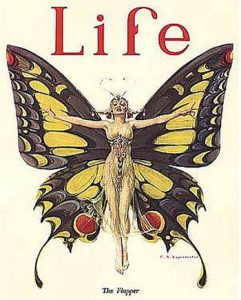
Life Magazine Articles
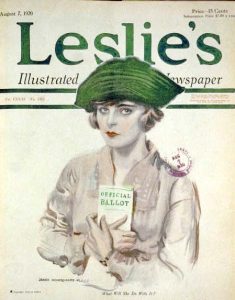
Leslie's Magazine Articles
Ken Magazine Articles
Film Daily Magazine Articles
Rob Wagner's Script Magazine Articles
Collier's Magazine Articles
Vanity Fair Magazine Articles
The Saturday Review Articles

Civil War History

Find old Civil War articles here. We have great newspaper articles about the Civil War check them out today!

Lincoln is Elected and the Markets Tank
(Harper’s Weekly, 1860)

“…It is said that the panic grew out of the fears aroused by the ferment in the Southern States. Although at New Orleans all is quiet, and everybody seeks peace, throughout the states of Alabama, Mississippi, South Carolina and Georgia, great excitement prevails; and if any reliance can be placed upon the assertions of the politicians and the newspapers of those states, the election of Lincoln will not be tolerated without a struggle. What that form of struggle may take remains to be seen.”

Advertisement

Use shortcode [oma_ad position="summary_top"] (or other position) in your theme or widgets to display OMA Promotions here.

Advertisement

Use shortcode [oma_ad position="summary_top"] (or other position) in your theme or widgets to display OMA Promotions here.

The Battle of Bull Run
(Harper’s Weekly, 1861)

Here is an eyewitness report of the Union rout from the first battle of the Civil War, Bull Run (July 21, 1861):


“Leaving my carriage, I went to a high point of ground and saw, by the dense cloud of dust that rose over each of the three roads by which the three columns of the [Federal] Army had advanced, that they were all on the retreat. Sharp discharges of canon in their rear indicated that they were being pursued.”

A Boy in the Union Army
(Coronet Magazine, 1960)

During the Civil War many young boys enlisted. In fact, three out of every ten men on the Union side were under 21, and not until 1864 did Congress pass a law forbidding the enlistment of of anyone under 16. But Johnny Clem, who joined up at ten, had them all beaten.


– Indeed he did. In fact, at the age of 12, Johnny Clem was a hero.

The Missing Confederate Gold
(Literary Digest, 1912)

For many it will come as no surprise that the Confederate States of America entered it’s twilight with the same hubris and cupidity that gave it life. This 1912 article solved a mystery: what had become of the gold and silver from the vaults of the CSA when it finally became clear to all that the rebellion was over.


Click here to read a memoir of the Union victory parade in 1865 Washington.

Advertisement

Use shortcode [oma_ad position="summary_top"] (or other position) in your theme or widgets to display OMA Promotions here.

The Victory Parade Down Pennsylvania Avenue
(Literary Digest, 1919)

Here is a reminiscence of the grand parade following the close of America’s bloody Civil War. It took two days; with the Army of the Potomac marching on the first day followed by General Sherman’s Army of the West on the next. The Grand Review was the brain-child of Secretary of War, Edwin M. Stanton and was attended by (so it was believed) over one hundred thousand people from the victorious Northern states.


From Amazon: Marching Home: Union Veterans and Their Unending Civil Warstyle=border:none

The War Begins
(NY Times, 1861)

The ball has opened. War is inaugurated. The batteries of Sullivan’s Island, Morris Island and other points were opened on Fort Sumpter at 4 ‘oclock this morning… The answer to General Beauregard’s demand by Major Anderson was that he would surrender when his supplies were exhausted, that is, if he was not reinforced.


Here are the dispatches from Charleston that appeared on the front page of the New York Times on April 13, 1861.

Was Mrs. Surratt Innocent?
(Newsweek Magazine, 1943)

Here is the book review for The Case For Mrs. Surrattstyle=border:none (1945) by Helen Jones Campbell. The review narrates how the landlady who had the misfortune of renting a room to the Lincoln conspirators soon found herself swept up in the pervasive Confederate hatred that enveloped the capital city following the assassination. In no time at all she sat among the plotters in a military tribunal where she was quickly judged guilty and sentenced to hang. The book is still in print.


More on the assassination can be read here

Advertisement

Use shortcode [oma_ad position="summary_top"] (or other position) in your theme or widgets to display OMA Promotions here.

Why The Rebels Fought
(Confederate Veteran Magazine, 1918)

Fed-up with decades of articles and editorials declaring that he and his Confederate comrades fought tirelessly for four years in order to preserve and advance the cause of slavery, elderly Southern veteran, James Callaway, put pen to paper in order explain that this was not the case. Equipped with numerous passages from A Soldier’s Recollections and an artificial Lincoln quote, Calloway argued that it was Northern aggression that swelled the Confederate ranks.

The Confederate Chaplains
(Confederate Veteran Magazine

A chaplain’s proper place in the Confederate Army was well defined in theory at least, but in fact each of us was a law unto himself and stayed wherever he liked. He belonged to the medical staff. But the medical staff in a campaign is divided… The regulation spot was with the surgeons.


Click here to read about the chaplaincy within the American military during World War II.

Confederate Doctors and their Many Problems
(Confederate Veteran Magazine, 1922)

A few paragraphs on the difficulties faced by the medical establishment of the Confederacy as a result of the Union naval blockade of Southern ports. We were surprised to learn that the scarcity of quinine and other medicinal aids forced the doctors of the South to embrace herbalism.


Click here to read about the heavy influence religion had in the Rebel states during the American Civil War.

Advertisement

Use shortcode [oma_ad position="summary_top"] (or other position) in your theme or widgets to display OMA Promotions here.

‘Beginner’s Guide to the Civil War”
(Pageant Magazine, 1958)

As the one-hundredth anniversary of the War Between the States grew ever nearer, a Pulitzer Prize winning Civil War Historian, Bruce Catton, wrote the attached article concerning the overwhelming popularity that the nation was finding in their study of that remarkable contest:

The requirements for becoming a Civil War Buff are very simple. All you need is a desire to join. If you are interested in the Civil War, you’re in… You may get to the point where you want to join a Civil War Round Table. [Overtime] commonplace words like Appomattox and Antietam and Perryville take on a new meaning for you; a good deal of the monotony and routine of modern life somehow evaporates, as you escape into a period of profound and haunting significance.

All in all, it’s quite an experience.
Welcome to the Army!

Impressions of John Brown
(Literary Digest, 1897)

This article from 1897 is a digest of Cheerful Yesterdays, a longer piece by Colonel Thomas Wentworth Higginson (1823 – 1911) originally appeared in The Atlantic Monthly. Having served actively in the anti-slavery movement during the days leading up to the Civil War, Higginson put to paper his memories of famed abolitionist John Brown, wishing to banish all thoughts that the man was mad.

Mathew Brady at Antietam
(NY Times, 1862)

An anonymous reviewer tells his readers about the mournful spirit that dominated each room at the Matthew Brady Gallery where he attended a unique exhibit of the photographer’s Civil War pictures:

At the door of his gallery hangs a little placard ‘The Dead of Antietam’. Crowds of people are constantly going up the stairs; follow them…there is a terrible fascination about it that draws one near these pictures, and makes you loath to leave them. You will see hushed, reverend groups standing around these weird copies of carnage, bending down to look in the pale faces of the dead, chained by the strange spell that dwells in dead men’s eyes.


It was on the first day at Gettysburg that the Confederates made a terrible mistake. Read about it here.

Advertisement

Use shortcode [oma_ad position="summary_top"] (or other position) in your theme or widgets to display OMA Promotions here.

Scroll to Top