The Emancipation Proclamation
(Famous Events, 1913)
There is much that can be said about President Lincoln’s Emancipation Proclamation
It was argued that slavery in the United States did not end in 1865…
|
|
|
|
|
|
|
|
|
|
|
|

|

|
|
|
|
|
|
|
|
|
|
|
|
|
|
|
|
|

|
|
|
|
|
|
|
|
|

|
|
|
|
|
|
|
|
|
|
|
Find old Civil War articles here. We have great newspaper articles about the Civil War check them out today!
There is much that can be said about President Lincoln’s Emancipation Proclamation
It was argued that slavery in the United States did not end in 1865…
This short article from The Famous Events of the World was written at a time when the Civil War was still fresh in the American memory; and although their lines were thinning, the veterans of that war were still walking the streets. One of the important events of the American Civil War during the year 1864 was the sinking of the Confederate pirate ship, C.S.S. Alabama

After a long course of capturing and destroying Northern merchant ships, the Aabama was caught in a French harbor by the United States frigate Kearsarge. The Kearsarge defied the ALABAMA to battle; and the Confederate ship, accepting the challenge, steamed confidently forth amid salvos of applause from the French and English spectators. The Kearsarge completely outfought her, and sank her.
Click here to read an article about the captain of the ALABAMA, Raphael Semmes.
A moving account of the fall of Richmond, pieced together from various eyewitness accounts:
The whole Rebel Government was on the move, and all Richmond desired to be. No thoughts of taking Washington now, or of the flag of the Confederacy flaunting in the breeze over the old capitol! Hundreds of officials were at the depot, to get away from the doomed city. Public documents, the archives of the Confederacy, were hastily gathered up, tumbled into boxes and barrels, and taken to the trains, or carried into the streets and set on fire.
The Atlantic Monthly who witnessed Grant’s maneuvering outside the city of Richmond filed this article:
General Grant’s entire force could not have been less than a hundred and thirty thousand, including Sheridan’s cavalry, the force at City Point, and the provisional brigade at Fort Powhatan. Lee’s whole force was not far from seventy thousand, – or seventy-five thousand, including the militia of Richmond and Petersburg…
Click here to learn why Richmond was chosen as the capitol of the Confederacy
Confederate General Robert E. Lee (1807 – 1870) is the topic of this psycho-graphic essay from Confederate Portraits (1914) by the celebrated biographer, Gamaliel Bradford (1863 – 1932).
…Lee won the hearts of his soldiers by living as they did. He managed the business of his position with as little fuss and parade as possible. Foreign officers were struck with the absolute simplicity of his arrangements. There were no guards or sentries around his headquarters, no idle aids-de-camp loitering about…
A 1910 book review of Oswald Garrison Villard’s biography of John Brown (1800 – 1859). Believed to be one of the more honest biographies on Brown, Villard’s effort is said to have five chapters dealing only with Brown’s activities in Bloody Kansas, including the slaughter at Pottawatomie.
Attached is a psychographic essay from Confederate Portraits (1914) by the noted biographer, Gamaliel Bradford (1863 – 1932). It must have been written in order to expose to the reading public that softer, more sensitive Raphael Semmes (1809 – 1877) that no historian ever seems to consider. This vision of the American Civil War pirate comes off as a quiet, pious Renaissance man, with a flare for the dramatic.
Semmes was not only a wide reader in his profession and in lines connected with it, but he loved literature proper, read much poetry and quoted it aptly. He was a singularly sensitive to beauty in any form.
This book review is a wonderful read, punctuated with interesting descriptions of the Civil War’s most prominent players. The book in question is The Sunset Of The Confederacy by former Confederate General Morris Schaff (1840-1929), author of The Battle of the Wilderness (1910).
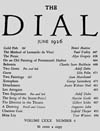
Attached is the The Dial Magazine book review of Elijah R. Kennedy’s The Contest for California in 1861. Kennedy maintained that a large party in California and Oregon sought to deliver that region to the Southerners and might have succeeded were it not for the efforts of one Colonel E.D. Baker.
Click here to print American Civil War chronologies.
When the Civil War broke out, Alan Pinkerton (1819 – 1884) was given charge of the Union Intelligence Service, having previously gained tremendous credibility as a detective in Chicago. It was at this post, early in the war, that he was assigned a task by General George McClellan (1826 – 1885) to proceed south of the Ohio River in order to gain a more thorough understand as to the loyalties of those people. Pinkerton first wrote about this mission in his Civil War memoir, A Spy of the Rebellion.
Click here to read another account of Civil War spying.
A book review from 1911 covering the Civil War memoirs of the Confederate Brigadier General Johnson Hagood (1829 – 1898) who fought many battles during that conflict, most notably Cold Harbor and the battles of Weldon Road and Bentonville. At war’s end he surrendered to General Sherman.
On the first anniversary marking the American intervention into the First World War Charles Payne of Grenell College, Iowa, wrote to the editors at The Nation and cautioned his fellow-Americans to remember the conduct and humility of Civil War General Robert E. Lee.
Click here to read about the heavy influence religion had in the Rebel states during the American Civil War.
Attached is the review from a respected literary journal concerning the autobiography of Brigadier General James Harrison Wilson (1837 – 1925). Under the Old Flag Wilson is today best remembered as the U.S. Army cavalry officer who captured the Confederate President Jefferson Davis in his flight from Richmond. Following the Civil War, where he rose rapidly in the army hierarchy and finished as brigadier general, Wilson continued to play important rolls in the U.S. military; serving during the Spanish-American War and the Boxer Rebellion
Five thumbnail portraits of the most consistently victorious generals of the American Civil War; three Union and two Confederate:
• Ulysses S. Grant
• Phillip Kearny
• George B. Thomas
• Thomas J. Jackson
• Robert E. Lee
Situated where the Tennessee River passes through the Cumberland Mountains, forming gaps, Chattanooga was called the Key to East Tennessee and Gateway to the deep South. The possession of Chattanooga was vital to the Confederacy, and a coveted goal of the Northern armies. Chattanooga’s principal importance during the Civil War was it’s position as a railroad center.
Click here to print American Civil War chronologies.
The second portion of Bruce Catton’s article (see above) concerning the necessary knowledge required in order to justifiably call your self a Civil War Buff was this short piece listing the greatest battles of the war. Accompanying the five brief thumb-nail summaries is a map of the South Eastern U.S., highlighted with red stars, which serve to identify where the blood poured.