
Abraham Lincoln

Read Abe Lincoln Articles from History Magazines. Our Site Has Information on President Lincoln and the Civil War.

Lincoln’s Truest Mourners
(Harper’s Weekly, 1865)

“[To the liberated slaves] the name Abraham Lincoln meant freedom, justice, home, family, happiness. In his life they knew that they lived. In his perfect benignity and just purpose, inflexible as the laws of seed-time and harvest, they trusted with all their souls, whoever doubted. Their deliverer, their emancipator, their friend, their father, he was known to them as the impersonation of that liberty for which they had wept and watched, hoping against hope, praying in the very extremity of despair and waiting with patience so sublime that fat prosperity beguiled us into the meaness of saying that their long endurance of oppression proved that God had created them to be oppressed.”

The Lincoln Blood Line Ends
(Pageant Magazine, 1963)

Here is an account of the painful life of Robert Todd Lincoln (1843 – 1926), the only son of President Abraham Lincoln:


“He witnessed the death of his father, the untimely deaths of his three brothers, the mental deterioration of his mother and the passing of his own 17-year-old son, who was the last hope for carrying on the Lincoln name.”


Click here to read about General Grant’s son.

Abe Lincoln: Short Story Writer…
(Gentry Magazine, 1956)

Reagan was the first actor to become president, Buchanan the first tailor, Jefferson the first architect and Abraham Lincoln was the first writer to move into 1600 Pennsylvania Avenue:

The world has long known that Lincoln liked an occasional back-room story. Here is the only record – in his own handwriting – of that earthy side of the Great Emancipator.

Advertisement

Use shortcode [oma_ad position="summary_top"] (or other position) in your theme or widgets to display OMA Promotions here.

The Lincoln Assassination Conspiracy
(The Southern Rebellion, 1867)

These words concerning the assassination of President Abraham Lincoln were penned a couple of years after the event took place, for an 1867 history on the American Civil War. The author referred to a popular allegation that was a common among Northerners at the time:

It was alleged, and with some reason, that the plot was known to, and approved by, the Rebel government in Richmond, and that [Jefferson] Davis and some of his cabinet, and their agents in Canada, were accomplices in the crime. Whether this be so or not, certain it is that propositions to assassinate President Lincoln and other prominent members of the government were received and entertained by Davis and his associates, and were not rejected at once, and with the scorn which became civilized and Christian men.


– from Amazon: Day of the Assassins: A History of Political Murder


More on the assassination can be read here…

General Grant Recalled Meeting Lincoln
(National Park Service, 1956)

A short paragraph from General Grant’s memoir recalling the the first private interview with President Lincoln, on the occasion in the early spring of 1864 when he was given command of all the Federal armies.

In my first interview with Mr. Lincoln alone he stated to me that he had never professed to be a military man or to know how campaigns should be conducted…


Click here to read about a dream that President Lincoln had, a dream that anticipated his violent death.

Snapshots of the Assassination
(Saturday Evening Post, 1865)

The pistol ball entered the back of the President’s head and penetrated nearly through the head. The wound is mortal. The President has been insensible ever since it was inflicted and is now dying… A common single-barred pocket pistol was found on the carpet.

Advertisement

Use shortcode [oma_ad position="summary_top"] (or other position) in your theme or widgets to display OMA Promotions here.

The Women Lincoln Loved
(McCall’s Magazine, 1920)

This brief article, The Women Lincoln Loved, illustrates the strong influences that four remarkable women made in the important process of molding the character of young Abraham Lincoln.

All four of these women share in and are a part of Lincoln’s greatness. They were the most powerful influences in the molding and shaping of the man and his career. Their valuation of life and their aspirations were the secret and noble forces that guided his heart and mind… Out of them was born a great and tender spirit with ‘malice toward none, charity for all.’

The Prophetic Dreams of Abraham Lincoln
(Literary Digest, 1929)

There are hundreds of stories concerning the life of President Lincoln. Some of them are true and some are not and we’ll leave it up to other websites to decide; among the stories told are the ones that tell the tale of a Lincoln who had dreams of foreboding, dreams that came to him in the night and told of his own demise:

Gradually she drove him into telling of his dream.

‘About ten days ago I retired late. I soon began to dream. Then I heard subdued sobs, as if a number of people were weeping. I thought I left my bed and wandered downstairs…I arrived at the East Room, which I entered. Before me was a catafalque, on which rested a corpse, wrapped in funeral vestments. Around it were stationed soldiers who were acting as guards, and there was a throng of people, some gazing mournfully…others weeping pitifully. ‘Who is dead in the White House?’ I demanded of one of the soldiers. ‘The President,’ was his answer. ‘He was killed by an assassin.’ Then came a loud burst of grief from the crowd which awoke me from my from my dream.’

It was argued that slavery in the United States did not end in 1865…

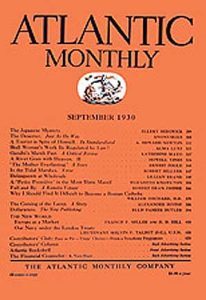
An Eyewitness Account of Lincoln’s Visit to Richmond
(Atlantic Monthly, 1865)

Abraham Lincoln was walking their streets: and worst of all, that plain, honest-hearted man was recognizing the [slaves] as human beings by returning their salutations!

-so wrote the Atlanta Weekly journalist, C.C. Coffin, in this report to his readers concerning the 1865 tour Abraham Lincoln made to a very humiliated Richmond, Virginia.

Advertisement

Use shortcode [oma_ad position="summary_top"] (or other position) in your theme or widgets to display OMA Promotions here.

The Two Lincoln Inaugurations
(Inaugural Program, 1949)

Callously torn from the binding of the 1949 inaugural program were these pithy paragraphs describing the somber moods of both Lincoln inaugurals. The anonymous author noted that

when Lincoln delivered his Inaugural Address, four future Presidents of the United States stood on the platform near him: Hayes, Garfield, Arthur and Benjamin Harrison.


To read the text of Lincoln’s Second Inaugural Address, click here .

Woodrow Wilson on Lincoln
(Collier’s Magazine, 1916)

Here is a paragraph that was pulled from an interview with President Wilson in 1916 in which the bookish president remarked upon the various interesting aspects of President Lincoln:


He was not fit to be president until he was president.

Did President Lincoln Really Need the Beard?
(Collier’s Magazine, 1948)

When an eleven year-old girl advised Abraham Lincoln to grow some whiskers, the great man humbly took her suggestion to heart:

I am a little girl only 11 years old, but want you should be President of the United States very much so I hope you wont think me very bold to write to such a great man as you are. Have you any little girls about as large as I am if so give them my love and tell her to write to me if you cannot answer this letter. I have got 4 brothers and part of them will vote for you any way and if you let your whiskers grow I will try and get the rest of them to vote for you you would look a great deal better for your face is so thin. All the ladies like whiskers and they would tease their husbands to vote for you and then you would be President.

The rest is history.


Click here to read an 1862 review about the Civil War photographs of Mathew Brady.

Advertisement

Use shortcode [oma_ad position="summary_top"] (or other position) in your theme or widgets to display OMA Promotions here.

The Books Lincoln Read
(Pathfinder Magazine, 1920)

Examine Lincoln’s prose and the fruitage of his reading will appear… The easy quickening of Lincoln’s mind came from books like Aesop’s Fables, Robinson Caruso and Pilgrim’s Progress… To a man who knew intimately so many creatures, both wild and domestic, the fables seemed natural.

The Clothing of Abraham Lincoln
(Coronet Magazine, 1950)

The attached article is a segment from a longer one about the history of Brooks Brothers and it confirms that the Great Emancipator was one of their customers, as were the Union Army Generals Grant, Sherman and Hooker.


Click here if you would like to read the entire article about the first 132 years of Brooks Brothers.

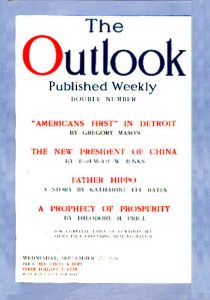
A Study of the Gettysburg Address
(The Outlook, 1913)

Jesse W. Weik (1857 – 1930) was one of the earliest of Lincoln scholars.

In preparation for Herndon and Weik’s Life of Lincolnstyle=border:none (1889), he visited every place in Illinois, Indiana and Kentucky where Abraham Lincoln lived; examined the records of all the lawsuits in which Lincoln was engaged, and talked to everyone he could find who knew Lincoln. For thirty years and more he has made a special study of the sources, written and unwritten, of the personal history of President Lincoln.

Advertisement

Use shortcode [oma_ad position="summary_top"] (or other position) in your theme or widgets to display OMA Promotions here.

Lincoln’s Address at Cooper Union
(The National Park Service, 1956)

Before his 1860 address at the Cooper Institute (presently known as Cooper Union) Abraham Lincoln was known in the East chiefly as a rather obscure western lawyer who had gained some prestige a little over a year earlier in the debates with Douglas during the Illinois senatorial contest. The day after the address Horace Greeley’s NEW YORK TRIBUNE remarked:

No man ever before made such an impression on his first appeal to a New York audience.

This speech put within Lincoln’s grasp a chance for the Presidency.


Attached, you will find his very powerful conclusion to the address.


Click here to read about the Confederate conscription laws.

H.L. Mencken: Not Impressed with Lincoln
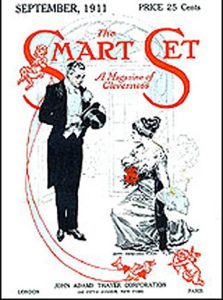
(The Smart Set, 1920)

As far as culture critic and all-around nay-sayer H.L. Mencken was concerned, Abraham Lincoln was simply another opportunist who fed at the federal trough and he found himself at a loss when it came to understanding the American deification of the man. It seemed that even Jefferson Davis might have had an easier time uttering a few sweet words to describe Lincoln then did the Bard of Baltimore. Yet, there was one contribution Lincoln made that Mencken applauded, the Gettysburg Address:

It is eloquence brought to a pellucid and almost gem-like perfection –the highest emotion reduced to a few poetical phrases. Nothing else precisely like it is to be found in the whole range of oratory. Lincoln himself never even remotely approached it [in other speeches]. It is genuinely stupendous.

(Although, like any unreconstructed Confederates, he thought the argument was all a bunch of rot.)

The Lincoln – Douglas Debates Observed
(The National Park Service, 1956)

These four paragraphs first appeared on the pages of THE CHICAGO TRIBUNE and were written by a reporter named of Horace White at the conclusion of Lincoln – Douglas debates of 1858. The journalist did a fine job in describing the excitement at the debates and the spirit of the participating candidates.

Douglas ended in a whirlwind of applause…and Lincoln began to speak in a slow and rather awkward way. He had a thin tenor, or rather falsetto voice, almost as high pitched as a boatswain’s whistle.


The debates resulted in a close election that returned Douglas to the U.S. Senate and Lincoln to his law practice.

Advertisement

Use shortcode [oma_ad position="summary_top"] (or other position) in your theme or widgets to display OMA Promotions here.

Scroll to Top