Author name: editor

Ives-Quinn Non-Discrimination Bill 1945 | New York Commission Against Discrimination 1945 | 1940s Workplace Discrimination
1946, African-American History, The American Magazine

Confronting the Bigots
(The American Magazine, 1946)

With the passing of the Ives-Quinn Bill in 1945, the state of New York was empowered to bring the full weight of the law down upon all employers who practiced any sort of discrimination in the workplace:

During the first eight months of the law’s operation, the Commission received 240 formal complaints charging some form of discrimination in employment… The charges varied greatly. Fifty-nine complained because of alleged prejudice against their religion. Another 113 charged color bias: 105 Negroes and eight Whites. Still another 48 charged prejudice against their race or national origin: 8 Germans, 5 Spaniards…


A similar article from 1941 can be read here…

1945 Death of Sgt. John Basilone USMC | John Basilone on Iwo Jima
1945, Iwo Jima, Newsweek

End of the Road for Sgt. John Basilone
(Newsweek Magazine, 1945)

The first Marine waves that stormed ashore on Iwo Jima included a stalwart young sergeant who stood out as a leader even in that picked group. Handsome, dark-haired, and purposeful, he strode through the surf seemingly oblivious to the enemy’s artillery fire. His eyes focused inland on a spot suitable for his machine-gun platoon… Suddenly, a Jap shell screamed. The sergeant fell. John Basilone, first enlisted Marine in this war to win the Congressional Medal of Honor, was dead.

1946 Magazine Article on the Failures of American Secondary Education
1946, Collier's Magazine, Education

‘Our Schools Are A Scandal”
(Collier’s Magazine, 1946)

Ten million Americans can’t read and write, thousands of teachers are underpaid and, try as they may, our poorer states cannot afford to do anything about it. Every Congress since 1919 has refused to improve the situation… The truth seems to be that schools are no longer America’s sweetheart. When there is money to be divided in a state, roads come first, public health second and schools third.


Click here to read about an American woman who grew heartily sick of the socialists who loitered on every street corner during the Great Depression…

Advertisement

Use shortcode [oma_ad position="summary_top"] (or other position) in your theme or widgets to display OMA Promotions here.

American Dead on Buna Beach New Guinea 1943 | Famous WW2 Photo by George Strock Life Magazine 1943
1943, Home Front, Yank Magazine

The Photograph
(Yank Magazine, 1943)

Attached you will find a few well-chosen words about that famous 1943 photograph that the censors of the War Department saw fit to release to the American public. The image was distributed in order that the over-optimistic and complacent citizens on the home front gain an understanding that this war is not without a cost.

A haunting image even sixty years later, the photograph depicts three dead American boys washed-over by the tide of Buna Beach, New Guinea. The photographer was George Strock of Life Magazine and the photograph did it’s job.


Click here to read General Marshall’s end-of-war remarks about American casualty figures.

MODERN TIMES 1936 Film Review | Stage Magazine 1936 Film Review of MODERN TIMES Directed by Charlie Chaplin
1936, Charlie Chaplin Articles, Stage Magazine

MODERN TIMES
(Stage Magazine, 1936)

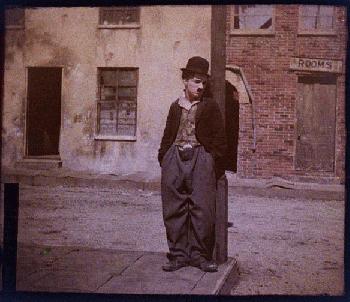
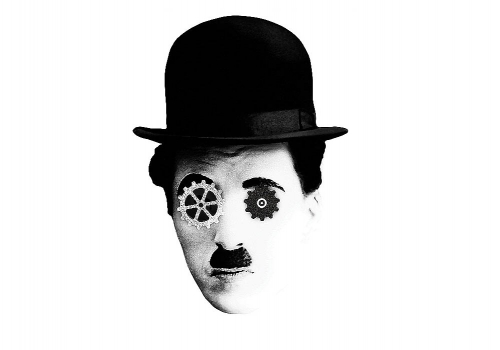
The world, with the exception of those bright eyed youngsters under the age of five, has waited pretty breathlessly for the reappearance of a forlorn little figure in a derby, baggy trousers, and disreputable shoes. The fact that his reappearance was to be under the sinister title, Modern Times alarmed not a few of us. This hapless creature, whose name by the way, is Charlie Chaplin, had come to mean an unchangeable element to us…Disguised in current mechanistic ingenuity, veiled in lukewarm disapproval of the plight of the working man, and tinted a slight shade of Red, it remain, delightfully and irrevocably, Chaplin.

1923 A Woman of Paris Film Review Time Magazine 1923 | Charlie Chaplin Directs His Second Film 1923 A Woman of Paris
1923, Charlie Chaplin Articles, Time Magazine

A Woman of Paris
(Time Magazine, 1923)

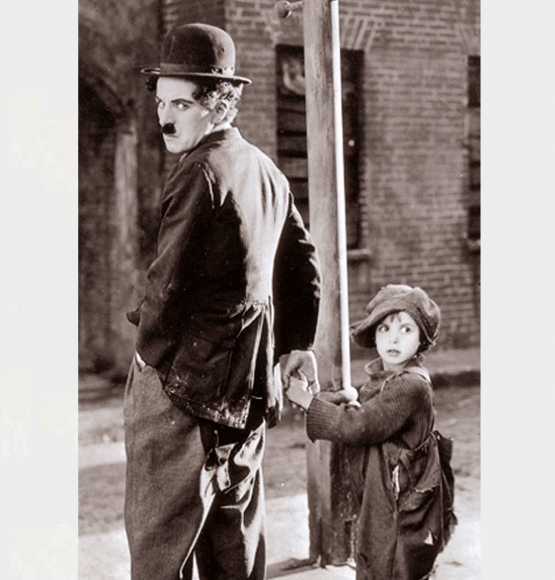
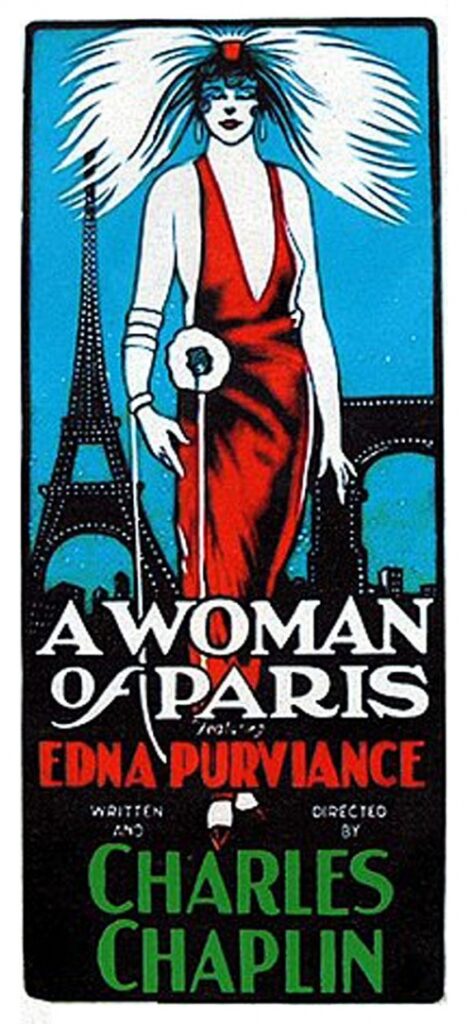
The Time Magazine review of Charlie Chaplin’s film, A Woman of Paris, fell in line with many other reviews of the work: they all believed that Chaplin, as director, had moved the ball forward insofar as the development of film – and Time hoped that they had seen the end of Chaplin the clown. However, the 82 minute film was a commercial flop, primarily because he wasn’t in it (they chose not to publicize that he played an extra’s roll for one quick scene).


The first film Chaplin had directed was The Kid (1922) – and you can read about that here

Advertisement

Use shortcode [oma_ad position="summary_top"] (or other position) in your theme or widgets to display OMA Promotions here.

Charlie Chaplin's Credo (Direction Magazine, 1941)
1941, Charlie Chaplin Articles, Direction Magazine

Charlie Chaplin’s Credo
(Direction Magazine, 1941)

This, the much-discussed final speech in The Great Dictator, is more than a climax and conclusion to Chaplin’s newest film, it is a statement of Chaplin’s belief in humanity, a belief in which his creative powers and artistic development are deeply rooted.

Hope…I’m sorry, but I don’t want to be an emperor. That’s not my business. I don’t want to rule or conquer anyone. I should like to help everyone, if possible -Jew, Gentile -black man -white.

Advertisement

Use shortcode [oma_ad position="summary_top"] (or other position) in your theme or widgets to display OMA Promotions here.

Post-World War 1 France by Alexander Woolcott 1920 | Post-World War I France in Ruins
1920, Aftermath (WWI), The North American Review

Post-World War I France
(The North American Review, 1920)

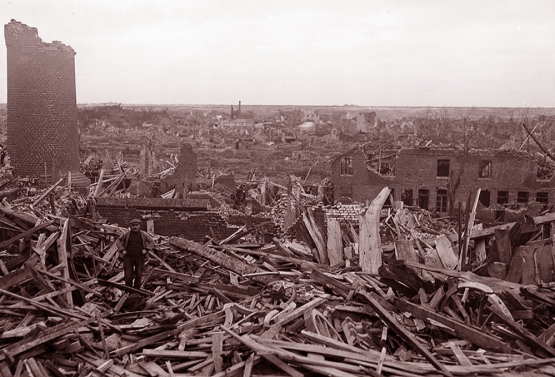
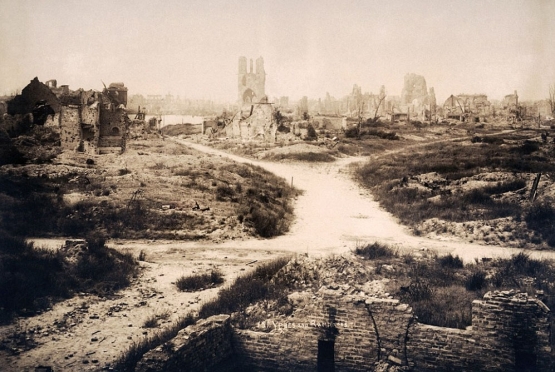
In the later years of the First World War, the American journalist Alexander Woollcott (1887 – 1943) served as a writer for the Doughboy newspaper The Stars & Stripes. In this roll he was able to travel far afield all over the American sectors of the front where he saw a great deal of the war: flattened villages, ravaged farmland, factories reduced to ruble. In the attached article from 1920, Woollcott reported that the war-torn provinces of France looked much the same, even two years after the Armistice. He was surprised at the glacial speed with which France was making the urgent repairs, and in this article he presented a sort-of Doughboy’s-eye-view of post-war France.


More on this topic can be read here

Advertisement

Use shortcode [oma_ad position="summary_top"] (or other position) in your theme or widgets to display OMA Promotions here.

Japanese Spies in the USA 1930 - 1940 | Toshito Sato Japanese Spy
1940, PM Tabloid, Spying

Japanese Spies and Their Many Troubles
(PM Tabloid, 1940)

From the 1940 editorial pages of PM came this column by Henry Paynter (1899 – 1960) who wrote amusingly about the many frustrations facing Japanese spies in North America.

The identity of almost every Japanese spy or saboteur has been known to U.S. authorities. Every instruction they have received or sent has been decoded…


At the height of their irritation, they confided in the German Consul-General stationed in San Francisco – only to learn after the war that he was an FBI informant (you can read about him here).

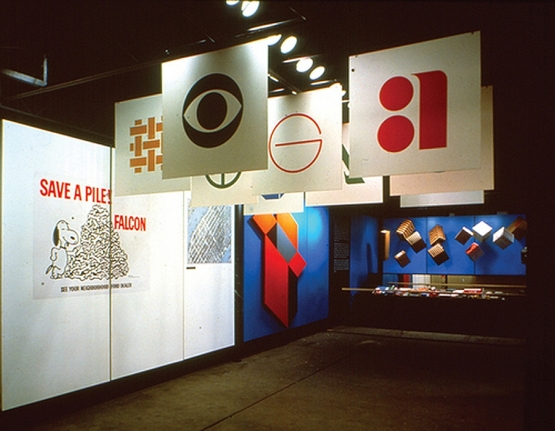
GRAPHIC ARTS USA Exhibit Seymour Chwast and Milton Glaser | GRAPHIC ARTS USA Exhibit USIA
1964, Design, Pageant Magazine

American Graphics Seen in Soviet Russia
(Pageant Magazine, 1964)

An exhibition of graphic art from the United States has become a tremendously popular attraction [as it toured throughout four cities within the Soviet Union]… In the first two days more than 17,000 Soviet citizens, most of them in their teens or early twenties, came to see a gay collection of funny American posters, preposterous ads, colorful book covers and abstract prints.

‘You mean you’re really allowed to paint like this, and nobody says anything?’ one of the visitors asked.

The Very First Football Referee Hand Signals (Literary Digest, 1929)
1929, Football History, The Literary Digest

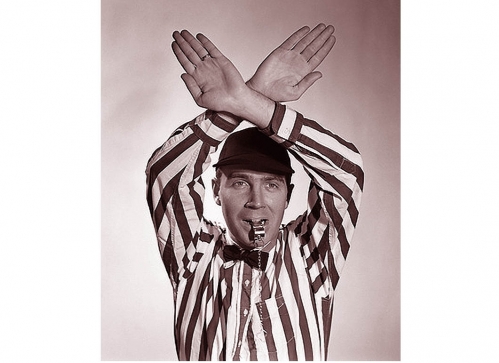
The Very First Football Referee Hand Signals
(Literary Digest, 1929)

With the widespread complaints on the rise from the football fans on the sidelines that they were completely in the dark as to why a play was called, the elders of the sport decided that action had to be taken to remedy the growing confusion…

Hence a system of signals has been devised whereby the officials on the field can let the people in the stand know what is what. A gesture of the arm by the field official will immediately telegraph to the stands that Whoozis College’s penalty was for slugging. Another wave will inform the inquisitive public that the forward pass was incomplete by being grounded.

The article is illustrated with eight photographs of assorted football penalty hand signals; none of the gestures have stood the test of time – the penalties have remained but today different signals indicate each infraction.

Advertisement

Use shortcode [oma_ad position="summary_top"] (or other position) in your theme or widgets to display OMA Promotions here.

Alger Hiss Article | The Hiss-Chambers Case
1949, Pathfinder Magazine, Spies

The Hiss-Chambers Case
(Pathfinder Magazine, 1949)

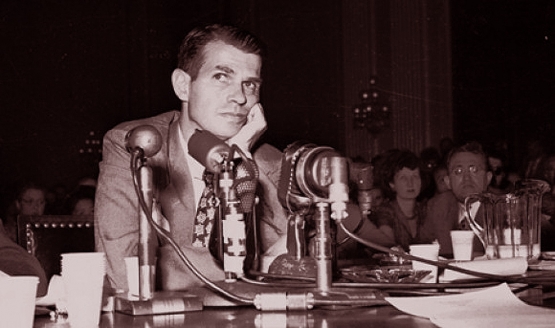
This is a report concerning how the Hiss/Chambers perjury trial was proceeding before the jury. The journalist pointed out that Hiss’ attorney, Lloyd Paul Stryker, was repeatedly making slanderous remarks about the character of Whitaker Chambers – an indication that the facts were simply not on the side of the defendant.

Judith Coplon in Federal Court (Pathfinder Magazine, 1949)
1949, Pathfinder Magazine, Spies

Judith Coplon in Federal Court
(Pathfinder Magazine, 1949)

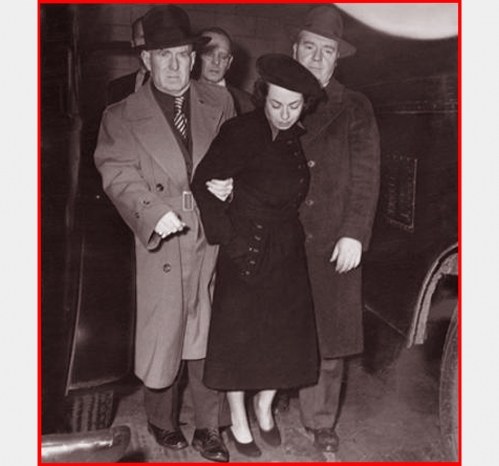
FBI agents arrested Judith Coplon (1921 – 2011: Soviet code name Kompid) on March 4, 1949 in Manhattan as she met with Valentin Gubitchev, a NKVD official employed at the United Nations, while carrying what she believed to have been secret U.S. government documents in her purse. Hoover’s G-Men FBI were certain that Coplon, a secretary at the Federal Justice Department, was colluding with the Soviet agents in Washington but to prove their case conclusively would compromise an ongoing counter-espionage project called the Venona Project. The failure to prosecute this case successfully began to shed doubt upon the FBI director and his credibility in matters involving Soviet spy-catching.– read about that here…


Years later Coplon’s guilt was made clear to all when the Venona cables were released. However our laws mandate that it is illegal to try a suspect twice for the same crime and she was released.

Advertisement

Use shortcode [oma_ad position="summary_top"] (or other position) in your theme or widgets to display OMA Promotions here.

Scroll to Top