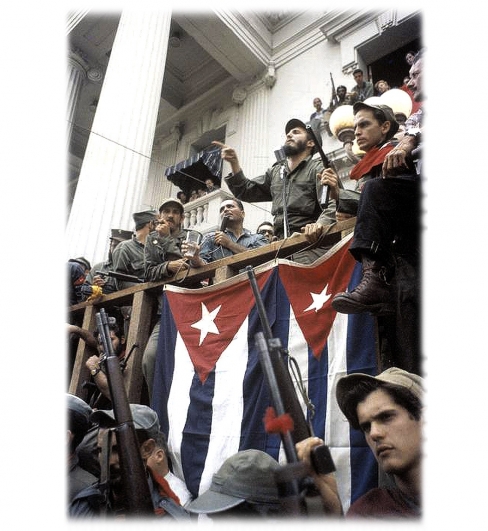
Castro Shows His Hand…
(Pageant Magazine, 1960)
Andrew St. George, a reporter who lived in the hills with Fidel Castro tells the story of how an idealistic revolution turned into one of the greatest tragedies of our time.

Andrew St. George, a reporter who lived in the hills with Fidel Castro tells the story of how an idealistic revolution turned into one of the greatest tragedies of our time.
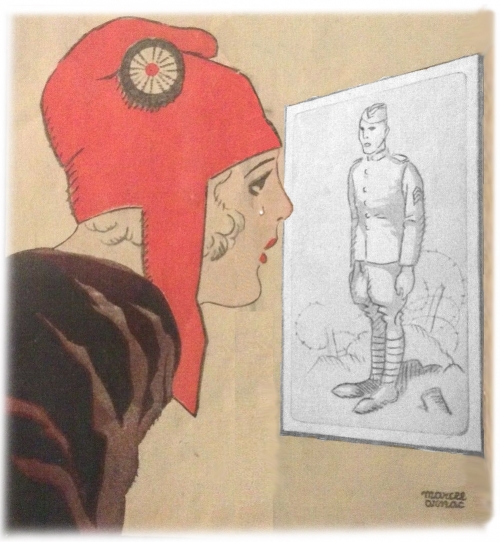
Almost twenty years after the First World War reached it’s bloody conclusion, Americans collectively wondered as they began to think about all the empty chairs assembled around so many family dinner tables, Do the French care at all that we sacrificed so much? Do they still remember that we were there? In response to this question, an American veteran who remained in France, submitted the attached article to The American Legion Monthly and answered those questions with a resounding YES.
Click here to read an article by a grateful Frenchman who was full of praise for the bold and forward-thinking manner in which America entered the First World War.
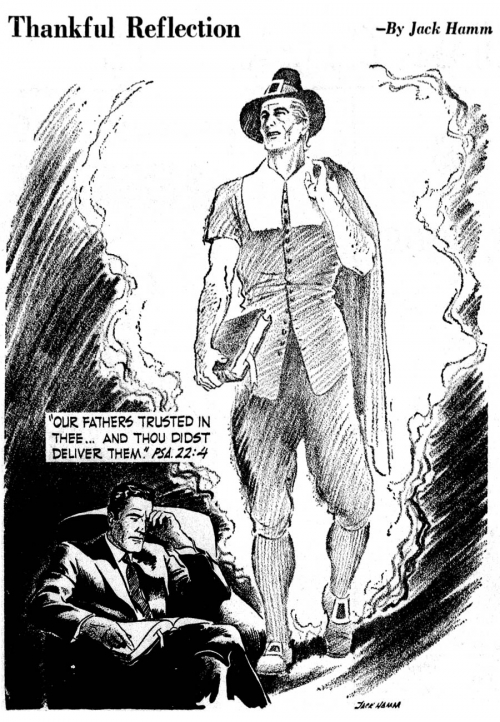
The Moody Bible Institute has not graduated many cartoonists but they did give their sheepskin to Jack Hamm (1916 – 1996), a terrific cartoonist who used his talent to advance the Gospel in Godlier America.
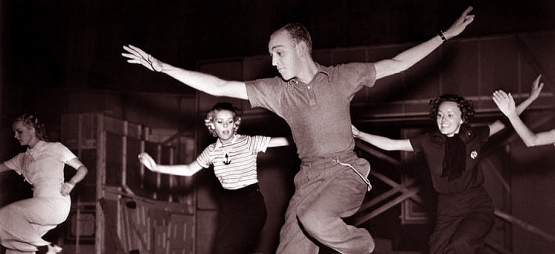
A magazine profile of RKO Studio Dance Director Hermes Pan (1909 – 1990); his work with Fred Astaire (1899 – 1987) and Ginger Rogers (1911 – 1995) and the lasting impression that African-American dance had made upon him. It is fascinating to learn what was involved in the making of an Astaire/Rogers musical and to further learn that even Bill Bojangles Robinson (1878 – 1949) was a fan of the dance team.
Astaire liked the youngster’s blunt answers. He realized the need of a critic who would talk back to a star.
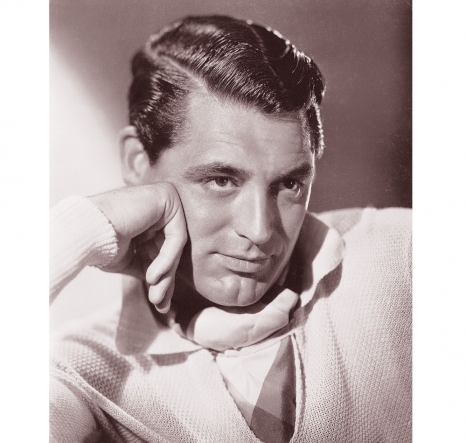
A fabulous three page article from STAGE MAGAZINE on the early career of Cary Grant:
Cary Grant appeared in six Broadway productions and twenty-seven Hollywood pictures before anybody took notice. Then he played a dead man.
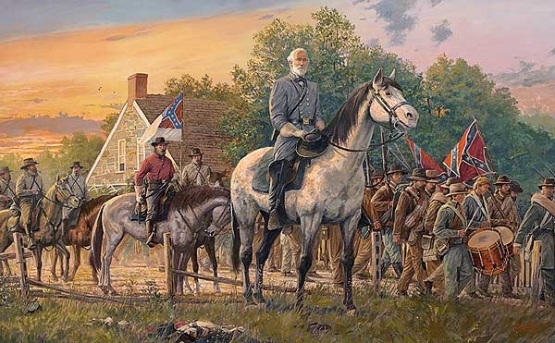
A brief explanation as to what General Lee had in mind when he invaded the North in the Summer of 1863, why he chose a route through the Shenandoah and Cumberland valleys, where his army was actually headed and what the South had intended to gain if the campaign had been successful.
From Amazon:
Lee’s Real Plan at Gettysburg
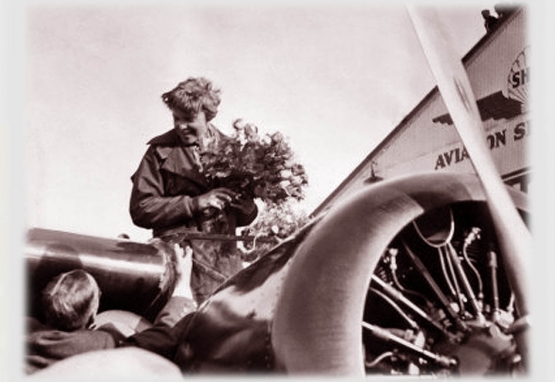
All well’, Amelia Earhart (1897 – 1937) radioed repeatedly during her 2,400-mile flight from Hawaii to California last week. ‘Alls well that ends well,’ she might have said as she set her monoplane down at Oakland Airport Saturday afternoon, eighteen hours and sixteen minutes after she took off from Wheeler Field, Honolulu. What she actually said was, ‘I’m tired’
Thus she has become the first woman to fly the Pacific from Hawaii to California, and the first person of either sex to fly it alone. Her record has been studded with ‘firsts’ ever since she learned to fly in 1918.
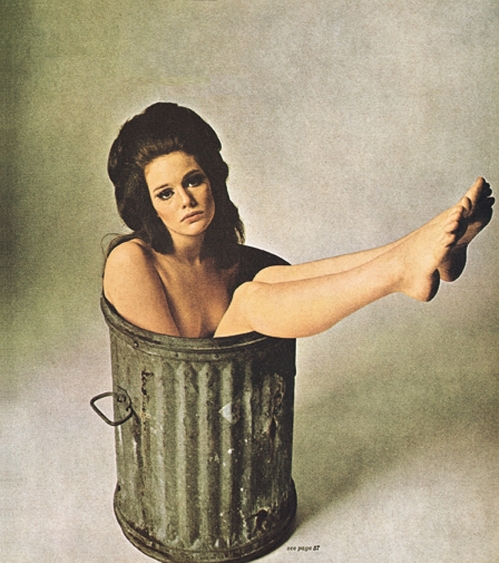
If you were a woman with leftist inclinations during the 1960s and wanted to join one of the many revolutionary groups that promised to burn it all to the ground, you wouldn’t be required to bring a lighter – that was for the male hippies only – the women were required to bring coffee percolators and feather dusters:
In the New Left, some people – men – are more equal than others. The revolutionary girl is distinguished from her male counterpart by one significant difference. The male can cut his hair, shave his beard and step back into the society he condemns. In trying to help the oppressed, the girls found they wear a uniform that they can’t remove anymore than the Blacks can remove their skin. They can’t remove their sex – and the men make use of it only too well.
More on this topic can be read here…
These men were big on reading the blather of the underground press and you can read about their journalistic tastes here…
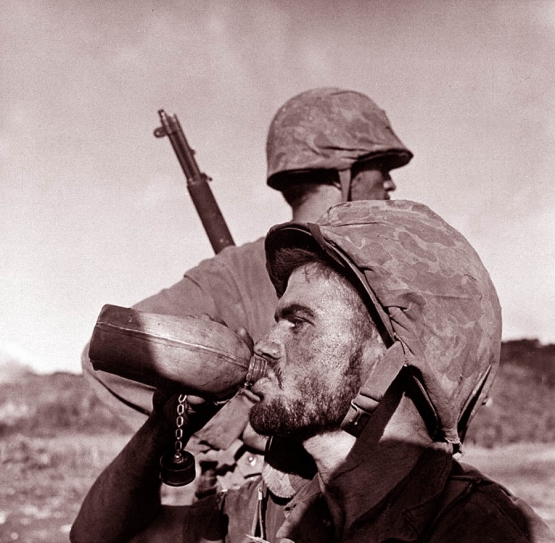
The battle of Saipan spanned the period between June 15 through July 9, 1944. Here is an eyewitness account of the three week battle:
Reveille for the Japanese garrison on Saipan sounded abruptly at five-forty that morning of D-Day minus one, with a salvo from the 14-inch rifles of one of our battleships. Other guns, big and small, joined the opening chorus and from than on we realized why we had stuffed the cotton in our ears. The bass drum jam session was to continue for hours.
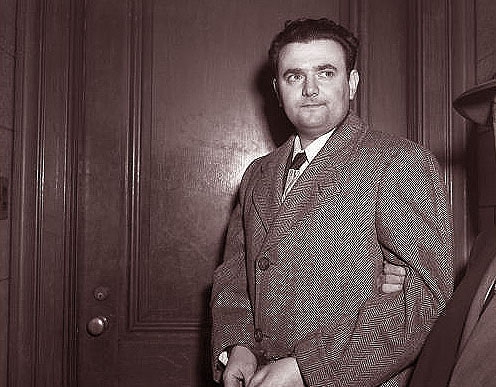
The arrests of David Greenglass (1922 – 2014: Soviet code name Kalibr) and Alfred Slack (1905 – 1977: Soviet code name El) were the result of the FBI having arrested and interrogated a vital Soviet courier a month earlier: Harry Gold (1911 – 1972: Soviet code name Arno). When Gold began to sing, the spies began to fall like leaves of autumn day. This quick read concentrates on Gold’s fellow chemist, Slack, who had been passing along information to the Soviets since the mid-Thirties, however between the years 1944 and 1945 Slack had been assigned to work in Oak Ridge Tennessee with the Manhattan Project. Greenglass had also been on the Manhattan project, and he was a far bigger catch.

In the Sixties the most popular fashion model was Twiggy (né Lesley Hornby, b. 1949), and in the Fifties the top model was Suzy Parker (1932 – 2003: truly the first Super Model). But in the 1940s the honor went to Jinx Falkenburg (1919 – 2003).
The 1940’s was the decade in which the advertising world began to gaze more favorably upon photographers rather than illustrators, who had long held the prominent place since printers ink was first invented. During the earliest days of her career Falkenburg’s likeness was often painted until the her bookings with photographers quickly picked up. She was the firstMiss Rheingold (appointed, not elected), she appeared in movies, entertained the troops and when she stood before the cameras she was paid all of $25.00 an hour (the term super Model wouldn’t come about until the Seventies).
The attached photo essay will give you some more information.
From Amazon:
This is a report on the 1939 government-sponsored medical outreach program for California’s Grapes of Wrath migrants:
The counties of San Joaquin Valley have well organized health departments… [Migrants] are entitled to drugs, special diets, eyeglasses and appliances if authorized by the medical director. Since many patients are in need not so much of medicines than of food, the Association may pay a medical grocery bill just as it pays the druggist. It also provides school lunches and nursery meals.
More on migrant laborers can be read here…
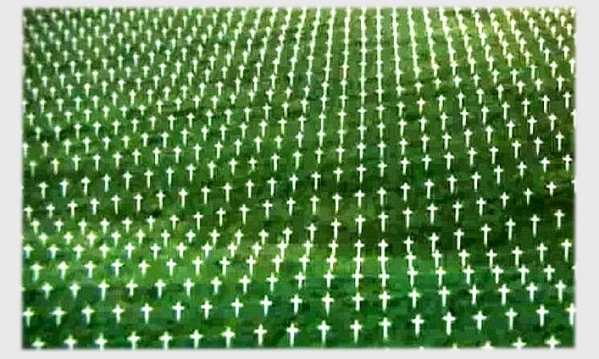
The author of this brief paragraph points out that prior to the Great Depression that commenced in 1929, there were as many as five other economic slumps that existed in America’s past. He remembered that in each case something unexpected has come along to not only put us back on our feet again but to boom things in addition.
Will it be the sudden perfection of television? Or further development of electrical appliances, particularly air-conditioning and cooling? Or some new novelty?

The word reconversion is a term so odd to our era that my auto-correct insists it is a misspelling – but the word appears more than a few times in the September 3, 1945 issue of Newsweek and it pertains to process of turning the economy (and society) from one centered on war to one that caters to consumers. This article encapsulates the excitement of the previous week when the war was declared over – POWs returned, rationing ended, Lend-Lease completed, nukes created, draft quotas reduced, traitors hanged and the recruits demobilized.

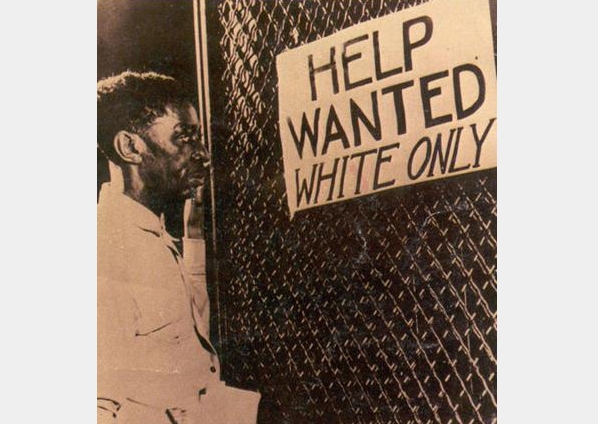
With the passing of the Ives-Quinn Bill in 1945, the state of New York was empowered to bring the full weight of the law down upon all employers who practiced any sort of discrimination in the workplace:
During the first eight months of the law’s operation, the Commission received 240 formal complaints charging some form of discrimination in employment… The charges varied greatly. Fifty-nine complained because of alleged prejudice against their religion. Another 113 charged color bias: 105 Negroes and eight Whites. Still another 48 charged prejudice against their race or national origin: 8 Germans, 5 Spaniards…
A similar article from 1941 can be read here…
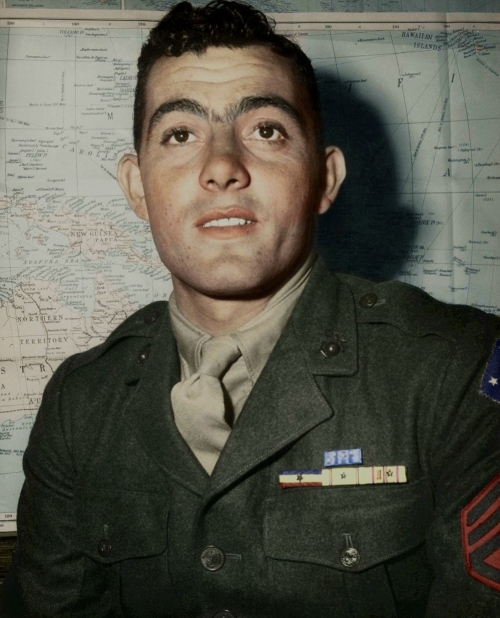
The first Marine waves that stormed ashore on Iwo Jima included a stalwart young sergeant who stood out as a leader even in that picked group. Handsome, dark-haired, and purposeful, he strode through the surf seemingly oblivious to the enemy’s artillery fire. His eyes focused inland on a spot suitable for his machine-gun platoon… Suddenly, a Jap shell screamed. The sergeant fell. John Basilone, first enlisted Marine in this war to win the Congressional Medal of Honor, was dead.

Ten million Americans can’t read and write, thousands of teachers are underpaid and, try as they may, our poorer states cannot afford to do anything about it. Every Congress since 1919 has refused to improve the situation… The truth seems to be that schools are no longer America’s sweetheart. When there is money to be divided in a state, roads come first, public health second and schools third.
Click here to read about an American woman who grew heartily sick of the socialists who loitered on every street corner during the Great Depression…
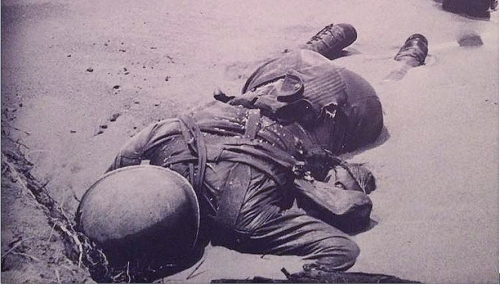
Attached you will find a few well-chosen words about that famous 1943 photograph that the censors of the War Department saw fit to release to the American public. The image was distributed in order that the over-optimistic and complacent citizens on the home front gain an understanding that this war is not without a cost.
A haunting image even sixty years later, the photograph depicts three dead American boys washed-over by the tide of Buna Beach, New Guinea. The photographer was George Strock of Life Magazine and the photograph did it’s job.
Click here to read General Marshall’s end-of-war remarks about American casualty figures.

