Author name: editor

Nancy Langhorne Astor, M.P. (Literary Digest, 1922)
1922, The Literary Digest, Women's Suffrage

Nancy Langhorne Astor, M.P.
(Literary Digest, 1922)

Lady Nancy Astor (1879 – 1964) is remembered as the first woman to take a seat in the British House of Commons (she was not the first woman to be elected, but she was the first woman to serve in the House of Commons). Born in Virginia, she was the daughter of a former Confederate officer who refused to send her to college, thereby sparking her interests in the Suffrage movement. Following the divorce from her first husband in 1903, she set sail for Britain and met Waldorf Astor (1879 – 1952) while on board ship. The two were wed in 1906 and soon developed and interest in British politics. She became a Member of Parliament in 1919 and served in the House of Commons until 1945.

Advertisement

Use shortcode [oma_ad position="summary_top"] (or other position) in your theme or widgets to display OMA Promotions here.

WW I Play Journeys End 1929 Review | WA Darlington Journeys End Criticism | RC Sheriff WW1 Drama Journeys End
1929, Theatre Arts Magazine, Writing

JOURNEY’S END by R.C. Sheriff
(Theatre Arts Magazine, 1929)

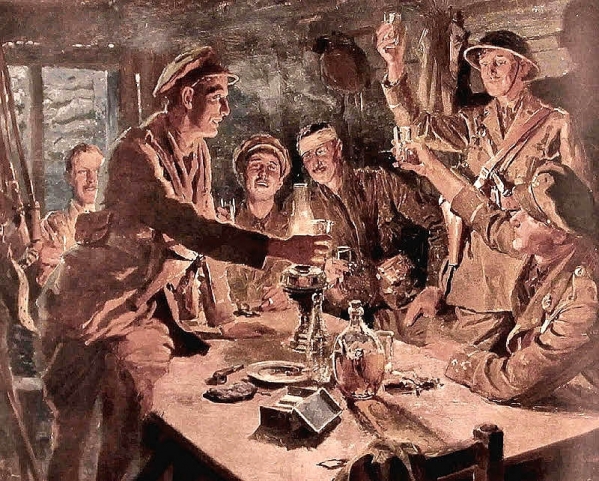
Robert Littell reviewed the first New York production of Journey’s End by former infantry officer, R.C. Sherriff (1896 – 1975: 9th East Surrey Regiment, 1915 – 1918). We have also included a paragraph from a British critic named W.A. Darlington who had once fought in the trenches and approaches the drama from the angle of a veteran:


Click here if you would like to read another article about the WW I play Journey’s End.

Advertisement

Use shortcode [oma_ad position="summary_top"] (or other position) in your theme or widgets to display OMA Promotions here.

Hitler Gets a Bad Review (Atlantic Monthly, 1933)
1933, Adolf Hitler, The Atlantic Monthly

Hitler Gets a Bad Review
(Atlantic Monthly, 1933)

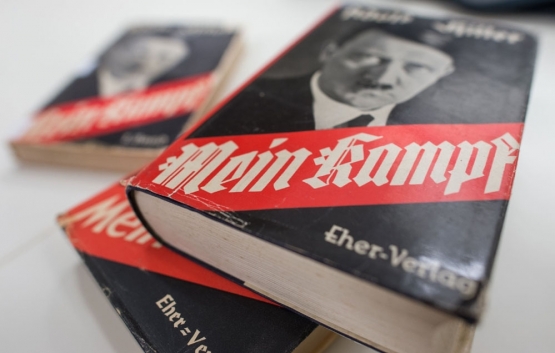
With Hitler’s rise to power in 1933, the German-speaking Alice Hamilton (1869 – 1970; sister to the classics scholar, Edith) was assigned the task of reviewing Mein Kampf
(1925) for The Atlantic Monthly. She didn’t like it.

He loves rough, red-blooded words – ‘relentless’, ‘steely’, ‘iron-hearted’, ‘brutal’; his favorite phrase is ‘ruthless brutality’. His confidence in himself is unbounded.
The royalties generated by the sales of Mein Kampf made Adolf Hitler a very rich man. To read about this wealth and Hitler’s financial adviser, click here.

Read another review of Mein Kampf.

Although Hitler didn’t mention it his book, German-Americans drove him crazy.

MoMA Purchased Paintings from the Degenerate Art Exhibit(Art Digest, 1939)
1939, Modern Art, The Art Digest

MoMA Purchased Paintings from the Degenerate Art Exhibit(Art Digest, 1939)

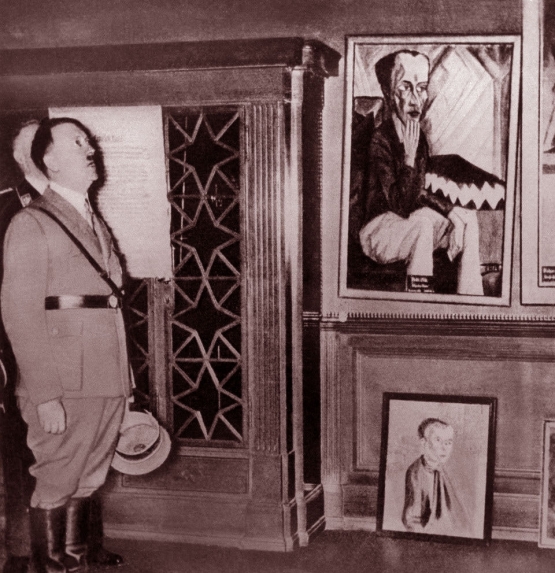
The art that Hitler has exiled as ‘degenerate’ is finding ready homes in other lands that have not yet been culturally crushed beneath the heel of Europe’s twin tyrannies: Fascism and Communism. Because Hitler has embraced the calendar decoration as the supreme art form, the Museum of Modern Art in New York has been able to acquire five works that formerly were housed in prominent museums.


The article lists the purchased works.


Click here to read about the Nazi Art Battalions…

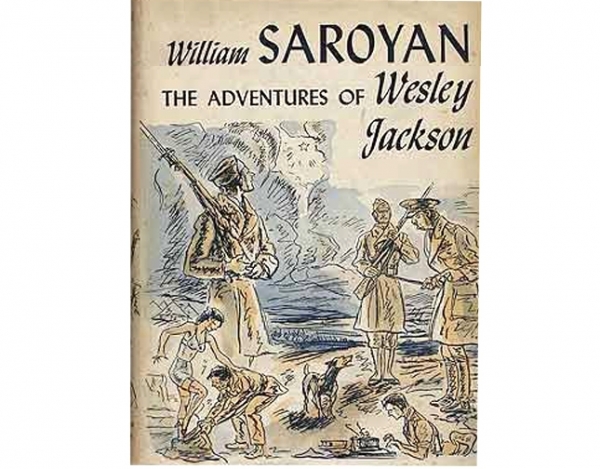
A Review of Saroyan's The Adventures of Wesley Jackson(Rob Wagner's Script, 1947)
1947, Rob Wagner's Script Magazine, Twentieth Century Writers

A Review of Saroyan’s The Adventures of Wesley Jackson(Rob Wagner’s Script, 1947)

The 1947 review of William Saroyan’s war novel, The Adventures of Wesley Jackson:

What makes the novel good is what makes Saroyan good. In this case his wonderful satires on army life, wangling , and the weird fauns of his private universe. What makes it bad is the overdose of soliloquies, hymns and plain mutterings on love, death life and the appeasement of divine wrath by means of scapegoat.

Advertisement

Use shortcode [oma_ad position="summary_top"] (or other position) in your theme or widgets to display OMA Promotions here.

Hugh Walpole Returns to America (Vanity Fair, 1919)
1919, Twentieth Century Writers, Vanity Fair Hall of Fame

Hugh Walpole Returns to America
(Vanity Fair, 1919)

A short piece on the British novelist Hugh Walpole (1884 – 1941). This notice concerns the writer’s first trip to the United States following the the close of the First World War and the printing of his novel, The Secret City; which reflects much of what the writer saw in the Russian Revolution during his service with the British Government:

In ‘The Secret City’, as in ‘ The Dark Forrest,’ the author handles very special material at first hand. Mr. Walpole served in the Russian Army during the first year of the war…He was in Russia all through the Revolution. ‘The Secret City’ is real Russia (even Russians admit this), somber, tragic, idealistic, half-maddened by the virus of revolt, yet imposing upon one a quality at once presaging and splendid.

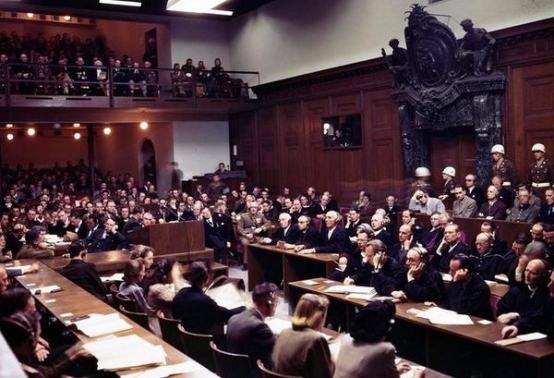
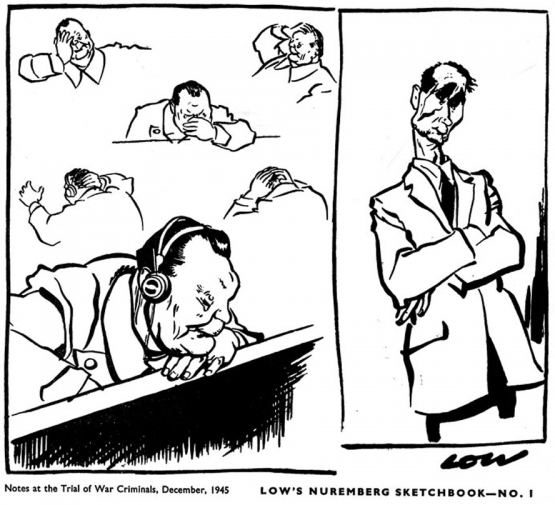
Louis Lochner Report from Nuremberg Trials 1946 | Nuremberg Trial
1946, Aftermath (WWII), Maptalk

News from Nuremberg
(Maptalk, 1946)

A collection of assorted thoughts that were pulled from various letters written by the German people to the offices of the War Crimes Tribunal. A few letters are from weirdos but most are from sincere anti-Nazis wishing that the court would deliver some measure of justice to this German or that German who they feared might be overlooked.

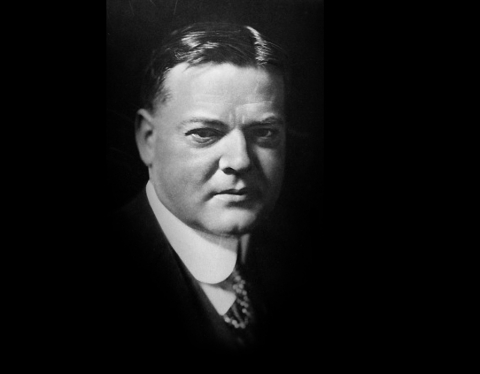
In Defense of President Hoover (Pathfinder Magazine, 1948)
1948, Pathfinder Magazine, The Great Depression

In Defense of President Hoover
(Pathfinder Magazine, 1948)

Attached is a small excerpt from the Pathfinder review of Eugene Lyons’ book, Our Unknown Ex-President (1948). The author outlined the various measures taken by the Hoover administration during the earliest years of the Great Depression in hopes that the flood waters would subside:


He fought for banking reform laws, appropriations for public works, home-loan banks to protect farms and residences. He asked for millions for relief to be administered by state and local organizations… A Democratic Congress refused to heed his suggestions.


Yet, regardless of the various missteps made by Hoover and FDR, the United States remailed an enormously wealthy nation…

Advertisement

Use shortcode [oma_ad position="summary_top"] (or other position) in your theme or widgets to display OMA Promotions here.

The KKK Fall from Fashion (The Literary Digest, 1928)
1928, Ku Klux Klan, The Literary Digest

The KKK Fall from Fashion
(The Literary Digest, 1928)

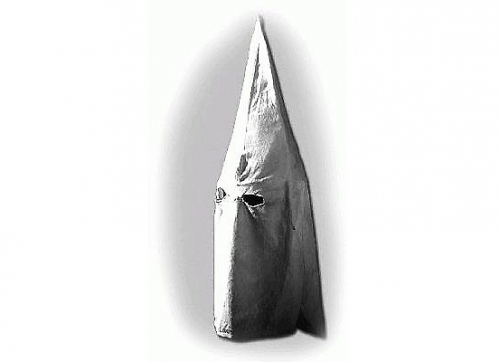
In 1928 the presiding übermensch of the KKK, Hiram Evans (1881 – 1966), saw fit to make a sartorial change in his terrorist organization by declaring that there would be no need in the future for any face-covering to be worn by any member. The article is primarily about the rapid disintegration that the Klan was experiencing and the tremendous loss in it’s over all social appeal throughout the country.

It was a success, temporarily, because it appealed to the playboy instinct of grown-ups and offered burning phrases of patriotism as the excuse for gallivanting about… It failed because its ‘patriotism’ was not real, but ancient bigotry in new a guise… It failed finally, because the genuine American sense of humor finally asserted itself and laughed at the Klan out of court.

The British Aristocracy and the Great War (Vanity Fair, 1916)
1916, Vanity Fair Hall of Fame, World War One

The British Aristocracy and the Great War
(Vanity Fair, 1916)

The 1914 social register for London did not go to press until 1915, so great was the task of assessing the butcher’s bill paid by that tribe. The letters written from camp and the front by those privileged young men all seemed to give thanks that their youth had been matched with this hour and that they might be able to show to one and all that they were worthy.


…For not even in the Great Rebellion against Charles I did the nobility lose so many of its members as the list of casualties of the present war displays. In the first sixteen months of operations no less than eight hundred men of title were killed in action, or died of their wounds, and over a thousand more were serving with the land or sea forces.


A similar article can be read here…


Click here to read about the W.W. I efforts of Prince Edward, the future Duke of Windsor.


Click here to read another article about the old European order.

Advertisement

Use shortcode [oma_ad position="summary_top"] (or other position) in your theme or widgets to display OMA Promotions here.

Fascism in Argentina | Juan Peron Nazi Sympathizer
1944, Allies, Collier's Magazine

Argentina: Silent Nazi Ally
(Collier’s Magazine, 1944)

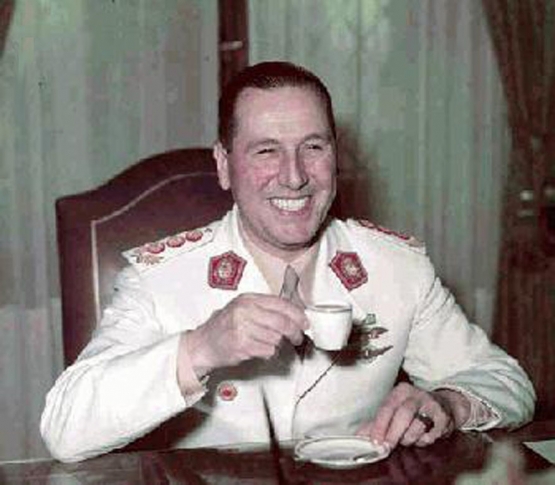
Just back from South America, COLLIER;S correspondent reports on the totalitarian government in Argentina, it’s link to Hitlerism, and what to do to guard our future security.

The Argentine government has harbored spies and saboteurs. Colonel Frederic Wolf, the Himmler of the German Embassy and the latest director of the real Nazi spy ring, remained in Buenos Aires until quite recently. Our military forces have plenty of evidence that Allied ships have been sunk, and American lives have been destroyed as a result of information broadcast from Argentina to U-boat commanders.


Click here to read about the headache that was Evita Peron.

Advertisement

Use shortcode [oma_ad position="summary_top"] (or other position) in your theme or widgets to display OMA Promotions here.

Scroll to Top