Author name: editor

Uncategorized

Shall Tobacco Follow Alcohol?
(The Independent, 1919)

The same forces that saw to it that alcohol was outlawed were debating as to whether or not liquor should be similarly restricted. It is interesting to read this piece because the same exact arguments are used to this very day as to the same subject. Tobacco was as well understood eighty six years ago. KEY WORDS: Outlawing Tobacco, Prohibition of Tobacco, Second-Hand Smoke, Congress and Smoking, Tobacco Laws, Congress and Tobacco, History of Tobacco, History of Tobacco in America…

Uncategorized

The Blouse That Never Was…
(The Stars and Stripes, 1918)

The First World War introduced firsts in so many categories, but this one item of military apparel has yet to be issued to any combatant in any war. KEY WORDS: Make-Believe Clothing, Un-Issued Uniform Items of World War One, Dreamers and the Clothes they Design, American Uniforms of World War One, Articles About Uniforms, Articles About Modern War, American Insignia, Articles About Industrial Wafare. U.S. Military Uniforms,

Advertisement

Use shortcode [oma_ad position="summary_top"] (or other position) in your theme or widgets to display OMA Promotions here.

Uncategorized

The Fear of the “Nipponification”
(The Independent, 1920)

Interesting figures revealed by the U.S. Census Bureau in 1920 served to relieve much of the race-conscious anxiety among some of the members of the Anglo-Saxon majority. KEY WORDS: Xenophobia, U.S. Census Bureau, Figures of the U.S. Census Bureau, Yellow Peril, Asian American, Asian American History, Asian American Studies.

Advertisement

Use shortcode [oma_ad position="summary_top"] (or other position) in your theme or widgets to display OMA Promotions here.

Interviews: 1912 - 1960

Natalie Wood Arrives
(Coronet Magazine, 1960)

One of the first profiles of Hollywood beauty and former child star Natalie Wood (1938 – 1981).

The journalist went into some detail explaining how she was discovered at the age of six by the director Irving Pichel (1891 – 1954) and how it all steadily snowballed into eighteen years of semi-steady work that provided her with a invaluable Hollywood education (and subsequently creating a thoroughly out-of-control teenager).

At sixteen, Natalie co-starred with the late James Dean in Rebel Without a Cause, and the resulting Dean hysteria swept her forward with him… She cannot bear to be alone. She is full of reasonless fears. Of airplanes. Of snakes. Of swimming in the ocean.

The article appeared on the newsstands while she was shooting All The Fine Young Cannibals.

The Humanity of Dick Kirkland (Coronet Magazine, 1957)
1957, Civil Behavior, Coronet Magazine

The Humanity of Dick Kirkland
(Coronet Magazine, 1957)

He led no charge, won no thrilling victory. But men honor his memory because, in the midst of slaughter, he dared death to bring solace to his wounded foes… He was Sergeant Richard Kirkland of the 2nd South Carolina Volunteers.


We honor him on this page because he was one of the few men in war who simply refused to submit himself entirely to the savage spirit of war and surrender all sense decency.


On a cold Virginia day in 1862, Kirkland and his Carolinians were locked in a bitter struggle with Federal infantry. It was not a good day for the men in blue, and many of their wounded lay on the ground crying out for help. During the few lulls in the firing Kirkland decided he could take their cries no more and ventured out onto the killing ground bringing water and blankets:

The Union men were thunderstruck when a Confederate soldier, laden with canteens, suddenly climbed into view. Their surprise was probably what saved Dick, for in a few seconds he had sprinted to the nearest wounded man, given him water, covered him with an overcoat, and gone on to the next… Dick was the talk of both armies that day.


Click here to read about the heavy influence religion had in the Rebel states during the American Civil War.

Advertisement

Use shortcode [oma_ad position="summary_top"] (or other position) in your theme or widgets to display OMA Promotions here.

In the Doughboy Trenches (The Stars and Stripes, 1918)
Stars and Stripes Archive

In the Doughboy Trenches
(The Stars and Stripes, 1918)

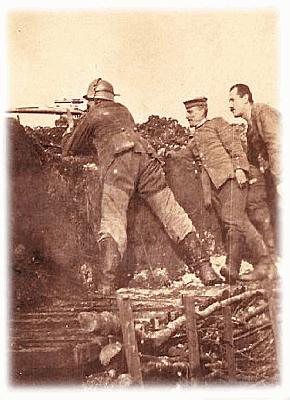
Mr. Junius B Wood, correspondent of the CHICAGO DAILY NEWS with the A.E.F. recently spent a week in the sector held by the American Army Northwest of Toul. He lived the life of a Doughboy, slept a little and saw a lot. He spent his days in and near the front line and some of his nights in No Man’s Land. Here is the second and concluding installment of his story, depicting life at the front as it actually is…
American Snipers in France (Literary Digest, 1919)
1919, Snipers, The Literary Digest

American Snipers in France
(Literary Digest, 1919)

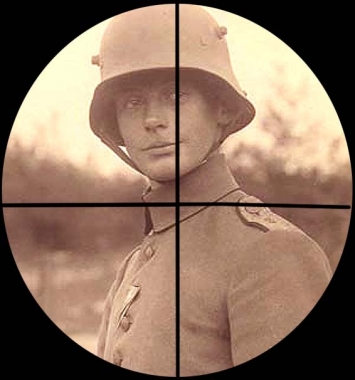
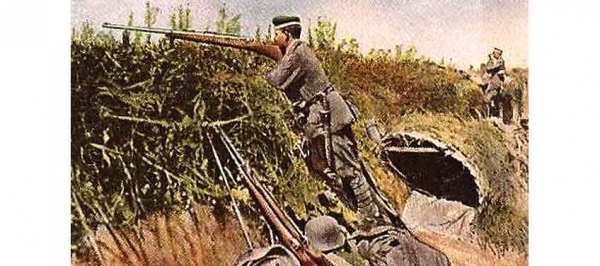
This article listed the skills required to survive as a sniper in W.W. I France:

One extremely important rule was that he should swab the muzzle of his rifle after every shot, to make sure that no moisture had collected there. One tiny drop of water would, upon the rifle’s discharge, send up a puff of steam that would reveal him to his carefully watching enemies.


To see a diagram of the American W.W. I sniper rifle, click here.


The Springfield 1903 Riflesstyle=border:none

ww1 american soldiers vs ww2 american soldiers |
1918, Vanity Fair Hall of Fame, Writing

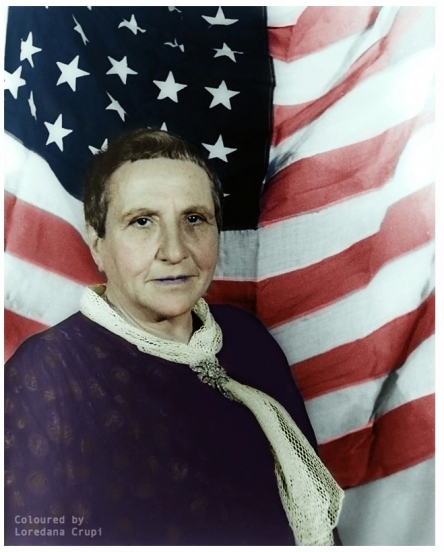
Patriotic Verse by Gertrude Stein
(Vanity Fair, 1918)

When you stop to think of patriotic poetry, Gertrude Steinstyle=border:none (1874-1946) is not one of the word-smiths whose name comes to mind. Yet she, too, applied her talents to the genre after having labored many moons as an ambulance driver in France on behalf of the American Fund for the French Wounded. She had joined this group in 1916 and in 1922 was awarded the Medaille de la Reconnaissance Française for all her good work. This poem, in praise of the U.S. Army, appeared in a 1918 VANITY FAIR.
Advertisement

Use shortcode [oma_ad position="summary_top"] (or other position) in your theme or widgets to display OMA Promotions here.

The German Anti-Tank Rifle (Almanach Hechette, 1919)
1919, Inventions and Weapons

The German Anti-Tank Rifle
(Almanach Hechette, 1919)

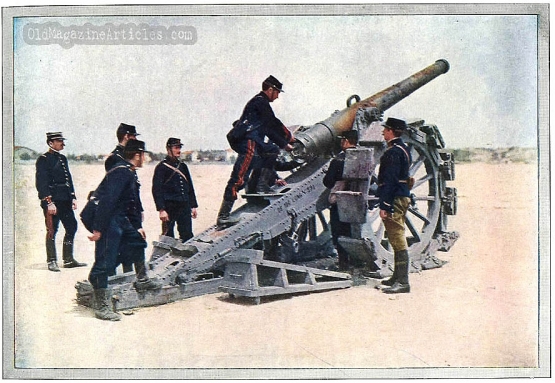
As a response to the drastic increase in French and British tank production, German industry manufactured a powerful (if cumbersome) anti-tank rifle in early 1918. The weapon fired a 13mm armor-piercing bullet but it’s heavy recoil made the weapon difficult to operate. The Abris Museum in Albert, France has one of these currently on display.

Manhattan Servant Problems (Vanity Fair, 1918)
1918, Cartoons, Cartoons (WWI), Vanity Fair Hall of Fame

Manhattan Servant Problems
(Vanity Fair, 1918)

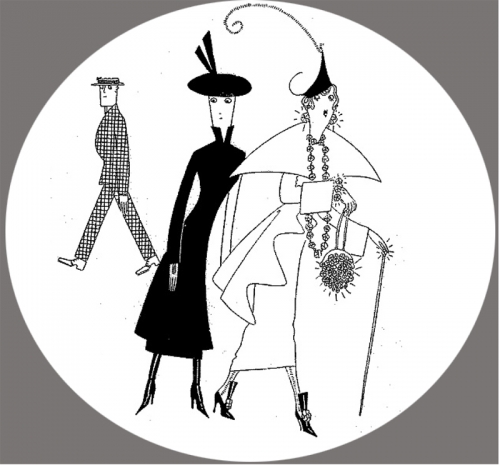
The attached cartoon depicted one of the unintended consequences of German aggression during the First World War: the creation of what was known as the servant problem. It should be understood that the difficulty in question caused no particular hardship for those who were supposed to be the servants; they were simply delighted to vacate the collective domiciles of Mr. & Mrs. Got-Rocks in order to pull down a living wage in a nice, cozy smoke-spewing armament factory some place – leaving their former employers to fix their own meals and diaper junior.


Click here to read about the New York fashions of 1916.

Advertisement

Use shortcode [oma_ad position="summary_top"] (or other position) in your theme or widgets to display OMA Promotions here.

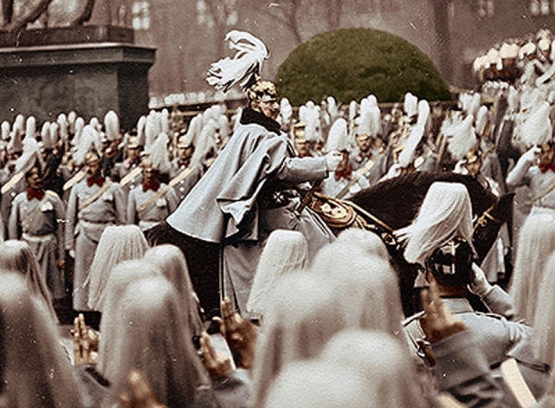
Photographs of the Crowned Heads of Europe (Vanity Fair, 1914)
1914, European Royalty, Vanity Fair Hall of Fame

Photographs of the Crowned Heads of Europe
(Vanity Fair, 1914)

Will Any of These Pictures be Turned to the Wall? asked the editors of VANITY FAIR shortly after the outbreak of the W.W. I. On the attached pages are photographic portraits of the potentates representing the assorted combatant nations; French President Raymond Poincare was the only elected official to be included among the royals. Pictured are Austria’s Emperor Franz Joseph, Britain’s King George V, Germany’s Willhem II, Victor Emmanuel II of Italy, Peter of Serbia and Albert, King of the Belgians.

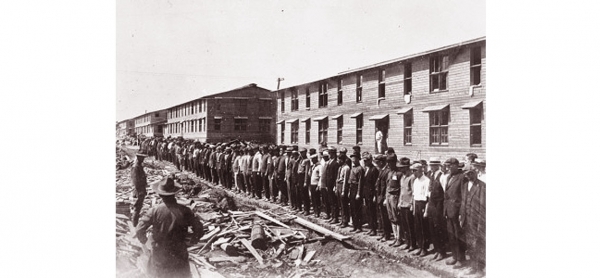
The 1917 Draft (U.S. Gov. 1931)
1931, Doughboys, The U.S. Government Records

The 1917 Draft
(U.S. Gov. 1931)

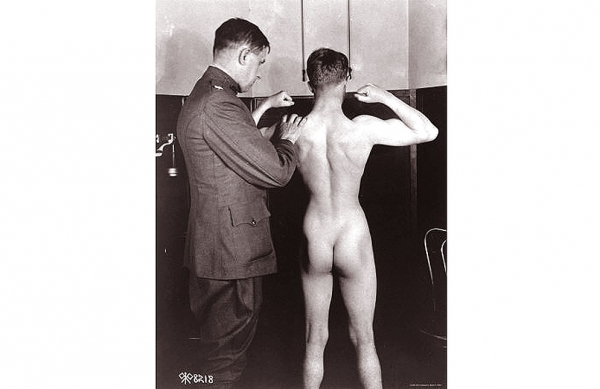
Attached is a small piece that explains how the draft of 1917 was conducted. Illustrated with three charts, this article provides the number of males in the U.S. at that time (54,000,000), how many had registered under the Selective Service Act (26,000,000), the percentage of the whole number who had never registered and how the onslaught of the influenza epidemic had effected the W.W. I draft.

In the fall of 1917 the first half million came rapidly. During the winter the accessions were relatively few, and those that did come in were largely used as replacements and for special services.

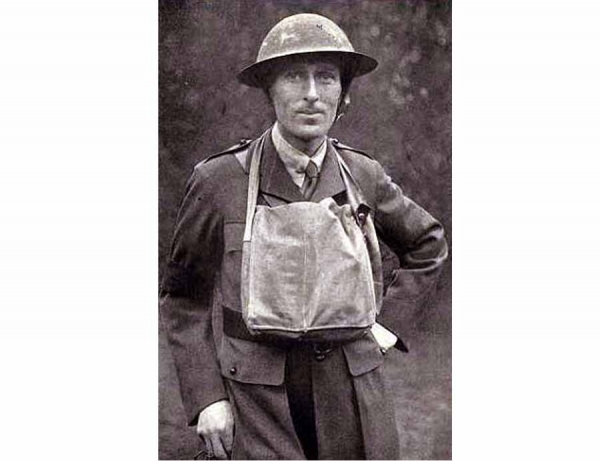
A Tribute to Philip Gibbs: War - Correspondent (The Literary Digest, 1917)
1917, The Literary Digest, World War One

A Tribute to Philip Gibbs: War – Correspondent
(The Literary Digest, 1917)

Two articles from 1917 heaped praise upon the laureled cranium of the British war correspondent Philip Gibbs (1877 – 1962). Having written diligently for the readers of the DAILY MAIL and DAILY CHRONICLE, who were also anticipating his book THE BATTLE OF THE SOMME (1917), Gibbs was admitted to the VANITY FAIR Hall of Fame (for whatever that was worth at the time):

He has been able to bring the wide, modern, romantic outlook to bear in his survey and analysis of fighting and the conditions of fighting…He is a war-correspondent of a ‘new dispensation’, giving ‘not a realistic or a melodramatic vision of war, but a naturalistic vision’.


At the close of hostilities in 1918, Philip Gibbs was filled with disgust concerning his cooperation with the censors and would begin writing NOW IT CAN BE TOLD (1920), in which he angrily names the bunglers in command and admits that he wrote lies all through the war.

Advertisement

Use shortcode [oma_ad position="summary_top"] (or other position) in your theme or widgets to display OMA Promotions here.

Scroll to Top