Author name: editor

In the Doughboy Trenches (The Stars and Stripes, 1918)
Stars and Stripes Archive

In the Doughboy Trenches
(The Stars and Stripes, 1918)

Mr. Junius B Wood, correspondent of the CHICAGO DAILY NEWS with the A.E.F. recently spent a week in the sector held by the American Army Northwest of Toul. He lived the life of a Doughboy, slept a little and saw a lot. He spent his days in and near the front line and some of his nights in No Man’s Land. Here is the second and concluding installment of his story, depicting life at the front as it actually is…

American Snipers in France (Literary Digest, 1919)
1919, Snipers, The Literary Digest

American Snipers in France
(Literary Digest, 1919)

This article listed the skills required to survive as a sniper in W.W. I France:

One extremely important rule was that he should swab the muzzle of his rifle after every shot, to make sure that no moisture had collected there. One tiny drop of water would, upon the rifle’s discharge, send up a puff of steam that would reveal him to his carefully watching enemies.


To see a diagram of the American W.W. I sniper rifle, click here.


The Springfield 1903 Riflesstyle=border:none

1918, Vanity Fair Hall of Fame, Writing

Patriotic Verse by Gertrude Stein
(Vanity Fair, 1918)

When you stop to think of patriotic poetry, Gertrude Steinstyle=border:none (1874-1946) is not one of the word-smiths whose name comes to mind. Yet she, too, applied her talents to the genre after having labored many moons as an ambulance driver in France on behalf of the American Fund for the French Wounded. She had joined this group in 1916 and in 1922 was awarded the Medaille de la Reconnaissance Française for all her good work. This poem, in praise of the U.S. Army, appeared in a 1918 VANITY FAIR.

Advertisement

Use shortcode [oma_ad position="summary_top"] (or other position) in your theme or widgets to display OMA Promotions here.

The German Anti-Tank Rifle (Almanach Hechette, 1919)
1919, Inventions and Weapons

The German Anti-Tank Rifle
(Almanach Hechette, 1919)

As a response to the drastic increase in French and British tank production, German industry manufactured a powerful (if cumbersome) anti-tank rifle in early 1918. The weapon fired a 13mm armor-piercing bullet but it’s heavy recoil made the weapon difficult to operate. The Abris Museum in Albert, France has one of these currently on display.

Manhattan Servant Problems (Vanity Fair, 1918)
1918, Cartoons, Cartoons (WWI), Vanity Fair Hall of Fame

Manhattan Servant Problems
(Vanity Fair, 1918)

The attached cartoon depicted one of the unintended consequences of German aggression during the First World War: the creation of what was known as the servant problem. It should be understood that the difficulty in question caused no particular hardship for those who were supposed to be the servants; they were simply delighted to vacate the collective domiciles of Mr. & Mrs. Got-Rocks in order to pull down a living wage in a nice, cozy smoke-spewing armament factory some place – leaving their former employers to fix their own meals and diaper junior.


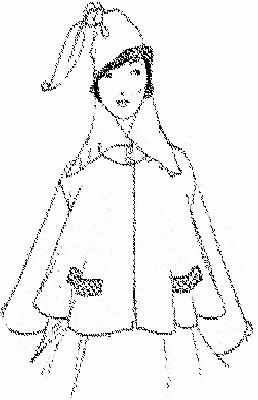
Click here to read about the New York fashions of 1916.

Advertisement

Use shortcode [oma_ad position="summary_top"] (or other position) in your theme or widgets to display OMA Promotions here.

Photographs of the Crowned Heads of Europe (Vanity Fair, 1914)
1914, European Royalty, Vanity Fair Hall of Fame

Photographs of the Crowned Heads of Europe
(Vanity Fair, 1914)

Will Any of These Pictures be Turned to the Wall? asked the editors of VANITY FAIR shortly after the outbreak of the W.W. I. On the attached pages are photographic portraits of the potentates representing the assorted combatant nations; French President Raymond Poincare was the only elected official to be included among the royals. Pictured are Austria’s Emperor Franz Joseph, Britain’s King George V, Germany’s Willhem II, Victor Emmanuel II of Italy, Peter of Serbia and Albert, King of the Belgians.

The 1917 Draft (U.S. Gov. 1931)
1931, Doughboys, The U.S. Government Records

The 1917 Draft
(U.S. Gov. 1931)

Attached is a small piece that explains how the draft of 1917 was conducted. Illustrated with three charts, this article provides the number of males in the U.S. at that time (54,000,000), how many had registered under the Selective Service Act (26,000,000), the percentage of the whole number who had never registered and how the onslaught of the influenza epidemic had effected the W.W. I draft.

In the fall of 1917 the first half million came rapidly. During the winter the accessions were relatively few, and those that did come in were largely used as replacements and for special services.

A Tribute to Philip Gibbs: War - Correspondent (The Literary Digest, 1917)
1917, The Literary Digest, World War One

A Tribute to Philip Gibbs: War – Correspondent
(The Literary Digest, 1917)

Two articles from 1917 heaped praise upon the laureled cranium of the British war correspondent Philip Gibbs (1877 – 1962). Having written diligently for the readers of the DAILY MAIL and DAILY CHRONICLE, who were also anticipating his book THE BATTLE OF THE SOMME (1917), Gibbs was admitted to the VANITY FAIR Hall of Fame (for whatever that was worth at the time):

He has been able to bring the wide, modern, romantic outlook to bear in his survey and analysis of fighting and the conditions of fighting…He is a war-correspondent of a ‘new dispensation’, giving ‘not a realistic or a melodramatic vision of war, but a naturalistic vision’.


At the close of hostilities in 1918, Philip Gibbs was filled with disgust concerning his cooperation with the censors and would begin writing NOW IT CAN BE TOLD (1920), in which he angrily names the bunglers in command and admits that he wrote lies all through the war.

Advertisement

Use shortcode [oma_ad position="summary_top"] (or other position) in your theme or widgets to display OMA Promotions here.

Behind the Scenes at the Doughboy Training Camps (Leslie's Weekly, 1918)
1918, Leslie's Weekly, World War One

Behind the Scenes at the Doughboy Training Camps
(Leslie’s Weekly, 1918)

This article written by Edwin A. Goewey and illustrated by C. Leroy Baldridge (1889 – 1977) reported on how America’s granite youth was chiseled into fighting trim at the Long Island training camps at Upton and Mineola. Reference is made to the contributions made by Father Francis Duffy and Major-General J. Franklin Bell.

Click here to read about the AEF officer training at Plattsburg, New York.

Click here to read some statistical data about the American Doughboys of the First World War.

The Suitability of the First One Million Draftees (Current Opinion, 1919)
1919, Current Opinion Magazine, Doughboys

The Suitability of the First One Million Draftees
(Current Opinion, 1919)

Additional data regarding the 1917 Draft and how the first one million inductees measured-up physically:

The first adequate physical survey in half a century was made possible when the Selective Service system brought before medical examiners some ten million men. Of the 2,510,000 men between the ages of twenty-one and thirty-one 730,000 (29 percent) were rejected on physical grounds.

We found it interesting to learn two facts from this article; the first being that the highest number of acceptable draftees were from the countryside and the second involved the malady of flat feet -which effected one out of every five American men at that time.

German Admiral Von Tirpitz Condemned (Review of Reviews, 1919)
1919, Aftermath (WWI), The American Review of Reviews

German Admiral Von Tirpitz Condemned
(Review of Reviews, 1919)

One year after the First World War reached it’s bloody conclusion, Admiral German Grand Admiral Alfred Von Tirpitz (1849 – 1930) was in a frenzy writing his wartime memoir in order that it arrive at the printing presses before his critics could do the same. One of his most devoted detractor was a naval advocate named Captain Persius who had been riding Tirpitz as early as 1914 for failing to fully grasp the benefits of the U-boat. In 1919 Captain Persius took it upon himself to widely distribute a pamphlet titled, How Tirpitz Ruined the German Fleet, which was reviewed in this article.

Tirpitz never realized the power of the submarine… Tirpitz was building Dreadnoughts when he should have been concentrating on submarines, and what is worse was building them with less displacement than the British, less strongly armed and of lower speed.


In 1920 the representatives from the victorious nations who convened at Versailles demanded that Kaiser Wilhelm, Admiral Tirpitz and an assortment of other big shots be handed over for trial – click here to read about it.


Read Another Article About Tirpitz…

Advertisement

Use shortcode [oma_ad position="summary_top"] (or other position) in your theme or widgets to display OMA Promotions here.

Sniper Scopes Compared (Literary Digest, 1916)
1916, Snipers, The Literary Digest

Sniper Scopes Compared
(Literary Digest, 1916)

By enlarge, this article is a mildly technical piece that compares the German sniper scopes used during W.W. I to those of the British; happily, the amusing part of this essay is contained in the opening paragraph in which a British Tommy returning from the front, is quoted as exclaiming:

German snipers are better shots than the English because their rifles have telescopic sights that are illuminated at night.

Advertisement

Use shortcode [oma_ad position="summary_top"] (or other position) in your theme or widgets to display OMA Promotions here.

Woman Aviator Seeks Mail Job (The Stars and Stripes, 1919)
1919, The Stars and Stripes, Women's Suffrage

Woman Aviator Seeks Mail Job
(The Stars and Stripes, 1919)

Katherine Stinson (1891-1977) wants to carry letters up to Third Army. By the time Stinson (a.k.a. the Flying Schoolgirl) had applied for the job of carying the mail to the occupying forces in post-war Germany, she already had the distinction of being the fourth American woman to earn a pilot’s license and the first woman to ever deliver air-mail for the U.S. Post Office. She didn’t get the job…

1915, Twentieth Century Writers, Vanity Fair Hall of Fame

W.B. Yeats and Those He Has Influenced
(Vanity Fair,1915)

With the publishing of the first part of his autobiography, Reveries Over Childhood and Youth, W.B. Yeats (1865 – 1939) got some attention in the American press. Here is a small notice from an American society magazine which praises his ability as an artist to influence other writers, such as George Bernard Shaw, John M. Synge, George Moore and Dr. Douglas Hyde.

Advertisement

Use shortcode [oma_ad position="summary_top"] (or other position) in your theme or widgets to display OMA Promotions here.

Scroll to Top