Author name: editor

Optimistic Plans Regarding the Use of Cavalry (The Alertmen, 1943)
1943, The Alertmen, World War Two

Optimistic Plans Regarding the Use of Cavalry
(The Alertmen, 1943)

This illustrated article from an obscure U.S. Army weekly states quite clearly that in light of the successful use of cavalry on the Eastern Front, the U.S. Army was once again training men to fight on horse-back. Referring to the writings of a Soviet General named O.T. Gorodoviko (a probable reference to General O.T. Gorodovikov: 1879 -1960) who had stated in an article written in an undated issue of The Cavalry Journal, that cavalry proved effective in fighting the Nazis when deployed as mounted infantry in limited engagements. The journalist conveyed his enthusiasm that the era of the mounted man was back.

Please give us your thoughts about this article, something seems terribly fishy; did over-extended Soviet Generals have time to write for American journals? Furthermore, you might find that the accompanying photos seem deliberately out of date. The hard-charging post-debutants at OldMagazineArticles.com tend to feel that this article was a hoax intended to throw someone off the trail…

A Study of World War I American Army Officers (U.S. Government Archive, 1931)
1931, Doughboys, The U.S. Government Archive

A Study of World War I American Army Officers
(U.S. Government Archive, 1931)

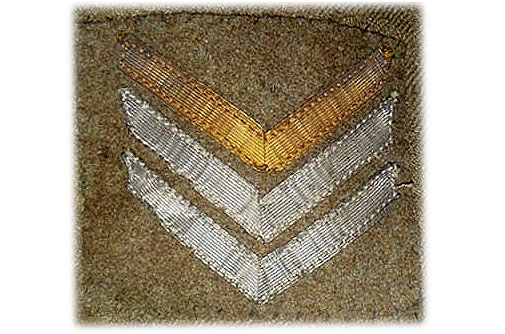
The attached pie chart will give you an understanding as to the history of the U.S. Army officer corps that served throughout the First World War. Drawn in 1931 and based upon the data collected by the Department of War, this study outlines the history of Army leadership between April of 1917 through November of 1918.


Click here to read a 1917 article about the U.S. Army officer training camp at Plattsburg, New York.

The U.S. Army Divisions and Their States of Origin (U.S. Government Archive, 1931)
1931, Doughboys, The U.S. Government Archive

The U.S. Army Divisions and Their States of Origin
(U.S. Government Archive, 1931)

The attached file is composed of two informative paragraphs and a table listing the 42 American Army divisions, the states from which they were pooled and the locations of their respective training camps:

The Doughboys were trained in the division, which was our typical combat unit. In the American Army it was composed of about 1,000 officers and 27,000 men. Training and sorting organizations of about 10,000 men, known as depot brigades, were also utilized, but as far as possible, the new recruits were put almost immediately into the divisions which were the organizations in which they would go into action.

Click here to read about the efforts that were made to get free cigarettes to the Doughboys…

Advertisement

Use shortcode [oma_ad position="summary_top"] (or other position) in your theme or widgets to display OMA Promotions here.

The First Automotive Brake Lights (Popular Mechanics, 1918)
1918, Cars, Popular Mechanics Magazine

The First Automotive Brake Lights
(Popular Mechanics, 1918)

Many dented fenders later, the first signal indicators show up. This article makes clear that both the Brake light and the turning signal indicator are both the same color (red) but they are an improvement on what was sporadically used in a few circles: the Illuminated Glove (a fingerless mit intended for the left-hand that was supposedly easier to see when making stop or turning gestures).

Advertisement

Use shortcode [oma_ad position="summary_top"] (or other position) in your theme or widgets to display OMA Promotions here.

An Interview with Suzanne Lenglen (Literary Digest, 1921)
1921, Tennis History, The Literary Digest

An Interview with Suzanne Lenglen
(Literary Digest, 1921)

A magazine interview highlighting the tennis career of Suzanne Lenglenstyle=border:none (1899 – 1938) up to the summer of 1921.

Mille. Lenglen was a remarkable French tennis player who won 31 Grand Slam titles from 1914 through 1926. She is remembered as the the first high-profile European woman tennis star to go professional: in 1912 she was paid $50,000.00 to play a series of matches against Mary K. Browne (1891 – 1971). This article concentrates on her supreme confidence and overwhelming determination to win.

When prest as to whether she liked a tonic, or say just a
little wine, before her matches, Mile. Lenglen admitted that she
did and that she had been promised that it would be obtained
for her in the United States. Despite the fact that she is in an
arid land Suzanne praised the effect of this stimulant on her
game.

‘Nothing, she said, is so fine for the nerve, for the strength
for the morale. A little wine tones up the system just right.
One can not always be serious. There must be some sparkle, too.’

Styling the Fifties (Gentry Magazine, 1956)
1950s Cars, 1956, Gentry Magazine

Styling the Fifties
(Gentry Magazine, 1956)

A one page essay by automobile-stylist William H. Graves, a former Vice President and Director of Engineering at the Studebaker-Packard Corporation.

Two years ago a new product philosophy was approved at Packard which gave the engineering department a green light that had not been on since 1935. This enabled us to set up a program to style future cars for the luxury field…The Packard program was launched in October, 1952, with the formation of a new styling group of young men, whose average age was 28. An advanced design section and a special section to experiment with plastics as a possible material for both parts and dies were established.

Click here to read the obituary of J.M. Studebaker.

Advertisement

Use shortcode [oma_ad position="summary_top"] (or other position) in your theme or widgets to display OMA Promotions here.

The Year of Sound (Theatre Arts Magazine, 1929)
1929, Talkies 1930, Theatre Arts Magazine

The Year of Sound
(Theatre Arts Magazine, 1929)

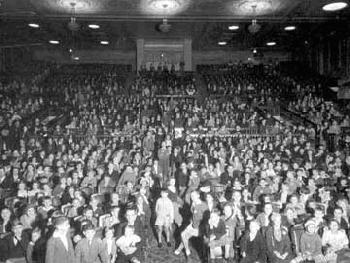
The oddballs who read old Hollywood magazines from the year 1929 seem to all be in agreement that these magazines all shared the same frenzied, enthusiastic energy; something new and wonderful and unpredictable had been introduced and it was going to cause an enormous shake up in every movie capitol under the sun: sound.

But it was in the past year that the newest art, that of the silent drama, like prehistoric Man, stood up on it’s hind legs and began to talk. Like prehistoric man, it talked badly at first. But soon it’s words came a shade more fluently, and gradually they began, when arranged, to make a small degree of sense.

Read about the first talkie movie star: Mickey Mouse…

Advertisement

Use shortcode [oma_ad position="summary_top"] (or other position) in your theme or widgets to display OMA Promotions here.

Reviewed: A Fool There Was (Life Magazine, 1922)
1922, Life Magazine, Silent Movie History

Reviewed: A Fool There Was
(Life Magazine, 1922)

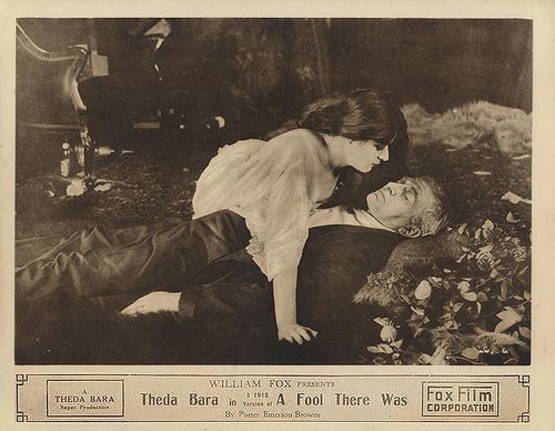
A Fool There Was was originally produced in 1915 starring Theda Bara in the vampire roll; but as the view of women changed in society, to say nothing of popular culture, the producers in the early Hollywood dream-factory decided to re-stage the production with a racier woman in the lead -a flapper-vampire, if you will. The reviewer was sympathetic as to the need for a new adaptation but pointed out that the actress who was re-cast in the Theda Bara roll, Estelle Taylor (1894 — 1958), left the audiences wanting. It was also pointed out that the censorship menace hangs heavy over ‘A Fool There Was’.


In 1919 Theda Bara wrote an article for Vanity Fair in which she swore off ever playing a vampire again; click here to read it.

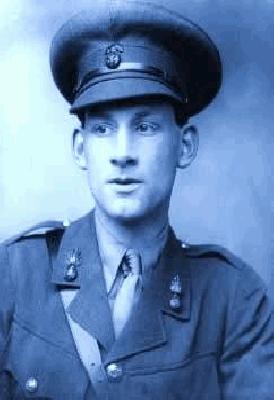
Siegfried Sassoon Reviewed (Touchstone Magazine, 1920)
1920, Poetry, Touchstone Magazine

Siegfried Sassoon Reviewed
(Touchstone Magazine, 1920)

American poet Marguerite Wilkinson(1883 — 1928) was very impressed with the World War I poetry of Sigfried Sassoon, MC (1886 – 1967); in this three page review she lucidly explained why Sassoon’s voice was different from all the other wartime versifiers and illustrated her point by quoting liberally from his two earlier volumes, The Old Huntsman (1917) and Counter Attack (1918):

Such wisdom is the shining power of Sigfried Sassoon. To read it is to come face to face with indelible memories of unspeakable anguish. No palliatives are offered. The truth about warfare is told, as Mr. Sassoon understands it, with vigor and in sight…It is told by a man, a soldier, who will never forget this Calvary of the youth of our generation.

Advertisement

Use shortcode [oma_ad position="summary_top"] (or other position) in your theme or widgets to display OMA Promotions here.

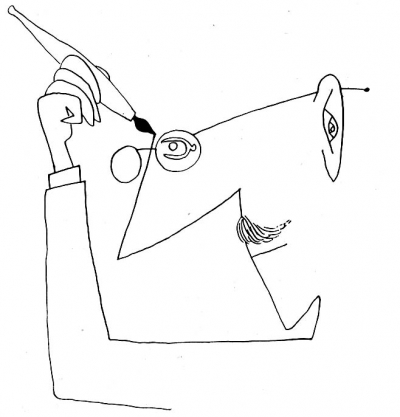
Saul Steinberg (Gentry Magazine, 1955)
1955, Gentry Magazine, Modern Art

Saul Steinberg
(Gentry Magazine, 1955)

The art of living in the wrong century – this is Saul Steinberg’s (1914 – 1999) own designation for the predicament he has been illustrating for over a decade. In his latest collection, The Passportstyle=border:none (the title is a deceptively mild clue to the whole works; it sneaks up on you), he has again and more inexorably than ever demonstrated his infinite capacity for taking pains in his graphic pursuit of melange, drafting, with a vilifying grasp of the murderously essential, our contemporary quest for style – in architecture, in furniture, clothing and machines – which we can also own.
Saul Steinberg (Gentry Magazine, 1955)
1955, Gentry Magazine, Modern Art

Saul Steinberg
(Gentry Magazine, 1955)

The art of living in the wrong century – this is Saul Steinberg’s (1914 – 1999) own designation for the predicament he has been illustrating for over a decade. In his latest collection, The Passportstyle=border:none (the title is a deceptively mild clue to the whole works; it sneaks up on you), he has again and more inexorably than ever demonstrated his infinite capacity for taking pains in his graphic pursuit of melange, drafting, with a vilifying grasp of the murderously essential, our contemporary quest for style – in architecture, in furniture, clothing and machines – which we can also own.
Advertisement

Use shortcode [oma_ad position="summary_top"] (or other position) in your theme or widgets to display OMA Promotions here.

Scroll to Top