Custom Made Tunic and Mack for British Officers
(L’Illustration, 1915)
Read more …

Illustrated pages from the Thresher and Glenny catalog showing how a blanket lining could be added to the trench coat in order to make the garment more suitable for winter campaigns. Also included in the advertisement were three glowing testimonials written by British officers who were simply bubbling over with excitement for their Thresher and Glenny trench coats.
The torrent of natural life has swept away the bitter memories of brother struggling with brother. In both North and South faces are turned from the past, and hearts are filled with pride and hope and aspiration for the future of the republic….The magnanimity which Grant displayed at Appomattox, the restraint which even political temper displayed during Reconstruction, stopping short of confiscation of property and the execution of prominent leaders…these things furnish a new chapter in the history of victor and vanquished. KEY WORDS: Civil War, Civil War Reconstruction, Malace Toward – None Charity Toward All.
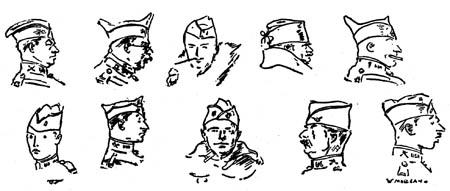
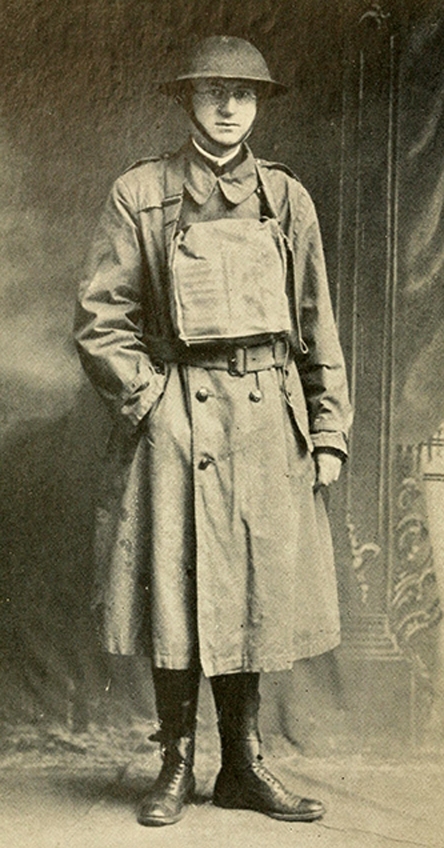
For those who think a good deal about American military uniforms in the Great War, the overseas cap was just as unique to that war as the the Brody helmet, the trench coat and the gas mask. The American Quartermaster Corps liked the hat but they were terribly confused as to what to do with it: can we put insignia on it? Yes. No. Yes. Should it be worn back home?
Click here to read a Stars & Stripes article about American W.W. I helmets.
The same forces that saw to it that alcohol was outlawed were debating as to whether or not liquor should be similarly restricted. It is interesting to read this piece because the same exact arguments are used to this very day as to the same subject. Tobacco was as well understood eighty six years ago. KEY WORDS: Outlawing Tobacco, Prohibition of Tobacco, Second-Hand Smoke, Congress and Smoking, Tobacco Laws, Congress and Tobacco, History of Tobacco, History of Tobacco in America…
When it came to the issue of assimilating immigrants on American shores and deporting Alien Slackers (and other assorted foreign ingrates), few groups yelled louder than the editors at The American Legion Weekly. In this anonymous opinion piece, one writer gently advocates for the recognition of American english.
The First World War introduced firsts in so many categories, but this one item of military apparel has yet to be issued to any combatant in any war. KEY WORDS: Make-Believe Clothing, Un-Issued Uniform Items of World War One, Dreamers and the Clothes they Design, American Uniforms of World War One, Articles About Uniforms, Articles About Modern War, American Insignia, Articles About Industrial Wafare. U.S. Military Uniforms,
Secretary of War, Newton Baker, introduced a bill before Congrees which proposed three new decorations: the Distinguished Service Cross (First Class), the Distinguished Service Cross (Second Class) and the Distinguished Service Medal. No less distuinguished was the Congressional Medal of Honor, which was re-fashioned (illustrations).
Interesting figures revealed by the U.S. Census Bureau in 1920 served to relieve much of the race-conscious anxiety among some of the members of the Anglo-Saxon majority. KEY WORDS: Xenophobia, U.S. Census Bureau, Figures of the U.S. Census Bureau, Yellow Peril, Asian American, Asian American History, Asian American Studies.
The German slide-rule jockeys of World War I burned the midnight oil well into the early hours coming up with this weird steel mask for their sharp-shooters…
Click here to learn more about W.W. I snipers.
One of the first profiles of Hollywood beauty and former child star Natalie Wood (1938 – 1981).
The journalist went into some detail explaining how she was discovered at the age of six by the director Irving Pichel (1891 – 1954) and how it all steadily snowballed into eighteen years of semi-steady work that provided her with a invaluable Hollywood education (and subsequently creating a thoroughly out-of-control teenager).
At sixteen, Natalie co-starred with the late James Dean in Rebel Without a Cause, and the resulting Dean hysteria swept her forward with him… She cannot bear to be alone. She is full of reasonless fears. Of airplanes. Of snakes. Of swimming in the ocean.
The article appeared on the newsstands while she was shooting All The Fine Young Cannibals.
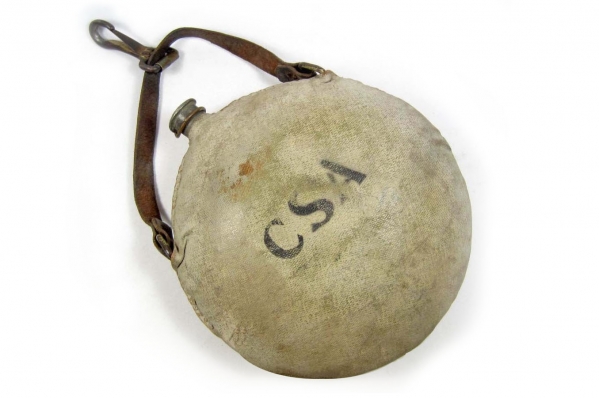
He led no charge, won no thrilling victory. But men honor his memory because, in the midst of slaughter, he dared death to bring solace to his wounded foes… He was Sergeant Richard Kirkland of the 2nd South Carolina Volunteers.
We honor him on this page because he was one of the few men in war who simply refused to submit himself entirely to the savage spirit of war and surrender all sense decency.
On a cold Virginia day in 1862, Kirkland and his Carolinians were locked in a bitter struggle with Federal infantry. It was not a good day for the men in blue, and many of their wounded lay on the ground crying out for help. During the few lulls in the firing Kirkland decided he could take their cries no more and ventured out onto the killing ground bringing water and blankets:
The Union men were thunderstruck when a Confederate soldier, laden with canteens, suddenly climbed into view. Their surprise was probably what saved Dick, for in a few seconds he had sprinted to the nearest wounded man, given him water, covered him with an overcoat, and gone on to the next… Dick was the talk of both armies that day.
Click here to read about the heavy influence religion had in the Rebel states during the American Civil War.