Author name: editor

Nazi Germany 1950 | Germany 1950
1950, Aftermath (WWII), See Magazine

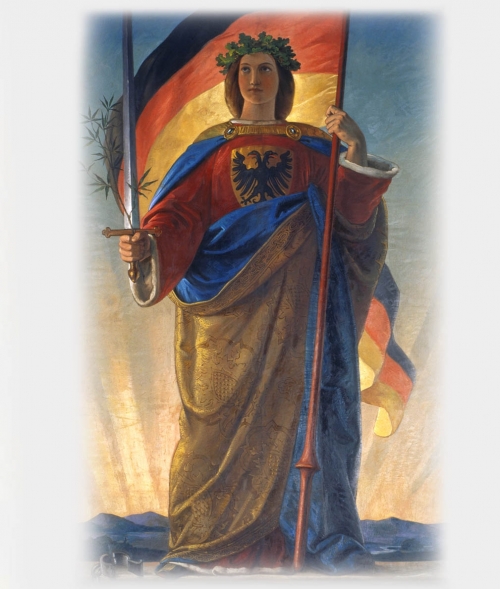
Germany, The Unrepentant
(See Magazine, 1950)

Filed from Berlin by the respected American journalist William Shirer (1904 – 1993), he read the findings of a German opinion poll revealing that


• A majority of Germans tended to hold that Nazism was good, when properly administered.

• Antisemitism was rapidly assuming its customary spot within German society.

• War guilt was largely non-existent and Nazi publications were rolling off the smaller presses with predictable regularity.


Shirer also reported that unrepentant, senior Nazis like Max Amann were getting out of prison, expecting to wield the power they once enjoyed as as one of Hitler’s yes-men.

Harley Earl on Car Design (Gentry Magazine, 1956)
1950s Cars, 1956, Gentry Magazine

Harley Earl on Car Design
(Gentry Magazine, 1956)

Few realize that when we applaud the tremendous style that went into so much of the design of 1950s American cars, we are actually praising the fertile mind of Harley J. Earl (1893 – April 10, 1969):


Earl, who served as the Vice-President of Design at General Motors, conceived of so many design elements that are associated with that period, such as wrap-around windshields, tail-fins and two-tone paint styling. In the attached article, written when he was at the top of his game, Harley Earl tells his readers what is involved in automobile design:

Shakespeare has told us ‘neither a borrower nor a lender be’. An automobile stylist must be both. He must borrow his ideas from the creatures and creations of nature which are all about him…

Advertisement

Use shortcode [oma_ad position="summary_top"] (or other position) in your theme or widgets to display OMA Promotions here.

American Trucks & Armored Cars (Vanity Fair Magazine, 1916)
1916, Cars, Vanity Fair Magazine

American Trucks & Armored Cars
(Vanity Fair Magazine, 1916)

Recognizing the importance of armored vehicles, a group of American millionaires, among them Henry Clay Frick (1849 – 1919), pooled their money and donated a number of such items to the New York National Guard. VANITY FAIR MAGAZINE pursued this story and produced this article as it developed with a thorough review of each of the donated military vehicles. Although the trucks are photographed, few are named.

Advertisement

Use shortcode [oma_ad position="summary_top"] (or other position) in your theme or widgets to display OMA Promotions here.

Interviews: 1912 - 1960

The Men of the ‘Enola Gay’
(Coronet Magazine, 1960)

This is a 1960 magazine interview that served to profile eleven of the top American military celebrities to emerge from the furnaces of the Second World War. These are the men of the ENOLA GAY, the B-29 bomber that incinerated Hiroshima in 1945. The interviews were conducted to reveal the deep feelings and assorted perceptions that had evolved in these men during the years since that day when they were thrust onto history’s stage; it was published at a time when the public was hearing false rumors that the ENOLA GAY crew had all gone slowly mad.

After 15 years the scene over Hiroshima is still sharp and clear to them, and though they disagree on details, they are unanimous on the point of whether they’d do the same things again.

Click here if you would like to read more articles about the Atomic Bomb.

Trench Warfare

War in the Trenches
(Hearst’s Sunday American, 1917)

An article by the admired British war correspondent, Ellis Ashmead-Bartlettstyle=border:none (1881-1931), concerning the unique aspects of the Great War which combined to make that the sort of war that had never been seen before:
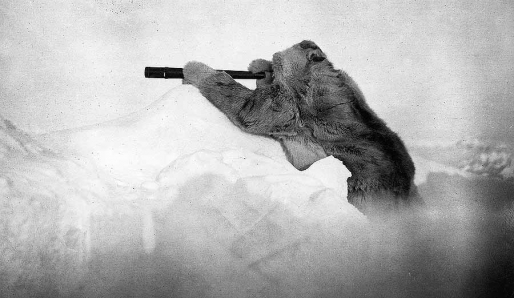
Everything has changed; uniforms, weapons, methods, tactics. Cavalry had been rendered obsolete by trenches, machine guns and modern artillery; untrained soldiers proved useless, special battalions were needed on both sides to fight this particular kind of war that, in no way, resembled the battles your father or grand-fathers had once fought.
A good read.

Advertisement

Use shortcode [oma_ad position="summary_top"] (or other position) in your theme or widgets to display OMA Promotions here.

The San Francisco Home Front (Yank Magazine, 1944)
1944, Home Front, Yank Magazine

The San Francisco Home Front
(Yank Magazine, 1944)

San Francisco played an active roll in World War Two and it was the largest port of embarkation, ferrying millions of American soldiers, sailors, airmen and marines off to their unknown fates in the Pacific War. Between 1942 and 1945, the San Francisco population increased by some 150,000 – yet despite the growth, traffic along Market Street was just as heavy as it was before the war. Taxis were fewer and far more dilapidated, trolley car rides were raised to seven cents and despite a government restriction obliging all coffee vendors to charge no more than five cents for each cup, the caffeine-addicted San Franciscans paid twice that amount. U.S.O shows were plentiful throughout San Francisco and with so many of the city’s police officer’s called up, some parts of the city were patrolled by women.

True fans of San Francisco will enjoy this article.


Read about the 1906 San Francisco Earthquake…


From Amazon:


The Bad City in the Good Warstyle=border:none

A Brief History of Women Combatants (Coronet Magazine, 1957)
1957, Coronet Magazine, Women's Suffrage

A Brief History of Women Combatants
(Coronet Magazine, 1957)

This article concerns those rare women of the Nineteenth Century who defied the dictates of the patriarchy, scoffed at the feminine traditions of their mothers and donned male attire in order to bare the hardships as soldiers and sailors.


The journalist saw fit to devote greater column space to the story of Madame Loreta Janeta Velazquez, who fought with distinction for the Confederacy during the American Civil War.


Click here to read about Russian combat battalion of women that fought the Germans in the First World War.

The Revival of the Norfolk Jacket (Gentry Magazine, 1953)
1953, Gentry Magazine, Men's Fashion

The Revival of the Norfolk Jacket
(Gentry Magazine, 1953)

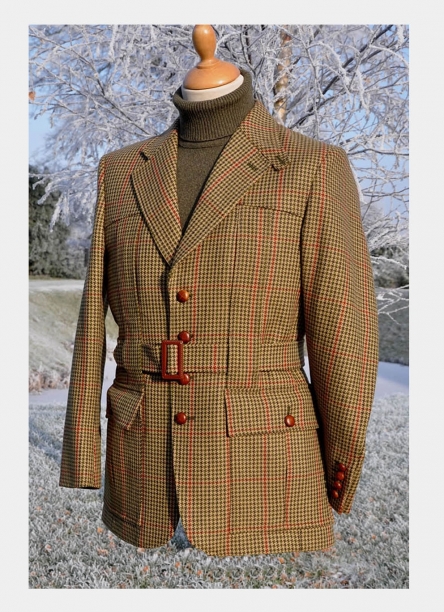
During the early days of 1953 some of the young men of the World War Two generation looked into their grandfather’s wardrobes and came away with a new friend – the Norfolk jacket:

There has been some talk concerning the possible revival of certain Edwardian fashions. In the renewed acceptance of the Norfolk jacket, which takes its name from the 15th Duke of Norfolk, we have the revival of a style which is even older, having first come into being during the Victorian era….In 1910 it was so well accepted that few small lads of that era were content unless they had a Norfolk coat just like their fathers’.


Buy an Original Pattern:

1870s-1900s Norfolk Jacket Patternstyle=border:none

Advertisement

Use shortcode [oma_ad position="summary_top"] (or other position) in your theme or widgets to display OMA Promotions here.

Her Favorite Movies (Photoplay Magazine, 1937)
1937, Elizabeth II Articles, Photoplay Magazine

Her Favorite Movies
(Photoplay Magazine, 1937)

The cinematic tastes of ER II are, like the sovereign herself, deep and complicated. A vast number of geeks employed by this website were sent forth far across the deep green sea in order to find out what her favorite movies are, and we were not at all surprised to learn that she favors the James Bond films. Contrast those movies with the earliest of her film choices and you will be able to trace her development through the years – another article on this page makes clear that she enjoyed the Shirley Temple series – but hold the phone: the attached article from THAT SAME YEAR indicates that she enjoyed A DIFFERENT MOVIE AS WELL!

Advertisement

Use shortcode [oma_ad position="summary_top"] (or other position) in your theme or widgets to display OMA Promotions here.

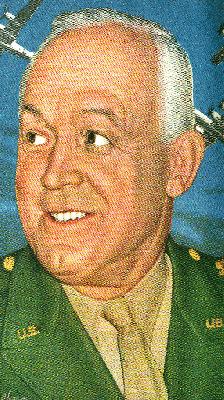
General Hap Arnold, U.S. Air Corps (Coronet Magazine, 1946)
1946, Coronet Magazine, World War Two

General Hap Arnold, U.S. Air Corps
(Coronet Magazine, 1946)

The famous smile which has won General Arnold the nickname of Happy is a pleasant front for a shrewd and grimly purposeful character. His real nature shows in his determined stride, his set jaw. He’s a fighter. He’s been fighting for our safety for almost forty years.

In his direction of the Air Force’s gigantic growth, General Arnold’s first thought was always for his men. The Training Command he planned and organized turned out, swiftly and safely, the thousands of air crews needed. He demanded, and got, the planes his men needed where and when they needed them. He directed our best doctors and scientists in medical and technological research that kept his men and equipment in the peak of fighting condition.

Advertisement

Use shortcode [oma_ad position="summary_top"] (or other position) in your theme or widgets to display OMA Promotions here.

Scroll to Top