Author name: editor

1938, Ken Magazine, World War One

Wrong Turn at Gallipoli
(Ken Magazine, 1938)

This is an opinion piece written at a time when the world stood at the doorstep of World War II. The writer went to some length to outline the fatal error made just one generation earlier and how the sins were to be paid for by their sons and daughters:

The world of today, an upheaval of antagonisms heading toward destructive war, was not inevitable. Russia need not have fallen to the Bolshevists, Germany to the Nazis, Italy to the Fascists. The United States need not have entered the Great War. Two million men slain in battle need not have died. These consequences resulted from a decision of a few men during the World War.


He argued that the Dardanelles Campaign is where the whole war went sideways.


Click here to read what the Kaiser thought of Adolf Hitler.

The Birth of the Green Bay Packers (American Legion Monthly, 1936)
1936, Football History, The American Legion Monthly

The Birth of the Green Bay Packers
(American Legion Monthly, 1936)

This is a sports article that summarizes the meteoric course of the Green Bay Packers, from their earliest days in 1918, when Curly Lambeau approached a meat packing plant beseeching their patronage in order that the team could have uniforms, to the high perch they held in 1936.

Consider for a moment the success this team has had, coming as it does from the smallest city in the pro league. After battling first division teams in the National Professional Football League for many years, the Packers finally came through and won three successive world championships in 1929, 1930 and 1931… If you were to ask most college football stars which pro team they would like to play on, most of them would invariably answer, ‘The Green Bay Packers‘.

Advertisement

Use shortcode [oma_ad position="summary_top"] (or other position) in your theme or widgets to display OMA Promotions here.

Agricultural Migrants in the Great Depression | New Deal Resettlement Administration
1937, Pathfinder Magazine, The Great Depression

Farmers in Flight
(Pathfinder Magazine, 1937)

A report from the regional directors of the Resettlement Administration (an arm of the FDR’s Department of Agriculture) stated that:


15,000 farmers have moved out of the Dakotas, Western Kansas and Eastern Montana, leaving soil which because a aridity or exhaustion could not yield any crop… [Having moved to the states of the Pacific Northwestern] Some of them are squatting in shacks and makeshift dwellings made of tree branches, stray boards [and] strips of tin.

The Four Horsemen and Knute Rockne in His Own Words (Collier's Magazine, 1930)
1930, Collier's Magazine, Football History

The Four Horsemen and Knute Rockne in His Own Words
(Collier’s Magazine, 1930)

An article written by one of the grand old men of football and one of the game’s most legendary coaches: Knute Rockne (1888 – 1931). Before there was the NFL, there was only college football and it was football pioneers like Rockne who brought out the excitement of the game, generating such enthusiasm for the sport and creating a fan-base that grew steadily throughout the century. Just as Redskin Coach Joe Gibbs had The Hogs in the Eighties, Knute Rockne was famous for a group of players in the Twenties called the Four Horsemen (Harry Stuhldreher, Don Miller, Elmer Layden, and Jim Crowley), and that is who the coach wrote about on the attached pages:

Individually, at first, they were just four compact youths, no better than football’s average…Within a season they became famous – the Four Horsemen of Notre Dame…They amazed even their own coach

1949, China - Twentieth Century, Pathfinder Magazine

Reversals for Chiang Kai-shek
(Pathfinder Magazine, 1949)

The years 1927 through 1947 has largely been remembered as a victorious era for the Chinese Nationalists in their struggle against the Communist rebels under Mao Zedong (1893 – 1976). However, following Mao’s 1947 retreat to Manchuria and the subsequent training and reforms that took place within his army, the Nationalist Chinese troops began to feel the humiliation of defeat until they made good their strategic withdrawal to Formosa (ie. Taiwan), where they have remained ever since.


This single page article goes into greater detain outlining the chronology of events.

Advertisement

Use shortcode [oma_ad position="summary_top"] (or other position) in your theme or widgets to display OMA Promotions here.

Primary Source Radio Newspaper Article | Early Radio History
1932, Pathfinder Magazine, Radio History

‘Radio Here and Abroad”
(Pathfinder Magazine, 1932)

During the early days of radio, as in the early days of the internet, there was much scrambling done all around in order to figure out a way to make the technology profitable. When this article was on the newsstand the pioneers of radio were getting closer to achieving this goal but they were not there yet. In Europe, by contrast, the concept of commercial radio was held askance by many; some nations barred all ads from the invisible wave, while others preferred that commercials only be heard during certain hours of the day.

Educational broadcasting is growing in popularity in Europe and is being extended into the afternoon school hours.


A good deal of column space explains how the Soviet Union used radio.

Read about the radio program that was produced by the WPA writers and actors branch in order to celebrate American diversity; click here.

A Tribute to General Pershing (American Legion Weekly, 1924)
1924, General John Pershing, The American Legion Weekly

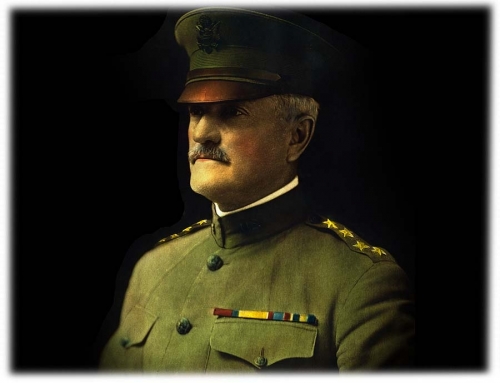
A Tribute to General Pershing
(American Legion Weekly, 1924)

Six years after the last shot was fired, war correspondent Frederick Palmer (1873 – 1958) typed up some sweet words of praise for the American W.W. I Commanding General John Pershing:

When the people at home were thinking in terms of thousands, Pershing planned for an army of a million men overseas…He was organizer and molder of the A.E.F.. The stamp of his character was upon it in so far as any one man can put his stamp upon a vast, modern army.


During that brief period of the war in which Pershing’s Doughboys were at bat against the Germans, Palmer worked under the general as the press liaison officer and censor for the entire A.E.F. (a job he hated). His bitter recollections of W.W. I were recorded in his 1921 memoir; click here to read the review.


Click here to read an article from 1927 by General Pershing regarding the American cemeteries in Europe.

Scrambling for Oil (Literary Digest, 1921)
1921, Miscellaneous, The Literary Digest

Scrambling for Oil
(Literary Digest, 1921)

Even as early as 1921 the world was noticing that in the U.S., that old Yankee mantra about avoiding foreign entanglements (a distortion of Washington’s Farewell Address) was being updated with a disclaimer: avoid foreign entanglements except when oil is involved.


Having put the Prussians in their place three years earlier, oil had become the new peace-time obsession for the Americans and their British ally – but it was to be the bane in their relationship: the Anglo-American irritant as Sydney Brooks remarked in FORTNIGHT REVIEW. With car manufacturers filling orders to placate a booming consumer market, the Brits pumped oil in Mesopotamia, the Americans in Texas while the oil companies from both locals vied for the rights to explore Latin America and the Caribbean.

Advertisement

Use shortcode [oma_ad position="summary_top"] (or other position) in your theme or widgets to display OMA Promotions here.

Assessing U.S. Army Management
1945, General Marshall, Yank Magazine

Assessing U.S. Army Management

As he looked back on all that the U.S. military was able to accomplish during the last two years of World War Two, General George Marshall was full of praise for the War Department’s General Staff; however, it was management of these three major commands that impressed him time and again:


*the collective efforts of the American Air Forces


*the Army Ground Command and


*the Service Forces.

The Price of Victory
1945, General Marshall, Yank Magazine

The Price of Victory

The first two paragraphs from General Marshall’s Biennial Reportstyle=border:none concentrate on the number of casualties counted from December 7, 1941 up to June 30, 1945 (keep in mind that this immediate estimate would have to be adjusted as time advanced and more men would continue to die of the wounds inflicted during earlier periods of the war).
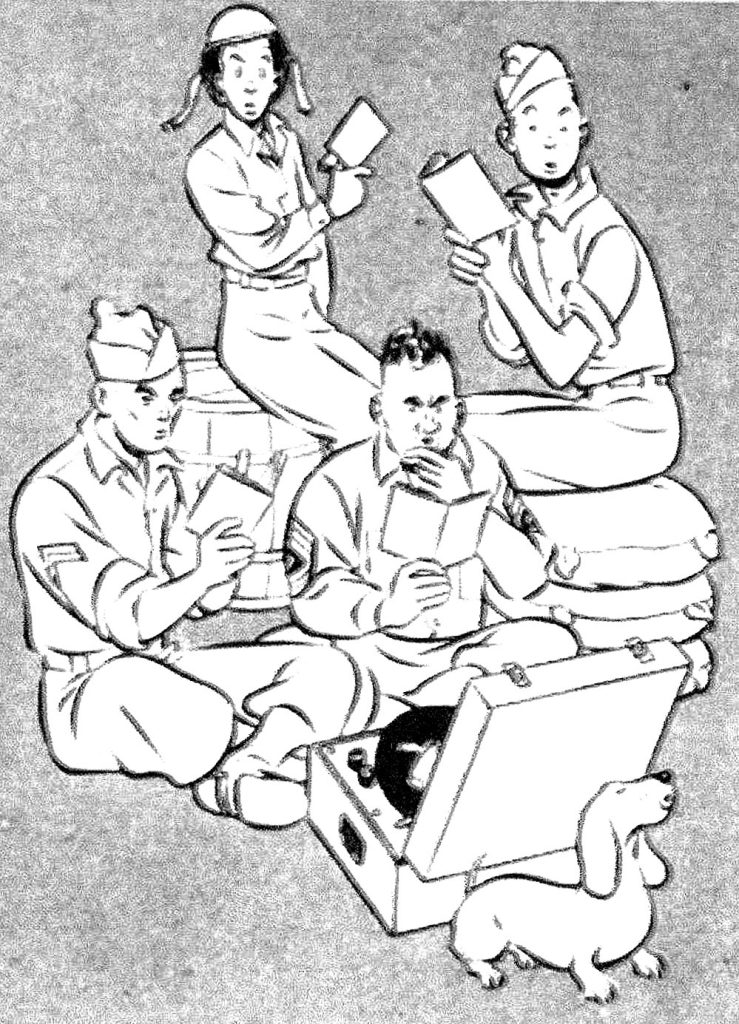
The last two paragraphs in the report concern the remarkably low amount of non-battle deaths suffered by the U.S. military during the course of the war. General Marshall attributed this fact to the broad immunization program that was enacted on all fronts by the army medical corps.


Click here to read a news report on the American military casualties that were amassed from 1941 up to November, 1944.

Advertisement

Use shortcode [oma_ad position="summary_top"] (or other position) in your theme or widgets to display OMA Promotions here.

Protestant Churches Condemn the KKK (The Literary Digest, 1922)
1922, Ku Klux Klan, The Literary Digest

Protestant Churches Condemn the KKK
(The Literary Digest, 1922)

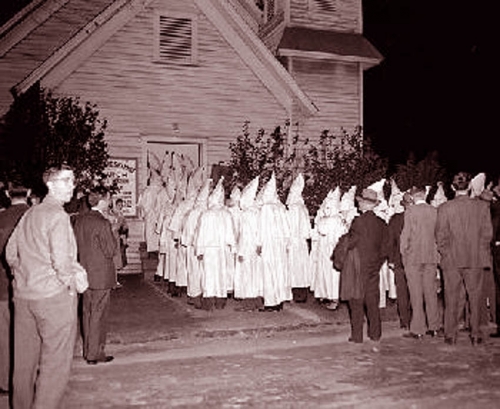
A couple of years after the membership lists of the Ku Klux Klan had swelled to record levels, and just seven years after a chic Hollywood film director made a movie that ennobled their crimes,the Administrative Committee of the Federal Council of Churches of Christ in America issued a statement which served to distance the Protestant churches from that hate-filled organization.


From Amazon: Gospel According to the Klan: The KKK’s Appeal to Protestant America, 1915-1930style=border:none

World War I Aerial Combat | World War 1 Air War Article | World War 1 Dog Fight Article
1918, Vanity Fair Hall of Fame, World War One

Dogfight Over Hunland
(Vanity Fair, 1918)

British fighter pilot in the Great War, Lieutenant E.M. Roberts, gave this account of the deadly game of Boche-hunting above the clouds:

I noticed he was going down a little, evidently for the purpose of shooting me from underneath. I was not quite sure as yet that such was really his intention; but the man was quick…he put five shots into my machine. But all of them missed me.

I maneuvered into an offensive position as Quickly as I could, and I had my machine gun pelting him…The Hun began to spin earthward.

Advertisement

Use shortcode [oma_ad position="summary_top"] (or other position) in your theme or widgets to display OMA Promotions here.

The Showmanship of Babe Ruth (Gentry Magazine, 1952)
1952, Babe Ruth Articles, Gentry Magazine

The Showmanship of Babe Ruth
(Gentry Magazine, 1952)

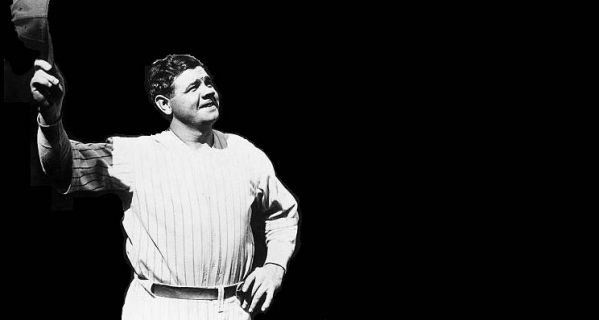
The attached notice recalled one of the grandest moments in baseball history when Babe Ruth played it up to his fans:

Then like an actor who, having played a part so often, knows it by heart, Ruth majestically waved toward the right center field wall. A moment later the Babe’s pantomimed prediction was a reality. As the crowd, sensing the finale of the drama, rose to its feet, Ruth slammed a homer almost exactly where he had pointed.

Advertisement

Use shortcode [oma_ad position="summary_top"] (or other position) in your theme or widgets to display OMA Promotions here.

Scroll to Top