Author name: editor

WW II Medical Innovations
1945, Pageant Magazine, World War Two

With the War Came Medical Innovations
(Pageant Magazine, 1945)

Four years of global carnage did not simply usher in an era of more destructive weaponry for the inhabitants of Earth to ponder; it also gave cause for tremendous improvements in medical care. This 1945 article anticipated a much better world that would be created from the smoldering remains of Europe and Asia – a world that was better prepared to address the health requirements of the diseased and the burned. The medical advancements that were forged between the years 1939 through 1945 saw remarkable improvements in surgery and anesthesia and brought new light on how the medical establishment understood blood and the treatment of venereal disease.


CLICK HERE… to read one man’s account of his struggle with shell shock…

Japanese Home Front During Sino-Japanese War | Life in Pre-War Japan
1938, Ken Magazine, Sino-Japanese Wars

The Japanese Homefront
(Ken Magazine, 1938)

This 1938 article concerned the gas rationing and and other assorted inconveniences that the Japanese population had to suffer during the Sino-Japanese conflict. The reporter was surprised to discover that the general citizenry was kept in a reasonable state of ignorance as to their military’s intentions in China:


Some attention is paid to the sacrifices made by the Japanese industrial classes, such as the Yasuda, Iwasaki, and Mitsui families.

Advertisement

Use shortcode [oma_ad position="summary_top"] (or other position) in your theme or widgets to display OMA Promotions here.

Fashion Designers Colide wth Hollywood Designers... (Click Magazine, 1938)
1930s Fashion, 1938, Click Magazine

Fashion Designers Colide wth Hollywood Designers…
(Click Magazine, 1938)

This is an historic article that introduced the fashion era that we still reside in today.


The attached article from 1938 heralded a new day in the fashion industry where fashion magazines would no longer be relied upon to set the trends in clothing; henceforth, that roll would largely be played by movie actresses in far-off Hollywood:

The greatest fashion influence in America, stylists sadly lament, is the much-photographed, much-glamorized and much-imitated Movie Queen. What she wears is news, eagerly copied, by girls all over the country who want to look like Joan Crawford and Myrna Loy.

The primary bone of contention that the East Coast fashionistas found most objectionable was the fact that movie stars are Californians, and Californians will always prefer comfort over glamor.

Vladimir Lenin Magazine Article | Vladimir Lenin Praised by British Labour Party Leader
1920, Soviet History, Soviet Russia Magazine

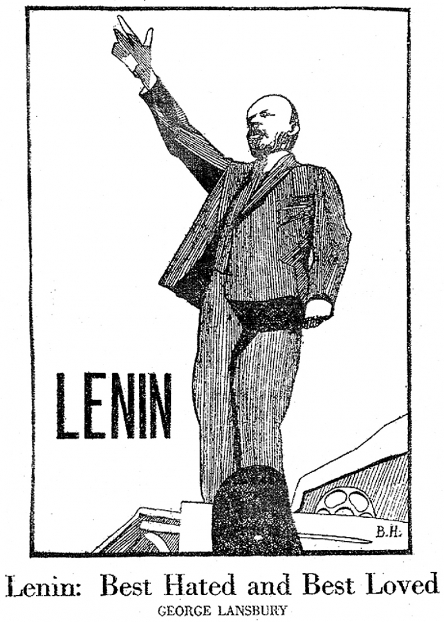
A Love Letter to Lenin
(Soviet Russia Magazine, 1920)

Sweet, sweet words from British socialist George Lansbury (1859 – 1940) concerning his first encounter with the Soviet dictator Vladimir Lenin:

He is about 50 years old, of medium height and carries himself with a slight stoop. He has fine eyes, which look you straight in the face, sometimes with a whimsical expression, as if he were trying to discover if anything unexpressed lay behind your words. They have, too, an expression of careful kindness; and you put him down as a man who musty love children.

Silent Films and the Lexicographers (Motion Picture Magazine, 1916)
1916, Motion Picture Magazine, Silent Movie History

Silent Films and the Lexicographers
(Motion Picture Magazine, 1916)

This small notice appeared on the pages of the March, 1916, issue of MOTION PICTURE MAGAZINE reporting that the overwhelming popularity of the new entertainment medium, and the public’s curiosity with the manner in which they are produced, is beginning to have an impact on the everyday language of the English-speaking world:

When a thing takes hold of a whole people its idiom enters the language; its individual verbiage begins to limber-up the common speech.

So the idiom of active photography has entered the English language, at least wherever the English language is Americanized. The self-conscious valedictorian is told not ‘to look into the camera’. The reporter writing of a street murder terms his description of the underlying cause a ‘cut-back’.

– and most interestingly, one of the most popular elements of Hollywood verbiage is mentioned as having been noticed by the lexicographers: close-up.

The N.Y. TIMES reported that the verb to film was entered into the dictionary in 1914,.

Advertisement

Use shortcode [oma_ad position="summary_top"] (or other position) in your theme or widgets to display OMA Promotions here.

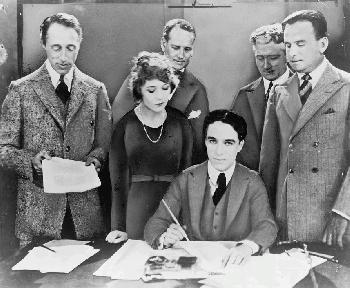
1919: United Artists is Formed (Film Cavalcade, 1939)
1939, Film Cavalcade, Silent Movie History

1919: United Artists is Formed
(Film Cavalcade, 1939)

A printable history of United Artists spanning the years 1919 through 1939 which also outlines why the organization was so original:

[United Artists] introduced a new method into the industry. Heretofore producers and distributors had been the employers, paying salaries and sometimes a share of the profits to the stars. Under the United Artists system, the stars became their own employers. They had to do their own financing, but they received the producer profits that had formerly gone to their employers and each received his share of the profits of the distributing organization.

1921 Poetry in USSR | Soviet-Approved Art 1921
1921, Soviet History, The Literary Digest

Soviet-Approved Poetry
(Literary Digest, 1921)

No liberty of the press exists in Russia and so none but a poet recognized by the Government can get his verses published… In justice to Russian letters it must be said that all talented Russian authors have abstained from writing, or at any rate, from publishing their works during the rule of the proletariat, so that only the official poets, the literati hired by the Government, have their say.


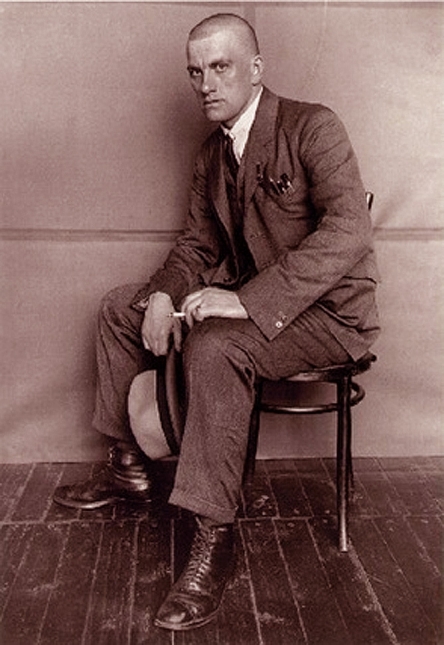
The only Soviet-approved poet they single out for derision is Vladimir Mayakovsky (1893 – 1930), who is quoted liberally.

Fearing German Filmmakers (Current Opinion, 1921)
1921, Current Opinion Magazine, Silent Movie History

Fearing German Filmmakers
(Current Opinion, 1921)

Teutonic film producers must have gotten a good guffaw upon reading the attached article that announced how insecure Hollywood producers felt when faced with the filmmakers of Germany. These intimidated studio heads and distributors believed that the Germans had a leg-up on Hollywood due to the high quantity of well-trained actors, crew and writers who had benefited from the traditions set forth generations earlier in German theater – so much so that they beseeched the law givers in Washington to protect them from these Germans…

Advertisement

Use shortcode [oma_ad position="summary_top"] (or other position) in your theme or widgets to display OMA Promotions here.

The Soviet Life Style (Collier's Magazine, 1947)
1947, Collier's Magazine, Soviet History

The Soviet Life Style
(Collier’s Magazine, 1947)

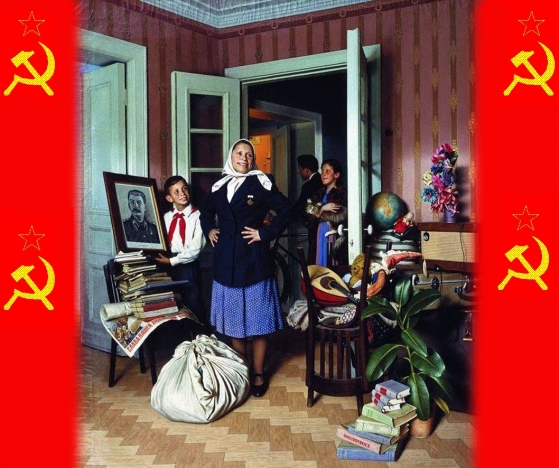
The standard of living in Russia has never been very high, but even despite his natural stoicism, the average citizen feels he has a good reason to be disgruntled with his life… Like any other totalitarian state, the Soviet state has done its best to paint a larger than life-size picture of its citizens. It likes to describe them as steel-hard heroes with an inflexible will, living for nothing but the great ideal of a Communist future, laughing at difficulties, gaily grasping with hard ship – a continent of Douglas Fairbankses. This is just a bit too good to be true, and the last one to be taken in by it is the average Russian.

D-Day Landing Magazine Article by Dewitt Gilpin 1945 | D Day Veteran War Stories |
1945, D-Day, Yank Magazine

June 6, 1945: the First Anniversary
(Yank Magazine, 1945)

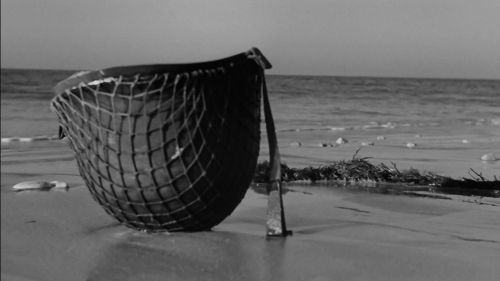
YANK correspondent Dewitt Gilpin visited the Omaha and Utah beaches exactly one year after the 1944 Normandy Invasion. The journalist interviewed some American D-Day veterans as well as members of the local French population who recalled that bloody day -while others simply tried to forget.

Landing to the left of the Rangers on Omaha was the 116th Infantry of the 29th Division. Their 1st Battalion came in over a beach that had more dead men on it than live ones.


Read what the army psychologists had to say about fear in combat.

WW I Camouflage History
1917, Inventions and Weapons, Popular Mechanics Magazine

Papier-Mache Used to Deceive German Snipers
(Popular Mechanics, 1917)

By the time the U.S. Army had joined the war in 1917, they were far behind in the study of camouflage, but they did their best to catch up quickly. The American generals assigned the task camouflage to the Signal Corps, which began to cruise the ranks for artists and sculptors because of their natural abilities understand paint and scale (one of the more well-known W.W. I Signal Corps camofleurs was the painter Grant Wood: click here to read about him).

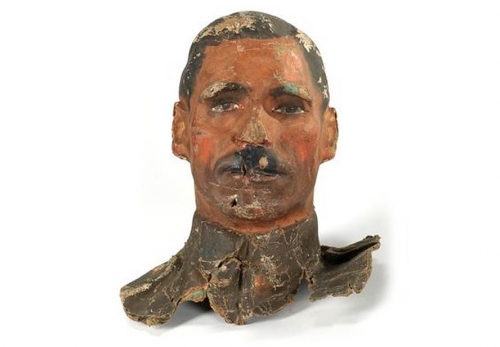
The attached article displays an illustration that clearly shows that the American Army had torn a page out of that well-worn play book written by the British Camouflage School in order to deploy papier-mache dummies along the front lines. There is no evidence or written word to indicate that it was actually done.

Advertisement

Use shortcode [oma_ad position="summary_top"] (or other position) in your theme or widgets to display OMA Promotions here.

The Modern Klan (Atlantic Monthly, 1922)
1922, Ku Klux Klan, The Atlantic Monthly

The Modern Klan
(Atlantic Monthly, 1922)

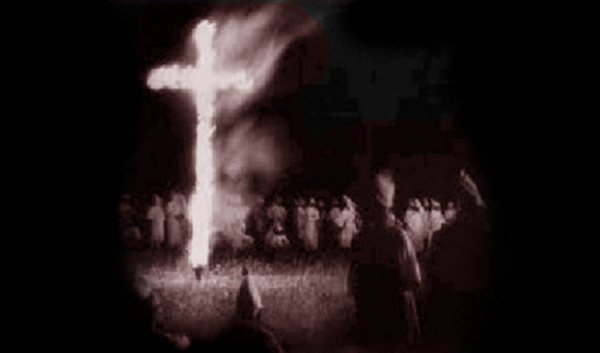
An Atlantic Monthly article by LeRoy Percy (1860– 1929), a well-off planter who had successfully fought the spread of the KKK into Washington County, Mississippi. This article explains how the Klan operated in 1922. Their wide-spread appeal is also discussed.

One of the strangest aberrations in American life since the war is the growth of the Ku Klux Klan. In the North that organization, when considered at all, has been thought of as a colossal buffoonery, a matter unworthy of the time or thought of intelligent folk; and indeed for the average American, with his common sense and his appreciation for the ridiculous, any other attitude of numbers would seem unlikely…The Klan excludes from membership Negroes, Jews, Catholics and foreign-born, whether citizens or not. In its own phrase, it is the only Gentile White Protestant American-born organization in the world. It is secret… When asked if he is a member, the custom is for a good Klansman to evade, more rarely to reply in the negative, but in any event not to avow his membership.


Click here to learn about the origins of the term Jim Crow.

Advertisement

Use shortcode [oma_ad position="summary_top"] (or other position) in your theme or widgets to display OMA Promotions here.

William Holden (Coronet Magazine, 1956)
1956, Coronet Magazine, Hollywood History

William Holden
(Coronet Magazine, 1956)

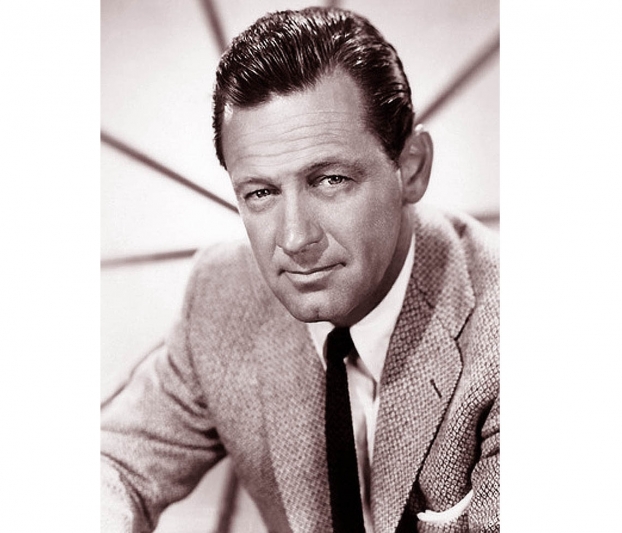
The attached profile of actor William Holden (1918 – 1981) appeared in print when his stock was about to peak.


When the summer of 1956 rolled around, Holden was already a double nominee for a BAFTA (Picnic), an Oscar (Sunset Boulevard) and was the grateful recipient of an Academy Award for Best Actor one year earlier (Stalag 17). In 1957 his performance in the Bridge on the River Kwai would bring even more pats on the back (although the Best Actor statue would go to Alec Guinness).


This five page interview tells the story of Holden’s initial discovery in Hollywood, his devotion to both the Screen Actor’s Guild and Paramount Pictures. His Hollywood peers held him in especially high-regard:

In a poll of Hollywood reporters recently he was designated ‘the best adjusted and happiest actor around’; by contrast, the same poll identified Humphrey Bogart as a total pain in the keister – click here to read that article.

1921, Golf History, Vanity Fair Magazine

The Swing of Cecil Leitch
(Vanity Fair Magazine, 1921)

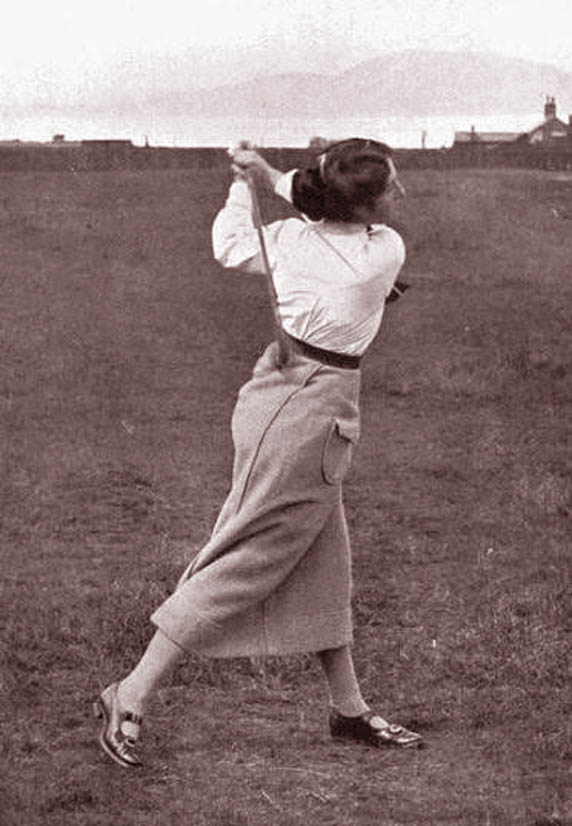
Attached herein is a photographic study of the British golf champion Cecil Leitch (1891 – 1977) snapped with a high-speed, stop-motion camera. In nine black and white images depicting her drive from start to finish, we are able to gain an understand as to how she was able to win three British driving championships up until that time. She left the game after having won a total of twelve national titles; at the time of this printing, she was writing her first book: Golf (1922).

The Invincible Mrs. Mallory (Vanity Fair Magazine, 1922)
1922, Tennis History, Vanity Fair Magazine

The Invincible Mrs. Mallory
(Vanity Fair Magazine, 1922)

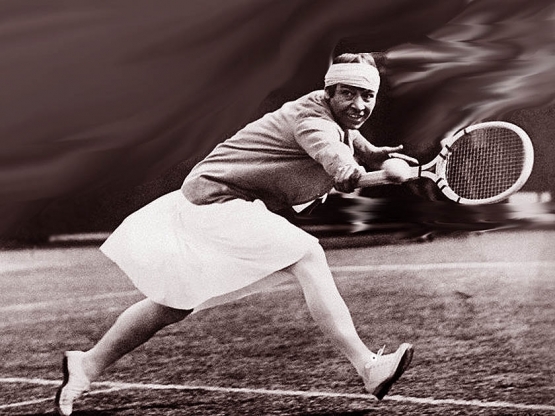
The Vanity Fair sports writer Fred Hawthorne was filled with high praise for tennis star Molla Bjurstedt Mallory (1884 – 1959):

To-day Mrs. Mallory’s backhand shots are on par with her famous forehand drive, and her all-around play has improved tremendously. She is a splendid volleryer, too, though not in our typical American style. Mrs. Mallory has won the national singles title five times and last August defeated Mlli. Suzanne Lenglen, of France, probably the most finished woman tennis player in the world.

Advertisement

Use shortcode [oma_ad position="summary_top"] (or other position) in your theme or widgets to display OMA Promotions here.

Scroll to Top