Author name: editor

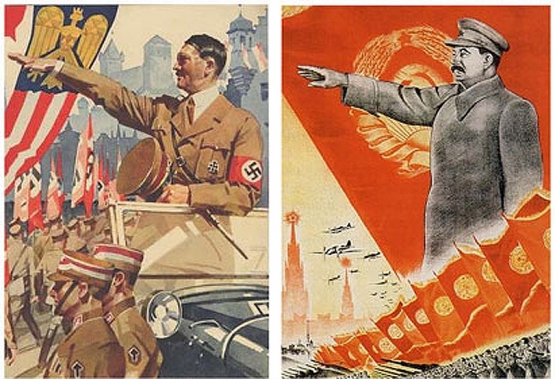
Soviet and Nazi Rhetoric Compared (The New Leader Magazine, 1951
1951, Soviet History, The New Leader Magazine

Soviet and Nazi Rhetoric Compared
(The New Leader Magazine, 1951

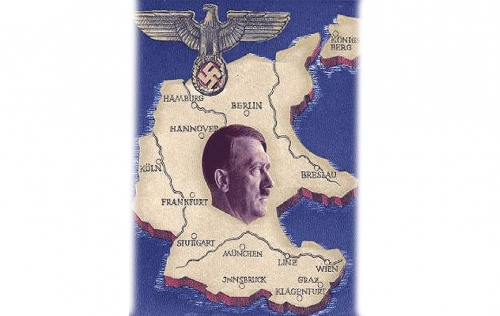
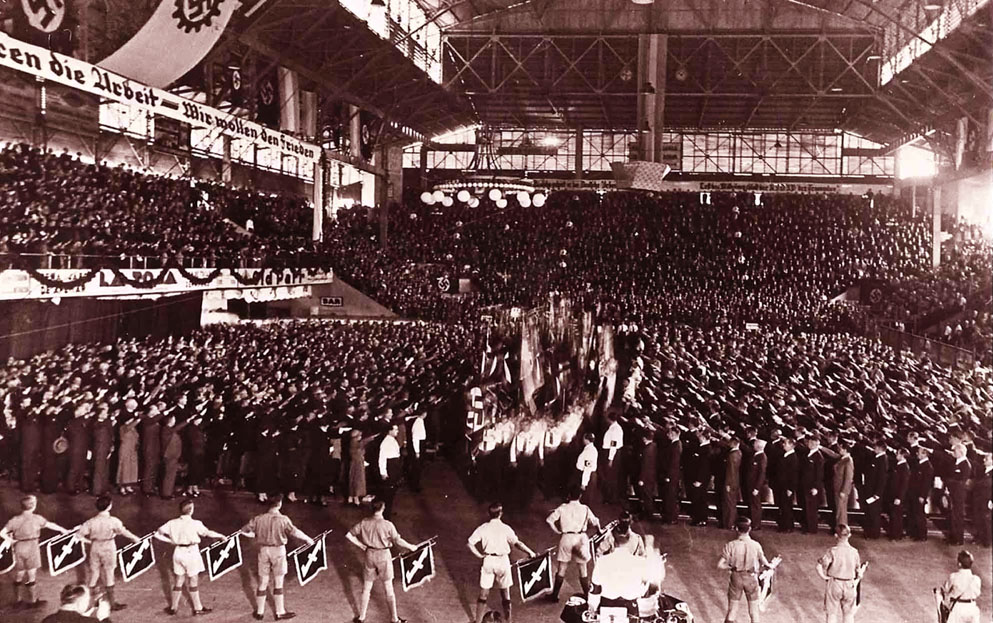
A carefully compiled assortment of quotes that were voiced by Stalin and Hitler (or their assorted Yes-Men). These utterances were printed with Stalin’s poisonous pronouncements in red and Hitler’s sickening soliloquies in black – both shades refer to similar topics and show an identical manner of thought that is indistinguishable from the other.


Hitler used the Bolshevik lingo more often than you might have thought…

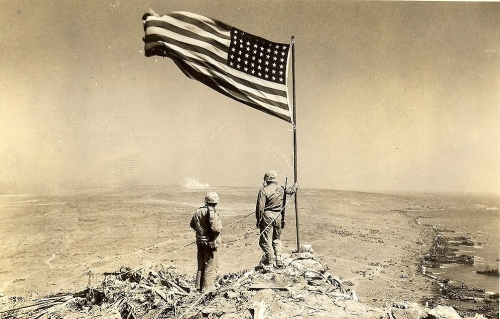
The Battle of Iwo Jima and the First Flag Raising on Mount Suribachi (Yank Magazine, 1945)
1945, Iwo Jima, Yank Magazine

The Battle of Iwo Jima and the First Flag Raising on Mount Suribachi
(Yank Magazine, 1945)

Yank staff correspondent Bill Reed wrote the following account of the Fifth Marine Division’s slug fest on the island of Iwo Jima throughout the months on February and March, 1945:

For two days the men who landed on Green beach were pinned to the ground. Murderous machine-gun, sniper, and mortar fire came from a line of pillboxes 300 yards away in the scrubby shrubbery at the foot of the volcano. No one on the beach, whether he was a CP phone operator or a front line rifleman, was exempt. The sight of a head raised above a foxhole was the signal to dozens of Japs, safely hidden in the concrete emplacements, to open up. Men lay on their sides to drink from canteens or urinate. An errand between foxholes became a life-and-death mission for the man who attempted it.

The Iwo Jima Invasion (Collier's Magazine, 1945)
1945, Collier's Magazine, Iwo Jima

The Iwo Jima Invasion
(Collier’s Magazine, 1945)

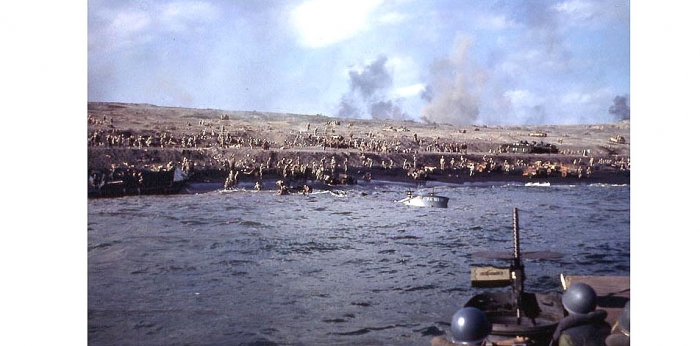
Written by war correspondent Walter Davenport some thirteen months prior to taking the helm as editor-in-chief at Collier’s Magazine, this article gives the reader a sense as to what D-plus-one looked like from the fifty yard line at the Battle of Iwo Jima (Operation Detachment: February 19 – March 26, 1945):

There is no Jap navy here to stop us; no Jap air force, either… So you see Jap? On our way up here to Iwo we flew over more supply ships, more cargo carriers. Those decks carry concrete mixers, Diesel-powered road crushers and rollers. There aren’t many cliffs on Iwo to hide out in, Jap! You can’t live for weeks in the crevices of Suribachi. You can’t grow gardens on that rock. So, while you can still see, look down at what we’re seeing: An American city, a harsh, womanless city is moving in on you.


Davenport’s observations were no doubt a comfort to the Collier’s readers on the home front, but post-war accounting revealed that one quarter of the U.S. Navy’s losses took place at Iwo Jima and Okinawa.


Click here to read a unique story about the Battle of the Sula Straits…
Advertisement

Use shortcode [oma_ad position="summary_top"] (or other position) in your theme or widgets to display OMA Promotions here.

Teddy Roosevelt, R.I.P. (The Crises, 1919)
1919, Interviews: 1912 - 1960, The Crises

Teddy Roosevelt, R.I.P.
(The Crises, 1919)

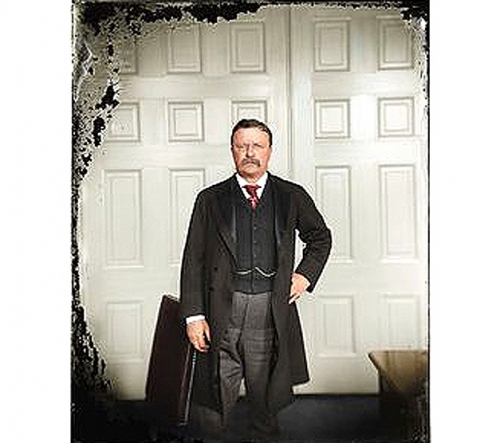
Written with a strong spirit of gratitude, this is the obituary of Teddy Roosevelt as it appeared in the N.A.A.C.P. magazine The Crises. Published at a time when the friends of the black man were few, this is a stirring tribute to a man who, although not always an ally, was respected as the world’s greatest protagonist of lofty ideals and principles.


Click here to read a 1945 article about the funeral of Franklin Delano Roosevelt, TR’s nephew.


Click here to read an article about one of New York’s greatest mayors: Fiorello LaGuardia.

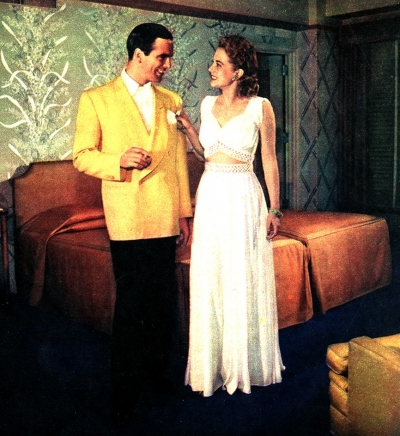
A Jihad on Menswear (Click Magazine, 1941)
1940s Men's Fashions, 1941, Click Magazine

A Jihad on Menswear
(Click Magazine, 1941)

With her characteristic disregard for the unreasonable mandates of the prevailing fashion police hanging out for all to see, Elizabeth Hawes (1903 – 1971) scoffed with the deepest irreverence at the males of the species for being so thoughtless and blind in matters sartorial. Pointing out that men, who she compared to mice, don’t have to wear ties, hats, heavy leather shoes or anything else that makes them uncomfortable, but do so purposelessly and out of fear…


Click here to read a 1929 article about the Dress-Reform Movement.

Israel's Alarm at Hitler's Rise (Literary Digest, 1933)
1933, Jews in the 20th Century, The Literary Digest

Israel’s Alarm at Hitler’s Rise
(Literary Digest, 1933)

This is an article that gathered Jewish opinions about the rise of Nazi Germany from many parts of the globe:

There have been European Premiers before this who were surrounded with an anti-Semite atmosphere, but never has such a Jew-baiter as Hitler sat at the helm of the Ship-of-State among Modern civilized people.

This bitter climax is the reward given to the Jews of Germany who poured out their blood for the ‘Fatherland’ during the Great War. Not less than 100,000 Jews took part in the war, which was more than a sixth of the Jewish population of the country including women and children. Twelve thousand fell on the battlefields, and thousands returned home crippled.

Advertisement

Use shortcode [oma_ad position="summary_top"] (or other position) in your theme or widgets to display OMA Promotions here.

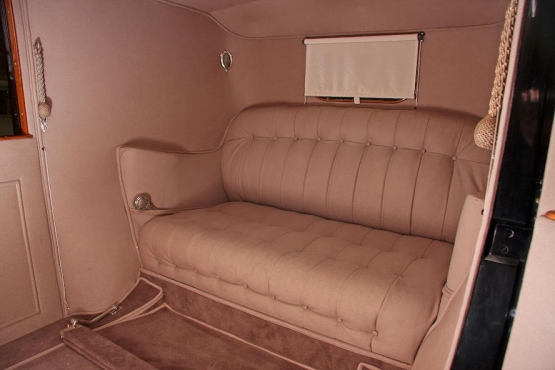
1920s Automotive Upholstery Style | 1920s Car Upholstery Style
1920, Cars, Vogue Magazine

Upholstery in the Finest Luxury Cars of 1920
(Vogue Magazine, 1920)

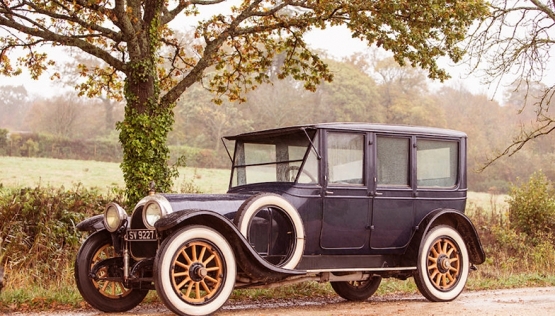
A magazine article which examines the automotive upholstery styles of cars that were made for the general public (stock cars) and those other cars that were custom made and likely to be furnished with Dictaphones and vanity cases.

As for materials, it may be said that most of the custom-built cars are upholstered in broadcloth or whipcord, whereas the stock cars show prevailingly velours, mohair velvet and the textile known as automobile cloth.

Advertisement

Use shortcode [oma_ad position="summary_top"] (or other position) in your theme or widgets to display OMA Promotions here.

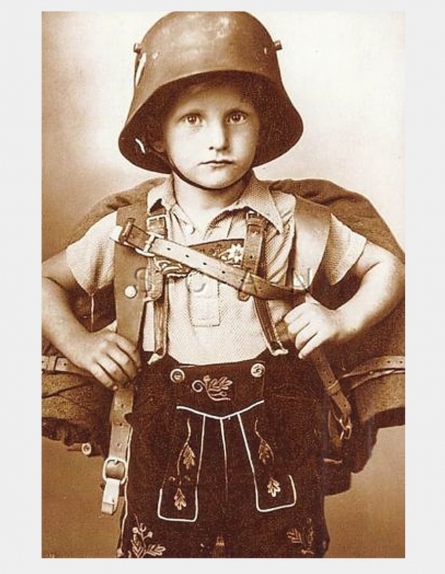
Captured HitlerJugend | Hitler Youth POWs
1944, POWs

Captured Hitlerjugend
(Stars & Stripes, 1944)

Among the thousands of German POWs captured during the Normandy campaign was this 17 year-old alumnus of the Hitler Jugend program who is the subject in the attached column. The editors at The Stars and Stripes were dumbfounded to discover how thoroughly he had been brainwashed – to prove the point, they printed their interview with the teen.


Q. If Germany wins the war, will you punish the United States?


A. We want living space.

Senator Barry Goldwater Support for Vietnam War
1966, Coronet Magazine, The Vietnam War

Goldwater on Vietnam
(Coronet Magazine, 1966)

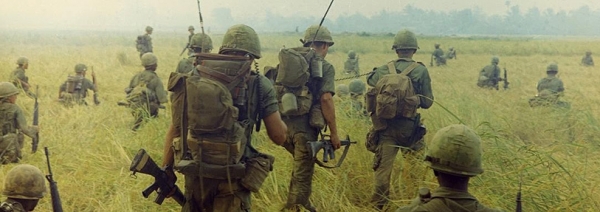
Throughout the course of the Vietnam War there was no greater Hawk on Capitol Hill than United States Senator Barry Goldwater (1909 – 1998). In the attached interview from 1966 the Senator chastises President Johnson for failing to seize the initiative and correctly predicted that if the Americans did not show greater pugnacity, they would be run out of South Vietnam.


You can read more about Senator Barry Goldwater here…

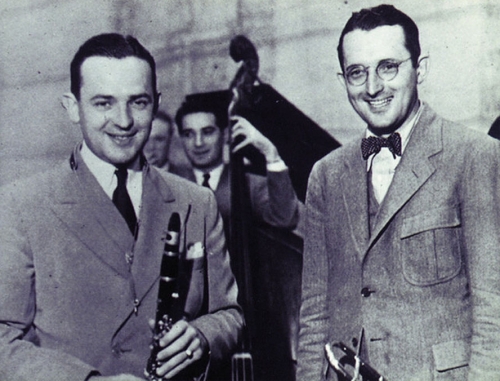
The Feuding Dorsey Brothers (Coronet Magazine, 1947)
1947, Big Band 1930s-1940s, Coronet Magazine

The Feuding Dorsey Brothers
(Coronet Magazine, 1947)

Brought up in Pennsylvania, Tommy and Jimmy Dorsey had a harsh taskmaster in the form of their father:

Thomas Dorsey was a self-taught musician who earned $10 a week in the coal mines and a few dollars extra by giving music lessons. When Thomas Francis Dorsey [his second son] was born in 1905, the father made up his mind that his sons would be musicians, or else!

While still in knee-pants, both learned all the wind instruments before specializing in the saxophone and trombone, respectively… The boys mother, Tess Langton Dorsey, often was distressed by her husband’s rigid disciplining of her sons. To miss a day’s practice meant a licking.


Inasmuch as the Dorsey brothers may have been united in their efforts to please their father, their union ended there. Much of the article pertains to their opposing temperaments and the skyrocketing career that both enjoyed as a result of their mutual desires to out-do the other. It wasn’t until the old man’s death in 1942 that their competition subsided.

Advertisement

Use shortcode [oma_ad position="summary_top"] (or other position) in your theme or widgets to display OMA Promotions here.

Howard Johnson's Restaurants | Chain Restaurant History of Howard Johnsons Restaurants
1946, Americana, Coronet Magazine

Howard Johnson’s Roadside Restaurants
(Coronet Magazine, 1946)

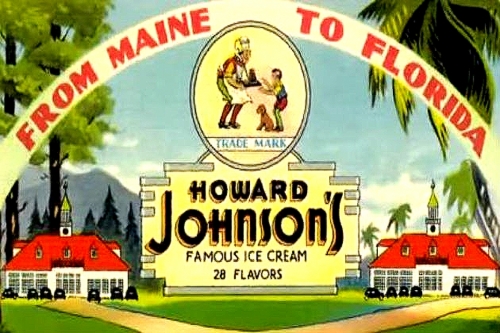
By the mid-Twenties millions of cars were on America’s highways and by-ways and family road trips were all the rage. However, the few roadside food stands that existed at the time were woefully inadequate and numerous journalists in every locale were writing articles about the various stomach aches that were regularly descending upon hapless motorists who patronized these businesses. This article is about a Massachusetts fellow named Howard Johnson –

Somewhere along the line he figured out that what America needed even more than a good five-cent cigar was a chain of stands that would take the chance out of roadside eating.

1951, Aftermath (WWII), People Today Magazine

Unrepentant Fascists in Argentina
(People Today, 1951)

The pages of PEOPLE TODAY, a short-lived gossip rag and probable ancestor of today’s PEOPLEstyle=border:none, seldom reserved any column space to report on the whereabouts of all the various celebrity Nazis who had missed their date’s with the hangman – but for this scoop they made an exception.
Spotted in Argentina during the summer of 1951 was Mussolini’s daughter, Edda Ciano (1910 – 1995), Otto Skorzeny (1908 – 1975) and Croatian fascist Ante Pavelić (1889 – 1959). The murderous Pavelić was in the employ of the Argentine dictator, Juan Peron; the other two resided in Europe (Countess Ciano had recently served a two year stint in an Italian prison and Skorzeny, as an ODESSA flunky, was probably no stranger to South America).


Click here to read a related article from NEWSWEEK concerning the post-war presence of Nazis in Argentina.


Click here to read another article about the post-war whereabouts of another Nazi.

WW II Medical Innovations
1945, Pageant Magazine, World War Two

With the War Came Medical Innovations
(Pageant Magazine, 1945)

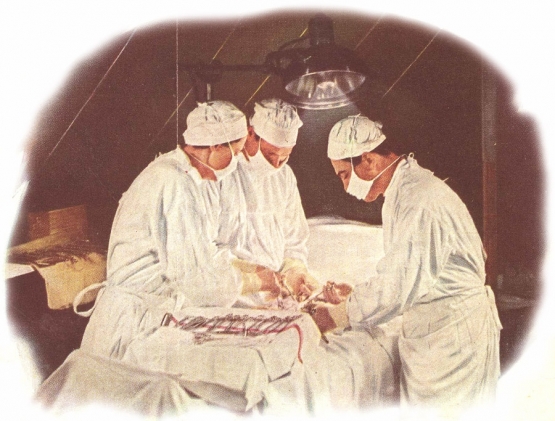
Four years of global carnage did not simply usher in an era of more destructive weaponry for the inhabitants of Earth to ponder; it also gave cause for tremendous improvements in medical care. This 1945 article anticipated a much better world that would be created from the smoldering remains of Europe and Asia – a world that was better prepared to address the health requirements of the diseased and the burned. The medical advancements that were forged between the years 1939 through 1945 saw remarkable improvements in surgery and anesthesia and brought new light on how the medical establishment understood blood and the treatment of venereal disease.


CLICK HERE… to read one man’s account of his struggle with shell shock…

Advertisement

Use shortcode [oma_ad position="summary_top"] (or other position) in your theme or widgets to display OMA Promotions here.

Japanese Home Front During Sino-Japanese War | Life in Pre-War Japan
1938, Ken Magazine, Sino-Japanese Wars

The Japanese Homefront
(Ken Magazine, 1938)

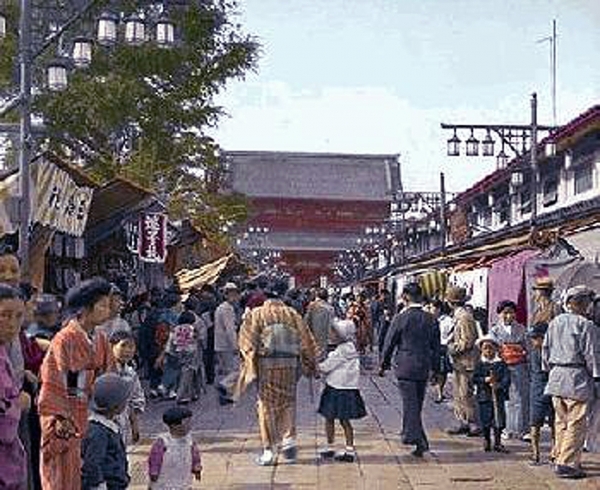
This 1938 article concerned the gas rationing and and other assorted inconveniences that the Japanese population had to suffer during the Sino-Japanese conflict. The reporter was surprised to discover that the general citizenry was kept in a reasonable state of ignorance as to their military’s intentions in China:


Some attention is paid to the sacrifices made by the Japanese industrial classes, such as the Yasuda, Iwasaki, and Mitsui families.

Fashion Designers Colide wth Hollywood Designers... (Click Magazine, 1938)
1930s Fashion, 1938, Click Magazine

Fashion Designers Colide wth Hollywood Designers…
(Click Magazine, 1938)

This is an historic article that introduced the fashion era that we still reside in today.


The attached article from 1938 heralded a new day in the fashion industry where fashion magazines would no longer be relied upon to set the trends in clothing; henceforth, that roll would largely be played by movie actresses in far-off Hollywood:

The greatest fashion influence in America, stylists sadly lament, is the much-photographed, much-glamorized and much-imitated Movie Queen. What she wears is news, eagerly copied, by girls all over the country who want to look like Joan Crawford and Myrna Loy.

The primary bone of contention that the East Coast fashionistas found most objectionable was the fact that movie stars are Californians, and Californians will always prefer comfort over glamor.

Advertisement

Use shortcode [oma_ad position="summary_top"] (or other position) in your theme or widgets to display OMA Promotions here.

Scroll to Top