Author name: editor

The Fine Art of Introduction (Vanity Fair, 1917)
1917, Manners and Society, Vanity Fair Hall of Fame

The Fine Art of Introduction
(Vanity Fair, 1917)

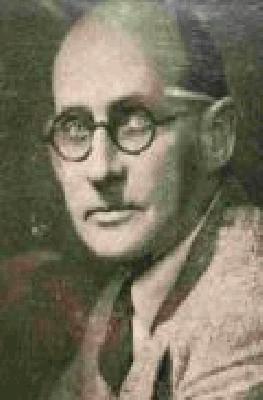
Stephen Leacock (1869 – 1944) had some amusing opinions concerning social introductions according to the recognized formulas.

With the approach of the winter season, conversation as an art is again in order. It is a thing that we all need to consider. Some of us are asked out to dinner merely because we talk. Others, chiefly because we do not. It is a matter in which we can help one another. Let us discuss it…

Click here to read about feminine conversations overheard in the best New York bathrooms.

1920s British Occupation of Iraq | British Occupation of Mesopotamia 1921| 1920s Mesopotamia Article
1921, Miscellaneous, The Spectator Magazine

Winston Churchill and the Mesopotamia Occupation
(The Spectator, 1921)

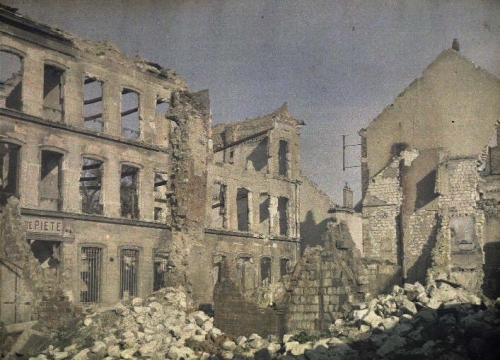
Mesopotamia should be placed in the same file as Gallipoli, along with all the other various assorted fantasies conceived by his Lordship. Mr. Churchill hopes to avert any fresh rising by setting up an Arab Government. The people are to elect a National Assembly this summer, and the Assembly is to choose a ruler…Mr. Churchill admits that that he does not know whether the people of [Iraq], who are rent with tribal, sectarian, racial, and economic feuds, will choose the Emir Feisul.

Click here to read about Churchill’s other folly: the Battle of Gallipoli.

Two Parachute Pioneers (Popular Mechanics, 1912)
1912, Aviation History, Popular Mechanics Magazine

Two Parachute Pioneers
(Popular Mechanics, 1912)

Attached is a well illustrated article concerning two of the earliest parachute drops: one was quite fatal while the other had a jollier ending. The first leap documented in this column was made by a fellow known only as F. Rodman Law (dates?); he jumped 345 feet from the torch of the Statue of Liberty and landed 30 feet from the water’s edge. The next day, parachute enthuiast Franz Reichelt (1879 – 1912) jumped from the first platform of the Eiffel Tower with a parachute of his own design. The Popular Mechanics correspondent reported that:

His body was a shapeless mass when the police picked it up.

Advertisement

Use shortcode [oma_ad position="summary_top"] (or other position) in your theme or widgets to display OMA Promotions here.

Harry Hawker (The Literary Digest, 1919)
1919, Aviation History, The Literary Digest

Harry Hawker
(The Literary Digest, 1919)

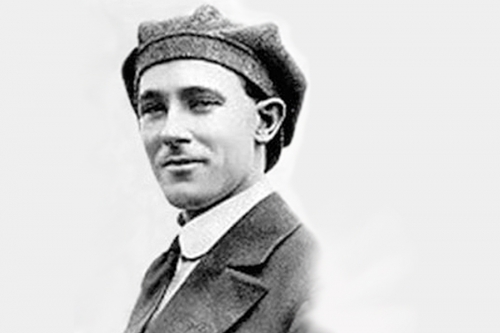
An article on the pioneer aviator Harry Hawker (1889 – 1921), written on the heels of his his failed attempt to beat the Yankees in crossing the Atlantic. Australian by birth, Hawker came to Britain specifically to seek a career in the infant aviation industry. His wish was answered in 1912 when he was hired by Tommy Sopwith. Hawker saved his wages to afford flying lessons and acquired his flying permit in the September of that same year. The following month he won the British Michelin Cup with a grueling endurance flight of 8 hr, 23 min. Sopwith was impressed and Hawker was promoted to chief test pilot. The rest is told herein…


from Amazon: Hawker: Aviator, Designer, Test Pilotstyle=border:none

New York to Philadelphia in Record Time (Popular Mechanics, 1910)
1910, Aviation History, Popular Mechanics Magazine

New York to Philadelphia in Record Time
(Popular Mechanics, 1910)

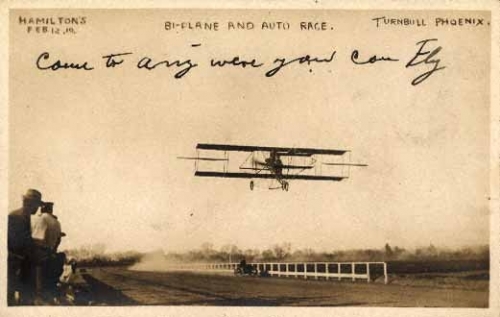
Pilot Charles Hamilton (1886 – 1914) made the first round-trip flight from Philadelphia to New York and back again flying a Curtis bi-plane in 1910:

He flew from New York to the Philadelphia in one hour and fifty minutes. His average speed on trips to the Quaker City was 46.92 miles per hour, but returning he averaged 51.36 miles per hour.


The NEW YORK TIMES paid Hamilton $5,000.00 for this achievement.

Advertisement

Use shortcode [oma_ad position="summary_top"] (or other position) in your theme or widgets to display OMA Promotions here.

Advertisement

Use shortcode [oma_ad position="summary_top"] (or other position) in your theme or widgets to display OMA Promotions here.

The Scenario Formula EXPOSED (Photplay Magazine, 1920)
1920, Silent Movie History

The Scenario Formula EXPOSED
(Photplay Magazine, 1920)

Cartoonist Ralph Barton and funny man Howard Dietz put together this nifty six-panel comic strip in order to ridicule the Hollywood screen writers and expose that crowd to be the tiresome dullards that they were (they’ve since reformed) and they also had the odd vision that the gag would be posted on a web page some eighty-six years in the future.

Advertisement

Use shortcode [oma_ad position="summary_top"] (or other position) in your theme or widgets to display OMA Promotions here.

chinese warlord Zhang Zuolin magazine article 1927 | Article Concerning Zhang Zuolin
1927, China - Twentieth Century, Pamphlet Produced by the National Park Service

Zhang Zuolin: Chinese Strong Man
(The Nation, 1927)

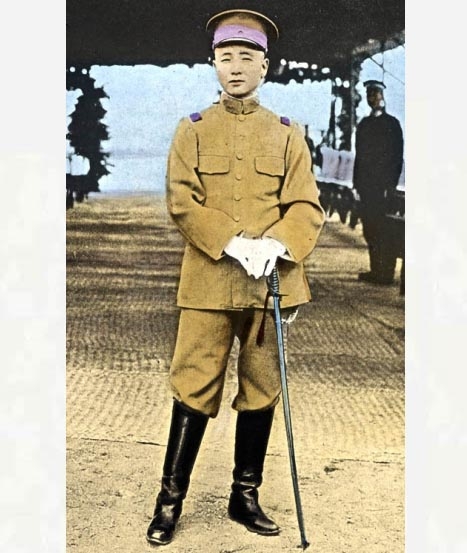
An interview with Zhang Zuolin (1873 – 1928), the Chinese warlord who oversaw Manchuria and much of North China during the last fifteen years of his life. The article was written by the old China-based correspondent Randall Gould.

Marshall Zhang, drawn to Peking from his native Mukden ‘to cooperate with the foreign ministers in saving China from Bolshevism’, talks in terms of nations but continues to think in terms of provinces. Anyone who has spent half an hour with him knows this. The Strong Man of Mukden has improved his propaganda vocabulary but he is using the same old brain – shrewd, keen, but sharply limited.

Advertisement

Use shortcode [oma_ad position="summary_top"] (or other position) in your theme or widgets to display OMA Promotions here.

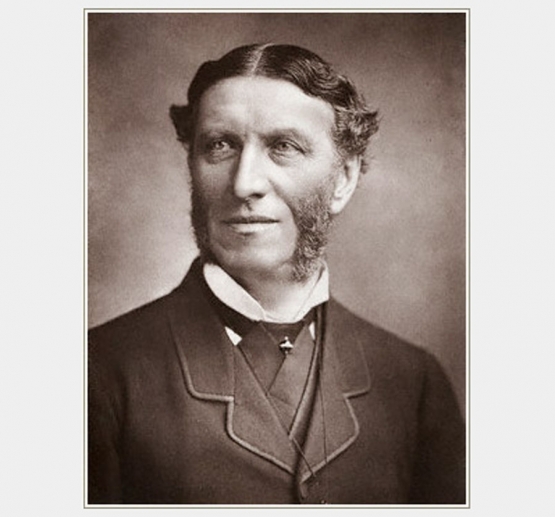
death of MATTHEW ARNOLD | MATTHEW ARNOLD obituary
1922, Aftermath (WWI), Pamphlet Produced by the National Park Service

The Passing of an Era
(The Nation, 1922)

British Foreign Secretary Sir Edward Grey (1862-1922) was quicker than most of his contemporaries when he recognized what was unfolding in Europe during the August of 1914, and uttered these prophetic words:


The lamps are going out all over Europe; we shall not see them lit again in our lifetime.


The anonymous old wag who penned this opinion column came to understand Gray’s words; four years after the war he looked around and found that the world speeding by his window seemed untouched by the heavy handed Victorians. For this writer, the Victorian poet and writer Matthew Arnold (1822 – 1888) represented the spirit of that age and it all seemed to come crashing down in 1922:

Granting that the son of Arnold of Rugby was more troubled over the decay of Christian dogma than we are, it should be remembered that the decay symbolized for him a fact of equal gravity to ourselves — the loss of a rational universe in which to be at home. But he never doubted how a new world was to be built — by justice and by reason, not by claptrap and myth.

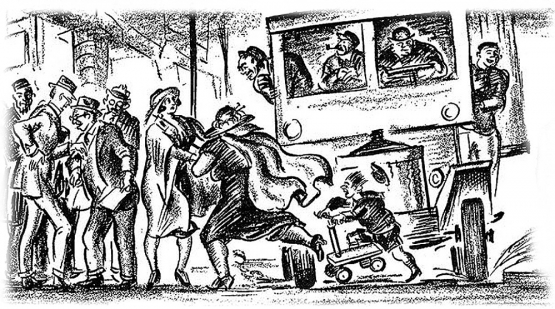
Fifth Avenue Observations (Vanity Fair, 1922)
1922, Old New York History, Vanity Fair Hall of Fame

Fifth Avenue Observations
(Vanity Fair, 1922)

This cartoon was drawn by the New York artist Reginald Marsh (1898 – 1954), who had a swell time comparing and contrasting the bio-diversity along 1922 Fifth Avenue; from the free-verse poets on Eighth Avenue up to the narrow-nosed society swanks on Sixty-Eighth Street -and everyone else in between.


Click here to read a 1921 article about the growth of the Jewish population in New York.


Click here to read a magazine article about 1921 Harlem.

Advertisement

Use shortcode [oma_ad position="summary_top"] (or other position) in your theme or widgets to display OMA Promotions here.

Scroll to Top