





British Foreign Secretary Sir Edward Grey (1862 – 1922) was quicker than most of his contemporaries when he recognized what was unfolding in Europe during the August of 1914, and uttered these prophetic words:
“The lamps are going out all over Europe; we shall not see them lit again in our lifetime.”
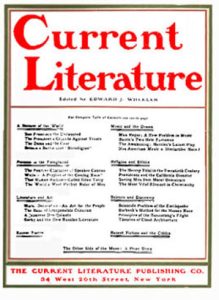
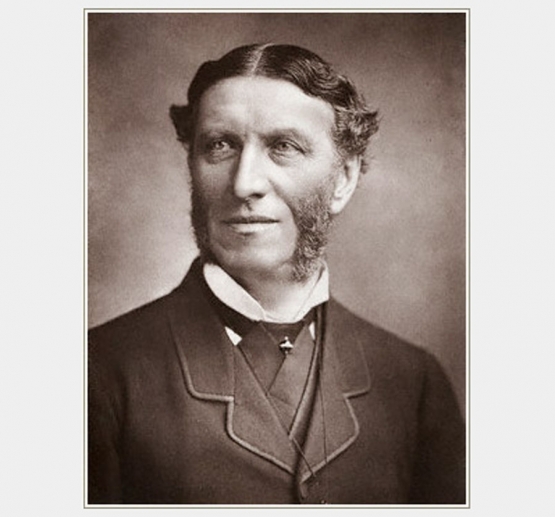
The anonymous old wag who penned this opinion column came to understand Gray’s words; four years after the war he looked around and found that the world speeding by his window seemed untouched by the heavy handed Victorians. For this writer, the Victorian poet and writer Matthew Arnold (1822 – 1888) represented the spirit of that age and it all seemed to come crashing down in 1922:
“Granting that the son of Arnold of Rugby was more troubled over the decay of Christian dogma than we are, it should be remembered that the decay symbolized for him a fact of equal gravity to ourselves — the loss of a rational universe in which to be at home. But he never doubted how a new world was to be built — by justice and by reason, not by claptrap and myth.”

![Matthew[BR] Arnold](https://oldmagazinearticles.com/pdf/Arnold%20RIP_0001.jpg)
![Matthew[BR] Arnold](https://oldmagazinearticles.com/pdf/Arnold%20RIP_0002.jpg)