Author name: editor

George Jean Nathan (Vanity Fair, 1917)
1917, Interviews: 1912 - 1960, Vanity Fair Hall of Fame

George Jean Nathan
(Vanity Fair, 1917)

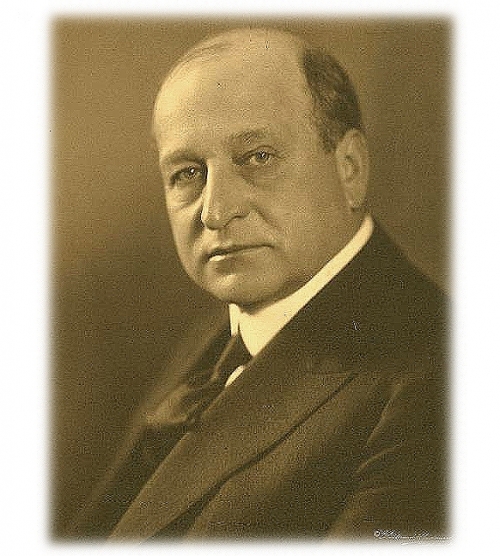
A witty if dry profile of George Jean Nathan (1882 – 1958), one of the more prolific essayists and reviewers of all things dramatic and literary during the Twenties. At the time of this printing he was serving as the co-editor (along with his friend H.L. Mencken) of the American magazine The Smart Set while contributing occasional drama reviews to Vanity Fair. You’ll read a very long list of Nathan’s likes and dislikes, which, in fact, comprise 99% of the profile.


Later in life, Nathan would wed Mary Pickford – read about her here…

Jules Romains and THE DEATH OF NOBODY (Vanity Fair, 1915)
1915, Twentieth Century Writers, Vanity Fair Hall of Fame

Jules Romains and THE DEATH OF NOBODY
(Vanity Fair, 1915)

This very brief column appeared in Vanity Fair Magazine during the winter of 1915 as one element in the publicity campaign supporting the distribution of The Death of Nobody, Jules Romains’ (1885 – 1972) 1911 novel.

Prior to the First World War Romains was primarily known as a poet and founder (along with fellow poet Georges Chennevière) of Unanimisme, a movement that combined concept of international brotherhood with the psychological ideal involving a shared group consciousness. At the time of this printing, the novelist was serving in the French Army.

Advertisement

Use shortcode [oma_ad position="summary_top"] (or other position) in your theme or widgets to display OMA Promotions here.

Kansan Governor Henry J. Allen Takes On the KKK (The Outlook, 1922)
1922, Ku Klux Klan

Kansan Governor Henry J. Allen Takes On the KKK
(The Outlook, 1922)

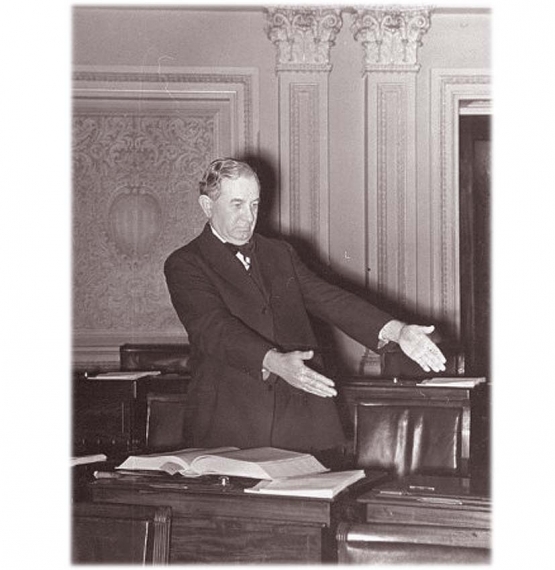
An article from The Outlook reported on the enormous amount of discomfort that the Ku Klux Klan was generating among Catholics in 1922 Kansas. During a New York interview, Kansas Governor Henry J. Allen (1868 – 1950) remarked about the piles of letters his office received imploring that the state take action and how he, too, had been threatened by the organization.

Kansas is engaged in trying out the Ku Klux Klan through an action in the State Supreme Court to restrain it’s secret activities.

Advertisement

Use shortcode [oma_ad position="summary_top"] (or other position) in your theme or widgets to display OMA Promotions here.

KKK Weird Rumors | 1922 Earle Mayfield KKK Candidate for U.S. Senate
1922, Ku Klux Klan

Weird Rumors About the Klan…
(The Outlook, 1922)

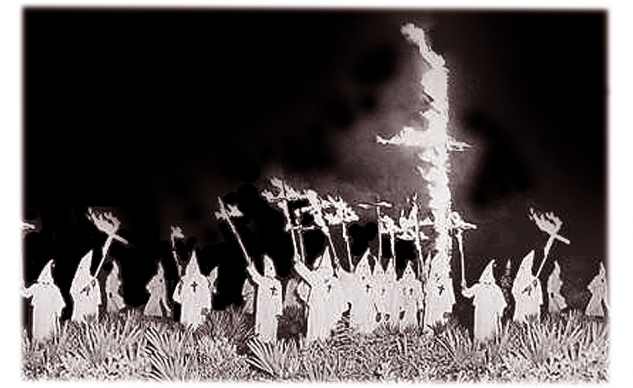
Teddy Roosevelt’s (1858 – 1919) magazine The Outlook, was often quite critical of the Ku Klux Klan, yet in this brief notice the editors seemed surprisingly Milquetoast in their reporting of the organization’s growth and assorted activities. The article passively noted bizarre rumors that stood in contrast to the Klan’s history:

There have been some queer developments in the Ku Klux Klan. Thus in Georgia it has been alleged that Negroes have been asked to join…

Douglas Fairbanks on Hollywood (Vanity Fair, 1918)
1918, Douglas Fairbanks & Mary Pickford, Vanity Fair Hall of Fame

Douglas Fairbanks on Hollywood
(Vanity Fair, 1918)

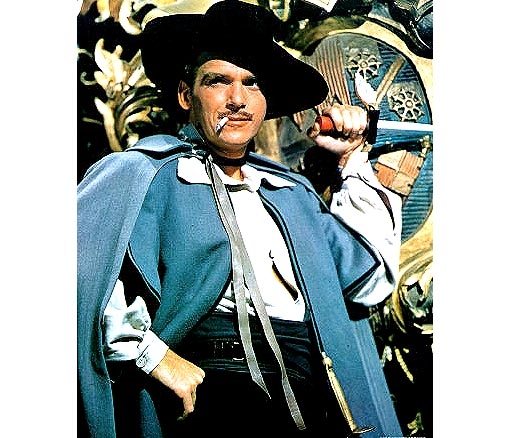
Attached is a very funny article written by the great matinee idol Douglas Fairbanks (1883 – 1939) concerning the predictability of silent films:

Whether eastern or western, the villain is never without a big black cigar. On the screen a big black cigar represents villainy; on the stage it represents General Grant.


Click here to read magazine articles about D.W. Griffith.

Advertisement

Use shortcode [oma_ad position="summary_top"] (or other position) in your theme or widgets to display OMA Promotions here.

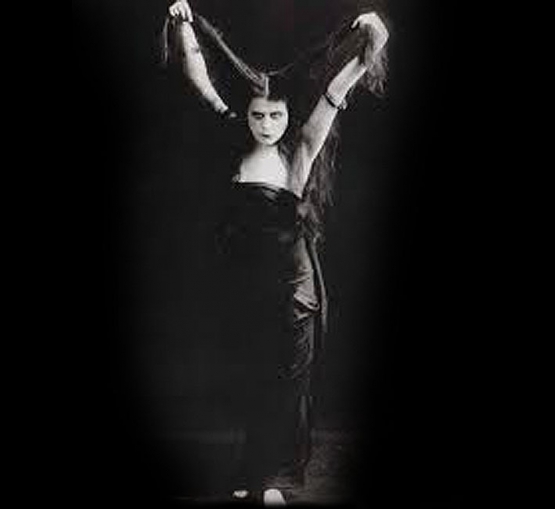
The Rebellion of Theda Bara (Vanity Fair, 1919)
1919, Silent Movie History, Vanity Fair Hall of Fame

The Rebellion of Theda Bara
(Vanity Fair, 1919)

Disgusted with being remembered for only playing the role of vampires, Theda Bara wrote this piece where she listed several sound reasons as to why she would never play such a roll again:

To me, there is nothing so quaintly naive as this inability of the moving picture public to disassociate the screen personality of a star from his or her own personality. I wonder what they think a Mack Sennett bathing girl must be like around the house.

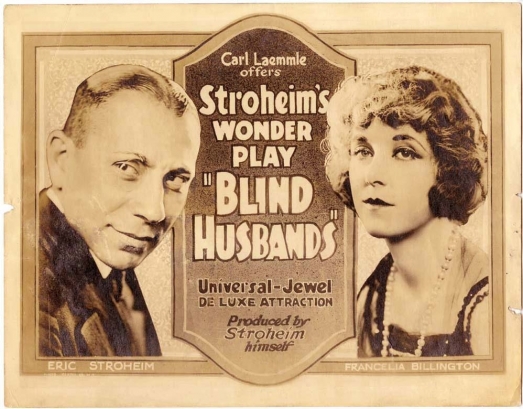
Hollywood Movie Magazine Article on Erich von Stroheim | Silent Movie Blind Husbands Article
1920, Motion Picture Magazine, Silent Movie History

Erich von Stroheim: an Immigrant’s Story
(Motion Picture Magazine, 1920)

Silent movie legend Erich von Stroheim (1885 – 1957) gave an account of his life and career in this 1920 interview printed in Motion Picture Magazine. The article touches upon von Stroheim’s roll as producer for the movie Blind Husbands (1919), but primarily concentrates on his pre-Hollywood life and his disappointment with the provincial nature of American films.

The Rebellion of Theda Bara (Vanity Fair, 1919)
1917, Silent Movie History, The Atlanta Georgian

Theda Bara: Sex Symbol
(The Atlanta Georgian, 1917)

An enthusiastic review of the Hollywood silent film, The Tiger Woman (1917) starring the first (but not the last) female sex symbol of the silent era, Theda Bara (born Theodosia Burr Goodman; 1885-1955).


This very brief review will give you a sense of how uneasily many men must have sat in their chairs when she was pictured on screen.

She is a very tigerish ‘Tiger Woman’ in this picture. Her heart, her soul, her finger tips, her eyelashes, her rounded arms, her heaving buzzum, all vibrate to a passion for pearls.

Theda Bara retired in 1926, having worked in forty-four films.


Click here to read articles about Marilyn Monroe.

Advertisement

Use shortcode [oma_ad position="summary_top"] (or other position) in your theme or widgets to display OMA Promotions here.

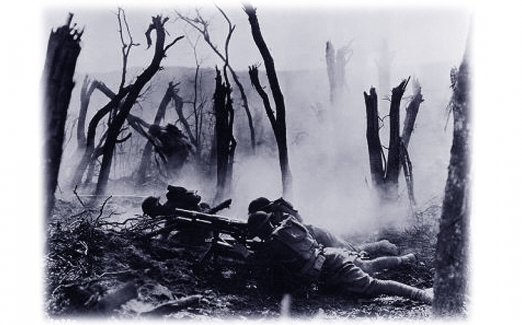
The Decorated Marines from Belleau Wood (NY Times, 1918)
1918, Belleau Wood

The Decorated Marines from Belleau Wood
(NY Times, 1918)

An eyewitness account of the decoration ceremony that took place on a lawn of an unnamed French chateau in the Marne Valley on July 11, 1918. The ceremony was presided over by U.S. Army General James Harbord (1866 – 1947) and well over 100 Marines of the U.S. Second Division were cited for their deeds in the fighting North-West of Chateau-Thierry.

Battle of Cantigny Report from 1918 Stars and Stripes | Battle at Cantigny Newspaper Article 1918
1918, Stars and Stripes Archive, The Stars and Stripes

The Battle at Cantigny
(The Stars and Stripes, 1918)

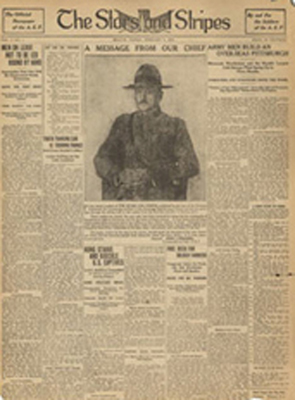
The battle of Cantigny (May 28 – 31, 1918) was America’s first division sized engagement during the First World War; George Marshall would later opine that the objective was of no strategic importance and of small tactical value. General Pershing was hellbent on eradicating from the popular memory any mention of the A.E.F.’s poor performance at Seicheprey some weeks earlier, and Cantigny was as good a battleground in which to do it as any. Assessing the battle two weeks after the Armistice, Pershing’s yes men at the Stars & Stripes wrote:

But at Cantigny it had been taught to the world the significant lesson that the American soldier was fully equal to the soldier of any other nation on the field of battle.


Click here to read about the foreign-born soldiers who served in the American Army of the First World War.


Click here to read a STARS & STRIPES article about the sexually-transmitted diseases among the American Army of W.W. I…

Advertisement

Use shortcode [oma_ad position="summary_top"] (or other position) in your theme or widgets to display OMA Promotions here.

Lt. Colonel Charles Whittelesey in the Vanity Fair Hall of Fame (December, 1918)
1918, Miscellaneous

Lt. Colonel Charles Whittelesey in the Vanity Fair Hall of Fame
(December, 1918)

Unlike the Vanity Fair magazine that we find on our newsstands, the Vanity Fair published under the steady hand of it’s first editor, Frank Crowninshield (1872 – 1947), was able to recognize that military heroes are a rare, three-dimensional breed, composed of an uncommon variety of testicular fortitude. Indeed, some years back, Israel went to the effort of giving IQ tests to the heroes of the Six Day War (1967) and they were not surprised to find that all of them tested in the higher ranges of their populations. The W.W. I U.S. Army hero Crowninshield saluted on the attached page was the commanding officer of a brave group of men called the Lost Battalion.


Click here to read more about the heroism of Major Whittelesey.

Harold Ross: Managing Editor of The Stars & Stripes (New York Tribune, 1919)
1919, Stars and Stripes Archive, The New York Tribune

Harold Ross: Managing Editor of The Stars & Stripes
(New York Tribune, 1919)

Sergeant Alexander Woollcott (1887 – 1943) wrote this article so that his New York readers (whom he had not addressed since signing on with the Doughboys) would know the key roll Corporal Harold Ross (1892 – 1951) played as Managing Editor at the Paris offices of The Stars & Stripes. Anyone who glances at those now brittle, beige pages understands how sympathetic the The Stars & Stripes and their readers were to the many thousands of French children orphaned by the war; Woollcott makes it clear that it was Harold Ross who was behind the A.E.F. charities that brought needed relief to those urchins.

It seems certain that no man in the A.E.F. had a greater influence on it’s thought and spirit…The men who worked with him on The Stars & Stripes considered him the salt of the earth.

To read another W.W. I article by Alexander Woocott, click here.

How the 'Stars & Stripes' Operated (The Stars and Stripes, 1919)
1919, Stars and Stripes Archive, The Stars and Stripes

How the ‘Stars & Stripes’ Operated
(The Stars and Stripes, 1919)

Written during the closing days of the paper’s existence, the reporting journalist could not emphasize enough how lousy the paper was with enlisted men serving in the most important positions. You will come away with a good amount of knowledge concerning the manner in which THE STARS & STRIPES crew addressed their daily duties and still made it to the presses on time. Surprising is the high number of experienced newspapermen who wrote for the paper during the paper’s short existence.


Click here to read World War II articles from YANK MAGAZINE.

Advertisement

Use shortcode [oma_ad position="summary_top"] (or other position) in your theme or widgets to display OMA Promotions here.

Scroll to Top