
Author name: editor

Origin of the Word 'Doughboy' (The Stars and Stripes, 1919)
1919, Stars and Stripes Archive, The Stars and Stripes

Origin of the Word ‘Doughboy’
(The Stars and Stripes, 1919)

A few historians tend to believe that the sobriquet Doughboy had it’s origins in the 1846 – 48 war with Mexico (a perversion of the Spanish word ‘adobe’), but the attached article makes a different reference, dating the term to the American army’s period in the Philippines. An effort was also made to explain the term Buck Private.


Click here if you would like to read an article about the Doughboy training camps.

Newspaper Article Air Pollution | Greenhouse Effect Build Up
1947, Pathfinder Magazine, The Environment

Air Pollution Becomes a Problem
(Pathfinder Magazine, 1947)

This news article was penned a year and a half after the end of W.W. II and it concerns the steps various industrial cities were taking to limit the amount of pollutants that factories belched into the air daily. A year later, the Republican-lead Congress would pass an important piece of legislation titled the Federal Water Pollution Control Act.


2013 marked the first time that the industrial powerhouse of China finally recognized that air pollution in the Beijing area exists and it is a problem. China regularly emits the lion’s share of green house gasses (a whopping 23.5%).

Advertisement

Use shortcode [oma_ad position="summary_top"] (or other position) in your theme or widgets to display OMA Promotions here.

The Battle of Henry Johnson (The Stars and Stripes, 1918)
1918, African-Americans, The Stars and Stripes

The Battle of Henry Johnson
(The Stars and Stripes, 1918)

The courageous acts of white soldiers were not so easily demeaned in other STARS & STRIPES features as were the heroics performed by Henry Johnson and Needham Roberts in this piece from the Spring of 1918. For those who have, through the years, read the history of the New York 369th Regiment of Infantry this article will leave you a little sadder for the racial stereotyping and cheekiness so clearly enjoyed by the journalist and his editors.


On June 2, 2015 Henry Johnson was posthumously awarded the Congressional Medal of Honor in a White House ceremony.

Ranger School (Yank Magazine, 1942)
1942, Army Rangers, Yank Magazine

Ranger School
(Yank Magazine, 1942)

The 76th Division at Fort Meade learns the latest scientific methods of hand-to-hand slaughter and free-for-all street fighting that will soon be taught to every infantry outfit in the Army. The article concerns the hand-t-hand combat instruction of one Francois D’Eliscu – a U.S Army major made famous for his 11-point training plan.

Major D’Eliscu is one of the toughest men alive. He can kill with a flick of his elbow, maim with a pinch of his fingers. He imparts this toughness into the course he gave to the 76th Division instructors and to the Special Service officers from the other divisions.
US Navy Admiral Forrest P Sherman Leadership 1950 | US Naval Operations During the Korean War 1950 - 1953
1950, Pathfinder Magazine, The Korean War

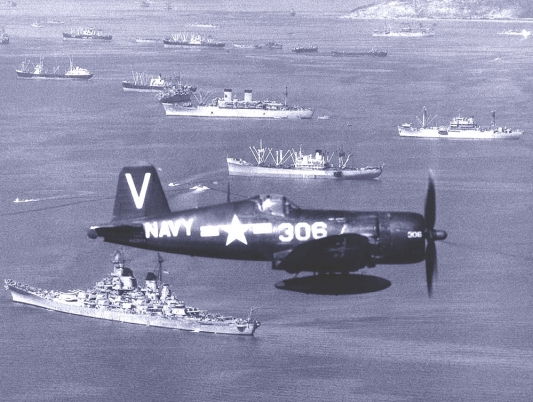
Korea: The Contributions of the U.S. Navy
(Pathfinder Magazine, 1950)

With no other seafaring nation afloat to oppose them, the United States Navy directed it’s attention entirely to land-based targets on the Korean peninsula. Navy jets pelted the mountainous terrain in support of UN operations ashore while battleships, cruisers and destroyers served as floating artillery batteries:

The miracle-man most responsible for this rejuvenated navy is brilliant, 53-year-old Admiral Forrest P. Sherman, the first air officer to serve as CNO…

Advertisement

Use shortcode [oma_ad position="summary_top"] (or other position) in your theme or widgets to display OMA Promotions here.

Plolesti Bomber Mission John Riley Kane | WW2 Polesti air-raid | WW II Plolesti Bomber Mission john riley kane MoH
1944, Coronet Magazine, Medal of Honor Recipients

John Riley Kane
(Coronet Magazine, 1944)

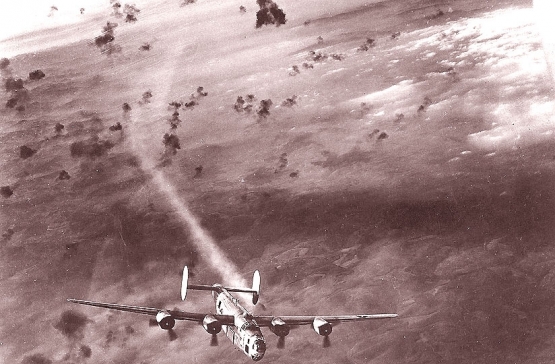
John Killer Kane (1907 – 1996) proved his mettle numerous times throughout the Second World War, but it was on August 1, 1943 – above the blackened skies of the Ploesti oil refineries in Romania, that the brass caps of the U.S. Ninth Air Force sat up and truly took notice of his polished skills as a pilot of a B-24 bomber. He was awarded the Congressional Medal of Honor for the admirable mixture of confidence and ability that showed so clearly that day.


In the attached article, the pilot recalled the moment when he was made aware that the number four engine had been hit

and we increased power on the other three. As soon as we left the target we dropped down to tree-top level. We were right in the middle of the group and I could see other ships passing us as we lost speed. Then the Junker 88s and the ME 105s came to work on us. It was a sight I can never forget, seeing B-24s falling like flies on the right and left of us. But we were getting our share of fighters, too. It was a rough show.


High praise is heaped on Colonel Kane for all of nine pages – celebrating his enormous personality as much as his sang-froid in battle.

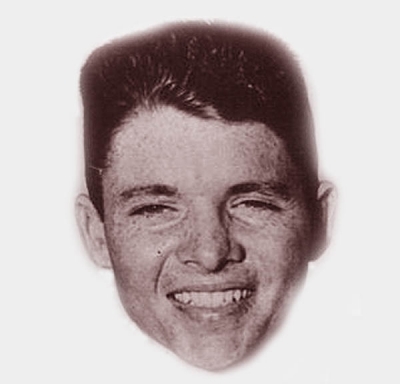
Audie Murphy Article | WW II Hero Audie Murphy
1955, Coronet Magazine, Medal of Honor Recipients

Audie Murphy: the Most Decorated
(Coronet Magazine, 1955)

Audie Murphy (1925 – 1971) was one of the most decorated American combat soldiers of the Second World War. This article appeared on the newsstands just in time to promote To Hell and Backstyle=border:none, the Universal Studio movie based on Murphy’s 1949 wartime memoir of the same name. Some men fit quite comfortably into the public life of a celebrated hero, Audie Murphy was not one of them.
The Nazi's Man in British Palestine ('48 Magazine, 1948)
1948, 48 Magazine, Haj Amin Al-husseini

The Nazi’s Man in British Palestine
(’48 Magazine, 1948)

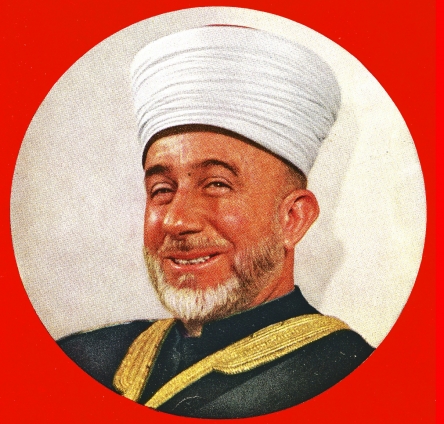
Written two and a half years after the Second World War, this article tells the story of Haj Amin Al-husseini (1897 – 1974), the Grand Mufti of Jerusalem; he was the most prominent of Nazi-collaborators in all of Islam. Believed to have been a blood relation of Yasser Arafat (1929 – 2004), Al-Husseini was the animating force behind numerous attacks on the Jews of British Palestine throughout the Twenties and Thirties.


Al-Husseini is also the subject of this article.


Here is an article from 1919 about Al Husseini.

Advertisement

Use shortcode [oma_ad position="summary_top"] (or other position) in your theme or widgets to display OMA Promotions here.

Inadequacies in Combat Training (Yank Magazine, 1945)
1945, The Regiment of the Century, World War Two

The Scared Infantry
(Regiment of the Century, 1945)

We were men on a chess board being pushed around by people we never saw, by orders we never read, going to places we didn’t know the names of, not knowing where the front was… praying that the ‘old man’ knew what he was doing.


The passage above was found in a year book that told the tale of the 397th (U.S.) Infantry Regiment, of the 100th Division. The 100th Division was on the German’s tale all the way to Berlin.


Click here to read about the depth of suffering American soldiers had to endure during the Battle of the Bulge.

Normandy battle of Hedgerows 1944 | Battle for Normandy 1944 article
1944, World War Two, Yank Magazine

The Death of the German Seventh Army
(Yank Magazine, 1944)

A 1944 Yank Magazine article concerning the destruction of the once mighty German 7th Army:
“We have been told that the German Army, which fought so craftily and gave out to our men a share of death in Normandy, is now almost encircled by the great armored columns which broke through and swept around the enemy. But this army does not die easily…”

Click here to read about the retreat of the Africa Corps.

Advertisement

Use shortcode [oma_ad position="summary_top"] (or other position) in your theme or widgets to display OMA Promotions here.

Montecassino Bombing 1944
1944, Newsweek, World War Two

The Bombing of Monte Cassino
(Newsweek Magazine, 1944)

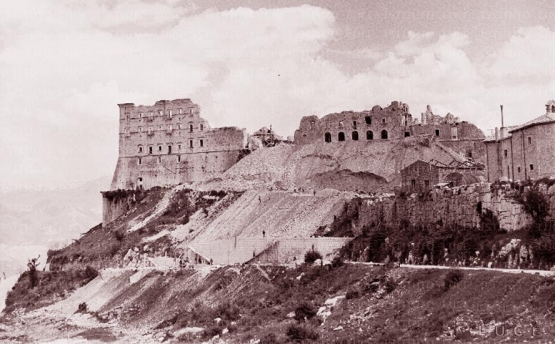
The bombing of the Medieval abbey at Montecassino was one of the saddest tactical errors of the Second World War. The decision to bomb the structure was a result an error in translating an intercepted German communique that lead the Allies to believe that there was Nazi battalion contained within the abbey. This was not the case. When the Allies sifted through the rubble they were surprised to find the remains of numerous Italian civilians and very few Germans. The attached article recalls the fantastic view that was enjoyed by the assembled U.S. and British troops as the bombs fell.

A Diagram of Lindbergh's Plane (Literary Digest, 1927)
1927, Charles Lindbergh, The Literary Digest

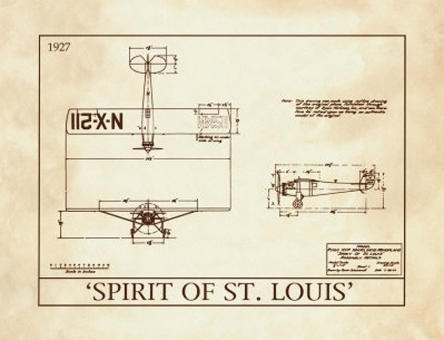
A Diagram of Lindbergh’s Plane
(Literary Digest, 1927)

Originally created for the editors of the now defunct Aero Digest, the diagram depicted the interior of The Spirit of St. Louis (also referred to to as The Ryan Transatlantic Monoplane) shows the layout of the famous craft, and the placement of the water supply, air vent, earth inductor compass and more. The Spirit of St. Louis weighed 5,000 pounds, could travel at the speed of 135 miles per hour and had a wing span measuring 46 feet.

Karl Shapiro, Poet (Yank Magazine, 1945)
1945, Twentieth Century Writers, Yank Magazine

Karl Shapiro, Poet
(Yank Magazine, 1945)

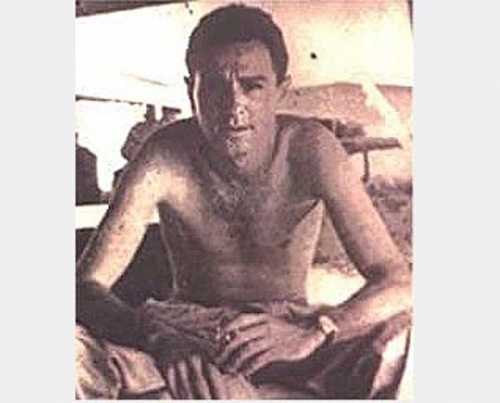
In 1944, Karl Jay Shapiro (1913 – 2000) was pulling in the big-bucks as a U.S. Army Private stationed in New Guinea, but unlike most of the khaki-clad Joes in at least a ten mile radius, Shapiro had two volumes of poetry under his belt (Person Place and Thingstyle=border:none and Place of Love) in addition to the memory of having been awarded a Guggenheim Fellowship. In this short interview, he explains what a poet’s concerns should be and offers some fine tips for younger poets to bare in mind.

A year latter, while he was still in uniform, Shapiro would be awarded the 1945 Pulitzer Prize for poetry

Advertisement

Use shortcode [oma_ad position="summary_top"] (or other position) in your theme or widgets to display OMA Promotions here.

FDR Insider Tells All
1954, Confidential Magazine, F.D.R.

Inside Hyde Park
(Confidential Magazine, 1954)

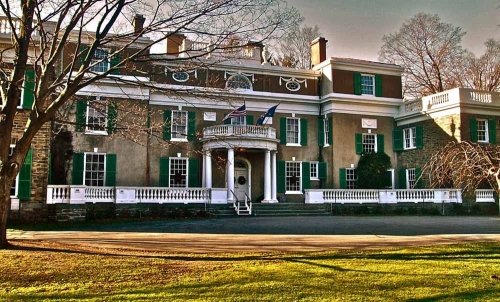
Appearing in CONFIDENTIAL MAGAZINE during the early months of 1954 were these pages from a memoir that was written by the sergeant who rode herd on the New York Police Security Detail for President Franklin Roosevelt. As far as we can figure, Prisoner at Hyde Park by New York State Policeman Edward J. Dougherty was never published, but as you will soon read, it was full of many obscure and unheard of stories of FDR and the world he dominated while in the Empire State.

Advertisement

Use shortcode [oma_ad position="summary_top"] (or other position) in your theme or widgets to display OMA Promotions here.

Scroll to Top