Author name: editor

Clark Gable's First Wife | The first MRS CLARK GABLE | Clark Gable's First Marriage | Clark Gable's First Divorce
1955, Confidential Magazine, Hollywood History

Clark Gable: Cad
(Confidential Magazine, 1955)

We all know that there are two sides to every story, but not in this article. If the utterances of Clark Gable’s first wife (Josephine Dillon, 1884 – 1971) are true, then we have no choice but to believe that Gable was a real stinker.

When Miss Dillon left for Hollywood, he followed. A year later they were married in Los Angeles by gospel minister A.C. Smithers. Josephine traded the Dillon name to become Mrs. Clark Gable.
It didn’t take her long to discover quite a bit about her new young husband. He didn’t even have a grammar school education. He knew nothing about acting. And he was penniless. They lived in the money Josephine made as a dramatic coach. There wasn’t much of it, because her best pupil was her big-eared husband; his lessons were ‘on the house’. He sopped up what she knew like a sponge.

The China Clipper (Literary Digest, 1935)
1935, Aviation History, The Literary Digest

The China Clipper
(Literary Digest, 1935)

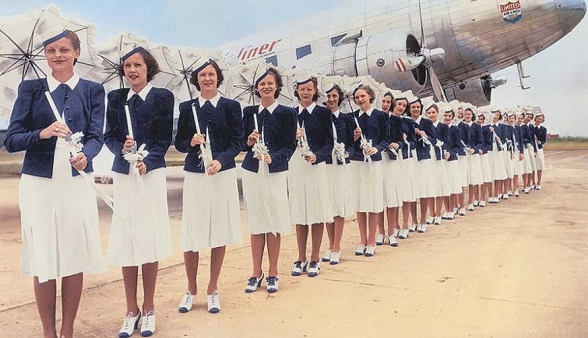
When the twenty-five-ton Martin transport-plane successfully passed its preliminary tests at Baltimore a few days ago, preparatory to entering the regular service of Pan American Airways, it was an occasion of world significance. In all likelihood this new member of the famous Clipper series will be the first to establish regular passenger and mail service across the Pacific.

Advertisement

Use shortcode [oma_ad position="summary_top"] (or other position) in your theme or widgets to display OMA Promotions here.

1945 Atomic Bomb Headline | Hiroshima Bombing Magazine Headline August 1945
1945, Atomic Bombs, Newsweek

The Atomic Age Begins – in Hiroshima
(Newsweek Magazine, 1945)

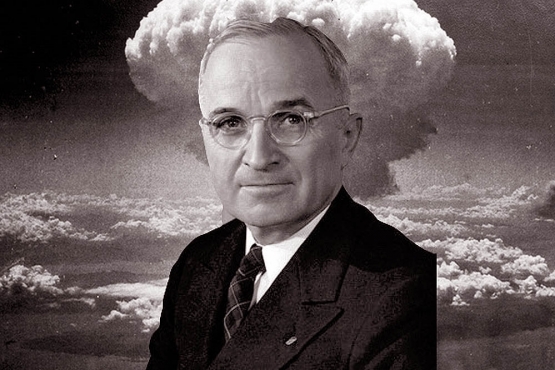
On Sunday morning, August 5 (Washington time), an American airplane flew over Hiroshima, a Japanese army base [!] on the Inland Sea. It dropped a single bomb. When that missile struck the earth, it blew up in the greatest man-made explosion in the history of the world. The United States had loosed an atomic bomb on Japan.


Click here to read about the invention of the Intercontinental Ballistic Missile

Rebecca West: The Last Birth of Time (Current Opinion, 1921)
1921, Current Opinion Magazine, Twentieth Century Writers

Rebecca West: The Last Birth of Time
(Current Opinion, 1921)

Rebecca Weststyle=border:none
(born Regina Miriam Bloch: 1892 – 1983) became a fixture on the literary landscape just prior to the First World War when she was recognized as a young, thought-provoking writer with much to say on many matters. The article serves as an interesting profile of the woman by compiling various remarks made during the course of her early career.

Advertisement

Use shortcode [oma_ad position="summary_top"] (or other position) in your theme or widgets to display OMA Promotions here.

Blanche Sweet Interviewed (Motion Picture Magazine, 1916)
1916, Motion Picture Magazine, Silent Movie History

Blanche Sweet Interviewed
(Motion Picture Magazine, 1916)

An interview with the silent film actress, Blanche Sweet (1895-1986) who, at that point in her career, had been a photoplayer (ie. an actor) for only six years. Prior to her contract with The Lasky Company, where she was obliged to perform at the time of this interview, she had toiled in the vineyards of such studios as Reliance and Biograph (where she was nick-named, The Biograph Blonde). Unlike her co-swells in that young industry, who liked to read and re-read their recent interviews from Motion Picture Magazine while loitering around the sets, we read that Blanche Sweet was very fond of reading Tennyson, Kipling and the novels of Edward Phillips Oppenheim (1866-1946). During the course of her career she had appeared in well over one hundred films.

Click here to read magazine articles about D.W. Griffith.
Click here to read articles about another Hollywood blonde: Marilyn Monroe.

D.W. Griffith in the 'Vanity Fair Hall of Fame' (Vanity Fair, 1918)
1918, D.W. Griffith, Vanity Fair Hall of Fame

D.W. Griffith in the ‘Vanity Fair Hall of Fame’
(Vanity Fair, 1918)

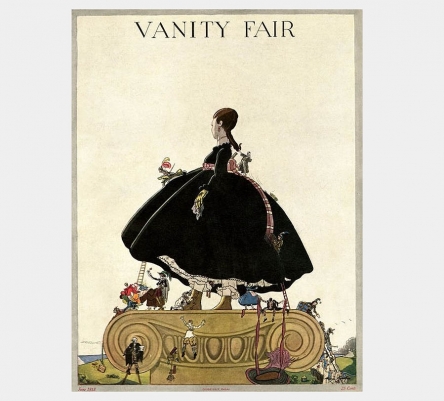
Sweet words of praise were heaped high for the silent film director D.W. Griffith when he was selected by VANITY FAIR magazine to be one of their anointed ones:

Because he was for many years an excellent actor and a leading man on Broadway; because he went into moving pictures as a an actor and emerged from them as a producer;because the greater the magnitude of the task ahead of him the more the prospect pleases him; because he invented the high-priced movies; because he has employed upwards of 5,000 people in a single scene; because he is an excellent musician and wrote the orchestral music for ‘Hearts of the World’, the most sensational moving picture of recent years.film production
check
summary
single
business ethics articles
display cases
imaging
old magazine
film production
check
summary
single
business ethics articles
display cases
imaging
old magazine
film production
check
summary
single

It's Superman! (Coronet Magazine, 1946)
1946, Americana, Coronet Magazine

It’s Superman!
(Coronet Magazine, 1946)

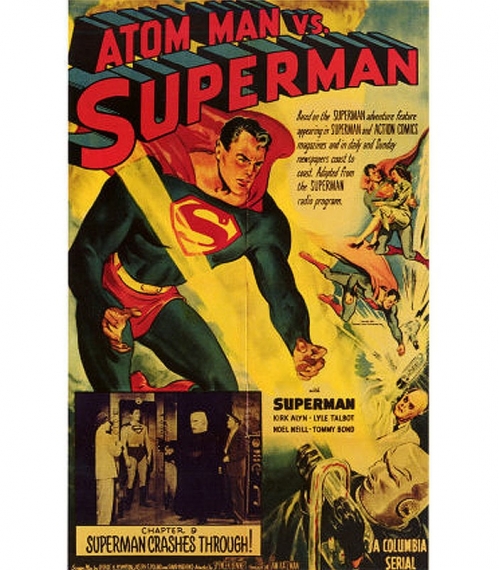
Attached is a 1946 article by Mort Weisinger (1915 – 1978), who is remembered primarily as the editor for DC Comics’ Superman throughout much of the Fifties and Sixties. His four page history of Superman, attached herein, lays out not simply the origins of the character but all his great successes when deployed on behalf of the enemies of bad grammar, tooth decay, and slot machines. The author lucidly explained his own amazement at the fact that during those years spanning 1936 through 1946, Superman not only fought tooth and nail for truth, justice and the American way, but had been successfully harnessed by numerous ad men to advocate for the study of geography, civics, literacy, vocabulary and the importance of iron salvage in wartime.
At the time Weisinger penned this article, SUPERMAN was purchased annually by as many as 30,000,000 buyers.


Click here to read about the roll comic books played during the Second World War.

Advertisement

Use shortcode [oma_ad position="summary_top"] (or other position) in your theme or widgets to display OMA Promotions here.

'Youth, the Spirit of the Movies'' (Illustrated World, 1921)
1921, Illustrated World, Silent Movie History

‘Youth, the Spirit of the Movies”
(Illustrated World, 1921)

Screen director D.W. Griffith declared in this article that youthful, energetic performers and writers are needed in the young and vigorous film industry of the Twenties:

We need youth because the most successful screen stars are not harassed by the technique of the older stage and the requirements of the newer art are very largely different. So a new kind of actor has come to be—the screen actor—just as a new kind of writer is coming to be—the screen-writer. But that isn’t all!… An audience loves a sweet and kindly face on the screen as in life. The surest guide in the world to lead us out of our daily troubles is a little star who is sweet and gentle and kind, like youth with all its yearnings and simplicity.

Tiresome Will Hays (Film Spectator, 1929)
1929, Silent Movie History, The Film Spectator Magazine

Tiresome Will Hays
(Film Spectator, 1929)

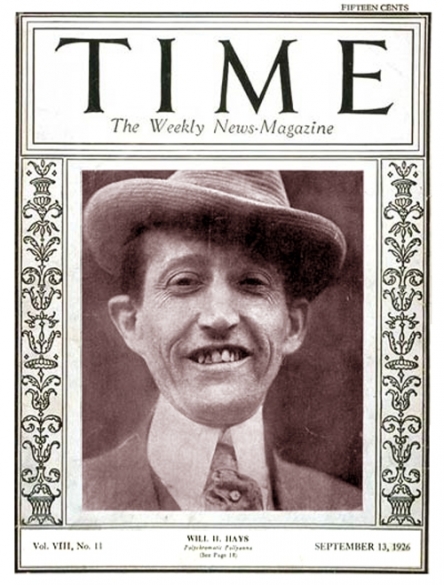
When the silent film era had run it’s course and the talkies were growing in popularity, Hollywood’s honeymoon with Will Hays was long over. In 1929 Hays’ association with Harry Sinclair of the Consolidated Oil Corporation was called into question by a number of Washington Senators. In 1924, Hays, the man who’s reputation was supposed to be beyond reproach, performed poorly before a Senate committee when asked to explain his 1920 roll as the go-between who collected a $75,000.00 donation from Sinclair in order to fill the coffers of the Republican National Committee. There were allegations of dubious gifts in exchange for this service and the Hollywood community, which has no difficulty generating it’s own scandals and needed no help from Will Hays, thank you very much, began to grumble. Various assorted unkind remarks concerning Will Hays were printed in this short article that appeared in a long forgotten Hollywood trade publication.

Click here if you would like to read about Will Hays and his 1922 arrival in Hollywood.


If you would like to read about the films of the 1930s, click here.

Click here to read a 1939 article about an alumni organization for the pioneers of silent films.

Will Hays Comes to Hollywood (The American Magazine, 1922)
1922, Silent Movie History, The American Magazine

Will Hays Comes to Hollywood
(The American Magazine, 1922)

This short notice is about Will Hays, an Elder in the Presbyterian Church, who was hired to be the conscience of the Dream Factory in 1922; he rode into Hollywood on the heels of a number of well-publicized scandals vowing to sober the place up. Widely believed to be a moral man, the Hays office was located in New York City – far from the ballyhoo of Hollywood. Hays’ salary was paid by the producers and distributors in the movie business and although he promised to shame the film colony into making wholesome productions, he was also the paid apologist of the producers.

Advertisement

Use shortcode [oma_ad position="summary_top"] (or other position) in your theme or widgets to display OMA Promotions here.

VE-Day in Paris (Yank Magazine, 1945)
1945, VE Day, Yank Magazine

VE-Day in Paris
(Yank Magazine, 1945)

Eyewitness accounts of all the excitement that was V.E. Day in Paris:

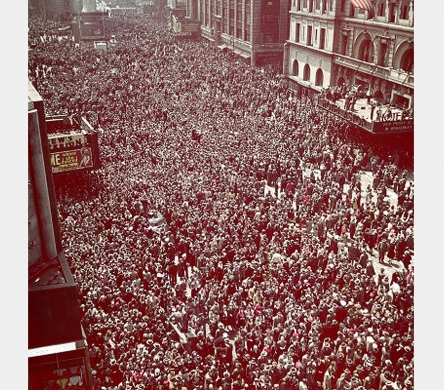
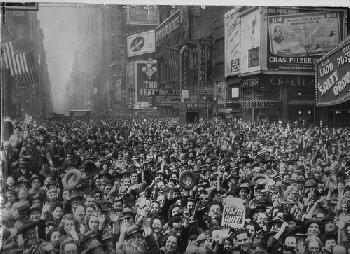
On the Champs Elysees they were singing ‘It’s a Long Way to Tipperary,’ and it was a long way even the few blocks from Fouquet’s restaurant to the Arc de Triomphe if you tried to walk up the Champs on VE-Day in Paris. From one side of the broad and beautiful avenue to the other, all the way to the obelisk in the Place de la Concorde to the Arc de Triomphe in the Place de l’Etoile, there was hardly any place to breathe and no place at all to move. That was the way it was in the Place l’Opera and the Place de la Republique and all the other famous spots and in a lot of obscure little side streets that nobody but Parisians know.

Click here to read about the liberation of Paris.
Click here to read the observations of U.S. Army lieutenant Louis L’Amour concerning 1946 Paris.

Advertisement

Use shortcode [oma_ad position="summary_top"] (or other position) in your theme or widgets to display OMA Promotions here.

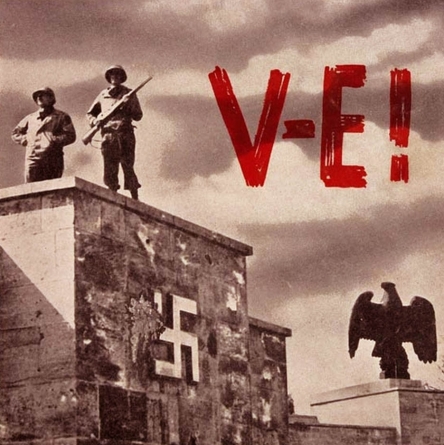
End of WW II in Germany | Surrender of Germany 1945
1945, Commonweal Magazine, VE Day

VE-Day in Germany
(Commonweal, 1945)

In the end, the German soldier faced the greatest ignominy which any soldier can receive. His own people discredited and betrayed him. The people knew the war was lost. They knew too that fanatical resistance meant that their homes and their fields were lost, too. Many an American soldier owes his life (though from the long range point of view, not his gratitude) to the very people who heiled Hitler into power. They would stool-pigeon on those SS troops who remained behind our lines to carry out guerrilla warfare.


Click here to read about the post-war trial of Norway’s Quisling.

VE-Day in Europe (Yank Magazine, 1945)
1945, VE Day, Yank Magazine

VE-Day in Europe
(Yank Magazine, 1945)

Assorted reports from various European capitols concerning the capitulation of Hitler’s Germany:

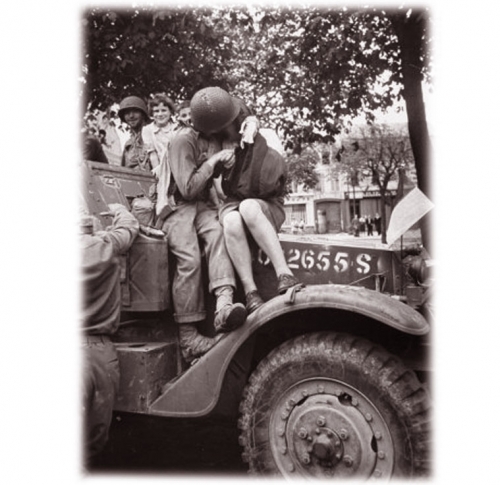
Finally, when Paris believed the news, it was just a big-city celebration –crowds and singing and cheers and lots of cognac and girls. People stopped work and airplanes of all the Allied forces buzzed the Champs Elysees. Pvt. Ernest Kuhn of Chicago listened to the news come over the radio at the 108th General Hospital. He had just been liberated after five months in a Nazi PW camp and he still had some shrapnel in his throat. I listened to Churchill talk, he said, and I kept saying to myself, ‘I’m still alive. The war is over and I’m still alive’ I thought of all the guys in the 28th Division Band with me who were dead now. We used to be a pretty good band.

Advertisement

Use shortcode [oma_ad position="summary_top"] (or other position) in your theme or widgets to display OMA Promotions here.

Scroll to Top