Author name: editor

Good and Bad Writing About World War I (Vanity Fair, 1915)
1915, Vanity Fair Hall of Fame, Writing

Good and Bad Writing About World War I
(Vanity Fair, 1915)

A small column from a 1915 issue of Vanity Fair in which the correspondent praised the virtues of Howard Copeland (an American psychologist and ambulance volunteer working in Frabce), Gertrude Aldrich (author of an Atlantic Magazine essay titled, Little House on the Marne), Cardinal Mercier (author of the Great Belgian Pastoral) and W.F. Bailey (authored a paper concerning the war in Northeastern Europe). These writers are preferred to the usually celebrated ink-slingers like Hellaire Belloc, Rudyard Kipling, Anatole France, and Arnold Bennett who are all compared to amateur recruiting sergeants in support of the War.


This image file is poorly scanned: we recommend that you print it for greater legibility.

ANTI-FA Movement 1930s | Resistance to Mussolini Fascist Government | Resistance to Fascism
1937, Benito Mussolini, Pathfinder Magazine

The Anti-Mussolini Resistance
(Pathfinder Magazine, 1937)

It is terribly chic these days to insist that the presidency of Donald Trump was Fascist – no one would have found this statement more hilarious than the fellows who are profiled in the attached article. These are the men who were assaulted on the streets and in their offices by Mussolini’s supporters, these are the writers who were censored and blacklisted – these hardy souls were the original Anti-Fa.

Advertisement

Use shortcode [oma_ad position="summary_top"] (or other position) in your theme or widgets to display OMA Promotions here.

1939 Cash and Carry FDR New Deal | FDR American Neutrality 1939 | 1939 Revised Cash and Carry Trade Policy
1939, Pathfinder Magazine, World War Two

‘Cash and Carry”
(Pathfinder Magazine, 1939)

Cash and carry was a diplomatic trade policy set in place by the FDR administration; it was crafted during a special session of the U.S. Congress on September 21, 1939, as a result of the outbreak of the Second World War in Europe. It replaced the Neutrality Act of 1937, by which belligerent parties would purchase only non-military goods from the United States so long as the client states in question paid in cash at the time of purchase and assumed full responsibility for transportation. The 1939 Cash and carry revision allowed for the purchasing of military arms to belligerents on the same cash-and-carry basis. The purpose of the policy was to maintain neutrality between the United States and European nations while giving aid to Britain by allowing them to buy non war materials.


Shortly after the 1940 election, British Prime Minister Churchill told FDR that Britain could no longer afford to buy military supplies under the code of cash and carry and a new agreement needed to be agreed upon. The President then persuaded Congress to swap cash-and-carry with Lend-Lease – a new piece of legislation that granted the president authority to sell, exchange, lend, or lease war materiel to any nation whose defense was vital to U.S. security.

Jack Dempsey In Silent Movies (Motion Picture News & Vanity Fair, 1919)
1919, Motion Picture News, Silent Movie History

Jack Dempsey In Silent Movies
(Motion Picture News & Vanity Fair, 1919)

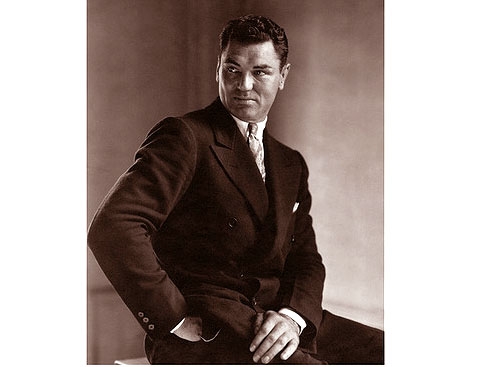
Two articles from two different magazines reported the news that the World Champion Boxer of 1919, Jack Dempseystyle=border:none (1895 – 1983), would soon try his hand at movie acting. The Vanity Fair item is actually a cartoon by that old sentimentalist, John Held, Jrstyle=border:none.(1889-1958).


In the future, other athletes would follow in his steps to Hollywood; his fellow boxer Gene Tunney would follow him out there eight years later (The Fighting Marines). Swimmers Buster Crabbe (Buck Rogers) and Johnny Weissmuller (Tarzan) got the fever and came out during the early days of sound movies.

Advertisement

Use shortcode [oma_ad position="summary_top"] (or other position) in your theme or widgets to display OMA Promotions here.

Stalin's Nine Point Plan (Coronet Magazine, 1951)
1951, Coronet Magazine, The Cold War

Stalin’s Nine Point Plan
(Coronet Magazine, 1951)

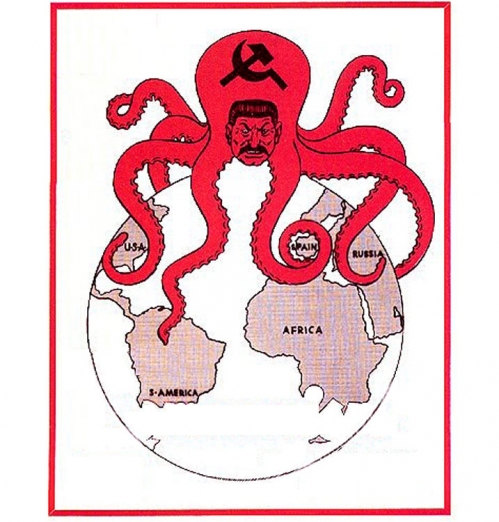
Joseph Stalin (1878 – 1953) is credited as the author of the attached article, Russia’s Plan for World Conquest, and it outlines all the various methods Soviet agents can subvert and curry-favor among the various youth and labor groups that are based in the industrialized democracies of the West:

…here is the Russian Dictator’s nine point program for world conquest, taken from his recorded writings, which are now on file in the Stalin Archives of the National War College in Washington, D.C. Italicized sentences have been inserted throughout the article in order to point up Stalin’s plan in the light of today’s crucial events. [ie. the Korean War]

As Lenin has said, a terrible clash between Soviet Russia and the capitalist States must inevitably occur…Therefore we must try to take the enemy by surprise, seize a moment when his forces are dispersed.


Click here to read about Soviet collusion with American communists.

Stage Productions Must Compete With Movies (Harper's Weekly, 1915)
1915, Harper's Weekly, Silent Movie History

Stage Productions Must Compete With Movies
(Harper’s Weekly, 1915)

A thoughtful look at all that stage productions have had to learn while competing for audiences with the early (and exciting) Hollywood film industry:

There is no doubt that the moving picture was responsible for the disappearance of the second-class theatre devoted to traveling companies, giving lurid melodramas and plays of obvious sentiment [but] instead of taking a lesson from the history of this form of amusement, which it helped to kill, the moving picture theatre imitated one of it’s very worst features.

Advertisement

Use shortcode [oma_ad position="summary_top"] (or other position) in your theme or widgets to display OMA Promotions here.

The Aerial Nurse Corps of America During WW2 | Lauretta Schimmoller Founder The Aerial Nurse Corps of America
1941, The American Magazine, Women (WWII)

The Aerial Nurse Corps of America
(The American Magazine, 1941)

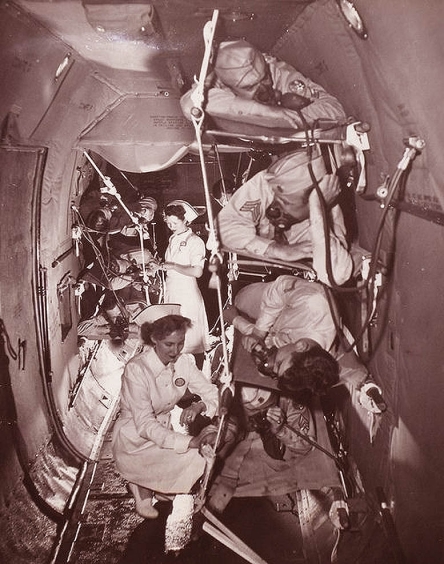
To read the U.S. magazines and newspapers printed in 1941 is to gain an understanding as to the sixth sense many Americans had in predicting that W.W. II would soon be upon them – and this article is a fine example. One month before Pearl Harbor the editors of AMERICAN MAGAZINE ran this column about Lauretta Schimmoller (1902 – 1981) who established the Aerial Nurse Corps of America, which, at that time, was composed of over 400 volunteers:

All air-minded registered nurses, they stand ready to fly with medical aid to scenes of disaster…Now established on a nation-wide scale, ANCOA, with its 19 national chapters, has already handled more than 3,000 emergency cases.

Advertisement

Use shortcode [oma_ad position="summary_top"] (or other position) in your theme or widgets to display OMA Promotions here.

review of o pioneers 1913 | Bad Book Reviews for Willa Cather 1913
1913, Twentieth Century Writers, Vanity Fair Hall of Fame

Willa Cather Gets a Bad Review
(Vanity Fair, 1913)

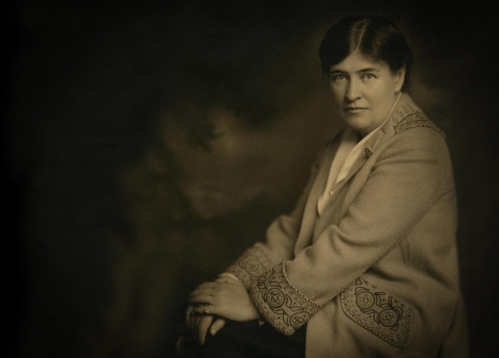
Writing his review of O Pioneers, DRESS and VANITY FAIR book critic Henry Brinsley wrote:

Miss Willa Cather in O Pioneers! (O title!!) is neither a skilled storyteller nor the least bit of an artist. And yet by the end of the book, something has happened in the readers mind that leaves him grateful…There isn’t a vestige of ‘style’ as such: for page after page one is dazed at the ineptness of the medium and the triviality of the incidents…And the secret of this is the persistence throughout of a single fine quality of the author – her extraordinary sincerity.

Errol Flynn on Trial (Yank Magazine, 1943)
1943, Hollywood, Yank Magazine

Errol Flynn on Trial
(Yank Magazine, 1943)

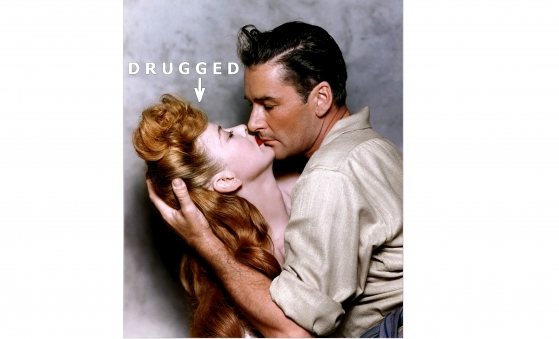
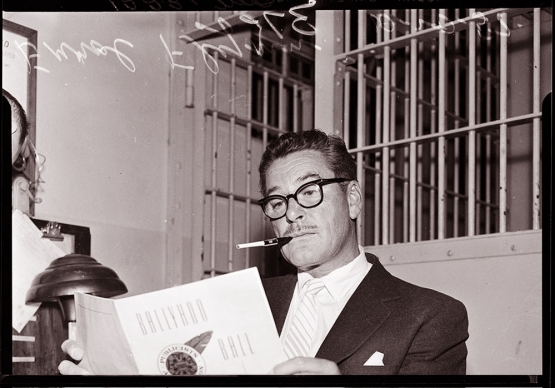
During the war years, the boys on the front loved reading about a juicy Hollywood scandal just as much as we do today, and Errol Flynn could always be relied upon to provide at least one at any given time. The closest thing to a Hollywood tabloid that the far-flung khaki-clad Joes could ever get their hands on was Yank Magazine, the U.S. army weekly that also provided them with the news from all battlefronts.


Movie star Flynn was tried by the California courts for having gained a fair measure of carnal knowledge from two feminine California movie fans who were both under the age of 18; said knowledge was gained while on board the defendant’s yacht, The Sirocco.


More about this trial and Flynn’s other scandals can be read here…

Errol Flynn: Defender of Hollywood Morality (Photoplay Magazine, 1937)
1937, Hollywood History, Photoplay Magazine

Errol Flynn: Defender of Hollywood Morality
(Photoplay Magazine, 1937)

A sly little grin must have come to the lips of the editors of Photoplay when they asked Hollywood’s reigning scandal-monger, Errol Flynn (1909 – 1959), to write a small treatise concerning Hollywood morals – and he accepted their offer. Flynn sharpened his pencil and scribbled the following lighthearted defense of Hollywood hedonism; contradicting himself at several points, he opined that Hollywood was not much different than any other neighborhood – and actors are always good because they’re too closely monitored to do bad – and if you don’t believe that, then you should know that the acting trade brings out in all who heed the call a certain character trait that makes any monogamy highly unlikely.

Advertisement

Use shortcode [oma_ad position="summary_top"] (or other position) in your theme or widgets to display OMA Promotions here.

A Song and Dance Man on Guadalcanal (Pageant Magazine, 1952)
1952, Pageant Magazine, The USO

A Song and Dance Man on Guadalcanal
(Pageant Magazine, 1952)

Four years after his stellar performance as the Scarecrow in The Wizard of Oz (MGM, 1939), Hollywood actor and comedian Ray Bolger (1904 – 1987) was performing in many parts of the war-torn Pacific islands on a USO tour for thousands of very grateful GIs and Marines. Attached is a two page reminiscence about one particular Guadalcanal performance, the men he met and the Hell they paid in the years that followed

William Saroyan on William Saroyan (Stage Magazine, 1940)
1940, Stage Magazine, Twentieth Century Writers

William Saroyan on William Saroyan
(Stage Magazine, 1940)

Hundreds of thousands of people regard me, I believe, as something of a success: A well-dressed, well-fed young writer, famous for his ties, who has moved upward and forward in the world of letters with a speed veering on the imperceptible; an Oriental whose name has become a word in the English language.


SAROYAN, n., one with money, a gentleman, a scholar, an artist; v., to slay, butcher, club, strafe, bombard, or cause to spin; adj., pleasing, ill-mannered, gallant; prep., near-by, within, over, under, toward.

What, however, is the inside story? What is the truth? Who is the real Saroyan? Is he a success or a failure? I will go over the entire saga from there to here chronologically…


Click here to read a Saroyan book review.

Advertisement

Use shortcode [oma_ad position="summary_top"] (or other position) in your theme or widgets to display OMA Promotions here.

Scroll to Top