Author name: editor

Taking the War to Japan's Doorstep (Yank Magazine, 1945)
1945, War at Sea, Yank Magazine

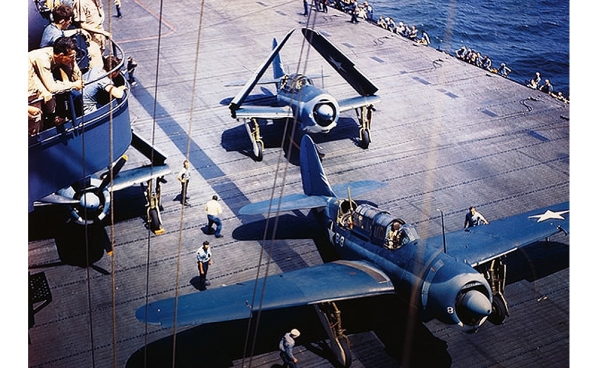
Taking the War to Japan’s Doorstep
(Yank Magazine, 1945)

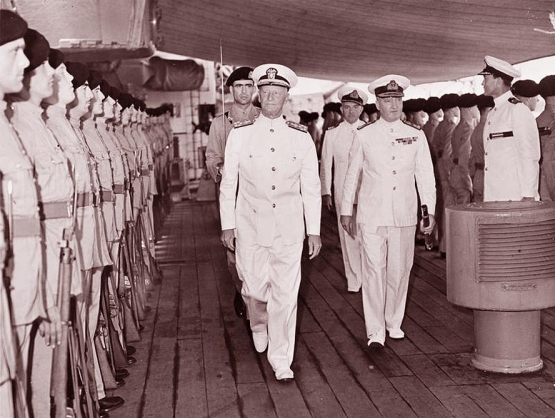
The last flight was coming home. The planes circled through the thick mist toward the stern of the Essex-class carrier. One by one they hit the deck: Hellcats, Corsairs and EBMs, with names like ‘Hydraulic Bess’, ‘Miss Fortune’, ‘Sweater Girl’ and ‘Kansas City Kitty’…When the air-crewmen came back from their low low-level raids, the thing they talked about most was the lack of Jap opposition.


Click here to read an interview with a Kamikaze pilot.
Anticipating Cell Phones in 1945 (Yank Magazine, 1945)
1945, World War Two, Yank Magazine

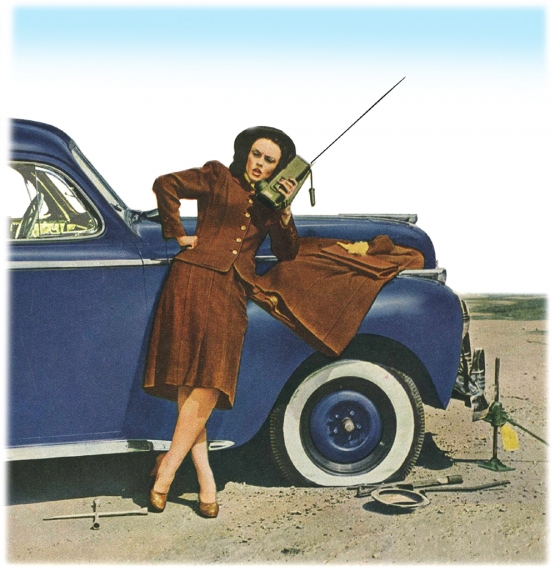
Anticipating Cell Phones in 1945
(Yank Magazine, 1945)

I recommend this article primarily for it’s three funny illustrations; the copy is not likely to hold your attention for too long. It concerns civilian applications for military technology, such as that era’s hand-held radios that were the wonder of the period. As you will see from the illustrations, the cartoonist recognized so well that such inventions could serve as the grandfather of the cell phone and he drew people on the street and driving cars -all chatting away on their walkie-talkies. Good fun.

Advertisement

Use shortcode [oma_ad position="summary_top"] (or other position) in your theme or widgets to display OMA Promotions here.

Battle for the North Atlantic 1941 | U-Boats in the North Atlantic 1941 | U-Boats vs Royal Navy 1941
1941, Newsweek, War at Sea

The North Atlantic Heats Up
(Newsweek Magazine, 1941)

April 1917 was Britain’s blackest month in the [First] World War… March 1941 seemed in many ways another grim month like April, 1917, perhaps even worse. Once more Britain faced peril on the sea – a danger which struck home deeper than any defeat of their armies on foreign soil… Not only German U-boats but German battle cruisers have crossed to the American side of the Atlantic and have already sunk some of our independently routed ships not sailing in convoy. They have sunk ships as far west as the 42nd meridian of longitude.

Advertisement

Use shortcode [oma_ad position="summary_top"] (or other position) in your theme or widgets to display OMA Promotions here.

Life on a WW2 Troop Ship | Daily Life on a WW2 USN Ship of War
1945, Coronet Magazine, War at Sea

‘Burial at Sea”
(Coronet Magazine, 1945)

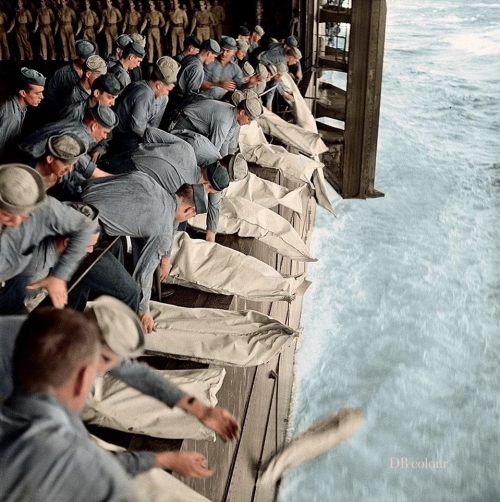
This is a short anecdote that recalled a slice of life on board a USN troop ship as it ferried men from one bloody atoll to the next. The two speaking parts in this drama were both officers who butted heads regularly until they understood that what united them was the welfare of the
dying young men returning from the beaches who had given their last full measure.


To read articles about W.W. II submarines, Click here.

Dorothy Dunbar Bromley Article 1933 | Salary Reductions During the Great Depression | President Hoover Economics
1933, New Outlook Magazine, The Great Depression

The Plummeting Salaries
(New Outlook Magazine, 1933)

In this article, Dorothy Dunbar Bromley (1896 – 1986) addressed one of the preeminent issue of her day: the rapidly decreasing salaries of the American worker:

If we are fatuous optimists, it is because we have only the vaguest idea of how appalling the situation is. We have read a great deal about the return of of the garment sweatshop of fifty years ago, with the same abominable conditions and the same exploitation of women and children for a few cents an hour, or for no pay at all…


More on this exploitation can be read here…

Advertisement

Use shortcode [oma_ad position="summary_top"] (or other position) in your theme or widgets to display OMA Promotions here.

Eyewitness to the Great Depression in Chicago | 1930s Chicago | Milton Sanford Mayer Chicago Article 1932
1932, The Chicagoan, The Great Depression

The Poor Are Everywhere
(The Chicagoan, 1932)

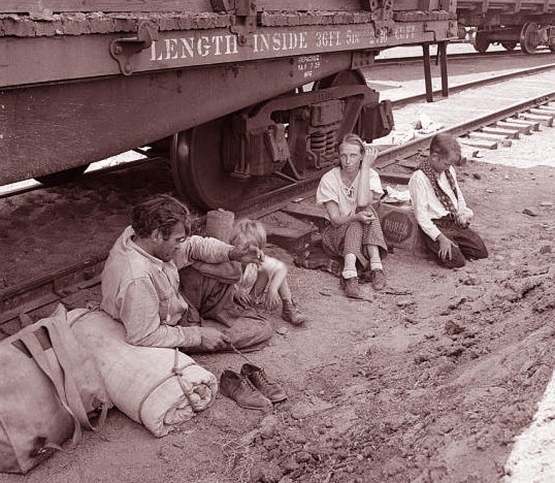
Three years into the Great Depression a citizen of Chicago realizes that there is nowhere he can go to escape the uneasy presence of the hungry poor in his city:

They’re on the boulevards and in the parks. They’re on the shady streets in nice neighborhoods and around the corner from expensive restaurants. You can tell they’re starving by looking at them. Their nerve is gone – they don’t even beg. You see thousands every day… Young men and old women never begged in this country before.

Leonard Bernstein (Newsweek Magazine, 1945)
1945, Music History, Newsweek

Leonard Bernstein
(Newsweek Magazine, 1945)

This Leonard Bernstein (1918 – 1990) profile is a real page turner – briefly explaining in four and a half pages all that this composer and conductor had been up to during the first thirty-eight years of his very productive life. The article appeared on the newsstands during the earliest days of 1957, when he was partnered with Stephen Sondheim on West Side Storystyle=border:none and mention is made of his numerous other collaborations with the likes of Jerome Robbins (Fancy Freestyle=border:none),
Comden and Green (On the Townstyle=border:none), and Lillian Hellman (Candidestyle=border:none).

WINGS: Directed by William Wellman (Life Magazine, 1927)
1927, Life Magazine, Silent Movie History

WINGS: Directed by William Wellman
(Life Magazine, 1927)

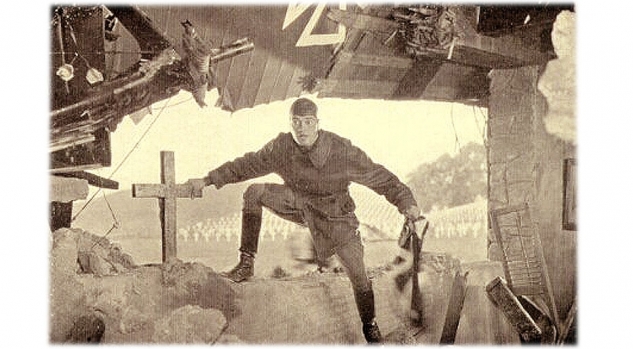
Appearing in an issue of [the old] Life Magazine, that was almost entirely devoted to the 1927 American Legion convention in Paris, was this Robert Sherwood review of the blockbuster silent film Wings. Directed by an American Air Corps veteran, William Wellman (1896 – 1975), Wings was the only silent film to win an Academy Award for Best Picture (at that time the category was titled Most Outstanding Production).

Advertisement

Use shortcode [oma_ad position="summary_top"] (or other position) in your theme or widgets to display OMA Promotions here.

Hollywood Silent Comedies Were Loved | Global Popularity of Hollywood Movies
1931, Photoplay Magazine, Silent Movie History

European Praise for American Silent Comedies
(Photoplay Magazine, 1931)

Written at a time when it was widely recognized that the silent film era had finally run it’s course and talking pictures were here to stay, the film critic for the Sunday Express (London) stepped up to the plate and heaped praise on the Hollywood film colony for having produced such an abundance of sorely-needed comedies which allowed Europe to get through some difficult times:

While German films were steeped in menacing morbidity and Russian films wallowed in psychopathic horrors; while Swedish film producers turned to Calvinistic frigidities, and Britain floundered in apologetic ineptitude…Hollywood’s unfailing stream of fun and high spirits has kept the lamp of optimism burning in Europe.

The Era of Bartering (Pathfinder Magazine, 1934)
1934, Pathfinder Magazine, The Great Depression

The Era of Bartering
(Pathfinder Magazine, 1934)

Scrip (sometimes called chit) is a term for any substitute for legal tender and is often a form of credit – so reads the Wikipedia definition for those items that served as currency in those portions of the U.S. where the bucks were scarce.
The attached news column tells a scrip story from the Great Depression – the sort of story that was probably most common on the old frontier.

20th Century Malaise | 20th Century Cynicism
1923, The Atlantic Monthly, Writing

The Pessimism That Followed W.W. I
(Atlantic Monthly, 1923)

A few years after the Great War reached it’s bloody conclusion, literary critic Helen McAfee discovered that a careful reading of the prominent authors and poets writing between 1918 and 1923 revealed that each of them shared a newfound sense of malaise – a despairing, pessimistic voice that was not found in their pre-war predecessors.

Certainly the most striking dramatization of this depth of confusion and bitterness is Mr. Eliot’s The Waste Land. As if by flashes of lightening it reveals the wreck of the storm… The poem is written in the Expressionist manner – a manner peculiarly adapted to the present temper… It is mood more than idea that gives the poem its unity. And the mood is black. It is bitter as gall; not only with a personal bitterness, but also with the bitterness of a man facing a world devastated by a war for a peace without ideals.


If you would like to read another 1920s article about the disillusioned post-war spirit, click here.

Advertisement

Use shortcode [oma_ad position="summary_top"] (or other position) in your theme or widgets to display OMA Promotions here.

Mad Magazine (Coronet Magazine, 1960)
1960, Coronet Magazine, Magazines

Mad Magazine
(Coronet Magazine, 1960)

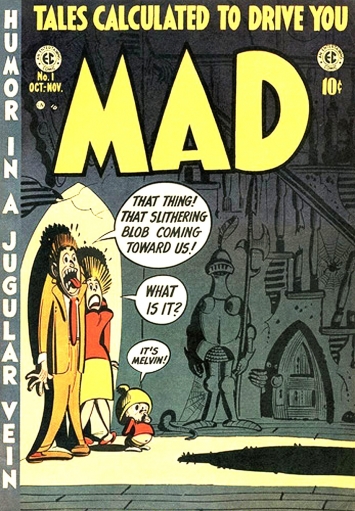
When Mad Magazine first appeared on newsstands in 1952 it was immediately recognized as something quite new in so far as American satirical magazine humor was concerned. The earliest issues were produced in comic book format with almost all content produced by its founding editor, Harvey Kurtzman (1924 – 1993); by 1955 the magazine’s lay-out was altered to its current form. From its earliest days, Kurtzman and his publisher, William Gaines (1922 – 1992), began receiving unsolicited gags from many of the finest writers and performers on radio and TV. This article lists some of the scandals (both foreign and domestic) that the magazine inadvertently generated.

Charles Lindbergh: American Hero (Literary Digest, 1927)
1927, Charles Lindbergh, The Literary Digest

Charles Lindbergh: American Hero
(Literary Digest, 1927)

Truth is stranger than fiction’ is an old writer’s saw that the pen plodders know and the general reader doubts. But that truth and fiction may be one and the same thing in comes to light in the story of Charles Lindbergh’s flight. No fiction writer could have contrived a story more perfect and right in it’s details…In a few short days an unknown lad has become the hero of the world. His name is on the lips of more people than any under the sun. His face etched in more minds than any living human. The narrative question of the story, ‘Will he make it?’ is on everybody’s lips, from President to beggars.

Advertisement

Use shortcode [oma_ad position="summary_top"] (or other position) in your theme or widgets to display OMA Promotions here.

Scroll to Top