Author name: editor

Child Labor Amendment in the Great Gepression | NRA and Child Labor
1933, Child Labor, New Outlook Magazine

Child Labor
(New Outlook Magazine, 1933)

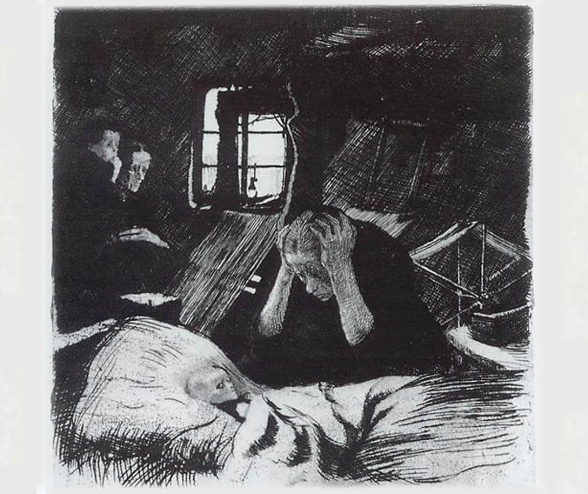
As you can read in this article, you’ll find that child labor throughout most of the Thirties had not been eradicated fully and was very much alive in some of the more brutal parts of the nation. That said, you might be surprised to know that the proposed amendment to the constitution concerning the ban on child labor (18 and bellow) has never been ratified by the Congress even to this day. When this column was written the proposed amendment was already nine years old and the politician who penned it held that the legislation was similar Prohibition in that it attempted to impose a moral code upon the American people. He believed that this was matter best left to the states; he further pointed out that the recently passed National Recovery Act had abolished child labor by fiat (and when the NRA was invalidated by the Supreme Court in 1935, child labor abuses increased a small degree).

Child labor was finally brought under control with the passage of the Fair Labor Standards Act in 1938.

Campus Fashions for Autumn (The Diamondback, 1949)
1940s Fashion, 1949, The Diamondback

Campus Fashions for Autumn
(The Diamondback, 1949)

Designing women are working toward the return of the chemise dress, the raccoon coat, the slicker rain coat, the ankle bracelet, multiple chains of beads, etc. Anything they have forgotten, your imagination may safely supply.

Important in high fashion this year are the scissors skirt, long and impossibly tight, the winged collar, featuring a neckline that juts off at a terrific angle, the bat collared suit – which looks more like a cartwheel than a costume. One can happily assume that these creations will never take on the campus…. Safer predictions are that the campus co-ed will take to tweed suits, especially those trimmed in velvet…

The Short Hair of the Late Forties (The Diamondback, 1949)
1940s Fashion, 1949, The Diamondback

The Short Hair of the Late Forties
(The Diamondback, 1949)

The shingle cut, the feather trim, the French Scissors cut or the cherub cut – no matter which you choose – a short hairstyle flatters your face…. When the American college girl first began to clip her long tresses, the general reaction was one of general horror. Now that the surprise has worn off, the various advantages of short hair become apparent: trim locks are cool, easy to take care of, smart looking and stylish.

Advertisement

Use shortcode [oma_ad position="summary_top"] (or other position) in your theme or widgets to display OMA Promotions here.

1929, Men's Fashion, The Literary Digest

The Dress-Reform Movement and Male Attire
(Literary Digest, 1929)

A few short paragraphs from a late-Twenties issue of Literary Digest recalled the terribly unproductive plans of the short-lived dress-reform movement and the frustrating nature of the human male in most matters sartorial:

The male is a shy creature, and has always been particularly fearful of appearing conspicuous…


Click here to read an editorial about the need for reform in men’s attire.

1950 Increase in Defense Budget Spending | American Response to Chinese Military Invasion of Korea
1950, Pathfinder Magazine, The Korean War

The War Budget Grows
(Pathfinder Magazine, 1950)

The Chinese foray into Korea resulted in the coming together of numerous politicians in Washington in order to boost Army spending by $41.8 billion dollars, with an additional $1 billion designated for nuclear warfare preparedness. Assorted branches of the military increased the draft pool and lowered their admission standards. New Jersey Representative Charles Eaton(R) gravely stated:

We face the greatest danger of extinction since the nation was founded.
Under-Nourished German Children (Magazine Advertisement, 1922-3)
1922, Aftermath (WWI), Magazine Advertisement

Under-Nourished German Children
(Magazine Advertisement, 1922-3)

Attached is a sad advertisement that ran on the pages of THE NATION for a number of years following the end of the war. Posted by a German charity, the ad pictures -what we can assume to be- a starving German child from one of the more impoverished regions of Saxony or Thuringia. All told, the photo and the accompanying text clearly illustrate the economic hardships that plagued post-World War I Germany.


Click here to read an article about the German veterans of W.W. I.

Advertisement

Use shortcode [oma_ad position="summary_top"] (or other position) in your theme or widgets to display OMA Promotions here.

Nazi Escape from Justice |
1944, Click Magazine, The Nazis

The Plan For Post-War Revenge
(Click Magazine, 1944)

This snippet that appeared in Click Magazine during the early months of 1944 supports the argument posed by journalist Gerard Williams and the investigators on the program Hunting Hitler. It stated that a Nazi insider had defected to London where he informed British intelligence of a Nazi plan to launch a third world war from the confines of, it was assumed, another country.

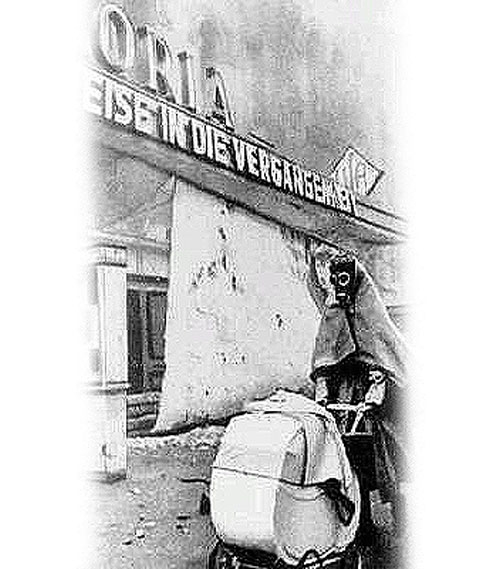
Life in W.W. II Germany (Collier's, 1943)
1943, Collier's Magazine, German Home Front

Life in W.W. II Germany
(Collier’s, 1943)

This Collier’s article clearly illustrated the gloom that hung over the German home front of 1943:

Nobody escapes war service in Germany. Children serve in air-raid squads; women work very hard…The black market flourishes everywhere. More fats are required, as are fruits and vegetables, for the people’s strength is declining. A report I have seen of Health Minister Conti shows that the mortality rate for some diseases rose 49 percent in 1941 – 1942.


Click here to read about the dating history of Adolf Hitler.

Advertisement

Use shortcode [oma_ad position="summary_top"] (or other position) in your theme or widgets to display OMA Promotions here.

U.S. Army Casualties: 1941 - 1944 (United States News, 1944)
1944, The United States News, World War Two

U.S. Army Casualties: 1941 – 1944
(United States News, 1944)

Here are the U.S. Army casualty figures from December, 1941 through November, 1944. The provided graph points out the following major events that ushered in the larger numbers:


• The Philippine collapse

• The American landings in North Africa

• The Battle of Kasserine Pass

• The Sicily Landings

• Anzio

• D-Day


Shortly after this article appeared on the newsstands the Germans launched their winter counter-offensive in the Ardennes. The editors of this magazine anticipated the American losses for 1945 to be the highest yet.


Click here to read General Marshall’s end-of-war remarks about American casualty figures.


A G.I. Rememberance of the ETO dead…

1930s Illegal Immigration | Great Depression Illegal Immigrants Deported | 1930s Illegal Immigration Article
1937, Immigration History, The Literary Digest

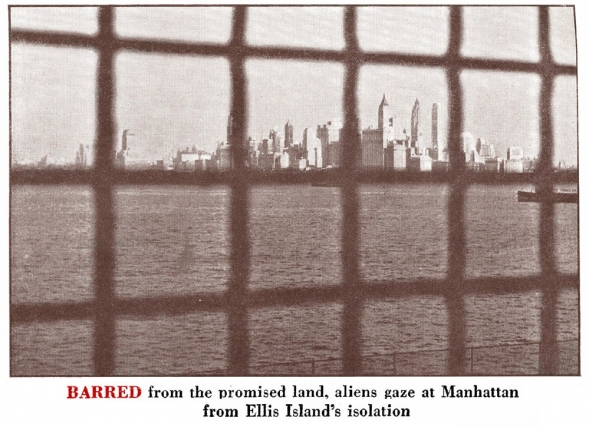
Deported From Ellis Island
(Literary Digest, 1937)

Here is a 1937 article concerning those stout souls who thought they’d make their way into the United States illegally – but made it no further than Ellis Island:

Aliens who have sneaked into the country are, by the fact of their entry, lawbreakers… Out of gratitude to a country which has welcomed them, is it too much to ask the properly qualified alien to register, in order that his fraudulent countrymen me be detected and sent home?

Advertisement

Use shortcode [oma_ad position="summary_top"] (or other position) in your theme or widgets to display OMA Promotions here.

WAAC Uniform Designer | US Army Colonel LO Grice Deputy Director of US Army Quartermaster Corps | Dorthy Shaver WAAC Uniforms
1942, The American Magazine, WACs

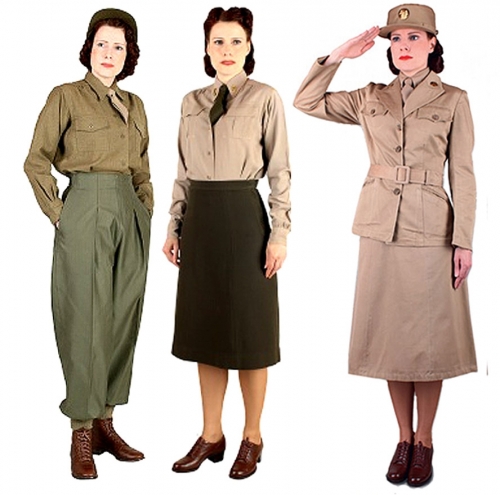
The Man Behind The WAAC Uniforms
(The American Magazine, 1942)

Although the WAAC uniforms were designed by Dorthy Shavers (1893 – 1959) of Lord & Taylor, this short article credits U.S. Army Colonel L.O. Grice – who actually served more in the capacity as the Army’s artistic director who supervised the designer.

He picked everything from purses to panties for Uncle Sam’s powder-puff army…


Click here to read about the WAVE’s uniform…

The New Glamour of Velvet (Literary Digest, 1936)
1930s Fashion, 1936, The Literary Digest

The New Glamour of Velvet
(Literary Digest, 1936)

A 1930s fashion article which perfectly encapsulated some of the heady excitement that filled the air when a new crush-resistant, non-wrinkling, packable, ultra-fashionable velvet hit the market. The material was immediately swooped-up by the glam squad in far-off Hollywood; RKO chief costume designer Walter Plunkett pontificated:

Velvet is the epitome and symbol of elegance.


Not one to be upstaged, Travis Banton (1894 – 1958) Plunckett’s counterpart at Paramount Studios, chimed in declaring:

The flattery and refinement of velvet is supplied by no other material.

Anticipating the Springtime coronation of Edward VIII, thousands of yards of velvet had been manufactured for the occasion.


Click here to read about the woman who dictated many of the fabric restriction rules on the American home front.

1938, Direction Magazine, Modern Art

Government Funding for the Arts Praised
(Direction, 1938)

An editorial by the artist Philip Evergood (1901 – 1973) who believed that the Federal Arts Project of the Thirties had not simply made the lives of artists a little better but has also created a far better society:

The Federal Arts Project has pointed the way to an American Culture. It has set a weight in motion, it has let loose a force that has affected hundreds of thousands of lives. It has made murals depicting the history of our country and the lives of our people have been placed on the walls of our schools, hospitals, libraries and public buildings making them of greater beauty and of greater community interest – monuments and small sculpture have been added in equal numbers, easel paintings and prints now hang in thousands on the walls of public buildings…

Evergood likened this government funding to the Renaissance, when the church served as the artist’s patron and culture flourished.

Click here if you would like to read a 1939 article about the closing of the Federal arts funding program.
Click here to read a 1942 article by Rockwell Kent on the proper roll of American artists during wartime.

Advertisement

Use shortcode [oma_ad position="summary_top"] (or other position) in your theme or widgets to display OMA Promotions here.

The Plot to Kill Hitler (Yank Magazine, 1945)
1945, Adolf Hitler, Yank Magazine

The Plot to Kill Hitler
(Yank Magazine, 1945)

During the summer of 1945, Yank reporter Corporal Howard Katzander, spent some time among the Third Army’s prisoners of war where he happened upon a German senior officer who was in a very talkative mood:

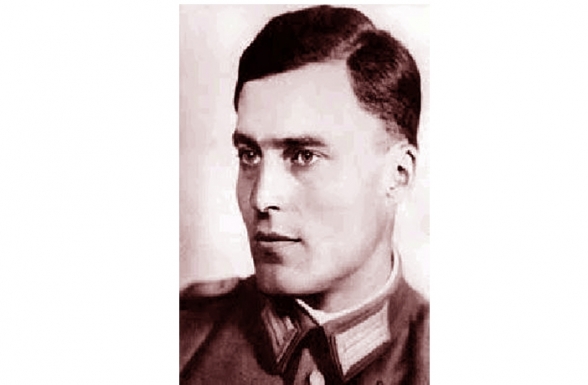
The story he was telling was the story of why the war did not end last July. It was the story of the attempt to assassinate Hitler and he knew all about it. Because this was Lieutenant Colonel Wilhelm Kuebart, a member of the Wermacht General Staff, and one of the original plotters.


Published in June of 1945, this must have been the first English language article about the Valkyrie plot.

An Alien Anti-Dumping Bill (Literary Digest, 1921)
1921, Immigration History, The Literary Digest

An Alien Anti-Dumping Bill
(Literary Digest, 1921)

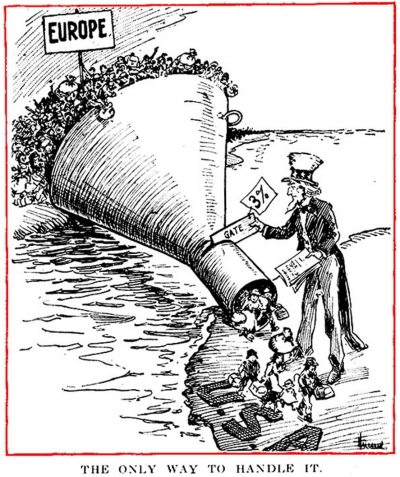
A 3 percent remedy’ for our immigration ills, real or fancied, will restrict the admission of aliens from May of this year to June, 1922, to 3 percent of the total of each nationality in this country when the Federal census was taken in 1910. As passed by the house, and expected to pass the Senate, the new measure, except for the time limit, is identical with the Johnson Bill passed in the last session of Congress and killed by pocket-veto of President Wilson.

But the Johnson Bill does not set up a permanent restrictive policy; it is intended merely to protect this country for the next fourteen months from a horde of Europe’s most objectionable classes.

How was Marilyn Monroe Discovered as a Model | Glamorous Marilyn Monroe
1954, Marilyn Monroe, People Today Magazine

The Woman Who Created Marilyn Monroe
(People Today Magazine, 1954)

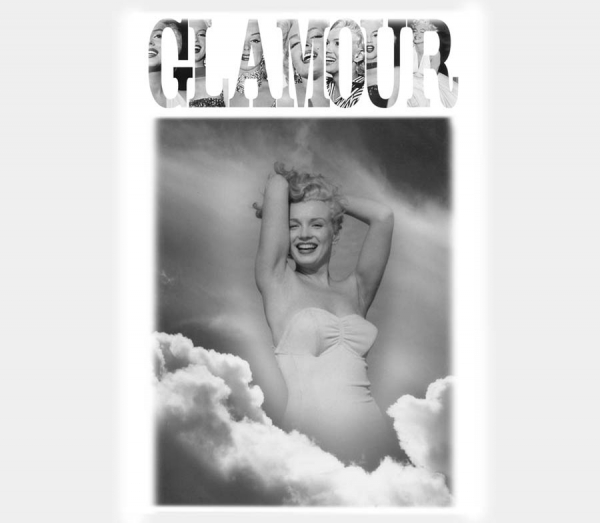
You can bet that throughout the short career of Marilyn Monroe there were voluminous amounts stylistes, cosmetologists, coiffeurs and doyennes of glamour who came in contact with the headliner at one time or another. Some offered genuine nuggets of beauty wisdom while others could only offer bum steers. Although the name Emmeline Snively may sound like a character from a Charles Dickens novel, she was in actuality the very first woman to offer sound fashion advice to the ingenue – advice that would start her on her path to an unparalleled celebrity status as the preeminent Blonde Bombshell in all of Hollywood. You see, Emmeline Snively was the one who recommended that La Monroe dye her hair that color in the first place.

Advertisement

Use shortcode [oma_ad position="summary_top"] (or other position) in your theme or widgets to display OMA Promotions here.

Scroll to Top