Author name: editor

The Birth of Hollywood Filmmaking (America, 1932)
1932, America Magazine, Silent Movie History

The Birth of Hollywood Filmmaking
(America, 1932)

2013 Anno Domini marked the 100th anniversary of the Hollywood film industry. With this in mind it is entirely fitting and proper that we post this thumbnail history that outlines how it all got rolling, as told by the jaded Robert Sherwood, an early film critic who witnessed much of it (although he incorrectly dated the first Hollywood feature film to 1912).

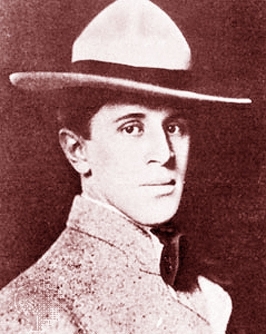
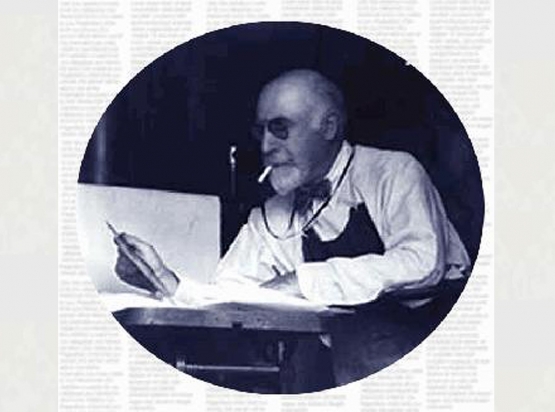
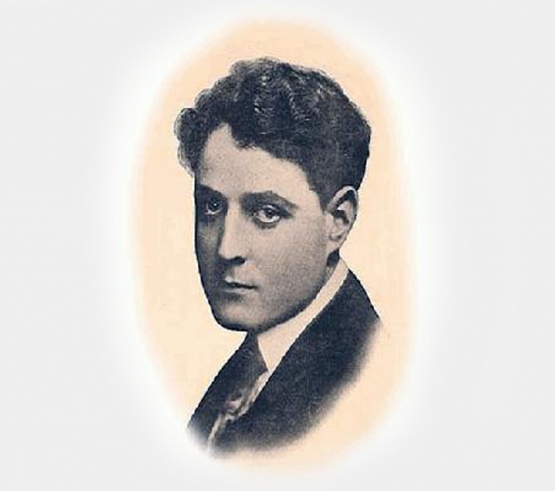
Hollywood history begins with four men: Jesse Lasky, Cecil B. DeMille, Dustin Farnum and a silent film called The Squaw Man


(The fourth name in Sherwood’s list was that of Samuel Goldwyn – who, in fact, had nothing to do with the production, but whose name in Hollywood had such staying power it seemed difficult to imagine that he didn’t.)


Read a 1951 profile of a future First Lady: the young Nancy Reagan.

Advertisement

Use shortcode [oma_ad position="summary_top"] (or other position) in your theme or widgets to display OMA Promotions here.

The Stalin-Hitler Non-Aggression Pact (Pathfinder, 1948)
1948, Pathfinder Magazine, World War Two

The Stalin-Hitler Non-Aggression Pact
(Pathfinder, 1948)

During the April of 1945 elements of the U.S. First Army barreled across the countryside of central Germany. Coming across the chateau outside of the Harz Mountain village of Degenershausen it must have seemed to them to be just another pretty pile of high class European rocks, just like all the other ones they’d been stumbling upon since D-Day – but they soon found that the joint was used to house many of the records of pertaining to German diplomacy between the years 1871 through 1944. This article lays bare some of the hidden details in the agreement that was struck between foreign ministers Molotov and Ribbentrop in 1939; the treaty that came to be known as the Hitler-Stalin Non-Aggression Pact.


Read about the earliest post-war sightings of Hitler: 1945-1955
<P

Harold Ickes Magazine Article 1935 | Secretary of the Department of the Interior Harold Ickes 1935
1935, New Outlook Magazine, The Great Depression

Harold Ickes Wrote the Relief Checks
(New Outlook, 1935)

When Harold Ickes (1874 – 1952) assumed his post as FDR’s Secretary of the Department of the Interior he found himself in charge of three distinct governmental concerns. The first of these elements to be lorded over was the public lands (mines, forests and Indian reservations). His second responsibility was involved with the drilling of oil. The third and most observed cell in his official asylum was that of Administrator of Public Works Three Billion Dollar Fund. He was under instruction to spend this as rapidly as possible…It would give work to the workless, get money into circulation and encourage business.


Click here to read about President Harry Truman…
The German Atrocities that Never Were (The Nation, 1923)
1923, Censorship, Pamphlet Produced by the National Park Service

The German Atrocities that Never Were
(The Nation, 1923)

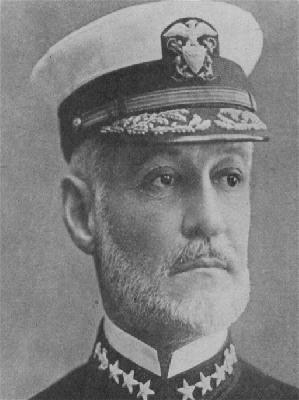
The post war period was the time when the press had to start figuring out what was true and what was false in all matters involving the reports that their assorted papers and magazines had printed during the conflict. Admiral Sims of the U.S. Navy caused a stir when he went on record announcing that a particularly odious policy observed by the Germans, widely believed to have been true, was in fact, a falsehood:

I stated…that barring the case of the hospital ship Llandovery Castle I did not know of any case where a German submarine commander had fired upon the boats of a torpedoed vessel…

Advertisement

Use shortcode [oma_ad position="summary_top"] (or other position) in your theme or widgets to display OMA Promotions here.

George Creel and His Posters (How We Advertised America, 1920)
1920, How We Advertised America, Posters

George Creel and His Posters
(How We Advertised America, 1920)

This essay was written by President Wilson’s Director of the Committee on Public Information, George Creel (1876-1953). It first appeared in Creel’s post-war memoir, How we advertised Americastyle=border:none
and gives a thorough rundown of the planning and the creativity that went into the mass-production of what is today a highly-prized collectible; the American World War I poster.


Twenty years later Creel wrote an article in which he explained his belief that America cannot be censored. Click here to read it.


Click here to read about how the mass-marketing techniques of the W.W. I era was used to promote KKK membership…

Over There' by Albert Sterner (Sea Power Magazine, 1918)
1918, Posters, Sea Power Magazine

Over There’ by Albert Sterner
(Sea Power Magazine, 1918)

An American sailor in white uniform stands in the center bearing the Stars and Stripes, and at his side stands Columbia, in shining armor and with a drawn sword, pointing across the sea to direct the gaze of the sailor Over There to the battlefield of the nations, where he must carry his flag to victory for the sake of the free country whose uniform he wears. In the background beneath the flag is shown the battle fleet steaming out to sea.


– so wrote the editors of Sea Power Magazine who were so moved by the W.W. I U.S. Navy recruiting poster Over There by Albert Sterner (1863 – 1946) that all they could do was describe it’s powerful lines and overall design.

Hollywood Star Condemns the Draft (Photoplay Magazine, 1917)
1917, Photoplay Magazine, Silent Movie History

Hollywood Star Condemns the Draft
(Photoplay Magazine, 1917)

The silent film actor J. Warren Kerrigan (1882 – 1947; played in such films as Captain Blood, Samson and Delilah and The Covered Wagon) was singled out for ridicule following a poorly conceived remark that all artists should be exempted from military service. The editors of Photoplay Magazine counter-attacked with a short list of the creative souls who have served regardless of their talents to entertain or provoke thought.

Apparently getting skewered in the press had no effect on him; he still wouldn’t register for the draft for another thirteen months.

Advertisement

Use shortcode [oma_ad position="summary_top"] (or other position) in your theme or widgets to display OMA Promotions here.

Morality in Hollywood | Moral Corruption in Hollywood
1922, Silent Movie History, The Smart Set

Moral Corruption in Hollywood
(The Smart Set, 1922)

Appearing in their monthly column, Repitition Generale, H.L. Mencken and George Jean Nathan briefly explored the reoccurring topic regarding Hollywood immorality:


So long as the majority of figures in the field of movies are recruited from the social and aesthetic slums, so long will the smell of Lime house cling to the movie’s scandals.


Speaking of moral corruption, read this article about the actor Errol Flynn…

White Russian Refugee Camp Pera Turkey 1922 | Николай Николаевич Романов
1922, European Royalty, Vogue Magazine

The Russian Nobility Struggled in Exile
(Vogue Magazine, 1922)

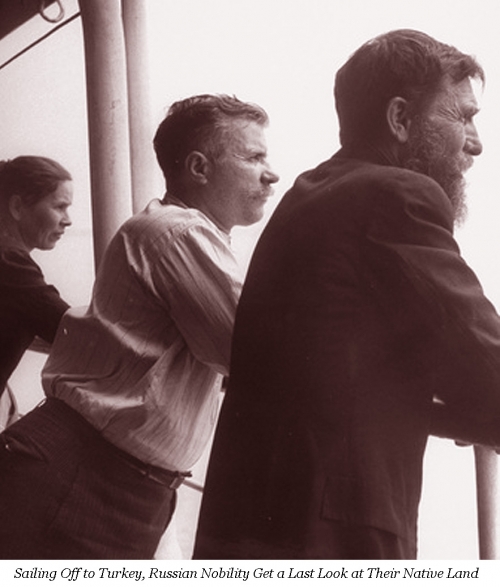
Luciene Murat (1876 – 1951?), a distinguished member of the French nobility wrote this Vogue article shortly after her return from Turkey in 1922. It is the sort of column that could only have been written by an over-indulged member of the post-war European high-society types, which makes it all the more enjoyable to read. Her reminiscences of her visit to the city of Pera are especially interesting for the observations made regarding the recently displaced White Russians of her acquaintance who reluctantly resided there in some discomfort.

Japan's Rebellion Against Western Fashions (Current Opinion Magazine, 1922)
1922, Current Opinion Magazine, Fashion

Japan’s Rebellion Against Western Fashions
(Current Opinion Magazine, 1922)

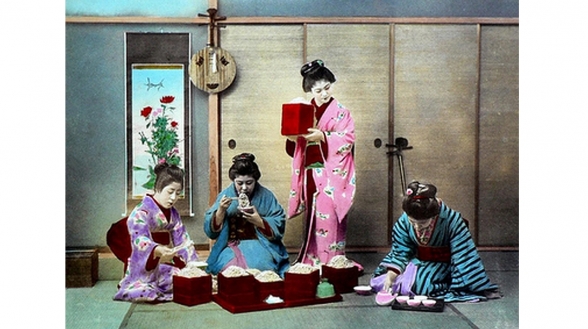
Contrary to the headline written above, this interesting article does not simply discuss the (temporary) Japanese rejection of European and American clothing in the Twenties but also touches upon earlier days when Western styles were fully embraced by the nobility of that country.

There is in Japan a growing revolt against European clothing…The Japanese have endured agonies in their efforts to get our hats, our trousers, our corsets…

Advertisement

Use shortcode [oma_ad position="summary_top"] (or other position) in your theme or widgets to display OMA Promotions here.

Alan Seeger American War Poet | Alan Seeger 1916 Combat Death | Grace D Vanamee Poem 1917
1917, Poetry, The Art World

Alan Seeger: He Did Not Fail That Rendezvous
(The Art World, 1917)

Although the U.S. President Woodrow Wilson asked Americans to be neutral in thought and deed on all matters concerning the war in Europe [before to April, 1917], the sympathies of the American people firmly stood with the French and their allies. Whether they served as soldiers or non-combatants, the American public was proud of those young Americans who expressed their outrage by volunteering to serve among the French or British armies. Numbered in that group was the Poet Alan Seegerstyle=border:none (1888 – 1916), who fought with the French Foreign Legion and was killed on the Somme. The following poem was written by Grace D. Vanamee (1867 – 1946) in response to Seeger’s very popular poem I Have a Rendezvous with Death (North American Review, October, 1916).
Gas Attack Horrors (NY Times, 1915)
1915, Poison Gas

Gas Attack Horrors
(NY Times, 1915)

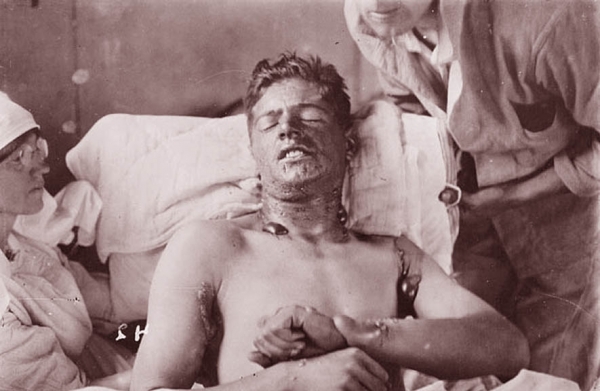
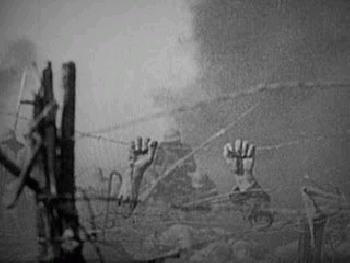
French novelist Pierre Loti (né Julien Viaud: 1850 – 1923) filed this dispatch from a forward aid station in the the French sector where he witnessed the suffering of the earliest gas attack casualties:

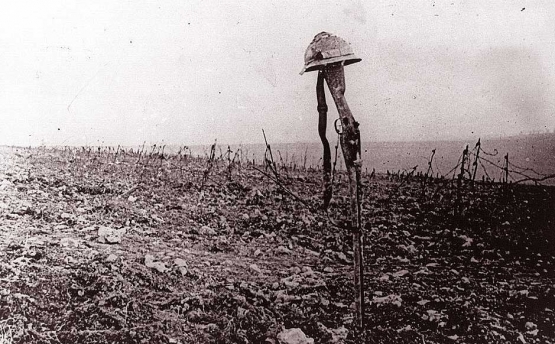
A place of horror which one would think Dante had imagined. The air is heavy, stifling; two or three little night lamps, which look as if they were afraid of giving too much light, hardly pierce the hot, smoky darkness which smells of fever and sweat. Busy people are whispering anxiously. But you hear, more than all, agonized gasping. These gaspings escape from a number of little beds drawn up close together on which are distinguished human forms, above all, chests, chests that are heaving too strongly, too rapidly, and that raise the sheets as if the hour of the death rattle had already come.


Click here to read about the new rules for warfare that were written as a result of the First World War – none of them pertain to poison gas.

Advertisement

Use shortcode [oma_ad position="summary_top"] (or other position) in your theme or widgets to display OMA Promotions here.

Reprimand from the Trenches (Cambridge Magazine, 1916)
1916, Letters, The Cambridge Magazine

Reprimand from the Trenches
(Cambridge Magazine, 1916)

This letter was clipped from a German newspaper and subsequently appeared in a British magazine some months later; it was written in response to a letter from a 13 year-old German girl who wrote to her brother at the front. She encouraged him in his sad, murderous work in her letter that was positively dripping with an affected air of trench-swagger. Outraged that his school-age sister should make such a vulgar suggestion, the soldier’s response was admirable and seemed much like the prose of Erich Maria Remarque.

The Anti-Asian Immigration Laws of 1924 (The Nation, 1927)
1927, Immigration History, Pamphlet Produced by the National Park Service

The Anti-Asian Immigration Laws of 1924
(The Nation, 1927)

The Immigration Act of 1924 denied admission to the United States to wives of American citizens if these wives are of a race ineligible for citizenship. Hindus, Chinese and Japanese are ineligible. Hence the curious and cruel fact that while an Oriental merchant with his wife may enter America, the wedded wife of an American-born citizen is held at the coast for deportation.

Failed Attempts to Amend The Constitution | Child Labor Legislation 1937
1937, Child Labor, Pathfinder Magazine

Putting An End To Child Labor
(Pathfinder Magazine, 1937)

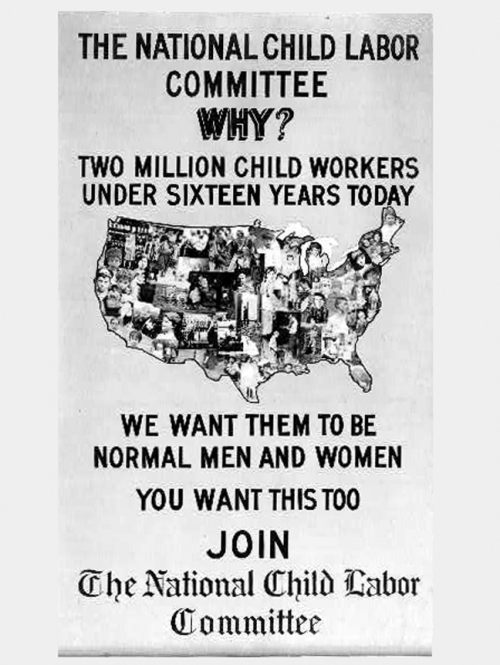
A column that recalls the failed efforts to banish child labor by adding a prohibitive amendment to the U.S. Constitution. The effort had the backing of the the American Federation of Labor and the National Child Labor Committee and was opposed by forces on Capitol Hill who felt that the issue was best addressed by each individual state. The opposition was composed of the American Bar Association, The Farm Bureau Federation, the Daughters of the American Revolution and Cardinal William Henry O’Connell of the Boston Archdiocese.

Advertisement

Use shortcode [oma_ad position="summary_top"] (or other position) in your theme or widgets to display OMA Promotions here.

Scroll to Top