Author name: editor

Howard Hughs and HELL'S ANGELS (Photoplay Magazine, 1930)
1930, Hollywood History, Photoplay Magazine

Howard Hughs and HELL’S ANGELS
(Photoplay Magazine, 1930)

The Thrilling, romantic story of how Howard Hughes, the millionaire kid, who tossed fortunes into the making of Hell’s Angels

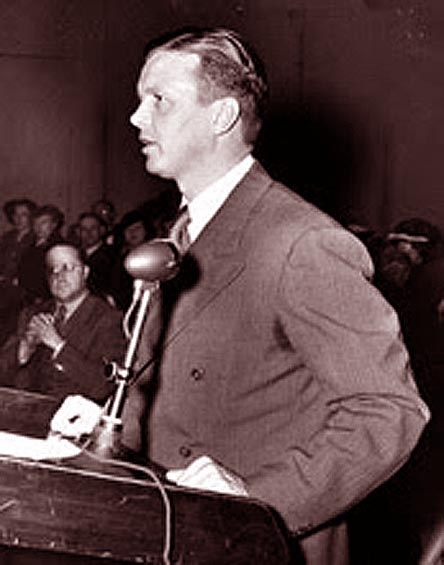
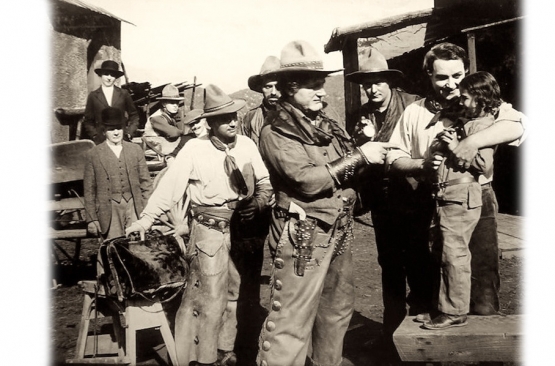
The editors of Photoplay, like many in the Hollywood community between the years 1927 through 1930, were extremely curious about wunderkind Howard Hughes (1905 – 1976) and the wildly expensive film he was directing that never seemed able to reach a state of completion, Hell’s Angels. This article, by Bogart Rogers, makes clear that by the time the film was released, production costs had soared beyond the four million dollar range (although some contemporary sources believe it was a few hundred thousand south of that number)- and most infamously, four aviators had been killed during the filming. This article sums-up the Hollywood career of Howard Hughes up to 1930 and seeks to separate some of the falsehoods that circulated about the boy-director.

A Woman in the Salvation Army (American Legion Monthly, 1928)
1928, The American Legion Monthly, Women (WWI)

A Woman in the Salvation Army
(American Legion Monthly, 1928)

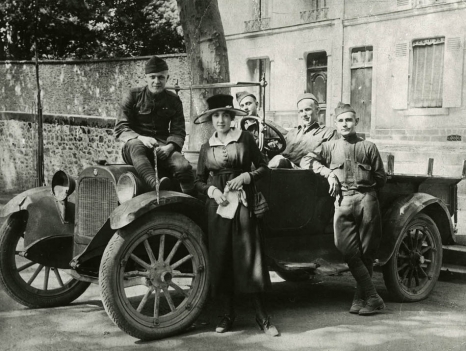
This article tells the World War One story of Irene McIntyre, a Salvation Army volunteer who served at the front during the most bloody period of the war:

In her two-hundred and fifty-six days under enemy fire, Irene McIntyre was twice gassed and twice received the unusual distinction of a personal citation in Army orders. She saw more of the war at close quarters than any other American woman. One of her citations read:

‘Under fire of high explosives and gas, she established and conducted huts that were noted for their good cheer and hospitality. Her courage and devotion to her voluntary work were a splendid inspiration to the troops.’


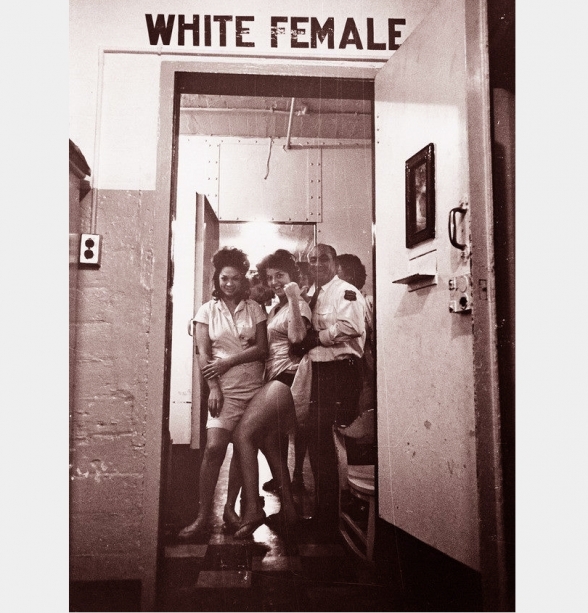
1920s Prohibition created a criminal climate
that appealed to more women than you ever might have suspected…


Read about the Women Marines of W.W. II HERE.

Advertisement

Use shortcode [oma_ad position="summary_top"] (or other position) in your theme or widgets to display OMA Promotions here.

WW2 photographer Joe Rosenthal Iwo Jima 1945 | Joe Rosenthal Article Collier's Magazine 1955
1955, Collier's Magazine, Photographers

Joe Rosenthal on Iwo Jima
(Collier’s Magazine, 1955)

Associated Press combat photographer Joe Rosenthal (1911 – 2006) wrote the attached article ten years after snapping the world famous image of the four U.S. Marines and one Navy corpsman raising the American flag on Mount Suribachi during the battle of Iwo Jima. In five pages, he explains the remarkable impact that the photo had on the American psyche as well as the popular culture on the American home front, both during the war and afterward. Rosenthal was awarded a Pulitzer Prize for capturing on film one of the greatest events of W.W. II and briefly explains that the three surviving men who participated in the event were thrust into fame for years afterward.


Read our article about the treason of Ezra Pound.

1918, Marines, Sea Power Magazine

A Wartime Footing for the USMC
(Sea Power Magazine, 1918)

The ranks of the United States Marine Corps began to swell in the early March of 1917, shortly after the Kaiser launched his campaign of unrestricted submarine warfare. When Congress declared war the following April, the expansion began is earnest:

The Act of Congress making naval appropriations for the present fiscal year carries a proviso increasing the Marine Corps from its permanent legal enlisted strength of seventeen thousand and four hundred to a temporary war strength of seventy-five thousand and five hundred with a proportional increase in commissioned and warrant officers and the addition of two major generals and six brigadier generals.


This article is illustrated with 12 photographs.

Click here to read about the African-American soldiers who served in France.

Advertisement

Use shortcode [oma_ad position="summary_top"] (or other position) in your theme or widgets to display OMA Promotions here.

Hollywood Stars in the USO (Click Magazine, 1944)
1944, Click Magazine, The USO

Hollywood Stars in the USO
(Click Magazine, 1944)

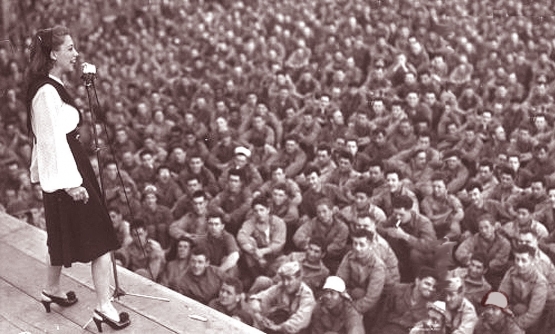
Attached is a 1944 article from CLICK MAGAZINE about the touring performers of the U.S.O. during the Second World War. Illustrated with eight photographs picturing many of the most devoted and well-loved of the Hollywood entertainers (Bob Hope, Martha Raye, Al Jolson, Jack Benny, Wini Shaw) the article, by celebrated newspaper critic Leonard Lyons, goes into some detail as to the deep sense of gratitude these show people felt and how happy they were to give some measure of payback. It was estimated that the U.S.O. performed 293,738 shows by the time the war reached an end.

End of the Great Depression | When Did the Great Depression End
1940, Newsweek, The Great Depression

Prosperity’s Return
(Newsweek Magazine, 1940)

A quick read about the return of prosperity by economist turned journalist Ralph Robey:

Majority opinion among government economists at present, according to all reports, is that the current decline of business has another six or eight weeks to run and then there will be an about-face which will start us on an upgrade that by the end of the year will wipe out all the recent losses and bring production back to the high level of the final quarter of last year.

Advertisement

Use shortcode [oma_ad position="summary_top"] (or other position) in your theme or widgets to display OMA Promotions here.

1940 End of the Great Depression | 1940 Year the Great Depression Ended | When Did The Great Depression End
1940, Newsweek, The Great Depression

Prosperity in Sight…
(Newsweek Magazine, 1940)

The optimistic year-end forecast – numerous authorities predicted at least a 25 percent rise in residential contracts and officers of the John Manville Corp. forecast the erection 400,000 privately financed homes, largest volume since 1929 – have been buttressed by several important developments since the turn of the year.

Kamikaze Article Newsweek Magazine 1945
1945, Kamikaze Attacks, Newsweek

Their Kamikaze Defense
(Newsweek Magazine, 1945)

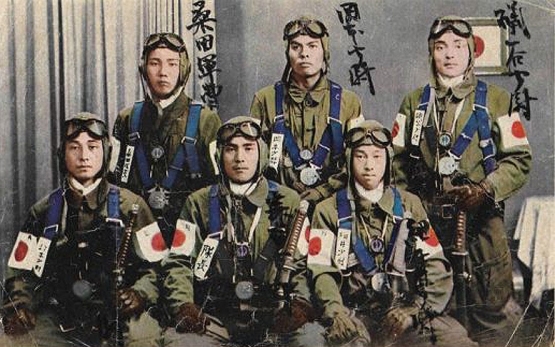
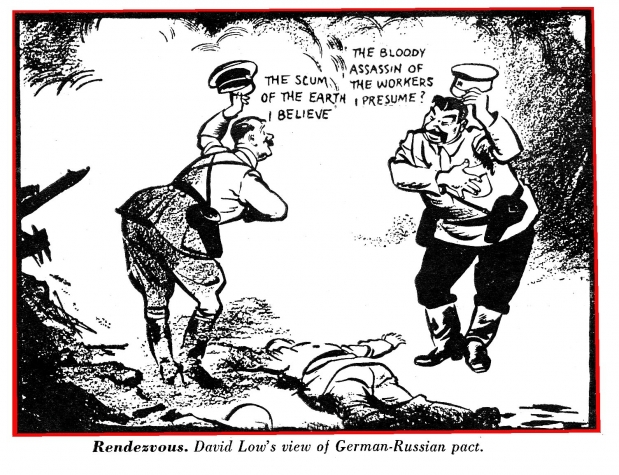
In a land where white is the color of mourning and black is the color of ceremony, where newspapers are read from right to left, this may have been a logical strategy. It was annunciated last week by the head of the Japanese government, Premiere Kantaro Suzuki… The upside-down Japanese mind could make the cost of conquest terribly expensive in American lives.

Advertisement

Use shortcode [oma_ad position="summary_top"] (or other position) in your theme or widgets to display OMA Promotions here.

The End of the War in Berlin (Yank Magazine, 1945)
1945, Aftermath (WWII), Yank Magazine

The End of the War in Berlin
(Yank Magazine, 1945)

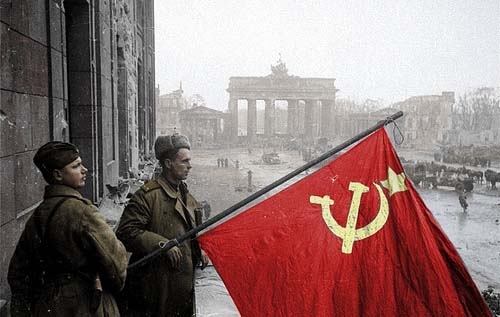
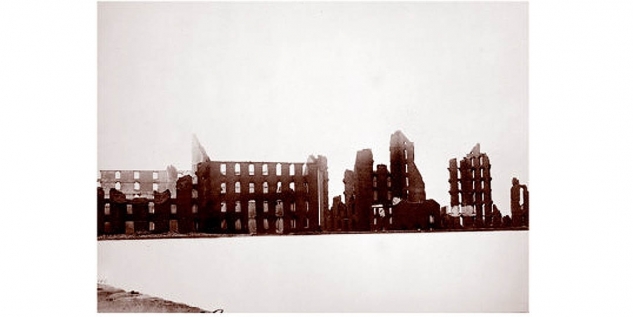
YANK correspondent Mack Morris wandered through the fallen Nazi capital of Berlin two days after it’s collapse and recorded his observations:

There were Russians in the the square, dancing and a band played. In Unter den Linden were the bodies of dead civilians, the dust of their famous street like grease paint on their faces.


Click here to read about the German surrender proceedings that took place in the French city of Reims on May 6, 1945.


Click here to read about the inmate rebellions that took place at Auschwitz, Sobibor and Triblinka.

Tom Treanor of the L.A. Times (Coronet Magazine, 1944)
1944, Coronet Magazine, War Correspondents

Tom Treanor of the L.A. Times
(Coronet Magazine, 1944)

War correspondent Tom Treanor (1914 — 1944) of The Los Angeles Times was billed by writer Damon Runyon as one of the four best reporters developed in this war.:

Landing in Cairo just about the time Field Marshal Erwin Rommel was approaching Alexandria, Treanor went to the British to obtain an accreditation certificate as a war correspondent. But since the British didn’t know him they wouldn’t accredit him. Undaunted he went out and bought a set of correspondent’s insignia for 70 cents, borrowed an army truck, and made a trip to the front and back before the British realized he was gone. They stripped him of his illegal insignia, but in the meantime Tom had obtained material for several ‘hot’ columns. Treanor was killed in France shortly after this column went to press.

The Woman with the First Division (American Legion Monthly, 1930)
1930, The American Legion Monthly, Women (WWI)

The Woman with the First Division
(American Legion Monthly, 1930)

Twelve years after the end of the war, former Y.M.C.A. volunteer Francis Grulick wrote this moving account of her days as a canteen worker in France. She had vivid and colorful memories of her days in the forward positions bringing some measure of comfort to the men of the U.S. Army First Division, to whom she was devoted. She was with them at Gondrecourt, Bonnvillers, Boucq, Cantigny and Soissons. She filled their canteens, served them lemonade, poured their coffee, cooked their meals and also saw to it that cigarettes were plentiful. By the time the First Division arrived in Coblenz for occupation duty, she recognized that the unit was composed almost entirely of replacements and that she was the only witness to the First Divisions earliest days in France.


Is your name Anderson?

Advertisement

Use shortcode [oma_ad position="summary_top"] (or other position) in your theme or widgets to display OMA Promotions here.

Letter from Belleau Wood (With the Help of God and A Few Marines, 1919)
1919, Belleau Wood

Letter from Belleau Wood
(With the Help of God and A Few Marines, 1919)

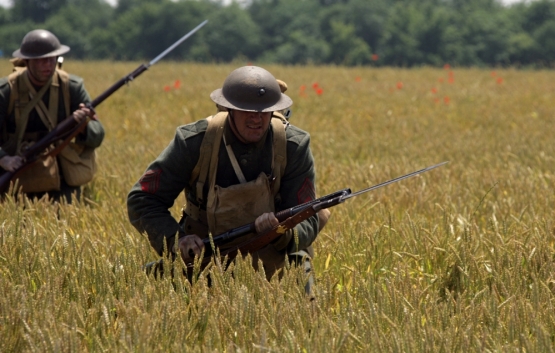
The following letter was written by a Belleau Wood veteran of the U.S. Marine Corp’s Sixth Regiment, Private Hiram B. Pottinger. It was included the World War One memoir, With the Help of God and a Few Marinesstyle=border:none (1919) by Brigadier General A.W. Catlin, U.S.M.C. (1868-1933), who believed it rendered accurately the enlisted man’s view of the battle.
The letter is accompanied by a black and white photograph depicting what is clearly a re-staging of the Marines mad dash across the wheat fields that sit just outside the Bois de Belleau.

Click here to read about the U.S. Navy railroad artillery of W.W. I.

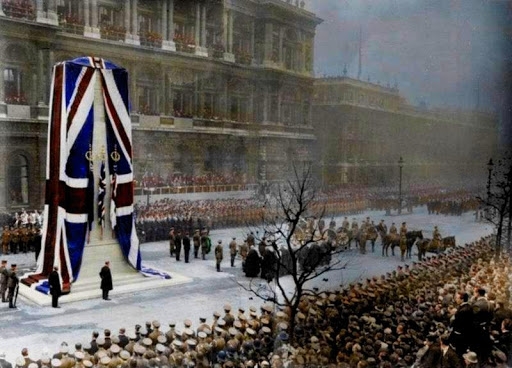
Remembrance Day at the Cenotaph (American Legion Monthly, 1936)
1936, Cemeteries, The American Legion Monthly

Remembrance Day at the Cenotaph
(American Legion Monthly, 1936)

This chill November morning the Cenotaph is surrounded by serried masses of men. Up and down Whitehall as far as one can see are thousands and thousands packed in so tightly they cannot move…Suddenly from St. James Park comes the sound of a gun. They used to say it was impossible for a British crowd to be quiet. That was before Armistice Day. For the hum of London dies at the sound of the gun…Somewhere in the distance a horse paws the ground and neighs. A flag flaps in the breeze. Never such a silence as this. A King and his people pause sixty seconds in solemn celebration for the dead. It is the Great Hush.

Advertisement

Use shortcode [oma_ad position="summary_top"] (or other position) in your theme or widgets to display OMA Promotions here.

Scroll to Top